
























You are standing there with a roll of baking paper in your hand thinking: hang on. If there is PFAS in my pan and in my raincoat, what is on this paper that is so suspiciously good at not sticking? Fair question. The answer has more nuance than the internet would have you believe, which is exactly why it is worth explaining properly.
Why baking paper does not stick
Paper is a sponge by nature. To stop your biscuit soaking in and baking on, it gets a layer that keeps grease and moisture out. That can be done in several ways, and that is precisely where the difference lies between "fine" and "rather not".
Silicone, quilon and the question of what is actually on it
The baking paper you buy at the supermarket has, in most cases, a silicone layer. Silicone is not a PFAS. So that is good news, and at the same time the most important nuance in this whole piece.
Where you do need to pay attention: greaseproof paper, snack packaging, takeaway trays and some disposable airfryer liners. Fluorine compounds turn up there more often, because they stand up to grease better than silicone does. In short, your baking paper is usually not your biggest problem. Your baking tin is, and we wrote a full piece about the 70 to 90 per cent of bakeware containing PFAS.
How to spot PFAS free baking paper
You cannot see it, smell it or feel it. So go by what it says:
- Look explicitly for "PFAS free" or "fluorine free" on the packaging. If it is not there, it is not ruled out.
- "Silicone coated" is a good sign, because that is a different technology.
- Labels like FSC are about forestry, not chemistry. Nice, but it does not answer your question.
- When in doubt, email the manufacturer. Brands that have sorted it reply within a day.
Brown and unbleached says nothing about PFAS
This is the most persistent misconception. Brown baking paper is brown because it has not been bleached with chlorine. Fine, but that is about colour, not about the coating on top. A brown sheet can carry a fluorine layer just as easily as a white one. So do not let a natural looking shade lull you to sleep.
No baking paper in the house? This does work
It happens to everyone. Dough ready, oven hot, roll finished. These emergency options genuinely work:
- Butter and flour. Brush butter into every corner, spoon in flour, turn until everything is coated, knock out the excess. Classic and surprisingly reliable.
- Butter and semolina or breadcrumbs for savoury things. Gives you a nice edge as a bonus.
- A reusable baking mat made of silicone. Good for biscuits, less good for anything that needs to spread.
- Nothing at all, if your tin has a decent ceramic coating. More on that in a moment.
Which fat you reach for does make a difference, by the way. We worked that out for pans in the piece on oil, butter or spray, and the same applies to bakeware: spray is the worst of the three.
And this does not work
Aluminium foil is not baking paper. Your dough sticks to it happily, and with acidic ingredients like tomato or lemon you really do not want it. Kitchen roll does not belong in an oven, full stop. Neither do sandwich bags, however creative it feels at the time.
Baking paper in the airfryer, briefly
It is allowed, as long as you put it under your food so it does not fly around, and as long as you never preheat with just an empty sheet in there. Choose loose sheets of ordinary baking paper over special airfryer liners, because it is precisely with those liners that the coating is more often unclear.
How to cut baking paper for a cake or tart tin
For a round tin you really do not need to go circling with scissors:
- Tear off a sheet that is comfortably bigger than your tin.
- Fold it in half, in half again, then twice diagonally until you have a point.
- Hold the point in the centre of your tin and cut off at the rim.
- Unfold. Circle.
- For a loaf tin: one strip along the length, with the ends sticking up as handles. That way you lift your bread straight out.
Reusable baking mats, the honest trade-off
They last for years and save a mountain of waste. But they also insulate, so your base comes out less brown and crisp. Great for biscuits and macarons, not so great for a pizza base or roasted vegetables. Use them deliberately rather than by default.
The real answer is a tin nothing sticks to
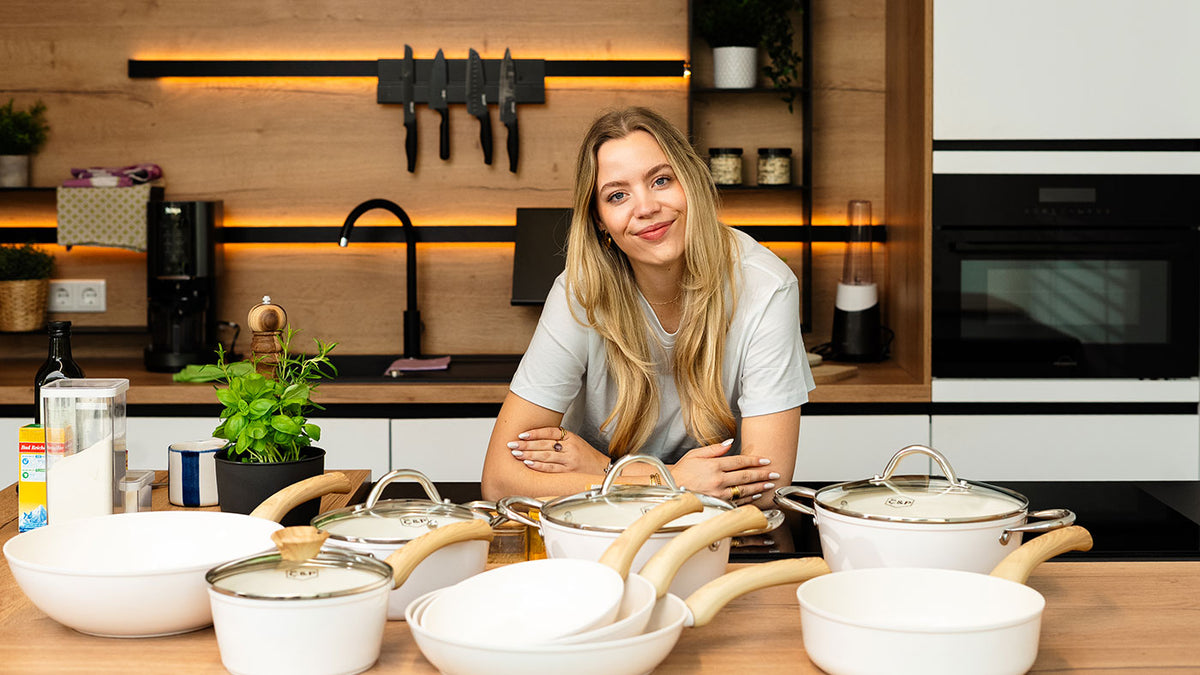
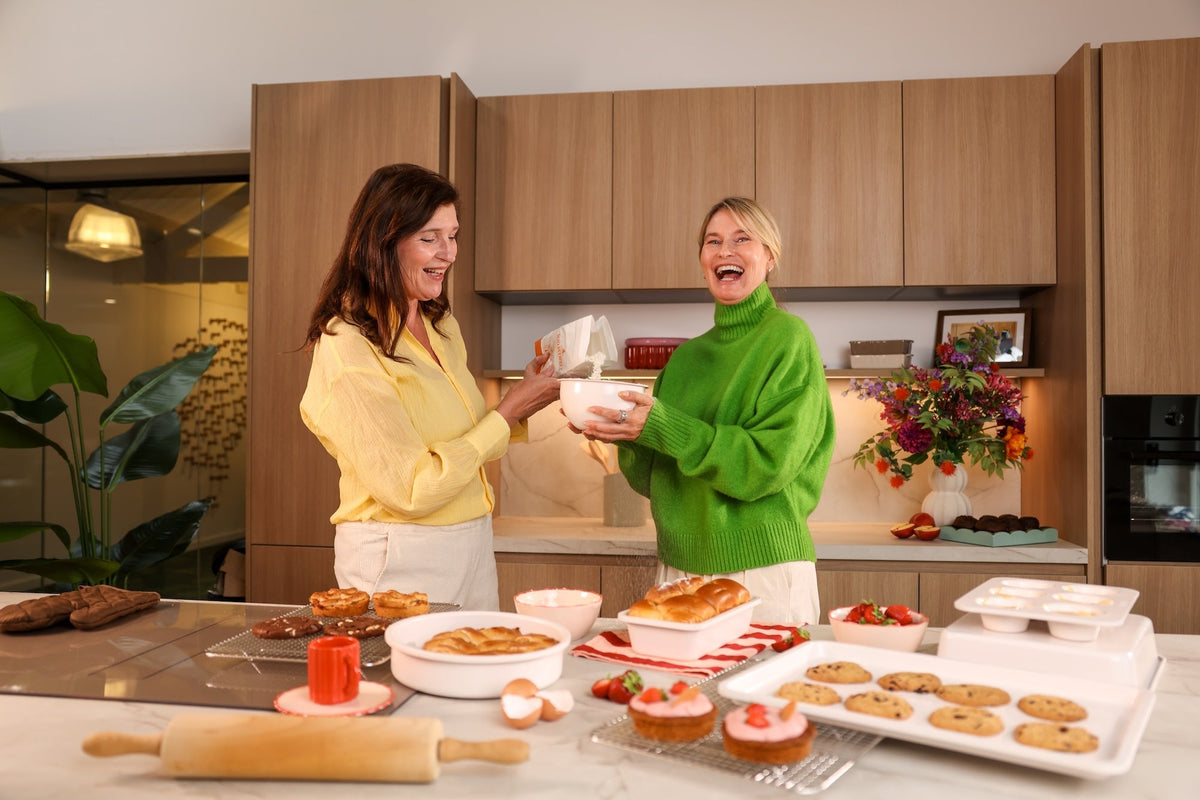
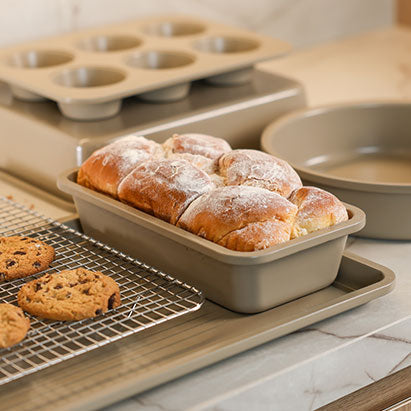
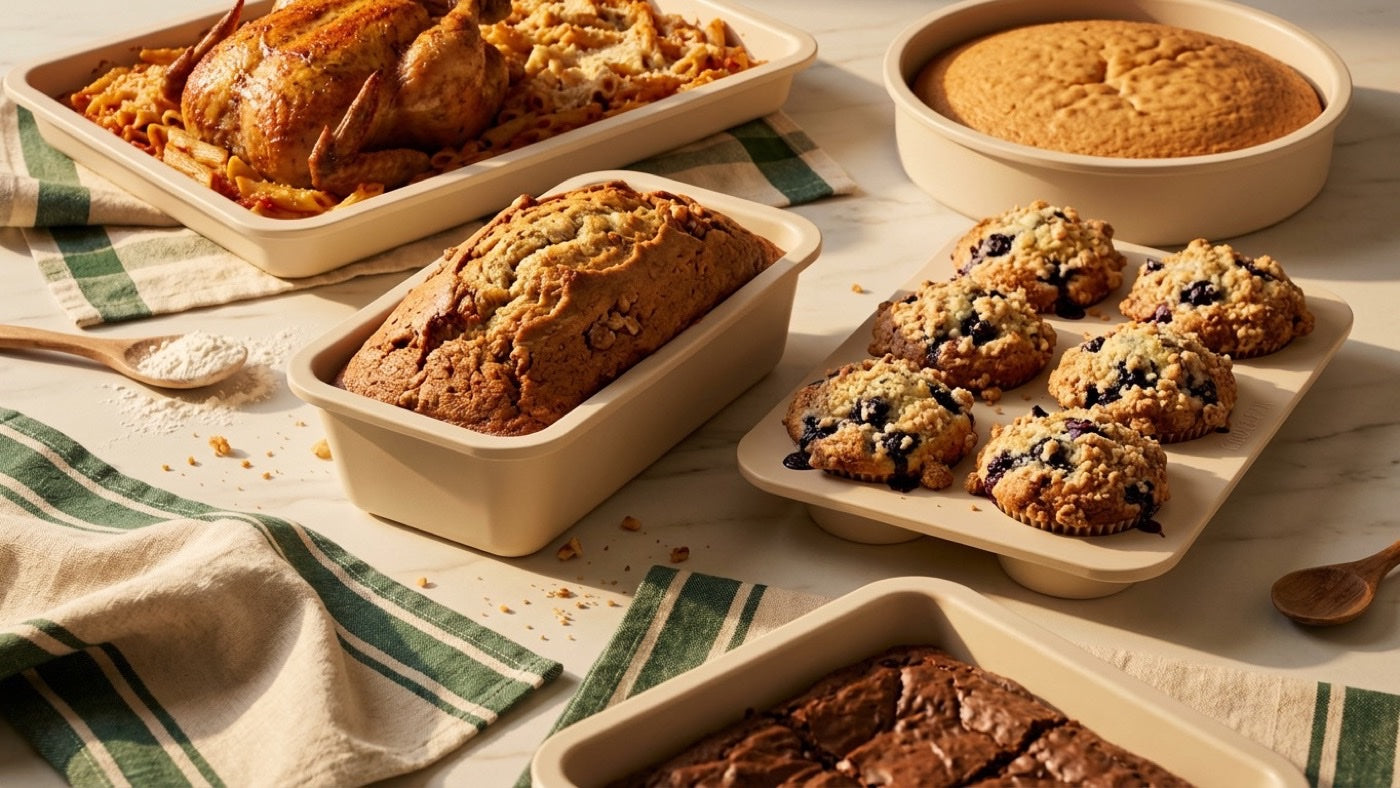
Let us be honest: baking paper is a plaster. You use it because your tin is not doing its job. A tin with a good ceramic coating simply does not need that paper. Cupcakes come out in one piece, biscuits release the moment you touch them, a cake slides out without you saying a quiet prayer first.
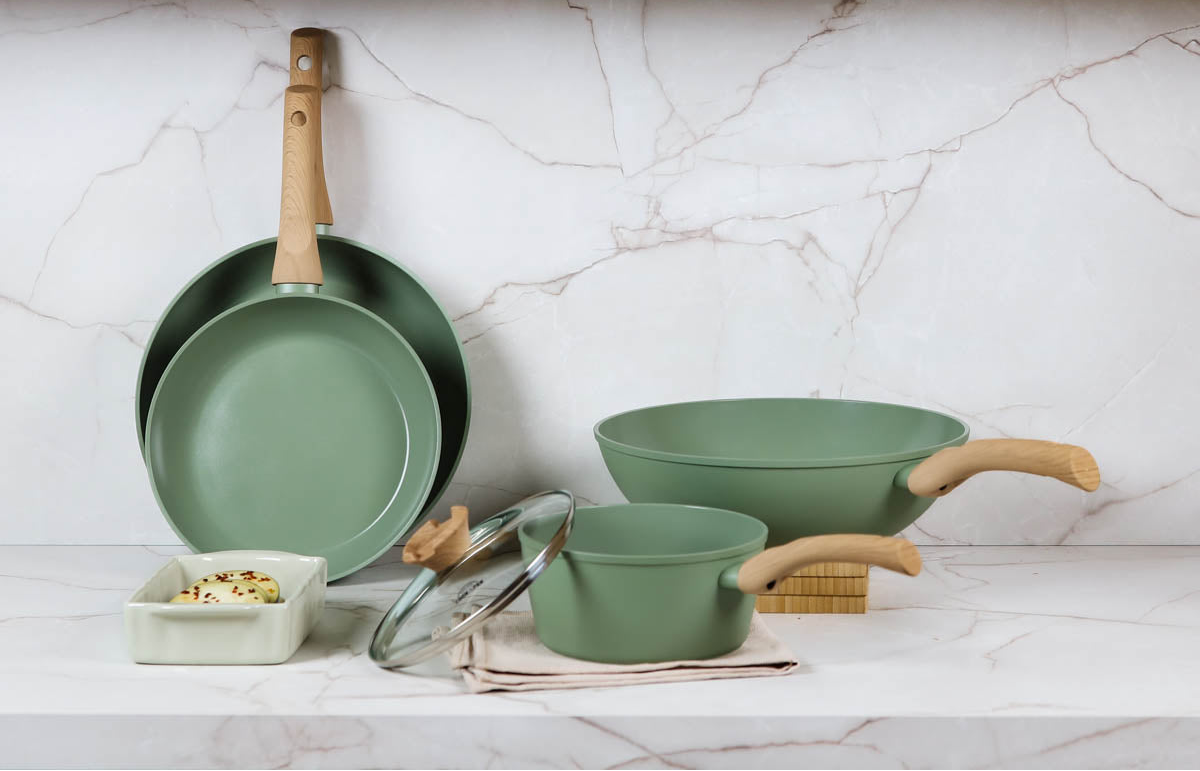
That is why we gave a baking set without PFAS the same Greenshield coating on the inside as our pans. Silica instead of fluorine, around 2.5 times as durable as what sits on the average baking tin, and 100 per cent PFAS free.
What that saves you in a year
Do the sums. If you bake twice a week, a hundred sheets a year go through easily. That is a few rolls, a few euros, and a pile of waste you never needed. Quite apart from the cutting, the curling up, and that one sheet that always turns out just too small.
How to make your baking kit baking-paper-free step by step
You do not have to overhaul everything today:
- First check which roll you have in the house, and whether it says "PFAS free".
- Replace the tin you use most often, usually the baking tray.
- Wash new tins by hand rather than in the dishwasher. That extends the life of any ceramic coating, as we also explain for ceramic pans.
- Keep one roll of baking paper for sticky exceptions like caramel and marshmallow. Some things stick to everything.
- Store your tins with protectors in between, because every scratch is a place where your bake will cling after all. A few simple kitchen accessories keep your set intact for years.
Frequently asked questions about PFAS and baking paper
Is silicone baking paper safe?
Silicone is a different group of substances from PFAS and is widely used for food contact. Do stay within the temperature stated on the packaging.
Can I reuse baking paper?
For dry things like biscuits you can happily use a sheet two or three times. Once it is brown, brittle or greasy, it is done.
Is there PFAS in my muffin cases?
Usually not, they are often just silicone coated paper. If you want certainty, check whether the manufacturer says so.
💡 Please note: we love cooking with boldness, but safety always comes first. Read more on our disclaimer page.