















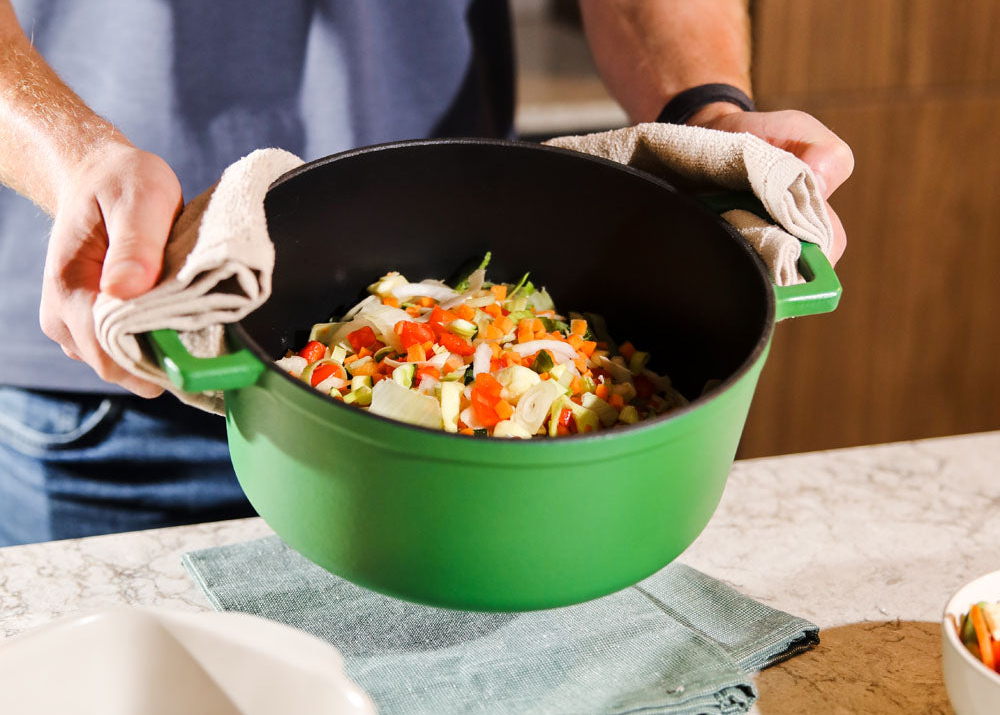
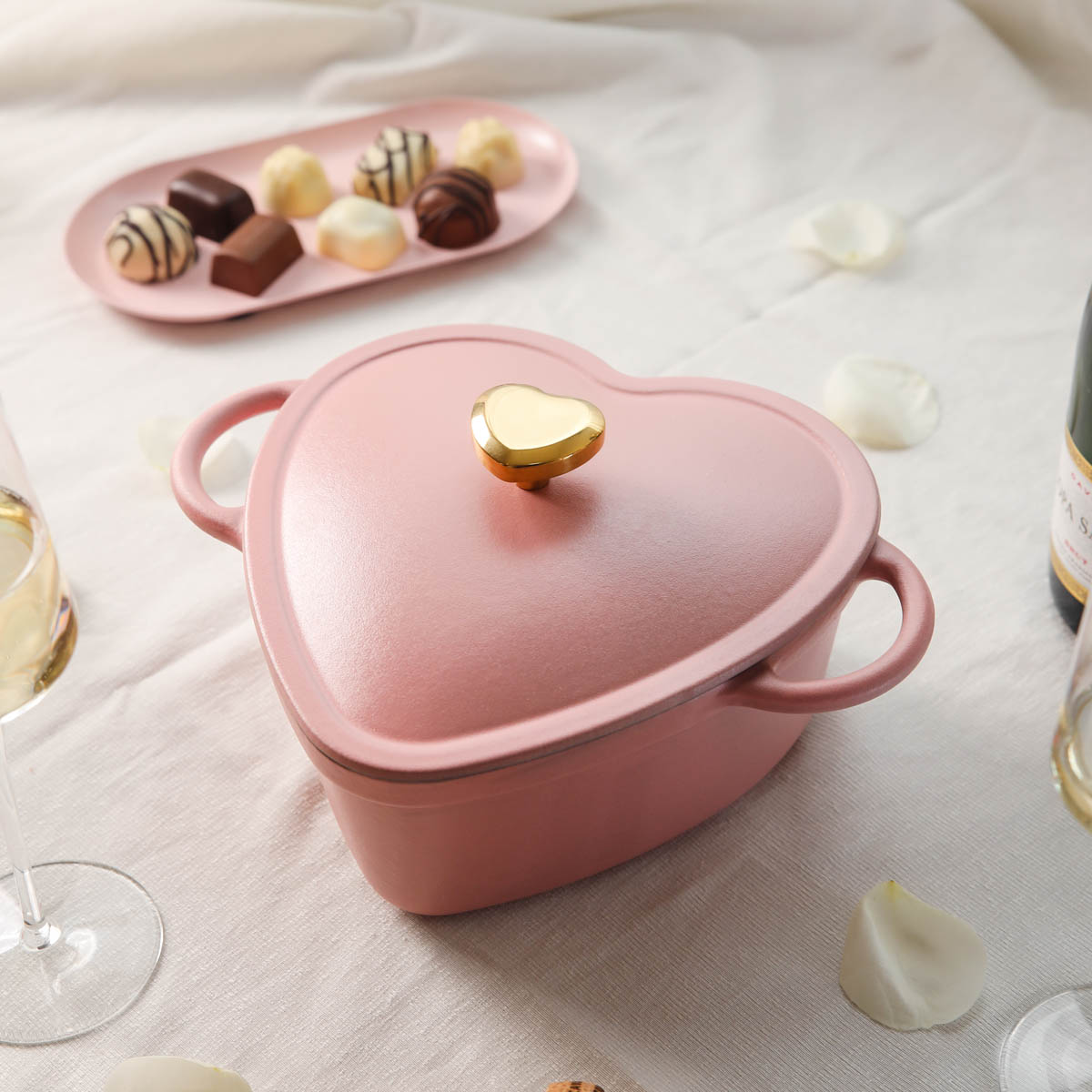








You replaced your frying pan. Deliberately, because you read about PFAS and thought: I do not want that stuff in my food. Well done. Except that in the bottom cupboard of your kitchen there is probably still a stack of baking tins you have never given a second thought. Same black layer, same chemistry, only this time with a cake in it.
What PFAS is and why it never goes away
PFAS is not a single substance but a family of thousands. They all share a strong carbon-fluorine bond, and that bond is exactly what makes them so attractive to manufacturers: water rolls off, grease does not stick, heat does not bother them. Handy for a baking tin. Less handy for the world, because that same bond barely breaks down in nature. Hence the nickname forever chemicals.
PFOA, perhaps the best known of them, is now banned in the EU. But a ban on one substance is not the same as a ban on the whole family. Plenty of nieces and nephews are still in production.
Why bakeware in particular so often contains PFAS
With a pan you look at brand, material and price. With a baking tin you look at whether it fits your oven. That is exactly where it goes wrong. Bakeware is a category almost nobody communicates about, so manufacturers reach for the cheapest non-stick coating going. And for decades that has been a fluorine coating.
We went through our own range for PFAS years ago. When we put the same glasses on and looked at the baking world, we were genuinely shocked.
70 to 90 per cent, and that is not a typo
Our own market research into aluminium bakeware puts the share containing PFAS, PTFE, PFOA or Teflon in the coating at 70 to 90 per cent. Seven to nine out of ten. That is not an outlier at the bottom of the market, that is simply the market.
And the strange part is that almost nobody knows. The packaging says "non-stick" and the information stops there. The same silence we saw earlier with pans, which we wrote about when we put PFAS in your pan and your raincoat side by side.
The names to look out for
Manufacturers get creative with words. In practice these terms all mean roughly the same thing:
- PTFE, the technical name. It is a PFAS itself.
- Teflon, a brand name for PTFE. Sounds familiar, is not reassuring.
- PFOA, once used in production, now banned in the EU. Sometimes still listed as comfort: "PFOA free". That says nothing about the rest.
- Fluoropolymer or fluorine coating, the same story in nicer words.
- "Non-stick" with no further explanation. If a brand is proud of its coating, it names it. If it does not, you know enough.
How to check what is in your cupboard in five minutes
- Take everything out. Yes, including that muffin tin from your mother-in-law.
- Check whether a sticker, box or leaflet came with it. Look for the coating name.
- No information? Search for the brand plus the word PFAS. A brand that is PFAS free shouts about it from the rooftops.
- Still unsure? Look at the layer itself. Deep black, glossy, soft to the touch and easy to scratch points towards a fluorine coating.
- Set aside everything you cannot trace. That is your replacement list.
What happens when your tin gets too hot
A fluorine coating is stable as long as you stay within the lines. Go beyond them, for instance with an empty tin preheating or a grill that runs far hotter than you think, and the material starts to break down and gives off fumes. Bird owners already know this story: budgies do not survive it.
When baking you usually stay under that threshold. But "usually" is an odd word when it comes to your food.
Scratches make the problem bigger
Every scratch is a place where the coating is no longer intact. With a tart tin that happens faster than you think, because you cut in it, you lever a knife around the edge, you stack tins on top of each other in the cupboard. We have written before about why metal and a non-stick layer are not friends, and for bakeware that goes double.

And what about your baking paper?
Good question, and the answer is less alarming than you expect. Classic baking paper usually has a silicone layer and no PFAS. Greaseproof paper, disposable packaging and some airfryer liners are a different matter. Fluorine compounds do turn up there. In short: your baking tin is the bigger problem, your baking paper the smaller one. But both are worth checking.
What a PFAS free baking tin actually is
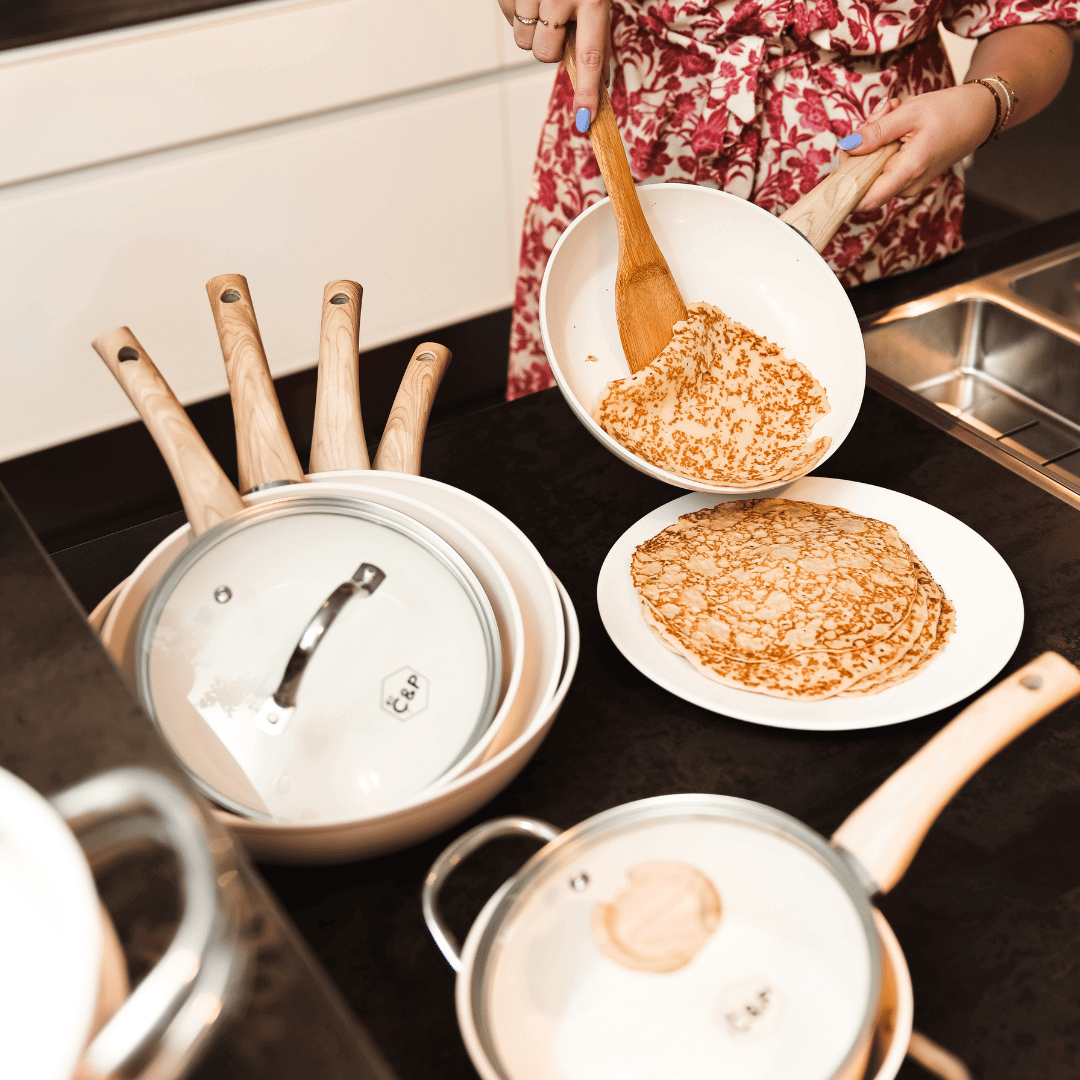
A genuinely PFAS free tin has a coating based on silica, also known as a ceramic coating. That layer is hard rather than soft, so it scratches less easily, and there is no fluorine in it. We call ours Greenshield, and it is exactly the same coating that sits on our PFAS free pans. It is around 2.5 times as durable as the average non-stick layer you find on bakeware.
To be honest about it: ceramic does not mean your tin is made of solid ceramic. It is a coating on metal. Anyone claiming it is indestructible is selling you a story. What it is: hard, fluorine free and considerably better at surviving daily use. What exactly goes into such a layer, we picked apart in the piece on our ceramic non-stick coating.
Why we started with the pan and only now with the oven
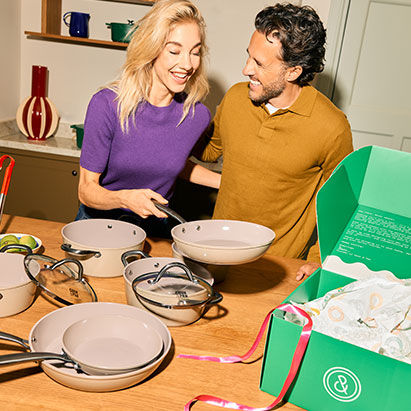
Our pans have been PFAS free for a while. Logical, because that is where most of the heat happens and where most of the time is spent. But the same question kept coming in, by email, on Instagram, through customer service: do you do bakeware too? When is the oven set coming? Someone literally wrote that they wanted their whole kitchen in Cook & Pan.
That was hard to ignore. So we asked our best customers, spent months researching, and only then started building.
Aluminised steel, and why that matters
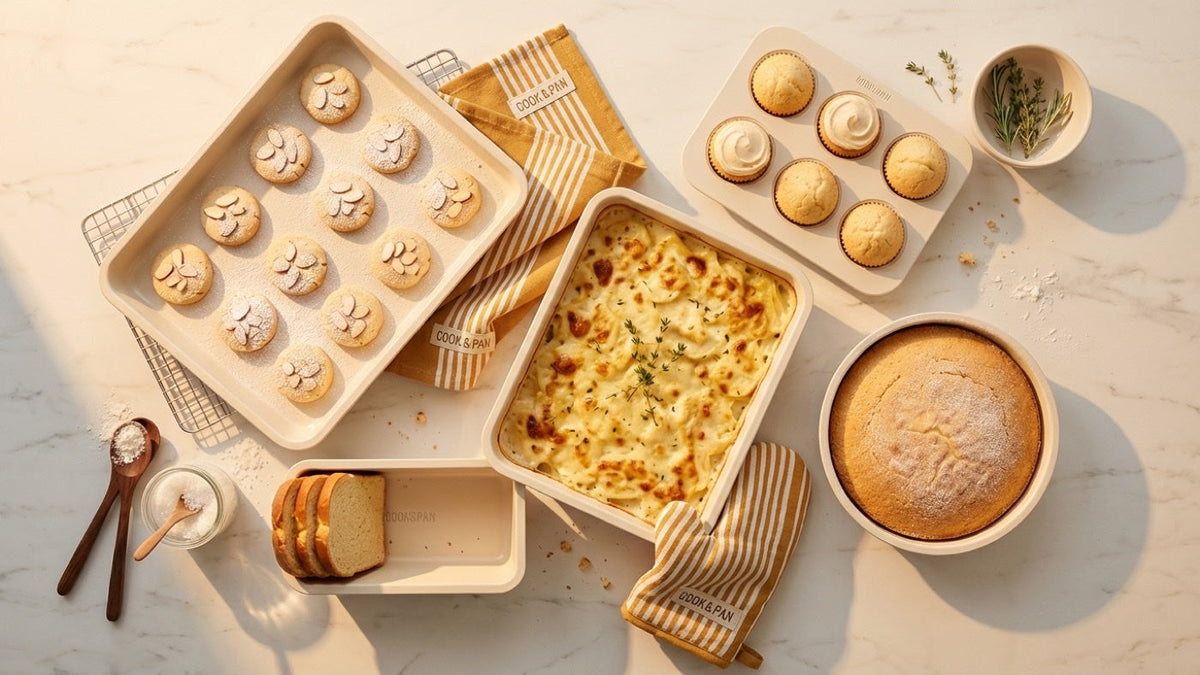
Most baking tins are thin sheet metal. You pick them up and they already flex, and in the oven that translates into uneven heat: the edges are done while the middle is still batter. Our PFAS free baking set from Cook & Pan is therefore made of aluminised steel. Thicker, heavier, and it does not bend away the moment you pour a cake into it.
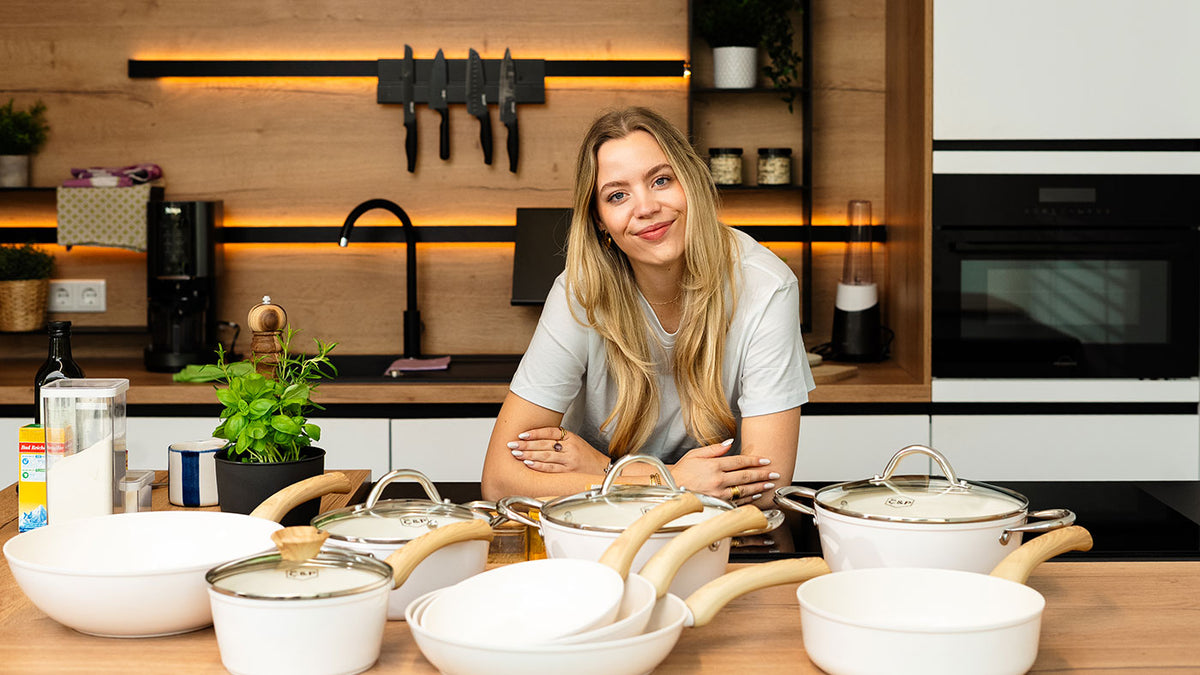
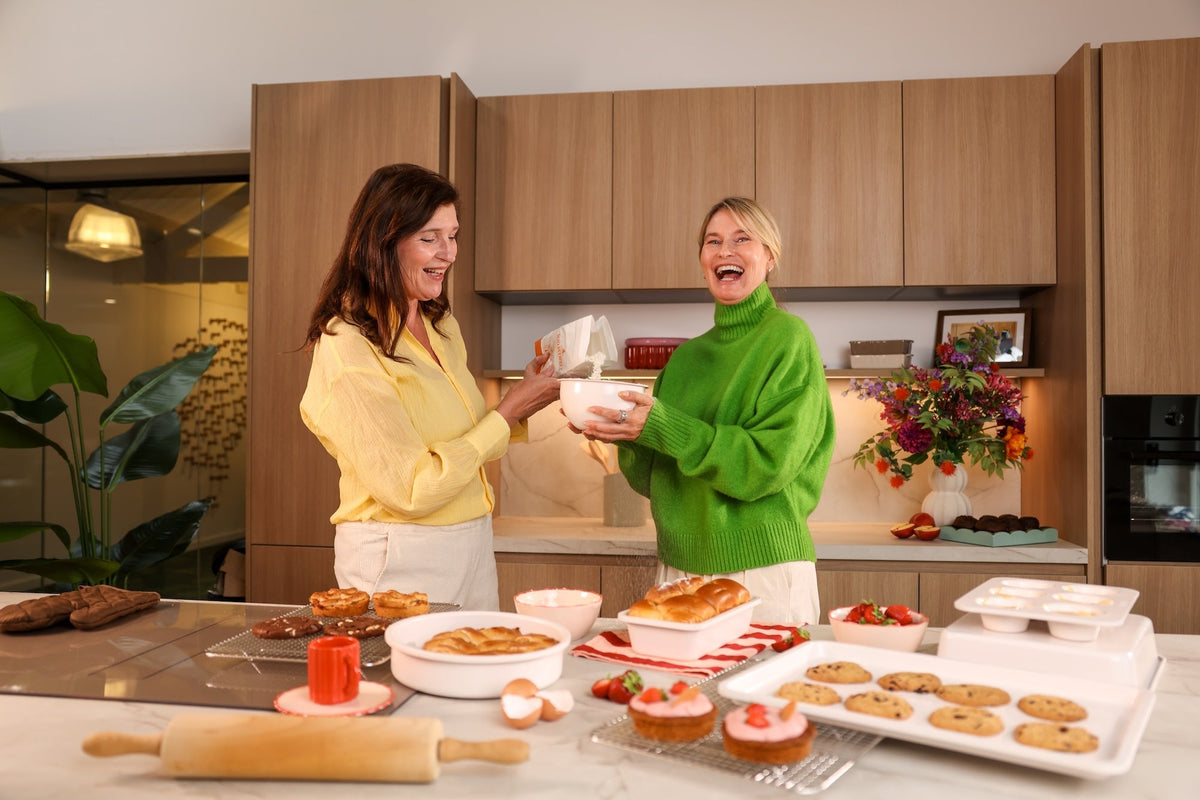
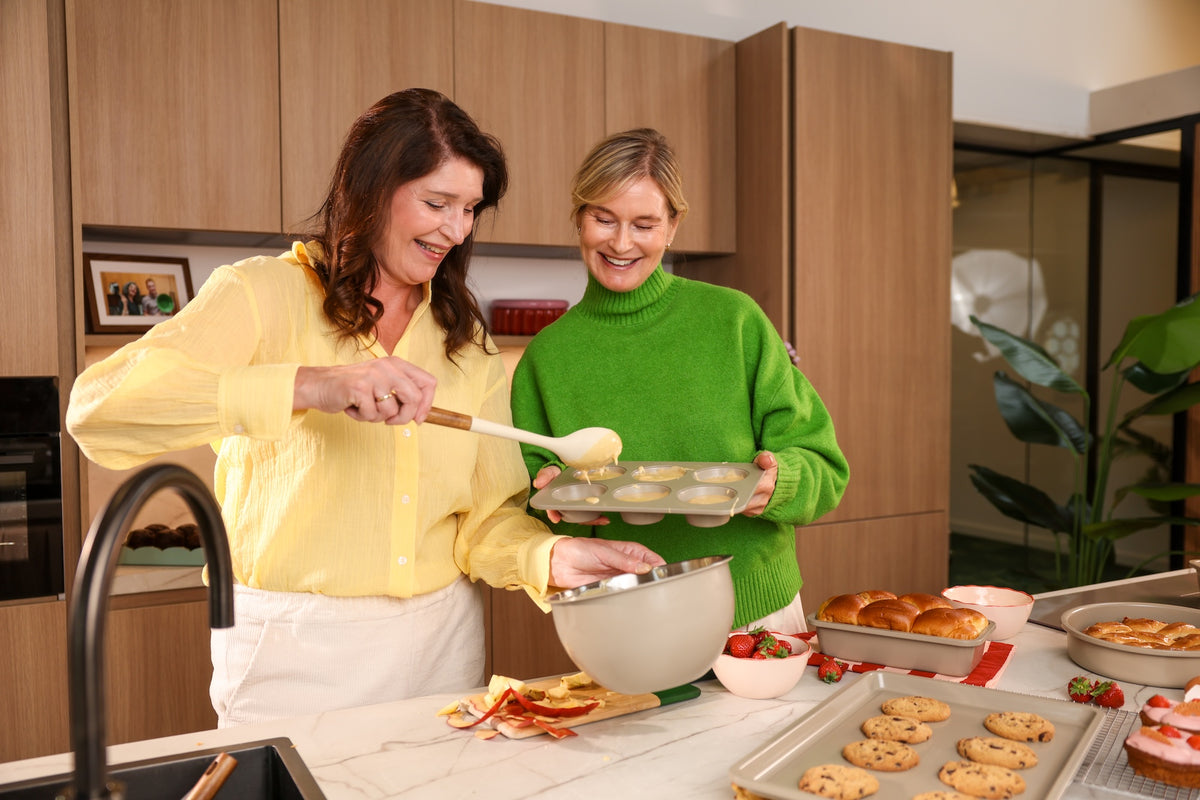
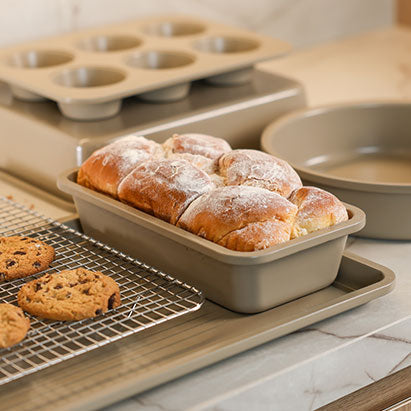
The set holds a round cake tin, a deep oven dish, a baking tray, a loaf tin, a muffin tin with six cups, a stainless steel cooling rack and three felt protectors so everything stacks neatly. In Go Ivory and Taupe of Mind, the same colours as the pans that may already be in your cupboard.
How to swap out your baking cupboard step by step
You do not have to bin everything at once, and it would be a waste anyway. Work from most used to least used:
- Start with the baking tray. You use it most often and it takes the most heat.
- Then the cake tin and the loaf tin, because that is where your bake sits longest.
- Then the muffin tin, where paper cases already remove part of the contact anyway.
- Tins you dig out once a year at Christmas can go last.
- Do not just put old tins in the general waste. Metal belongs with metal, and the recycling centre knows what to do with it.
Frequently asked questions about PFAS in bakeware
Is aluminium harmful in itself?
Aluminium is not the same as PFAS. With aluminised steel your food never touches the metal anyway, because the ceramic coating sits in between.
Are silicone tins the answer then?
They contain no PFAS, that is true. But they bake limply, sit wobbling on your oven shelf and are hard to get properly clean. No PFAS does not automatically mean good baking kit.
How do I know for sure that a brand is PFAS free?
If it does not say so in as many words, assume it is in there. Brands that have sorted it put it on the packaging, on the product page and on the website.
💡 Please note: we love cooking with boldness, but safety always comes first. Read more on our disclaimer page.