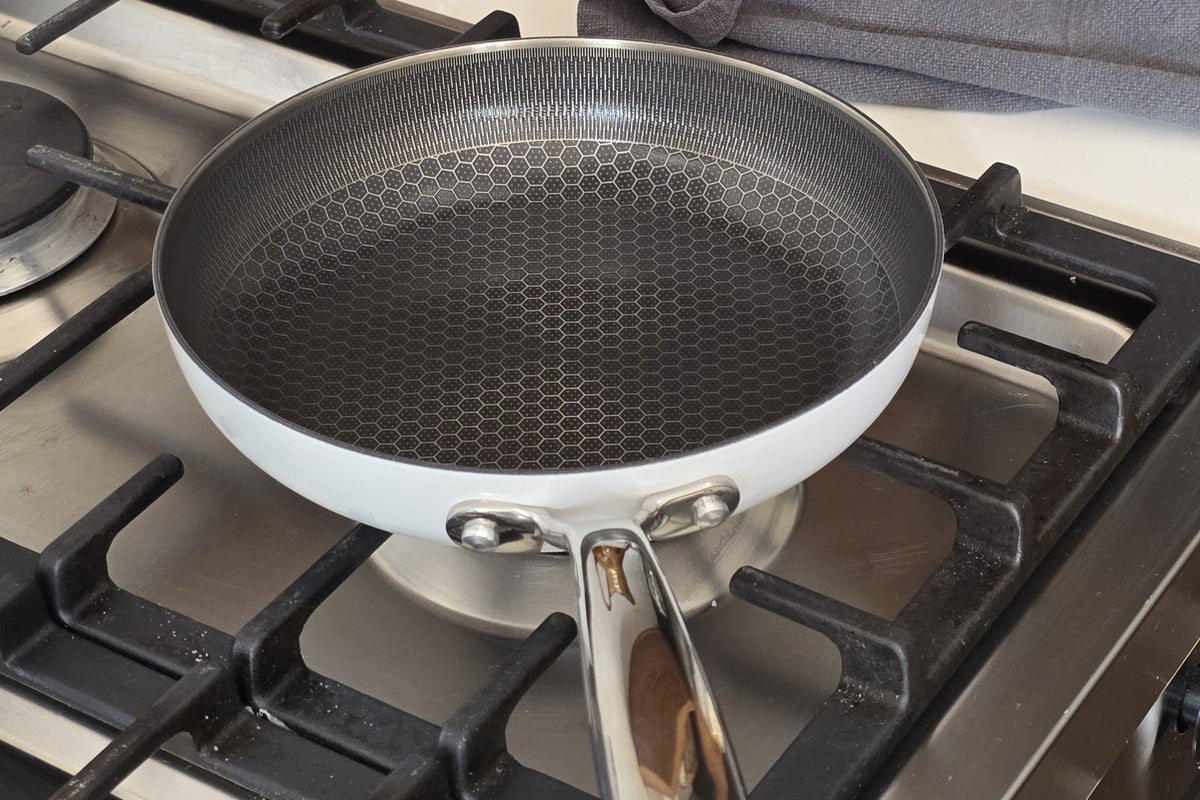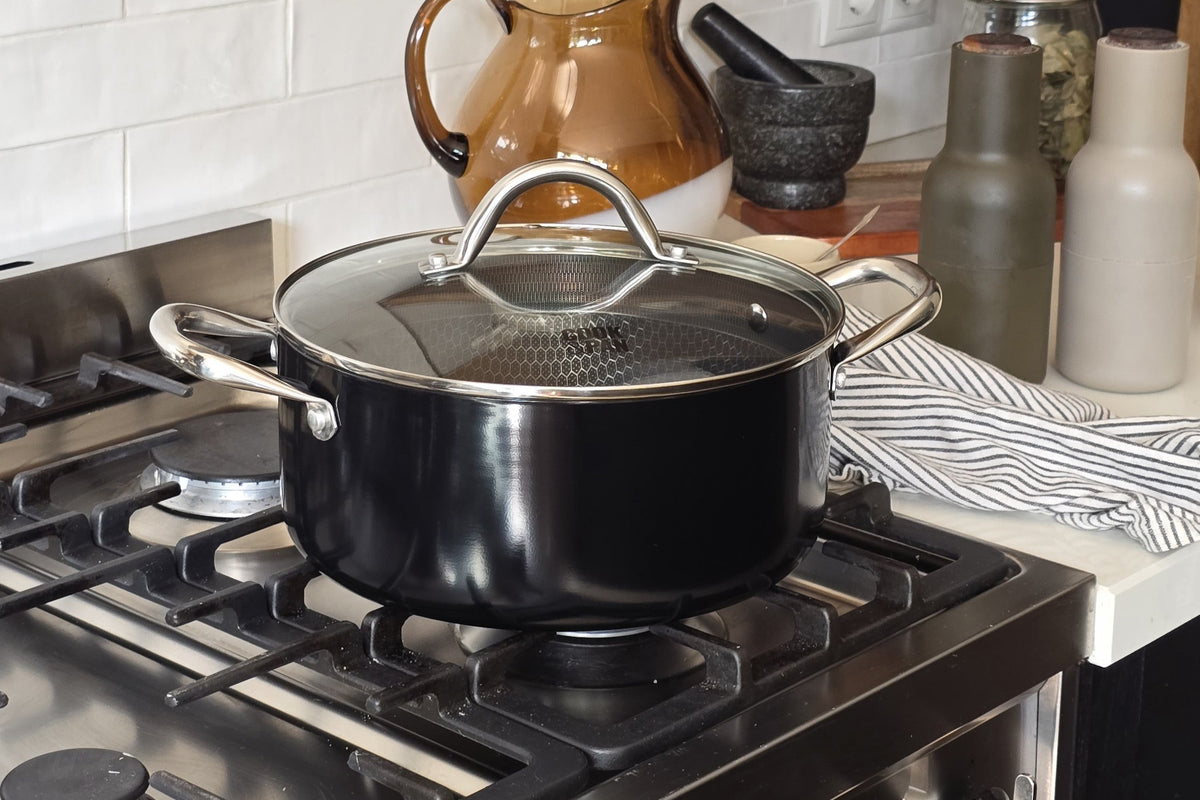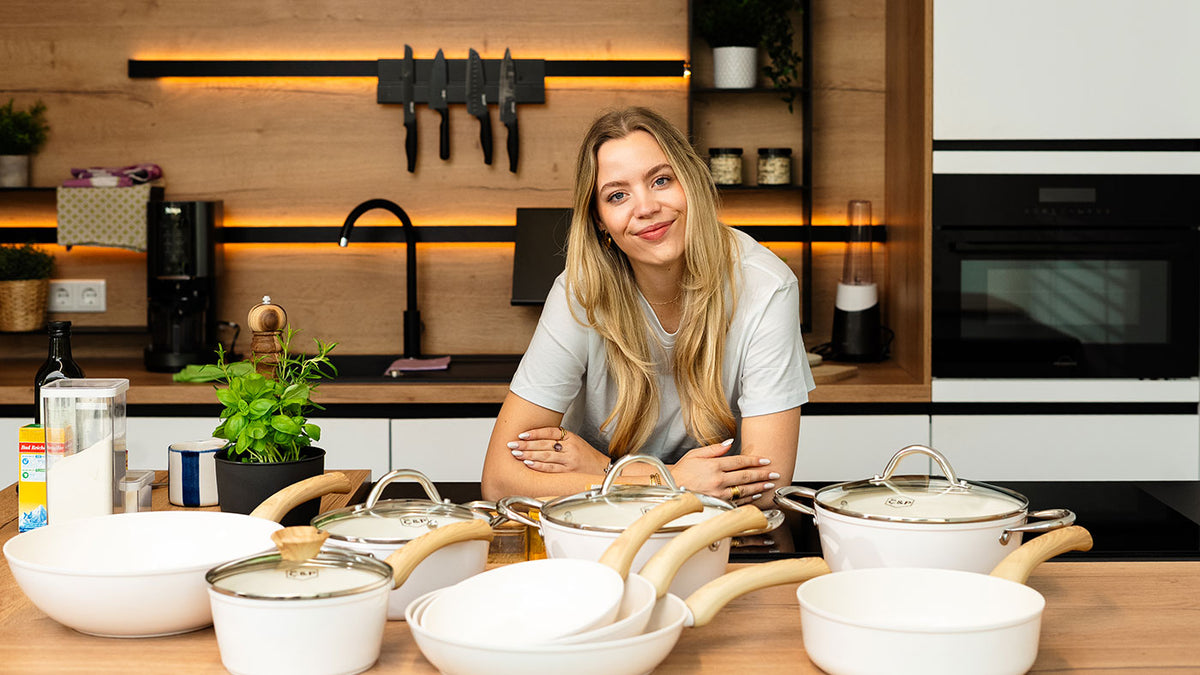



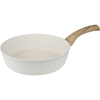

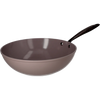


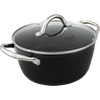



















You're standing at the pan, the egg sticks a little, and you grab the first kitchen tool you find in the drawer. A steel spatula? A quick prise and pop, the egg comes loose. Problem solved, you think. Until a few weeks later you suddenly notice fine scratches in the coating, and your dishes keep sticking more and more often. Welcome to the most underrated silent killer of your pan: metal.
Why metal quietly wrecks your pan
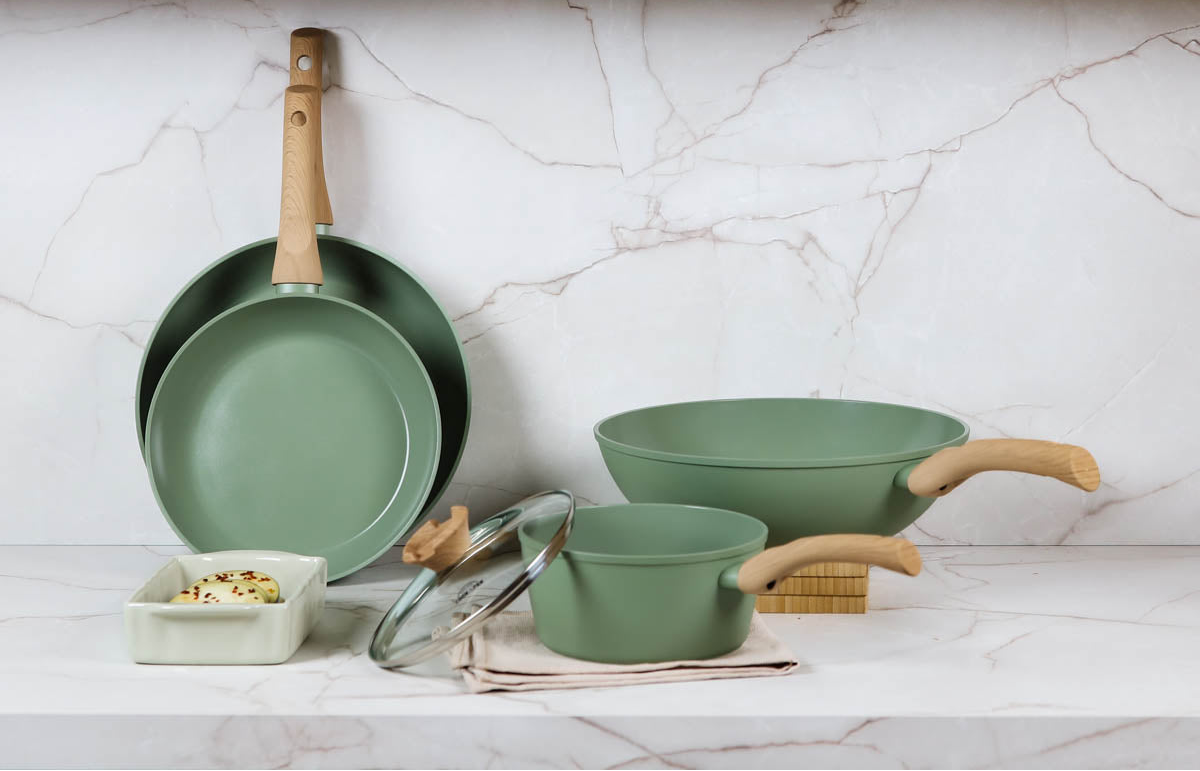
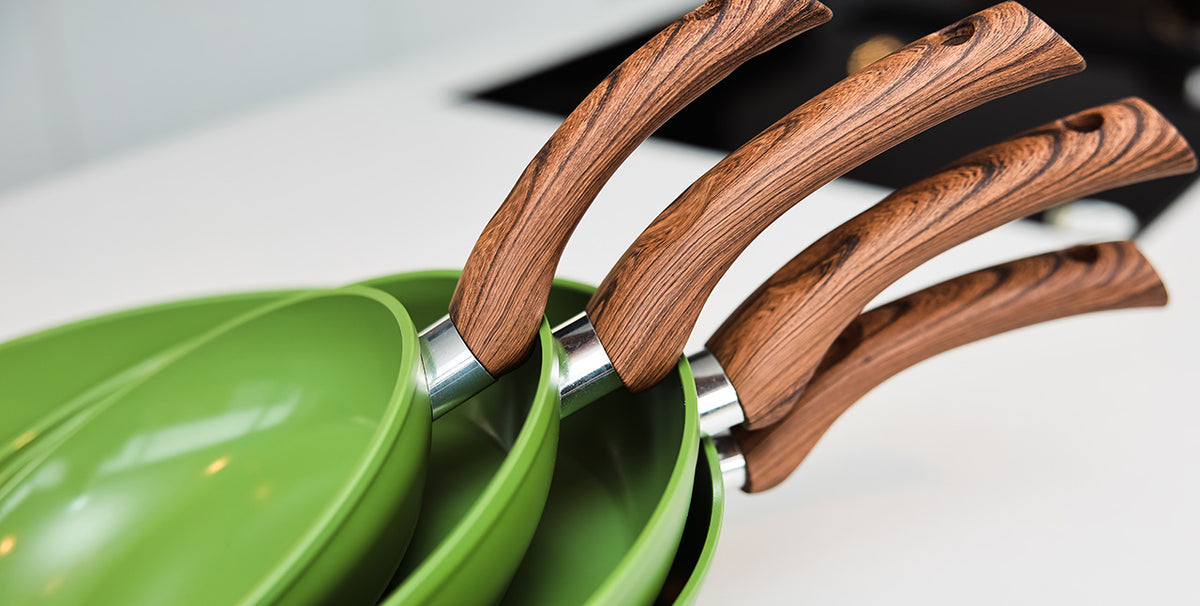
The coating on a pan is a layer that keeps food from sticking. Whether it's ceramic, a PFAS-free layer or an honest aluminium finish: that surface has one big enemy. Sharp, hard metal. One scratch looks innocent, but every scratch is an opening where heat, water and fats settle in. And once the coating is damaged, the rest wears down quickly too.
At Cook & Pan we design pans to last for years, not one season. But even the best coating cannot defend itself against a well-meant jab from a meat fork.
What actually happens with that first scratch
Picture a freshly waxed car bonnet. One firm key scratch, and water creeps in, the surface oxidises, the shine is gone. The same thing happens at micro level inside your pan. A scratch means:
- Loss of the non-stick effect on that spot.
- An uneven heat distribution, so food that suddenly burns in patches.
- Fats and proteins that nest in the groove and bake on there.
- Faster decline of the coating around it.
One scratch is rarely just one scratch. It is the start of a chain reaction.

Which kitchen tools are actually safe
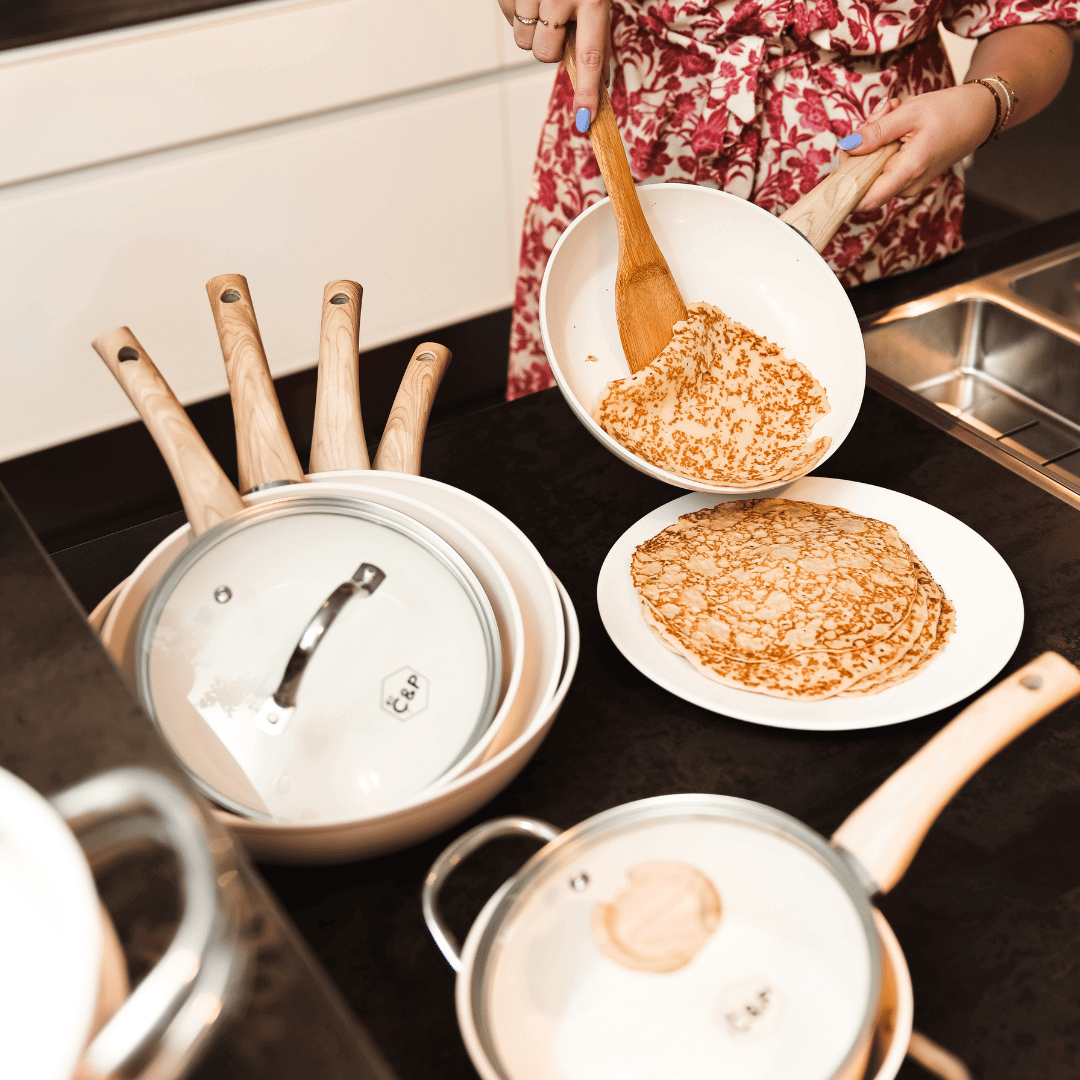
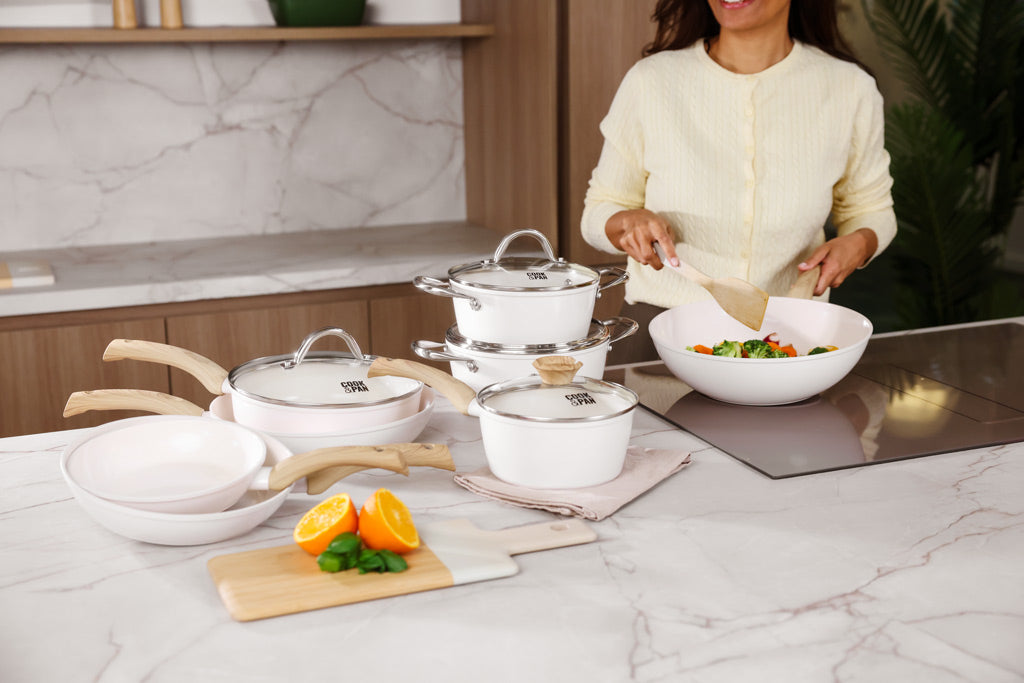
You don't have to cook as if you're standing in a museum. There are plenty of tools that leave the coating alone and still feel solid in your hand:
- Wood: timeless, warm in the hand, totally coating-friendly.
- Silicone: flexible, heat-resistant and gentle.
- Heat-resistant plastic: light, dishwasher-safe, no risk to your pan.
Combine these with the right cooking technique, and your pan stays sharp for years. Have a wander through our kitchen accessories; you'll find spatulas and spoons that pass the test.
The big exception: cast iron can take metal
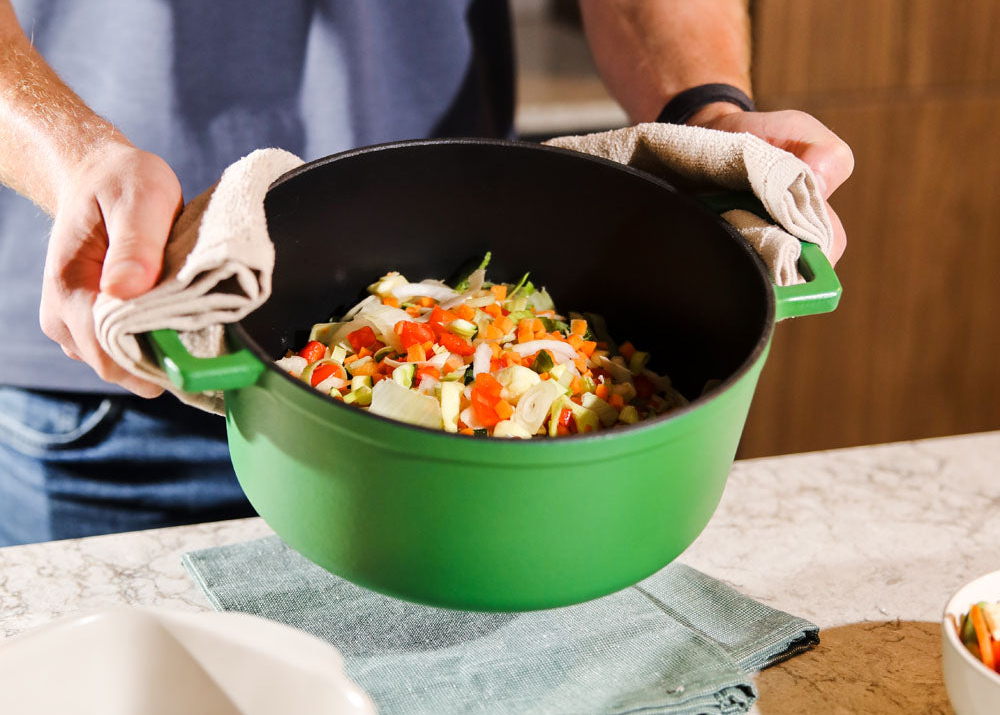
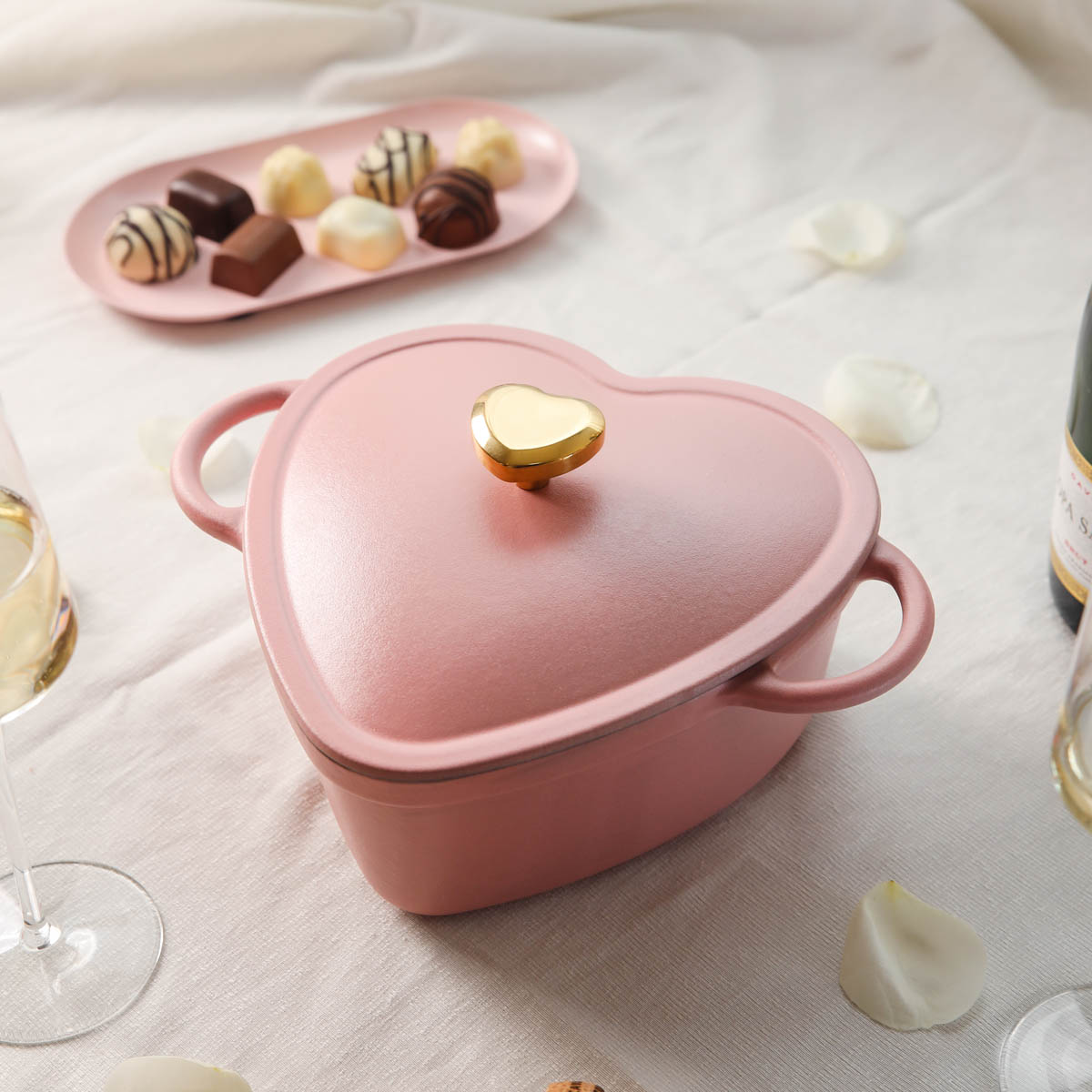
And then comes the plot twist. Because there is one type of pan that doesn't care about a steel spatula at all: cast iron pans. No coating to damage, no fragile layer. Cast iron is rugged, old-school sturdy and asks for a firm hand. A steel turner against your cast iron steak pan? No problem.
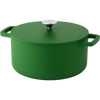
That is exactly why cast iron dutch ovens are so loved by people who want to sear meat at really high heat. No worries about scratches, just searing power.
But beware: cast iron has its own rules
The freedom around metal comes at a price. Cast iron wants to be preheated gently, on a low setting, for two to three minutes. A hot pan under the cold tap? You're inviting thermal shock, and that is a well-known cause of damage. What else cast iron expects:
- Maximum 70 to 80% power on induction. The boost function stays off.
- Hand wash with warm water and a soft brush, no dishwasher.
- Rub the bare rim with a touch of plant oil now and then to prevent flash rust.
- Store separately or with a pan protector in between, so the enamel isn't damaged.
Scratches from the dishwasher? That's another story
Not every scratch comes from a spatula. The dishwasher is surprisingly aggressive on your pans. Especially the eco programme, because less water means more concentrated detergent. Combine that with all-in-one tablets and you get a chemical cocktail that will dull, stain and eventually make porous even the best coating. At Cook & Pan, hand washing is always the better choice, however inviting that hatch may look.
Want to know more about how to keep your pans neat through the years? How do you store pans without scratches or damage? is full of practical tips.
What coatings actually do, and why they deserve protection
A good non-stick layer isn't magic, it's smart applied materials science. Ceramic pans have a mineral coating that finishes super smooth and releases no harmful substances. A PFAS-free coating means you can fry without worrying about chemicals leaching into your food. Both demand respect for the surface, and that starts with no metal.
Want to dive deeper? Read the difference between ceramic and teflon coatings, it gives you a much sharper picture.
The link between scratches and lifespan
A pan without scratches can last for years. Ceramic coatings come with a two-year warranty on performance from us, and cast iron even gets twenty-five years on manufacturing and material defects. But those terms assume normal household use, and that means: no steel utensils on coated pans, no dishwasher marathons, no empty pan on the highest setting.
It isn't fine print, it's simply how materials behave. Curious when a pan should be replaced? Check out how often you really need to replace your pan; it's less often than you think.
Coating damaged? What now?
Honestly: a damaged coating cannot be repaired. But you don't have to bin everything straight away. A light scratch needn't be a disaster, as long as the pan still functions and you keep using it carefully. What you really don't want:
- Carrying on with sharp metal, because that makes the damage worse.
- Using abrasive cleaners or a scouring sponge.
- Putting the pan on extremely high heat, because hot spots accelerate wear.
With heavy flaking or large scratches it's time for a new pan. Choose deliberately then, for instance an aluminium frying pan with a strong coating, or stainless steel if you want no coating at all.
Myth: new coatings are scratch-proof
Some brands love to claim their coating is "metal-safe". In practice, that often disappoints. No coating is fully immune to steel objects. A manufacturer might say its pan "can take a knock", but every scratch is still a scratch. At Cook & Pan, we'd rather be honest: don't use metal on your coated pan and it will last longer. Full stop.
Have a look at four myths about ceramic pans debunked, then you know what's marketing chatter and what's true.
Choosing the right pan starts with knowing how you cook
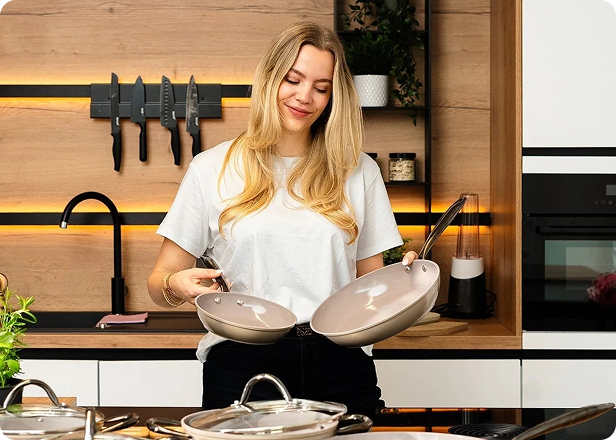
Not everyone cooks the same. Are you someone who likes to sear at high heat? Then cast iron is the logical choice, because there you can go in with metal without worry. Mostly cooking eggs, fish and pancakes? Then a pan with a good coating fits better, as long as you stick to the wood-or-silicone principle. Want no coating at all? Stainless steel pans are your answer, because they handle anything and are practically indestructible. A PFAS-free pan is in turn ideal for anyone who wants to cook consciously without worry.
Five habits that make your pan last years longer
- Always heat gradually, never an empty pan on the highest setting.
- Use wood, silicone or heat-resistant plastic, except on cast iron.
- Wash by hand with warm water and mild detergent.
- Always let a hot pan cool before rinsing it.
- Store your pans with protectors in between, not just stacked.
Five simple rules, but together they save you years of replacements. And your wallet thanks you.
Cook consciously, enjoy longer
A pan is not a throwaway item, and never has to become one. With a little attention and the right tool, Cook & Pan pans stay beautiful and functional for years. Whether you choose the rugged freedom of cast iron or the smooth elegance of a coated pan: knowing why you shouldn't use metal is the first step toward a kitchen that grows with your life.
So next time you reach for that steel spatula, spare a thought for your pan. It's thinking about you.
💡 Please note: we love cooking with boldness, but safety always comes first. Read more on our disclaimer page.