



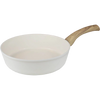

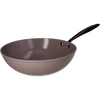

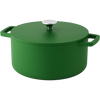

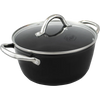


















Cooking isn't just a way to fill your stomach. It's also a chance to get creative in the kitchen. And for that, you need the right tools. One of the biggest choices with a new pan is the coating. Two names come up again and again: ceramic and Teflon. Both stop your egg from sticking to the bottom. But that's pretty much where the similarities end. Below you'll find what the difference is, what to look out for and why Cook & Pan wholeheartedly chooses ceramic.
Ceramic or Teflon: the short answer
No time? Here's the summary. Teflon is a plastic coating (PTFE) that's super slippery, but can't handle high heat and belongs to the PFAS family. A ceramic coating is a mineral layer without PTFE or PFAS, and it doesn't give off harmful fumes when overheated. Teflon is often a bit cheaper. Ceramic needs a little more love in daily use, but you get peace of mind in return. Want to know why? Just keep reading.
What exactly is Teflon?
Teflon is actually a brand name, like Hoover for vacuum cleaners. The material is called PTFE, short for polytetrafluoroethylene. It's a plastic known for its super low friction. That's why food slides off effortlessly and the pan is quick to clean. No wonder PTFE was the standard in non-stick pans for decades. Even pans that don't literally say "Teflon" often have a PTFE coating. See "PTFE", "fluoropolymer" or just "PFOA-free" in the description? Then you're most likely dealing with a Teflon coating.
What is a ceramic coating?
A ceramic non-stick coating is a so-called sol-gel coating. That's a liquid mixture based on silica (think sand and glass) that's sprayed onto the pan and then cured in an oven into a smooth, hard layer. No PTFE, PFOA or other PFAS are involved. Good to know: a ceramic pan isn't a pan made of pottery. Our pans are made of aluminium or stainless steel, with a ceramic layer on top. Want to know exactly what's in it? Read what's in the ceramic non-stick coating from Cook & Pan.
The difference between ceramic and Teflon coatings at a glance
Put them side by side and this is what you see:
- Material: Teflon is a plastic (PTFE). Ceramic is a mineral layer based on silica.
- PFAS: PTFE is itself a fluoropolymer and belongs to the broad PFAS family. A ceramic coating contains no PFAS.
- Heat: Teflon starts to break down and release fumes above 260 °C. Ceramic doesn't give off toxic fumes when overheated.
- Non-stick: Teflon is slightly more slippery at first. Ceramic cooks perfectly well with a little oil or butter.
- Use: both prefer wooden or silicone utensils and a gentle wash. Ceramic works best on low to medium heat.
- Price: Teflon pans are often cheaper. A good ceramic pan costs a bit more, but you know exactly what you're bringing home.
Is Teflon harmful?
In normal use on low or medium heat, an intact Teflon coating stays stable. The risk lies in two situations. The first is overheating. If a Teflon pan gets hotter than around 260 °C, the coating starts to break down and releases fumes you'd rather not have in your kitchen. Those fumes can cause flu-like symptoms, also known as polymer fume fever. And an empty pan on high heat passes that limit faster than you'd think. The second is damage. With scratches or a flaking coating, tiny particles can end up in your food. Not exactly the secret ingredient you were after. For more background, read why we choose a Teflon-free kitchen.
Teflon, PFOA and PFAS: how does it all fit together?
This is where things often get muddled, so let's line it up. PFOA is a substance that used to be used in making Teflon. It has been banned in the EU since 2020. That's why many pans proudly say "PFOA-free". Sounds good, but the pan can still have a PTFE coating. And PTFE is itself a PFAS too: a substance from the group known as forever chemicals, which barely break down in the environment. During the production and processing of PTFE, PFAS can end up in the environment. Really want to avoid them? Then don't look for "PFOA-free", look for "PFAS-free". Everything about this group of substances is in what PFAS is and how to spot pans without PFAS.
Is a ceramic pan really PFAS-free?
Fair question, because "ceramic" on the box is no guarantee. In factories where PFAS coatings and ceramic coatings run on the same line, residue can carry over. That's why our pans are made on a separate coating line, used only for ceramic. And we have them tested independently. The lab Light Labs looked for 30 different PFAS substances, including PFOA and PFOS, and didn't find a single one. You'll find the lab results on our product pages. The full story is in is a ceramic pan PFAS-free.
How hot can a ceramic pan get?
Ceramic can take a fair bit when it comes to heat. If the pan gets too hot once in a while, it won't release toxic fumes like Teflon does. That doesn't mean you should crank it up to the highest setting, though. Ceramic conducts heat very efficiently, so a medium setting is almost always enough, even for a lovely golden crust. On induction, use a maximum of 80% of the power and never the boost function. Always heat your pan up gradually, and never empty on the highest setting. That way the coating stays smooth for longer.

Which coating is easiest to cook with?
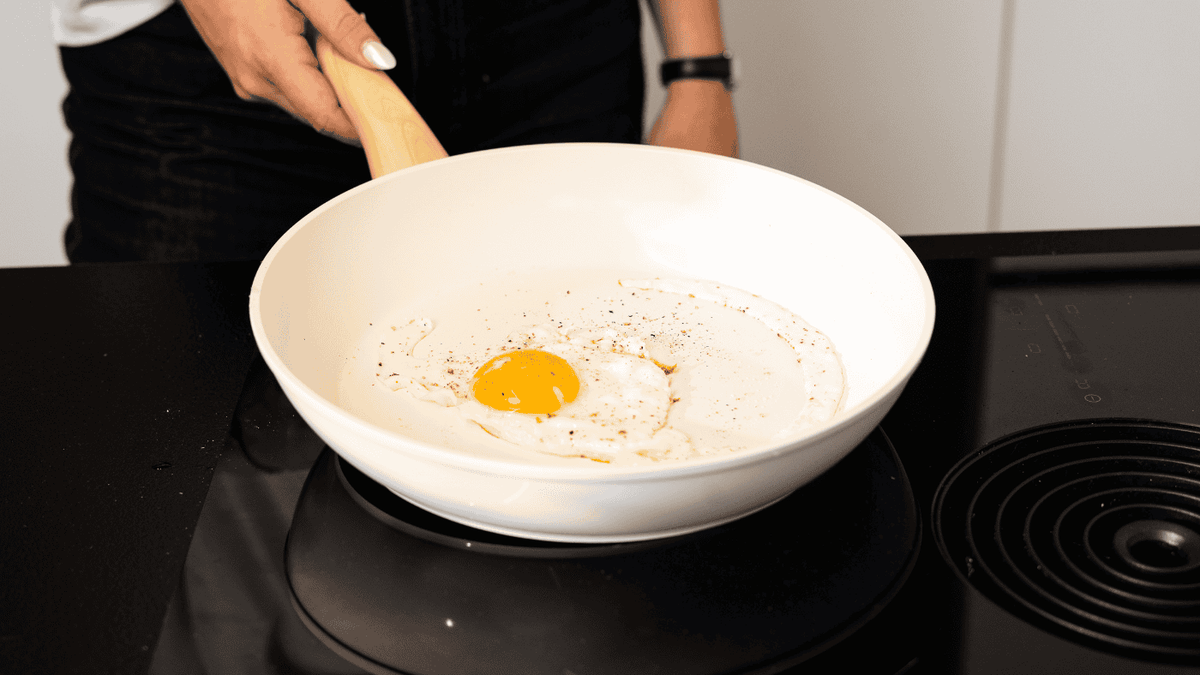
Let's be honest: a brand-new Teflon pan is as smooth as glass. An egg practically slides out on its own. A ceramic coating isn't far behind, especially with a knob of butter or a splash of oil with a high smoke point. The real difference is in the care. A ceramic coating doesn't like cooking sprays (they leave a sticky film) or extra virgin olive oil on high heat. Skip those and your pan stays smooth for much longer. Curious what's true about all the stories on ceramic? Read the myths about ceramic pans busted.
How long does a coating last?
Every non-stick coating wears over time. That's true for Teflon and for ceramic. How fast that happens depends mostly on how you treat it: heat, utensils and washing up make the biggest difference. We give a 2-year warranty on the performance of our ceramic non-stick coating and 7 years on manufacturing and material defects of the pan itself. A worn, damaged Teflon pan is best thrown away, because scratches in PTFE are something you don't want in your food. A ceramic coating contains no PTFE, so that worry simply doesn't apply.
How to keep a ceramic pan smooth for longer
With these habits, you'll get the most out of your ceramic pan:
- Heat the pan gently on a low to medium setting.
- Use an oil with a high smoke point, such as groundnut oil, rice bran oil or a mild olive oil. Or just butter.
- Choose wooden, silicone or heat-resistant plastic utensils. No metal and no sharp edges.
- Let the pan cool down before adding water. A hot pan under the cold tap gets a thermal shock.
- Wash by hand with a soft sponge and a little washing-up liquid, and dry straight away.
- Stacking your pans? Put a pan protector in between.
More tips in how to clean ceramic pans.
How do you recognise a pan with Teflon?
The packaging doesn't always say "Teflon" in big letters. Look out for these words: PTFE, fluoropolymer, or just "PFOA-free" without "PFAS-free" next to it. Not sure? Simply ask the manufacturer what the coating is made of. A brand with nothing to hide will happily tell you.
Why we leave Teflon on the shelf
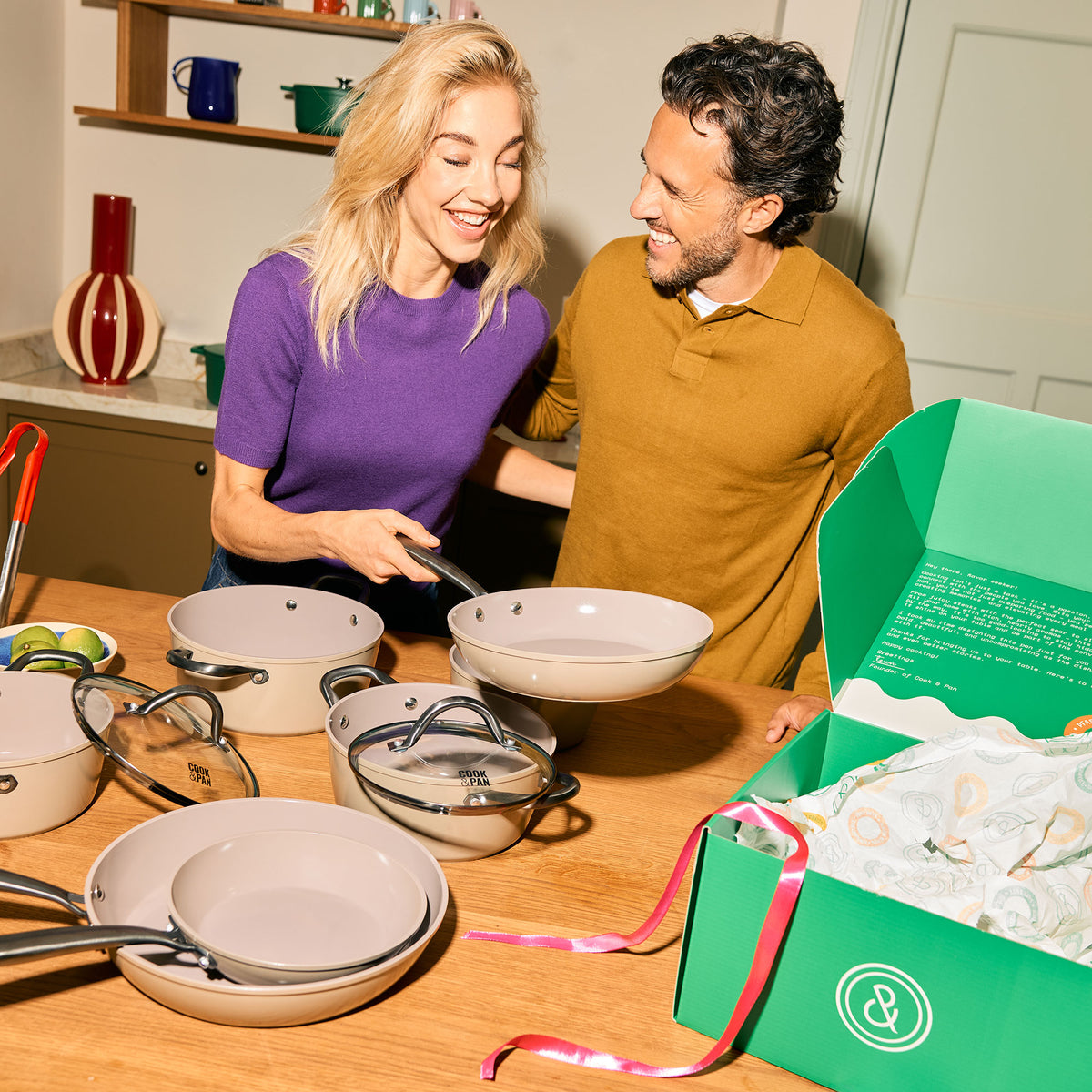
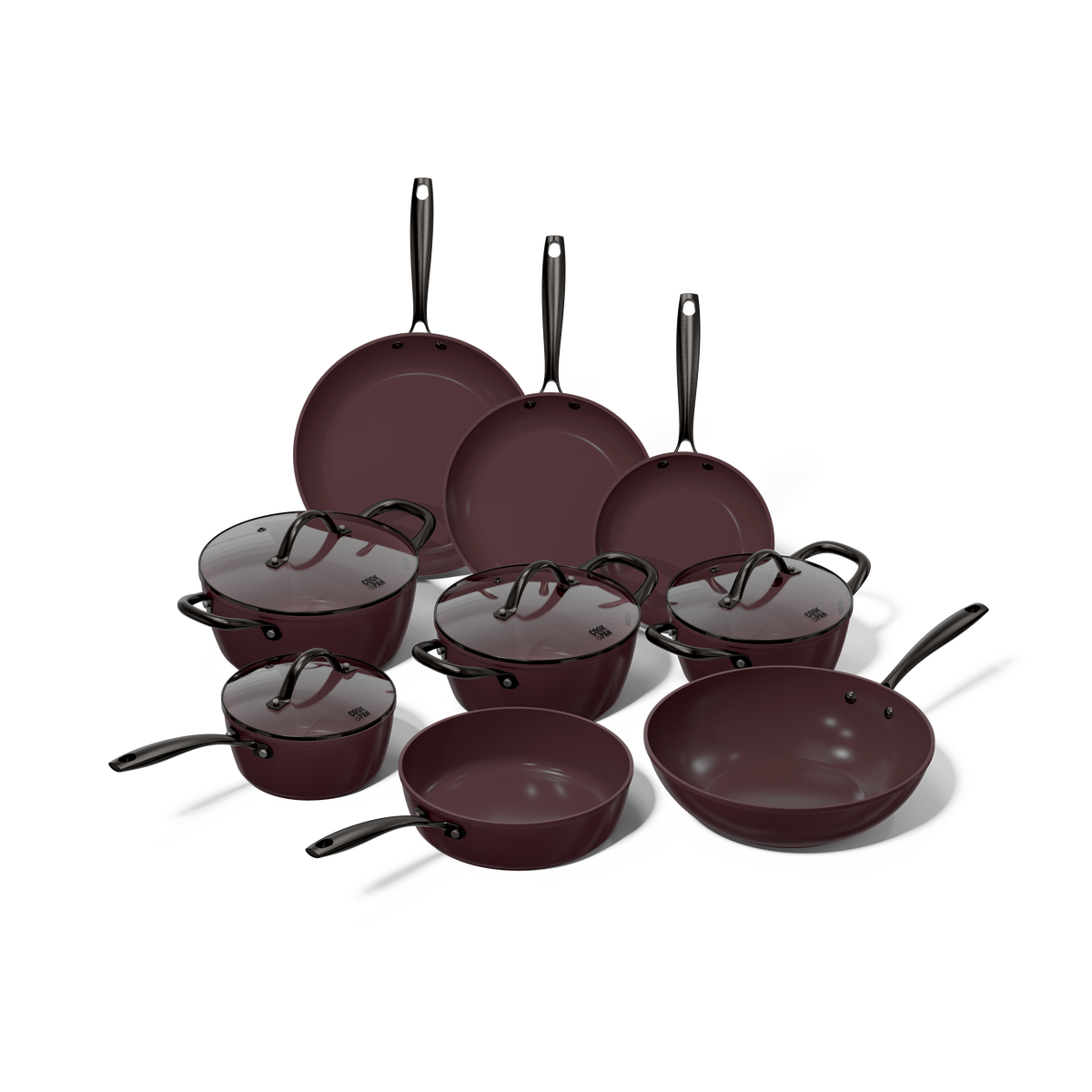
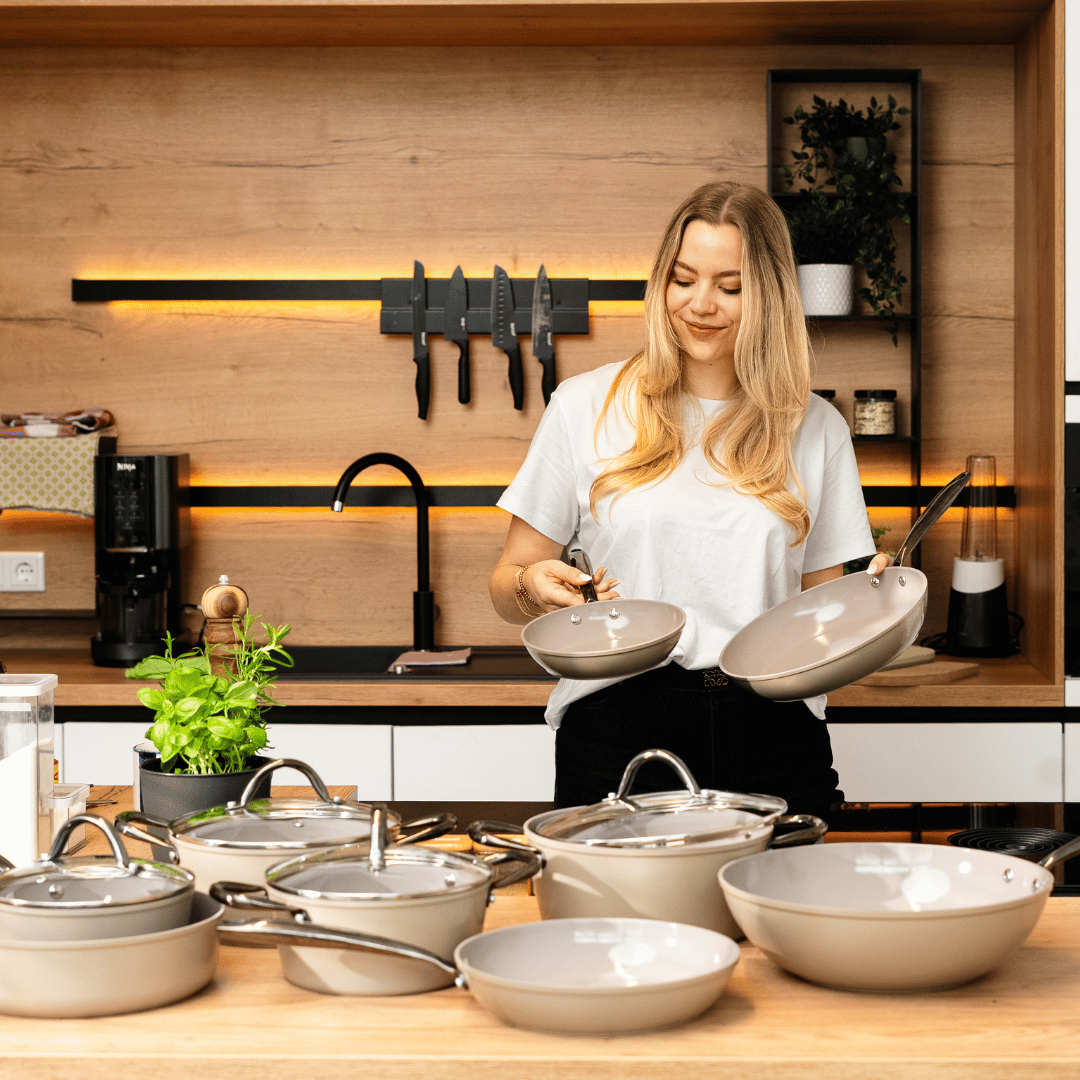
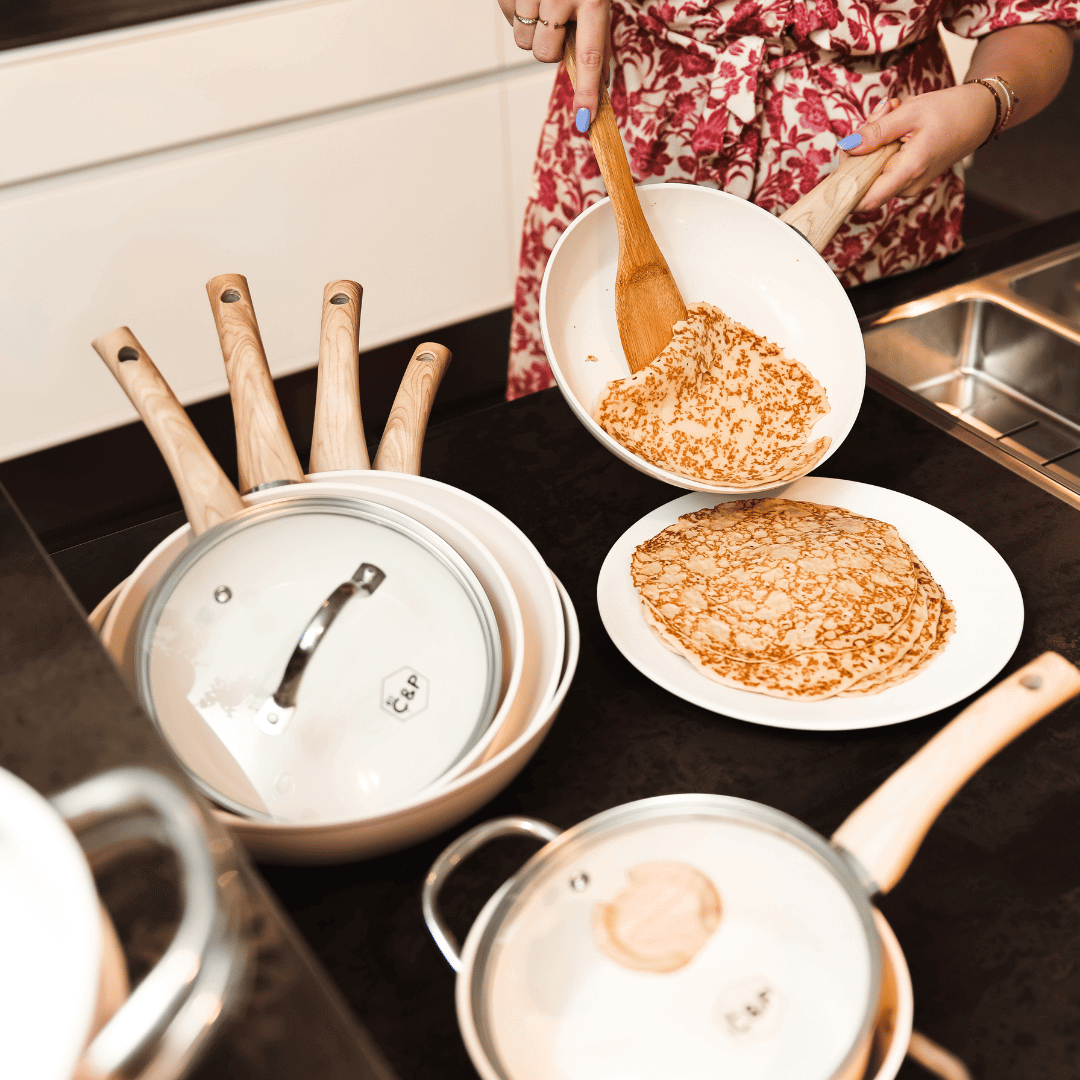
We like to keep things clear and honest. Teflon may be convenient, but it comes with risks you can't ignore: fumes when overheated, particles when damaged and PFAS in production and waste. For us, that's reason enough to say: no, thanks. That's why all our ceramic pans have a PFAS-free coating. Whether you're after a ceramic frying pan for your Sunday pancakes or a complete set, you know exactly what you're cooking with.
Rather go without a non-stick coating?
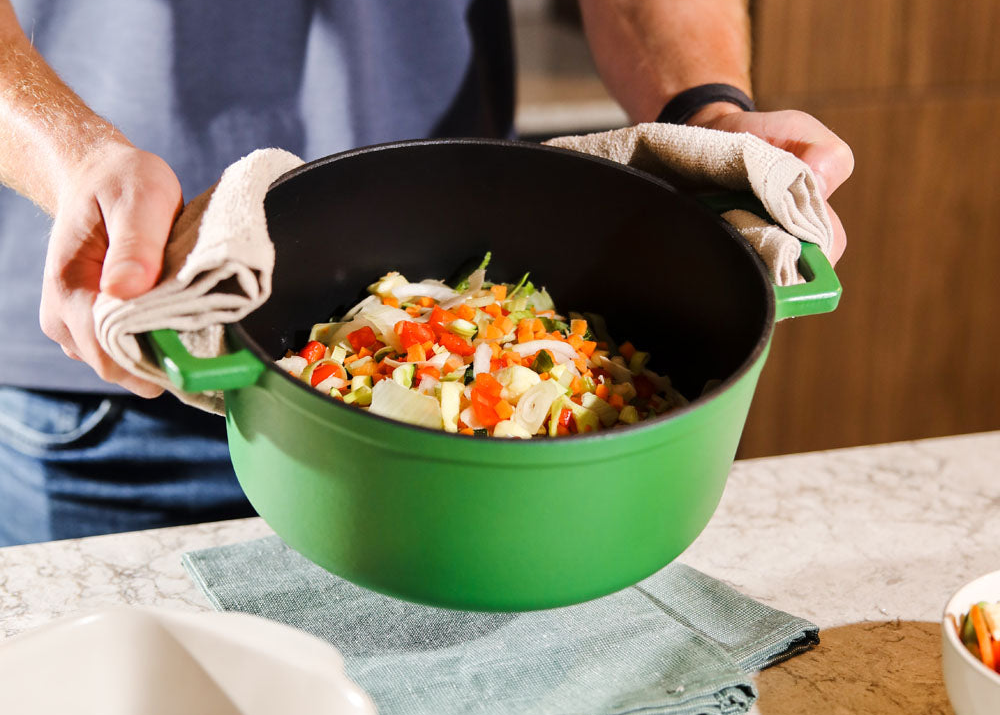
That works too. Not every pan needs a non-stick coating. Our enamelled cast iron dutch ovens have no ceramic coating and are free from PFAS and PTFE. Perfect for stews and roasts, with a 25-year warranty. That settles the Teflon question for good.
All our pans without PFAS are in our PFAS-free pans collection.
Frequently asked questions about ceramic and Teflon
Which is better, a ceramic pan or a Teflon pan?
For healthy, worry-free cooking, go for ceramic: no PTFE, no PFAS and no toxic fumes when overheated. Teflon is often cheaper and slightly more slippery at first.
Is PTFE the same as Teflon?
Yes. Teflon is the best-known brand name for PTFE. So a pan with a "PTFE coating" simply has a Teflon coating.
Is a PFOA-free pan also PFAS-free?
No. PFOA is just one substance in the PFAS group. A PFOA-free pan can still have a PTFE coating, and PTFE is itself a PFAS.
Can a ceramic pan go in the dishwasher?
Washing by hand is always best. If you do use the dishwasher, skip the eco programme and harsh tablets, and dry the pan straight away.
Does a ceramic pan work on induction?
Yes, as long as it has a magnetic base. All our aluminium pans have a stainless steel plate under the base, so they work on induction. Use a maximum of 80% of the power and no boost.
Which coating suits you?
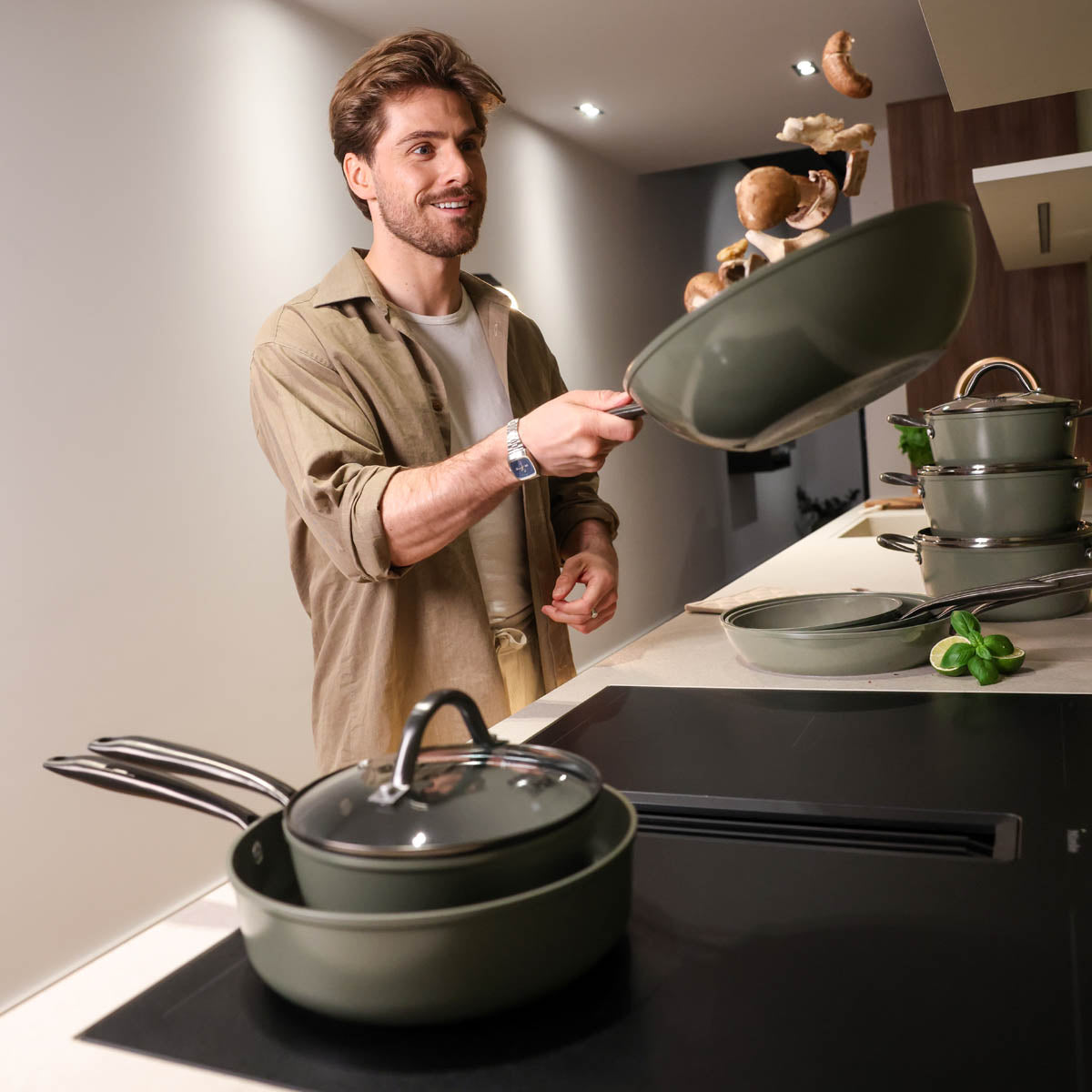
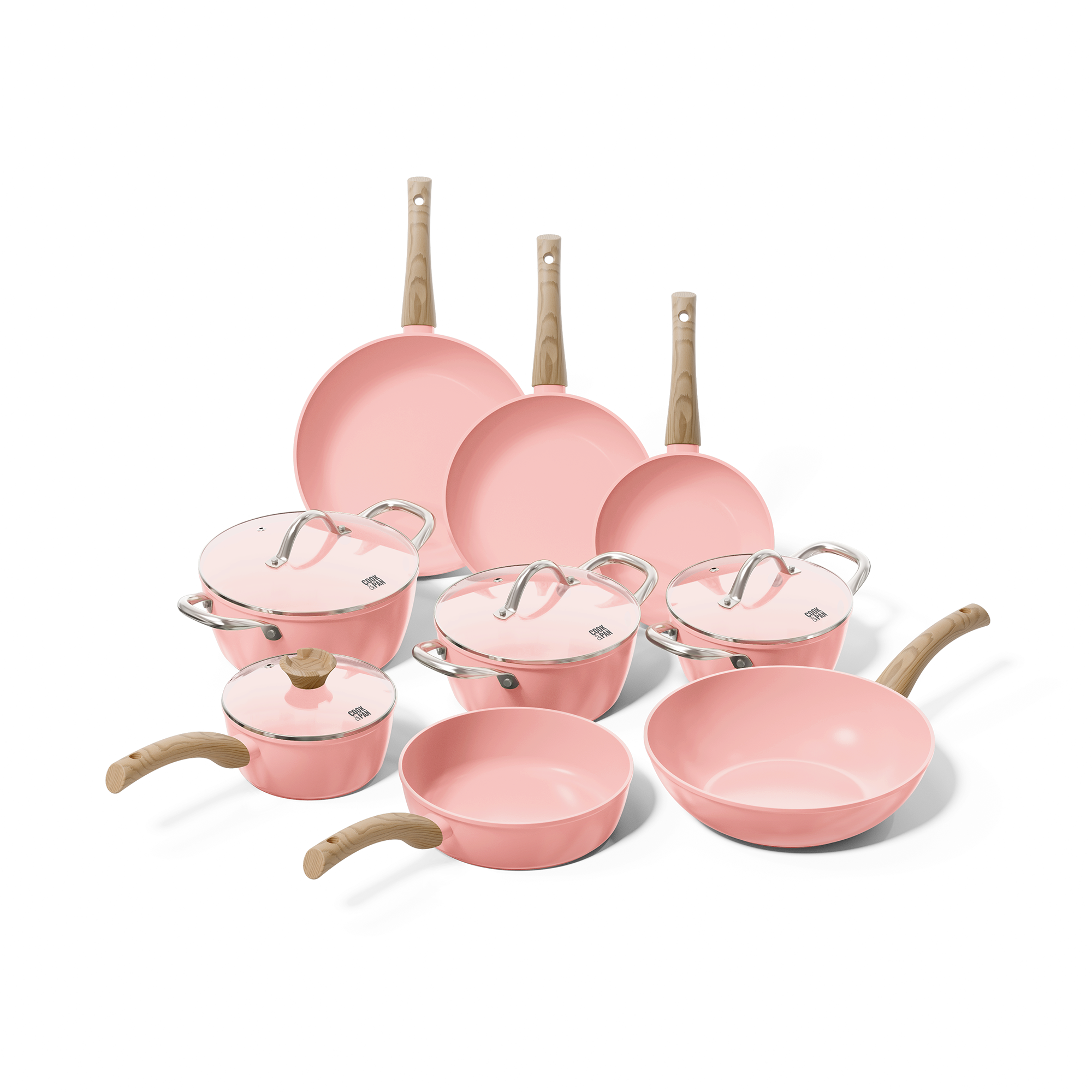
If quick convenience is your thing, Teflon might seem tempting. But if, like us, you choose control, comfort and peace of mind with every meal, ceramic is the way to go. And you don't have to choose between responsible and irresistible. With the pans from Cook & Pan you get both. The eye wants its share too: our colourful collection turns your kitchen into a party before the first bite. Still not sure? With a 60-day trial, you can simply test it at home.
Teflon? Not our thing.
Ceramic? Totally our thing.
💡 Please note: we love cooking with boldness, but safety always comes first. Read more on our disclaimer page.