

























Your old frying pan has been sitting on the worktop for weeks, with curling coating and a base that no longer rests properly flat anywhere. Tempting to chuck it straight into the bin and be done with it. But that is precisely where a pan like this does not belong. A frying pan is mostly metal, and metal can be recycled almost endlessly. On top of that, older non-stick pans often contain chemicals you would rather not leave behind in an incinerator. Time to give your pan a proper final chapter.
Why your old pan absolutely should not go in with the household waste
Household waste in most of Europe ends up at the incinerator. Energy is recovered, that is true, but the metals in your pan can then only be saved through an expensive sorting step (and very often they simply disappear into the slag). Aluminium, steel and cast iron are exactly the materials that can be melted down again without any loss in quality. Every pan you drop off correctly saves new raw materials being mined.
On top of that: does your old pan still have a traditional PFAS coating? Then burning it really is not a great idea. At high temperatures these substances can be released, with all the discussions about the environment and health that come with it. Reason enough to dispose of it properly. And to choose your next pan PFAS-free, like our PFAS-free pans.
First check: is your pan actually really finished?
Before you write it off, take a critical look. Some „worn out“ pans still have a second life in them. Others really are done.
- Light scratches and a bit of discolouration: usually still perfectly fine to keep cooking with, especially for calmer tasks like steaming vegetables or warming a sauce.
- Coating flaking off in flakes or pieces coming loose: stop using it for food, this really is the end.
- Base so warped it wobbles on a flat hob: heat distribution is gone, time to replace.
- Handle loose or cracked: bin it, safety risk.
- Rust spots in the pan itself with cast iron or steel: often still rescuable with a scouring pad and re-seasoning.
Wondering how long a pan should actually last? In our article on how often you really need to replace your pan we lay out the lifespan per type. Spoiler: it is often much longer than you think.

Option 1: the recycling centre or the metal container
The most obvious route. Almost every council in the UK and Ireland has a household waste recycling centre where you can drop off metals for free. Your pan joins a separate pile, gets compacted and is eventually melted into new blocks of aluminium or steel. Not a romantic ending, but a useful one.
Tips to make it run smoothly:
- Give the pan a rough clean, so it does not smell or leak grease in the car.
- Remove wooden or plastic handles if it is easy. Not required, just saves sorting work.
- Ask at the desk whether your pan goes in „small metal“ or in a specific container.
- Combine the visit with other errands, then it feels less like a detour.
Option 2: pass it on to someone who can still use it
A pan that is worn out for you is sometimes exactly right for someone else. Students in their first room, a neighbour looking for a pan for the garage or camping, a charity shop selling kitchenware: there is always a taker.
Places to give your pan a second life:
- Gumtree or Facebook Marketplace, even as a free listing.
- Charity shops (give them a quick call, not every shop accepts non-stick pans).
- Local groups on WhatsApp or Nextdoor.
- A repair café, scout group or food bank nearby.
- Just ask in your circle of friends, often someone has just moved or just started out.
Important condition: only do this if the pan is still safe to use. A pan with flaking coating you do not pass on, that one really belongs in the metal container.
Option 3: reuse in your own home (creative and practical)
Sometimes a pan does not need to leave the house at all. With a bit of imagination it becomes a handy helper somewhere else.
- Plant pot for the shed or balcony, with a few holes in the bottom.
- Feeder or water bowl for birds in the garden.
- Storage tray for screws, nails or garden tools.
- Cast iron pans you can keep using almost indefinitely for barbecue duties, even if they no longer look fresh inside.
- Decorative piece in the kitchen, hung on the wall as a nod to your old loyal companion.
What suits each pan type when it comes to disposal
Not every pan is built the same, so not every pan is welcome everywhere. A rough overview:
- Aluminium frying pan with PFAS coating: recycling centre or metal container, do not burn in the garden or in wood stoves.
- Aluminium pan without coating or with ceramic coating: recycling centre, perfectly recyclable.
- Stainless steel: with scrap metal, almost endlessly reusable.
- Cast iron: incredibly long lasting, so when in doubt try restoring first instead of disposing.
- Glass lids: in glass recycling, not in paper or general waste.
Take-back schemes at shops and brands
More and more kitchen and cookware shops organise temporary take-back campaigns. You bring in your old pan, get a discount on a new one and the shop takes care of correct processing. Keep an eye on local kitchen specialists and check the social media of bigger chains. Sometimes such a campaign only runs for a few weeks, so you have to catch it just in time.
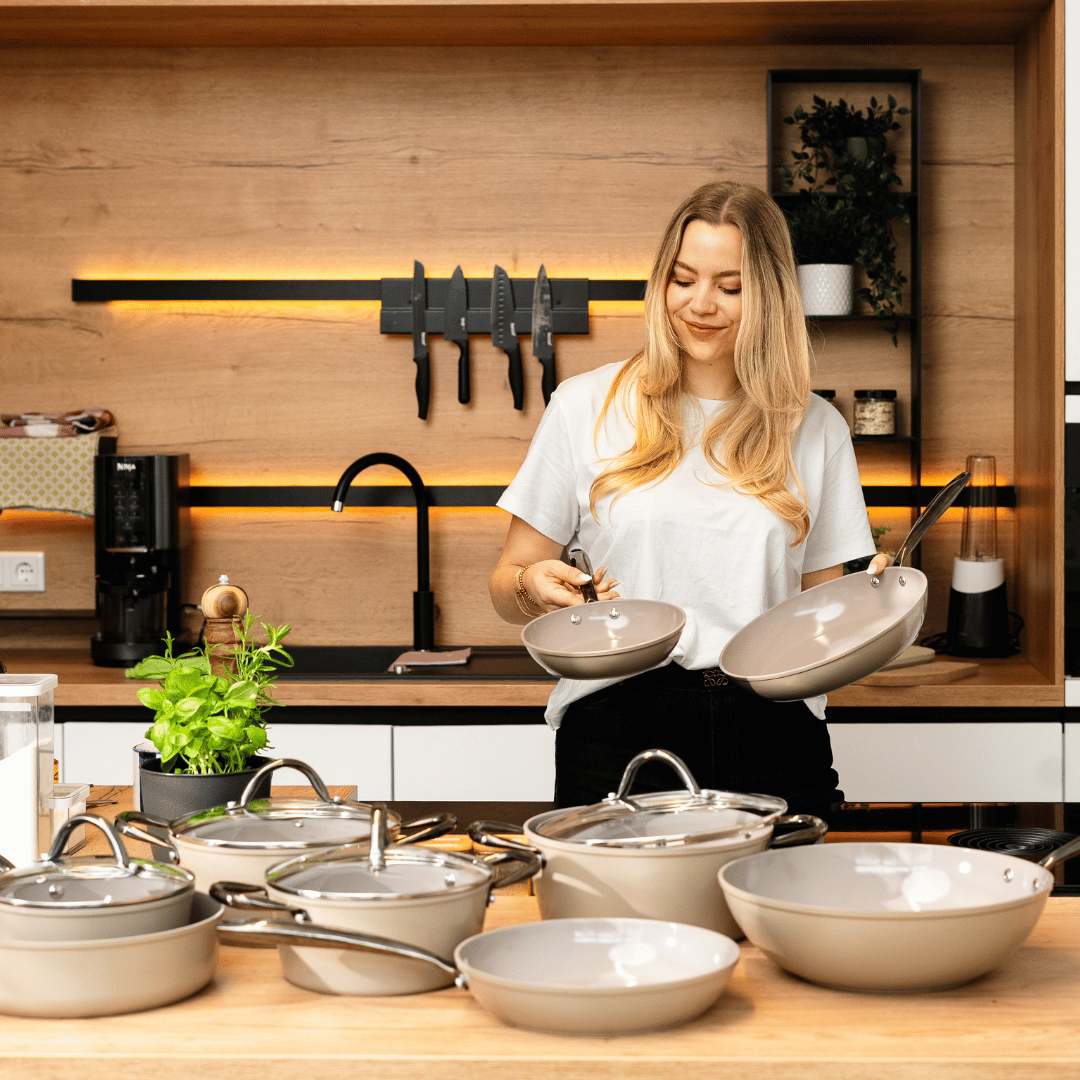
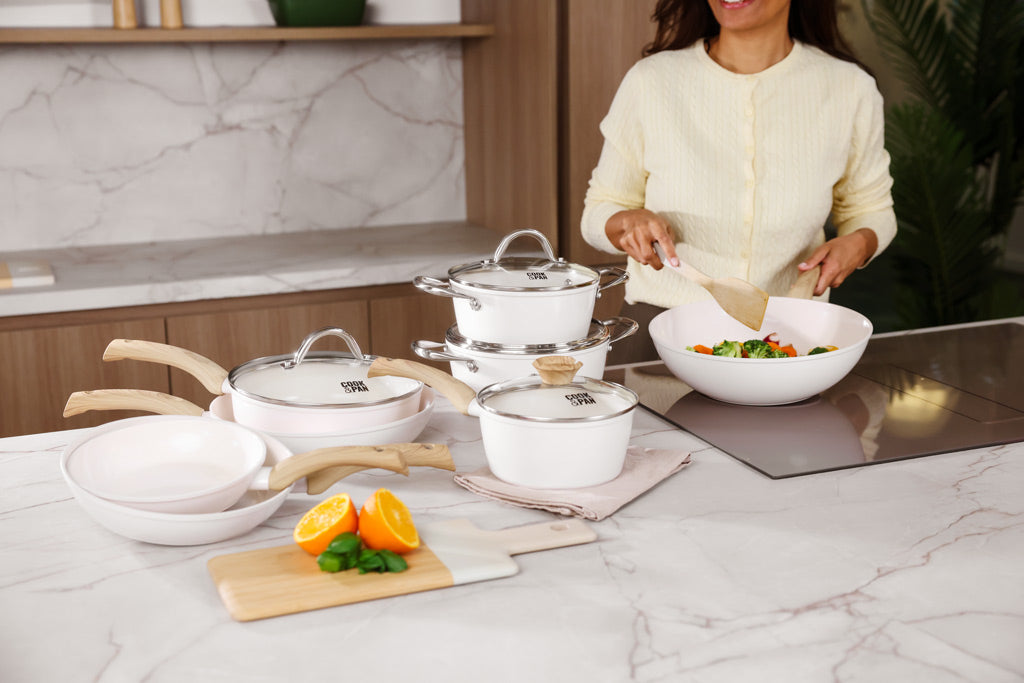
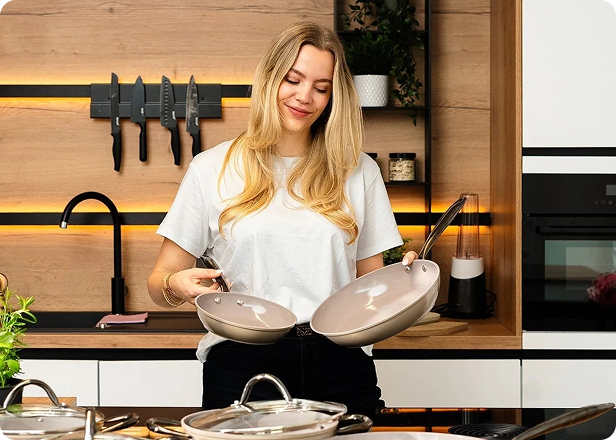
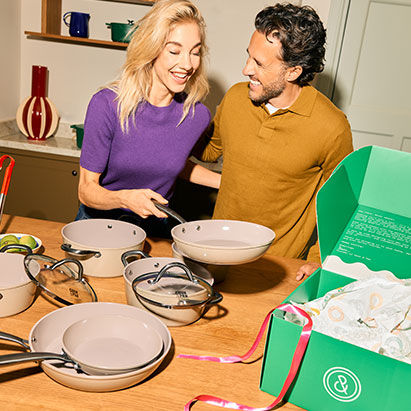
What you find there is often also a nice moment to treat yourself to something more sustainable. For example a complete ceramic pan set that with good care lasts many years, instead of yet another cheap example that gives up after one season.
How to stop your next pan also heading quickly to the dump
Disposing sustainably is fine, buying sustainably saves much more. The choices you make at the moment of purchase largely determine how often this trip to the tip will repeat itself.
- Choose a pan with a thick base that distributes heat well and warps less quickly.
- Go for PFAS-free coatings (ceramic, aluminium with natural coating, seasoned cast iron).
- Watch the warranty period: at Cook & Pan you get 25 years warranty on cast iron and 7 years on the other products.
- Invest in pans you actually use, not in a set of twelve where nine gather dust in the cupboard.
- Treat your pans nicely, especially on induction (max 80 per cent power, no boost function).
In our article on the non-stick coating we explain why a good coating is also ecologically the better choice, and how to keep it in top condition for as long as possible.
Maintenance extends the life of your pan by years
Many pans land in the container far too soon. Not because of manufacturing faults, but because of treatment that just is not quite right. A few habits make a world of difference:
- Hand wash always wins. No aggressive all-in-one tabs in the dishwasher, no eco programme (less water = more concentrated detergent = attack on the coating).
- Use wooden, silicone or plastic kitchen utensils. Steel spatulas scratch your non-stick coating to bits at high speed.
- Never heat an empty pan for long on a high setting. Warm up gradually, then add.
- Never throw cold water into a hot pan, we call that thermal shock and almost any base will warp from it.
- Store your pans with protectors between them to prevent scratches when stacking.
More on how to avoid scratches in our article on storing pans without scratches or damage.
Microplastics, PFAS and why this is not only about recycling
With every scratch in an old non-stick pan, microscopic particles come loose. Some of them end up in your food, some in the waste water, and ultimately in nature. The longer you keep using a damaged pan, the bigger that amount becomes. Disposing sustainably is therefore not just something for „later“, it can also be a healthier choice for your family right now.
We wrote an extensive piece about it, in our blog on avoiding microplastics in your pans. It makes very concrete which risks you avoid by switching in time, and how to keep your new pan in top shape afterwards for as long as possible.
Choosing a pan set that lasts for years (without choice stress)
If you are tidying up your old stuff anyway, this is exactly the moment to take a critical look at your whole cupboard. Do you really need four frying pans, or do two good ones work better? A well-thought-out set saves cupboard space, money and ultimately waste.
We are happy to help you on your way. In buying your first pan set we discuss which sizes and types are really indispensable for most households. And if you would rather take a ready-made combination, have a look at our value sets: carefully composed combinations with a hefty discount, designed to last a lifetime.
60 days trial cooking: new pan, no risk
Are you swinging between throwing away and replacing? Then it is good to know that at Cook & Pan you can always trial cook with your new pan for 60 days. Does it not suit your cooking style, your hob or your kitchen after all? Then you send it back, even if you have already used it a few times. An honest trial period, no small print. That gives just the extra nudge to finally swap that wonky old pan for something better.
To finish: a small gesture with a big effect
It costs you five extra minutes to bring that pan to the right place, or to think for a moment before tossing it into the bag. But the impact is real: fewer raw materials from the mine, less PFAS in the incinerator, less mess on the dump. And at the same time a nice moment to treat yourself to a pan that actually fits how you want to cook now: conscious, healthy and without hassle. Better four pans that last for years than fourteen that have to head to the bin every couple of years.
💡 Please note: we love cooking with boldness, but safety always comes first. Read more on our disclaimer page.