

























New induction hob at home, or sitting at the top of your wishlist? Then the first question is always: which pans can I keep, and which go straight to the recycling? Here's the honest answer with concrete examples, no marketing fog and no endless jargon.
The magnet test in one sentence
Stick a fridge magnet under your pan. Sticks? Then it works on induction. Falls off? Then it doesn't. That one-second test beats every "induction-ready" sticker.
Works: cast iron, always
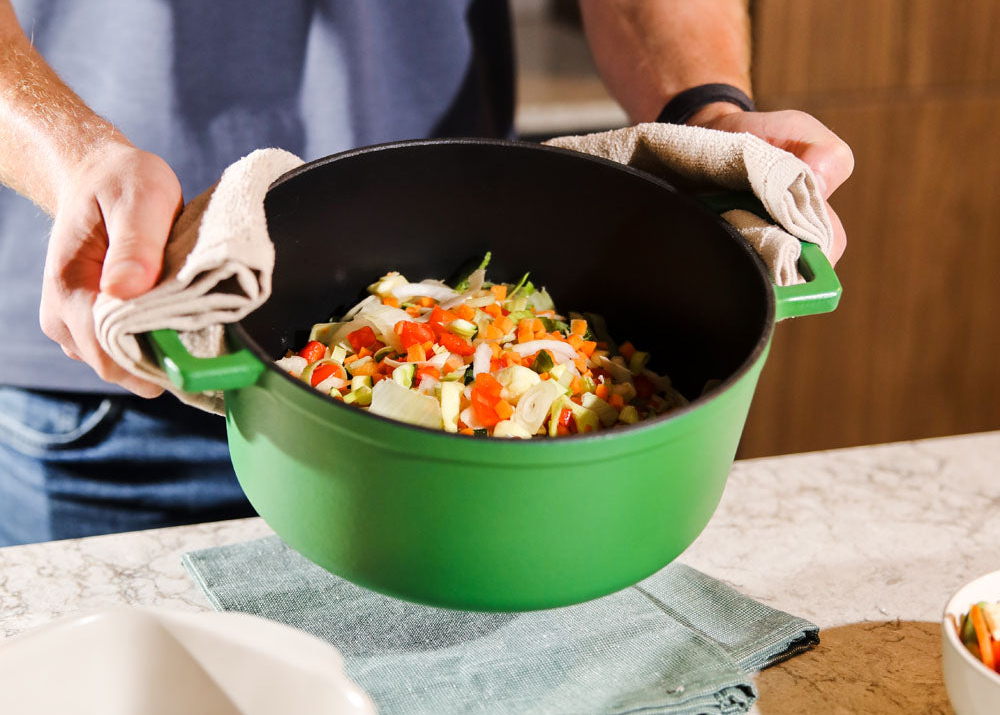
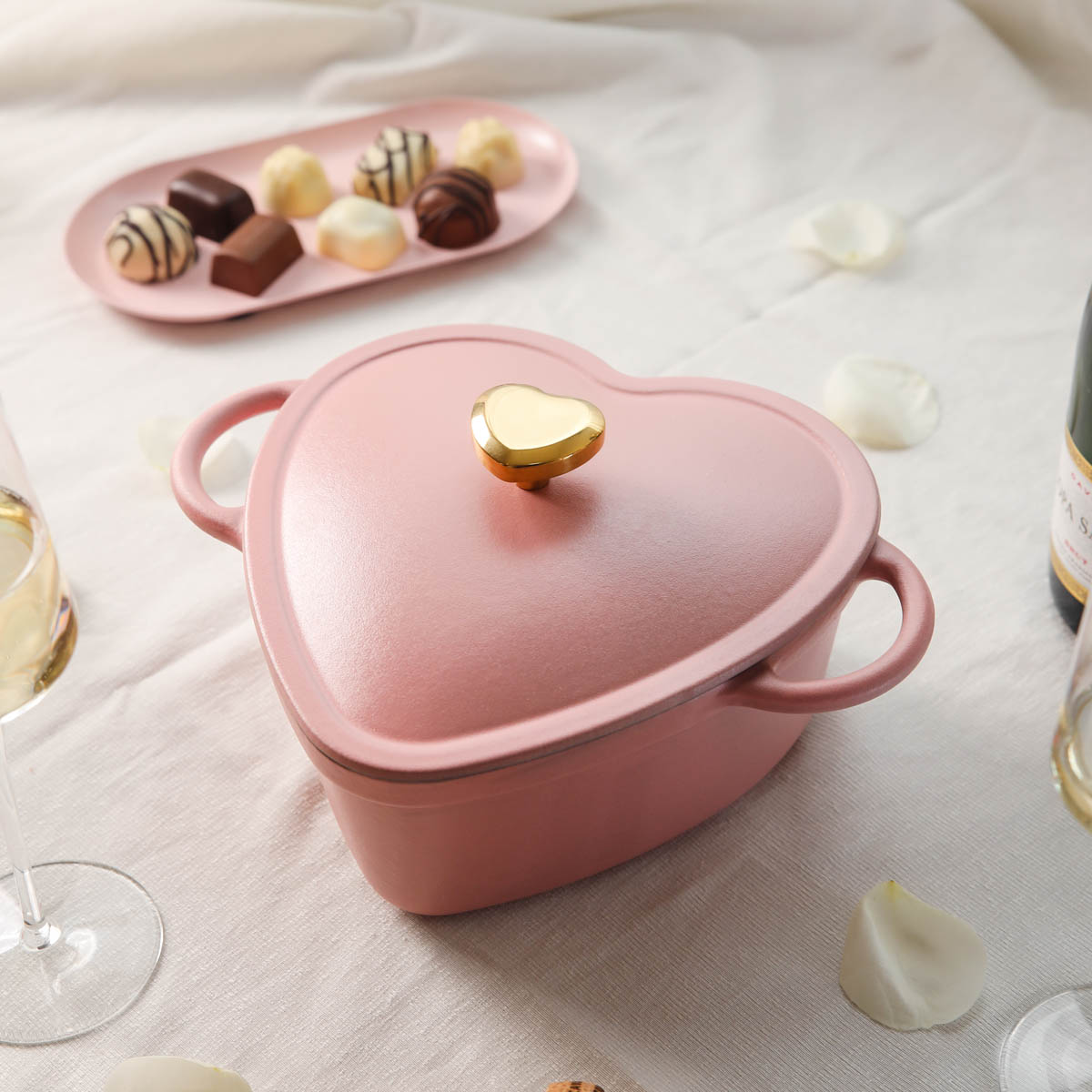
Cast iron is magnetic by nature and so works without exception on every induction hob. An old skillet from your gran or a glossy modern dutch oven, the technology doesn't care. Cast iron heats slowly (patience pays), but then holds heat phenomenally well. Have a look at the casserole pans for induction if you're ready for a real slow-cooking workhorse.
Works: stainless steel, if it's magnetic
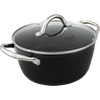
Here's the catch. Not all stainless steel pans are magnetic. The type of steel decides. Stainless pans with a magnetic core or a sandwich base (multiple layers including magnetic steel) work fine. A thin, single-layer stainless pan from the budget end often doesn't. Always do the magnet test, even on expensive stainless. Looking for a reliable option? Have a look at the stainless steel frying pans built specifically for induction.
Works: aluminium with induction base
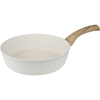
Pure aluminium doesn't work, because it isn't magnetic. But most modern aluminium pans have an embedded or pressed-in plate of magnetic steel on the underside. Then it does work. It's exactly the combination you'll find in many ceramic pans: light aluminium for the body, magnetic sandwich base for compatibility. Want to deliberately go PFAS-free as well? Look at a frying pan without PFAS.
Works: enamel on cast iron
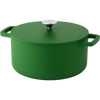
An enamelled cast iron dutch oven works fine. The enamel is just a coating, the magnetic work is done by the cast iron underneath. No risk on the compatibility side, and a good-looking pan on your hob.
Doesn't work: pure aluminium or copper
Classic aluminium or copper pans without a base plate don't work on induction. Period. You usually recognise them by a fairly thin, shiny build with no thick underside. Lovely things, just not for your new induction hob. Keep them for gas or pass them on.
Doesn't work: glass, earthenware and terracotta
Pans or dishes made of glass, ceramic or terracotta are never induction-compatible. They belong in the oven, not on the hob. A Pyrex dish stays cold on your induction plate no matter how long you leave it there.
Doesn't work: old budget stainless
Some supermarket stainless pans have a wall made of a steel type that just isn't magnetic. They look identical to induction-ready stainless, but the magnet tells a different story. Not dramatic, just disappointing if you thought you could keep using your old set.
The grey areas: wok, fondue and gourmet
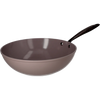
The wok in your cupboard is almost always carbon steel or aluminium. Carbon steel is magnetic and so it works, as long as the base is flat enough. Aluminium woks usually don't. Especially for this issue, dedicated wok pans for induction with a flat magnetic base have been developed. More technical detail in how do you use a wok on induction?.
A gourmet set with little saucepans? Do the magnet test on each one. It's not unusual for the little pans to be magnetic and the fondue pot to not be (often copper or aluminium). For gourmet or milk, a dedicated induction saucepan works better anyway.
Pan by pan: what's likely sitting in your cupboard
A quick run-through of the odds your standard kit works:
- Branded Tefal frying pan with thick base — usually yes (sandwich base)
- Cheap aluminium pan from the discount store — often no
- Le Creuset or Staub cast iron — always yes
- Old WMF or Fissler stainless — usually yes, do the magnet test
- Asian-style carbon steel wok — yes, as long as flat base
- Glass quiche dish — no, oven only
- Grandmother's copper saucepan — no, sadly
Works but won't heat? Four causes
Sometimes a pan is on induction and nothing happens, even though the magnet test passed. Four common causes:
- The pan is too small for the zone. Base too small = induction doesn't recognise it and throws an error.
- The base is convex or warped. No contact with the plate = no heat transfer.
- The pan isn't centred. Small offset, big impact.
- The magnetic layer is too thin. The magnet grabs but too weakly to generate enough energy.
Base diameter: this prevents 80% of issues
An induction zone has a fixed diameter. The base of your pan needs to fit it well: equal to the zone, or up to two centimetres larger. A 28 cm pan on an 18 cm zone wastes energy and gives cold edges. A 16 cm pan on a 22 cm zone sometimes won't even switch on. For a hob with classic 21-22 cm zones, a 28 cm frying pan is the "safe" all-rounder, working on the vast majority of zones.
Boost function: the silent pan killer
Almost all induction hobs have a boost button. Great for getting a litre of water boiling in two minutes, bad for your pan. The extreme heat warps many pans and shortens their lifespan dramatically. Rule of thumb: max 80 percent power. For cast iron even tighter, max 70 to 80 percent ramped up gradually.
The material-vs-induction table
| Material | Induction-compatible? |
|---|---|
| Cast iron (pure or with enamel) | Yes, always |
| Stainless with magnetic sandwich base | Yes |
| Thin single-layer stainless | Often not, do the magnet test |
| Aluminium with embedded steel plate | Yes |
| Pure aluminium without plate | No |
| Copper | No |
| Carbon steel (wok) | Yes, if flat base |
| Glass, earthenware, terracotta | No, oven only |
The replacement route: from single pan to full set
Half of your pans don't work, or you're starting from scratch with a new kitchen? Two options:
- Single replacement: only swap what doesn't work. Often a frying pan and a wok or large dutch oven. For a PFAS-conscious kitchen, here's what's in our ceramic non-stick coating spells out exactly which substances aren't in our coating.
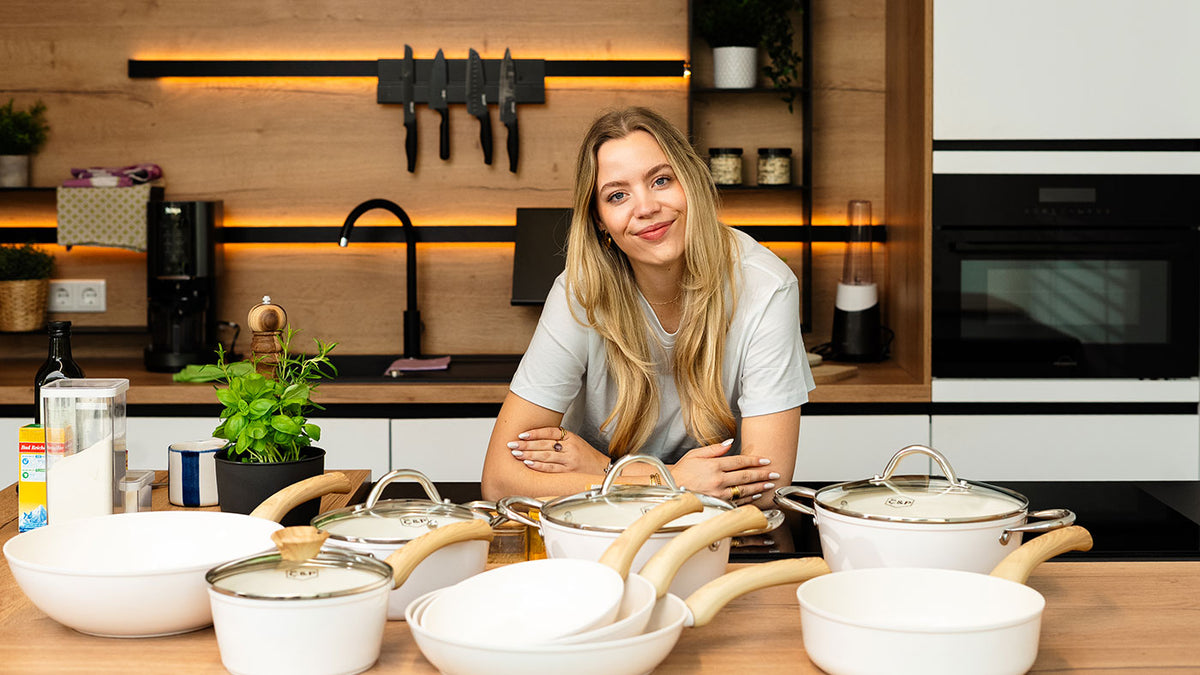
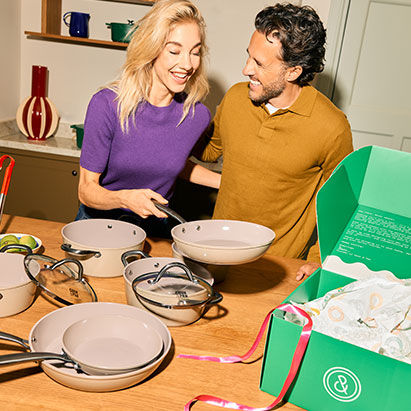
- A set in one go: often cheaper than buying pans separately, and you know for sure everything works. A black cookware set for example covers four to six sizes at once, all with magnetic bases.
Also read 4 myths about ceramic pans busted if you have doubts about ceramic versus classic materials. Because often the "downsides" you hear are just myths that cloud the entire coating debate.

Quick conclusion
Nine times out of ten, the magnet test is all you need. Works? You can use it. Doesn't work? Then your old pan is in the wrong material camp, and a replacement makes sense. With that replacement, mind the base size relative to your zones, avoid the boost function, and your new pan will last years longer than you expect.
💡 Please note: we love cooking with boldness, but safety always comes first. Read more on our disclaimer page.