
























Moving out feels like a new chapter full of freedom, ramen smells and spontaneous friend dinners at two in the morning. But then you find yourself in your tiny kitchenette with one hob, half a drawer and a budget that also has to deal with tuition fees. The big question: which pans do you actually take with you, and which ones do you leave comfortably at mum and dad's place?
Why you don't need to drag along your entire pan set
A complete set of twelve pans sounds very grown-up, but in a student room it's about as handy as a cast iron stable in a Smart car. You have little storage, often just one or two hobs, and you mostly cook for yourself or a friend who unexpectedly stays for dinner. Three to four well-chosen pans cover at least ninety per cent of what you'll be cooking.
The trick lies in choosing smart, not in choosing many. A good frying pan, a roomy sauté pan and a solid cooking pot will get you further than a noisy stack that never leaves the cupboard.
First things first: what kind of hob do you actually have?
Before you buy pans on impulse: check what's in your studio first. Induction, ceramic, gas or the classic old-school electric plate? It makes a big difference. Induction only works with magnetic bases. Buy a cute little pan that isn't induction-ready and your egg will stay cheerfully raw.
Most student rooms and starter homes today have induction. Play it safe and go for pans that work on all heat sources. Our induction-ready pans are made exactly for that: now student studio, later just your first proper home.

The student starter set in four pans
If you want to keep it simple, this is your shortlist:
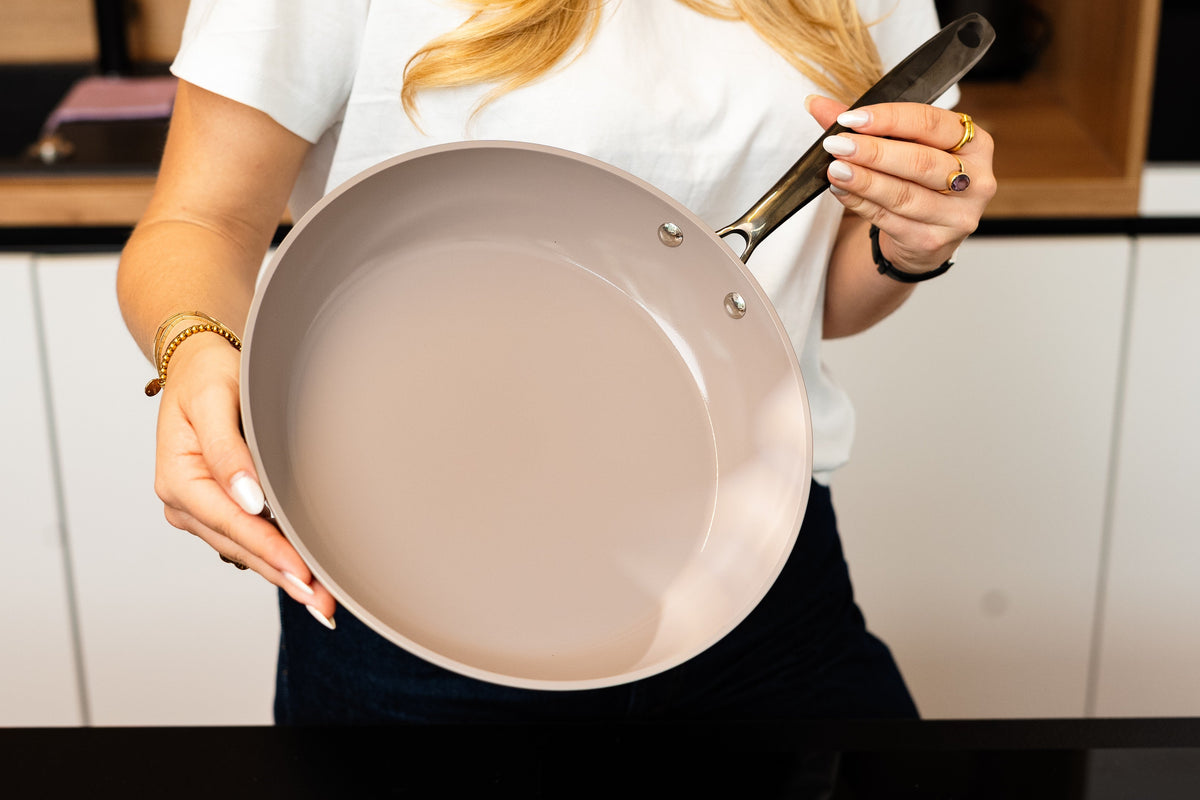
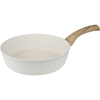
- A frying pan of 24 or 28 cm for eggs, pancakes and quick searing
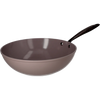
- A sauté pan with lid for pasta, curry and anything that needs sauce
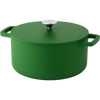
- A cooking pot for potatoes, soup and hopefully something healthy now and then
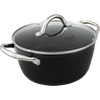
- A saucepan for sauces, boiling an egg or hot chocolate at half past eleven
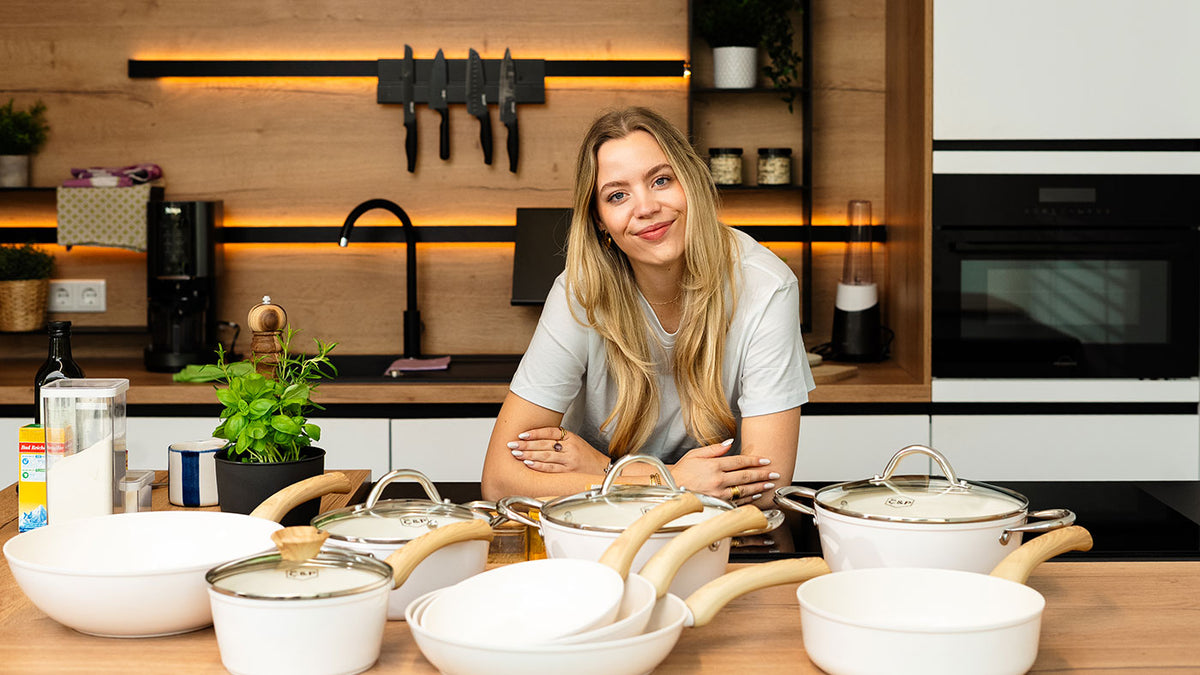
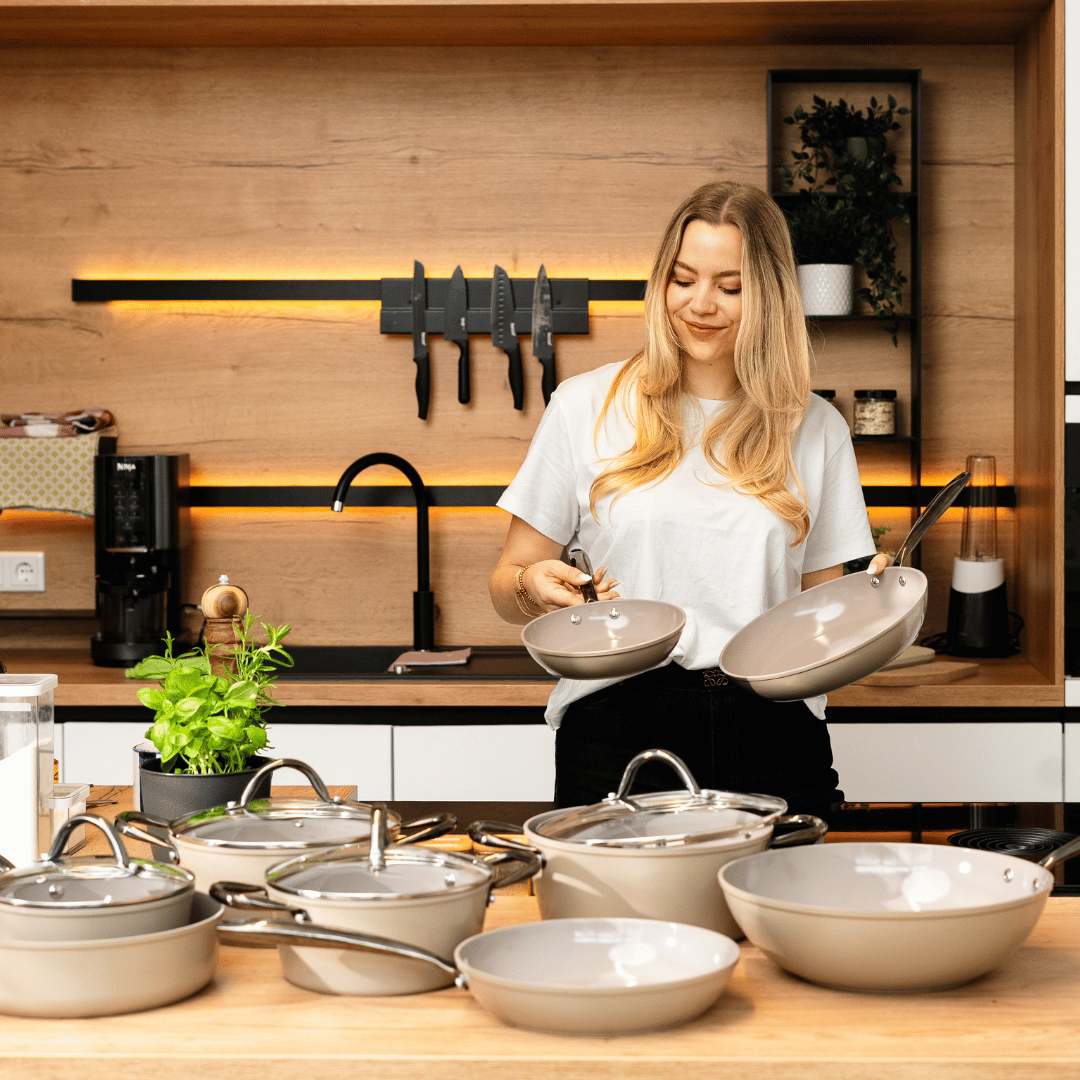
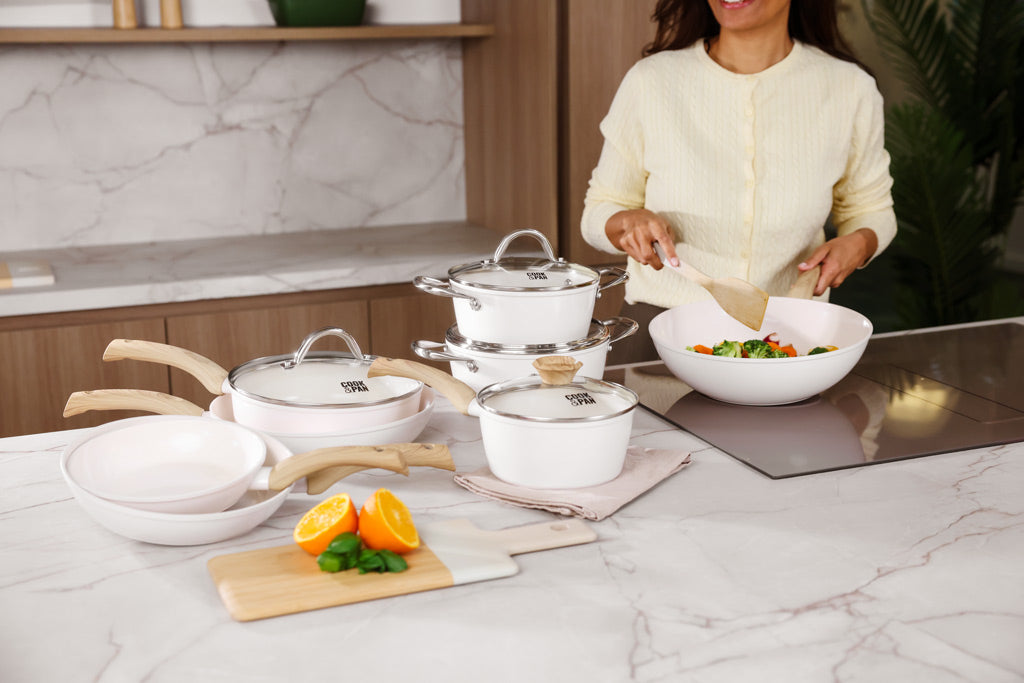
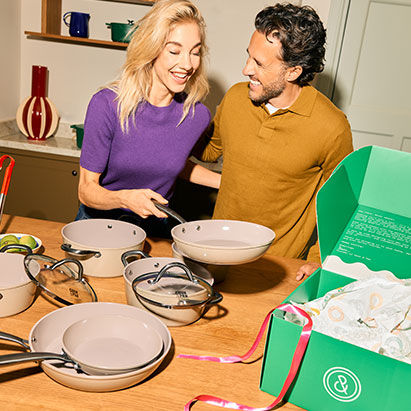
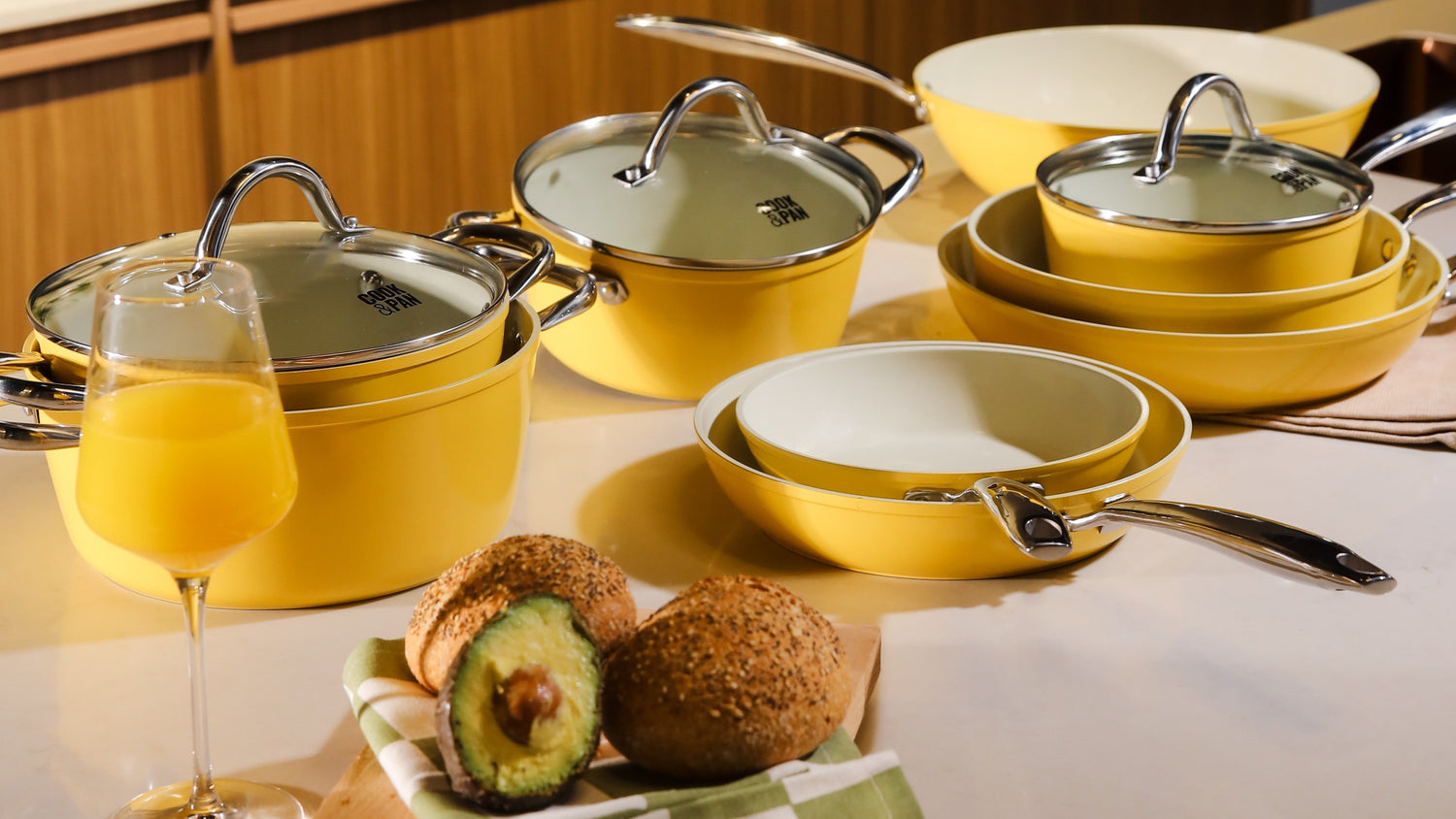
With these four you cover breakfast, lunch, dinner and the small kitchen projects you're proud of. A complete pan set for induction sorts that out in one go and saves you the puzzle of buying separate sizes.
The frying pan: your best friend in the room
Honestly: your frying pan will work hardest. Scrambled eggs, omelette, pasta with leftovers, a toast without a toaster. Pick a pan that heats up fast, doesn't stick and doesn't bother your health. A frying pan without PFAS is a no-brainer if you want to keep filling pans for years to come, not doctors.
Size advice: 24 cm is fine if you mostly cook for yourself, 28 cm if you eat with two more often or like to fold your avocado toast in one pan. Torn between the two? Have a quick read of our guide to the right frying pan size.
The sauté pan: secretly the MVP
The sauté pan is that one mate who's up for everything. High sides, roomy base, lid included. One-pan meals, curries, pasta sauces with chicken and veggies, anything that needs to simmer, sear and then soak up sauce. For student cooks this is the pan type that often gives you the best ratio between little washing-up and lots of meal.
Want to know exactly how a sauté pan compares to a frying pan? Our comparison between sauté pan and frying pan spells it out clearly.
The cooking pot: for pasta, potatoes and endless soup
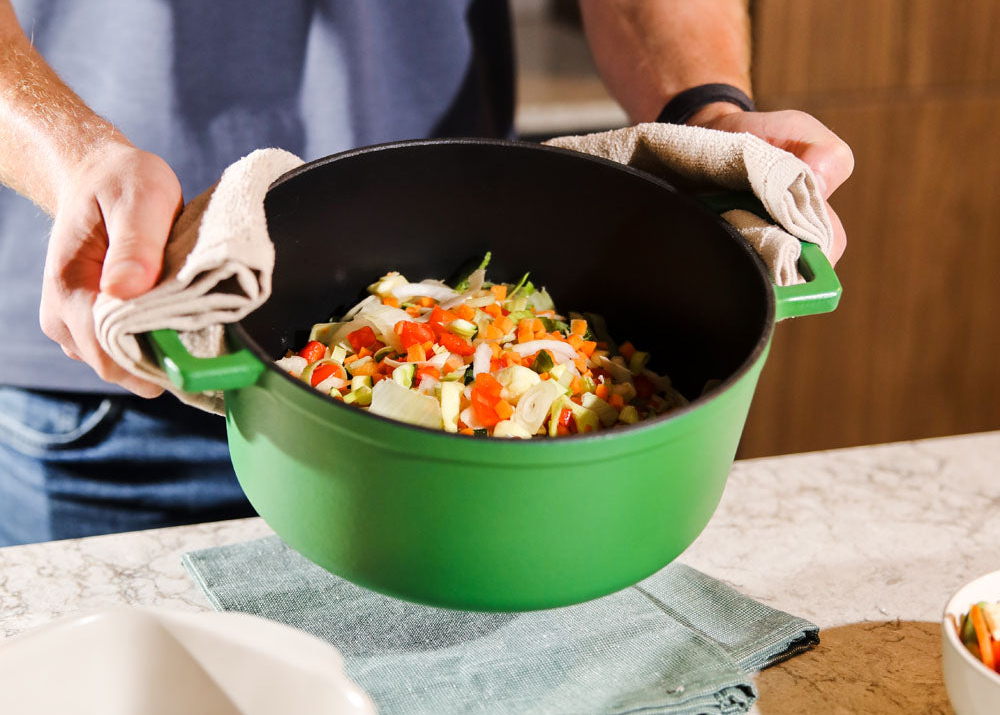
A solid cooking pot is student life in a picture: pasta for four because you always overestimate your portion, potatoes you reheat for three days straight, a big pot of soup you freeze in portions. Pick a four or five litre size so you stay flexible. An induction cooking pot brings water to the boil at lightning speed, which is nice when you've just got home and are starving.
How expensive does it need to be to be good?
Buying cheap is often buying twice. A bargain set that flakes or warps after three months is no saving, it's just delaying the next purchase. But you don't have to spend half a student loan either. Aim for pans that last for years, have a decent non-stick coating and work on all heat sources. Read our overview of what a household really needs if you want to know which pans you'll still use later, when student life is over.
PFAS, coatings and why you want to know about it as a student
Cheap non-stick pans regularly contain substances you'd rather not have in your avocado pasta. PFAS, also called forever chemicals, stay in your body and the environment. If you're starting fresh in your new town anyway, start fresh with your pans too. In our article about toxic substances in pans you read what to look out for and which materials are safe for daily use.
Care: how to make your pans last longer than your studies
Student life isn't always loving towards kitchen gear. Still, you don't suddenly have to turn into a kitchen prince or princess to keep your pans for ages. Stick to these basic rules:
- Never heat an empty pan on the highest setting. Gradual heating prevents warping.
- Use wooden or silicone utensils. Steel forks leave scratches you'll regret six months later.
- Wash your pans by hand if you can. Dishwasher is okay, but hand-washing is significantly better for the coating.
- Let a hot pan cool down before holding it under the cold tap. Otherwise you risk a warped base.
- Don't use cooking spray. It leaves a sticky film that attacks the non-stick coating.
Do this a bit and good pans easily last seven years. At Cook & Pan you get 7 years of warranty on manufacturing and material defects, and 2 years on the ceramic non-stick coating. Got a cast iron pan? That even comes with 25 years of warranty. Student-proof, then.
Compact storage in a minimal kitchen
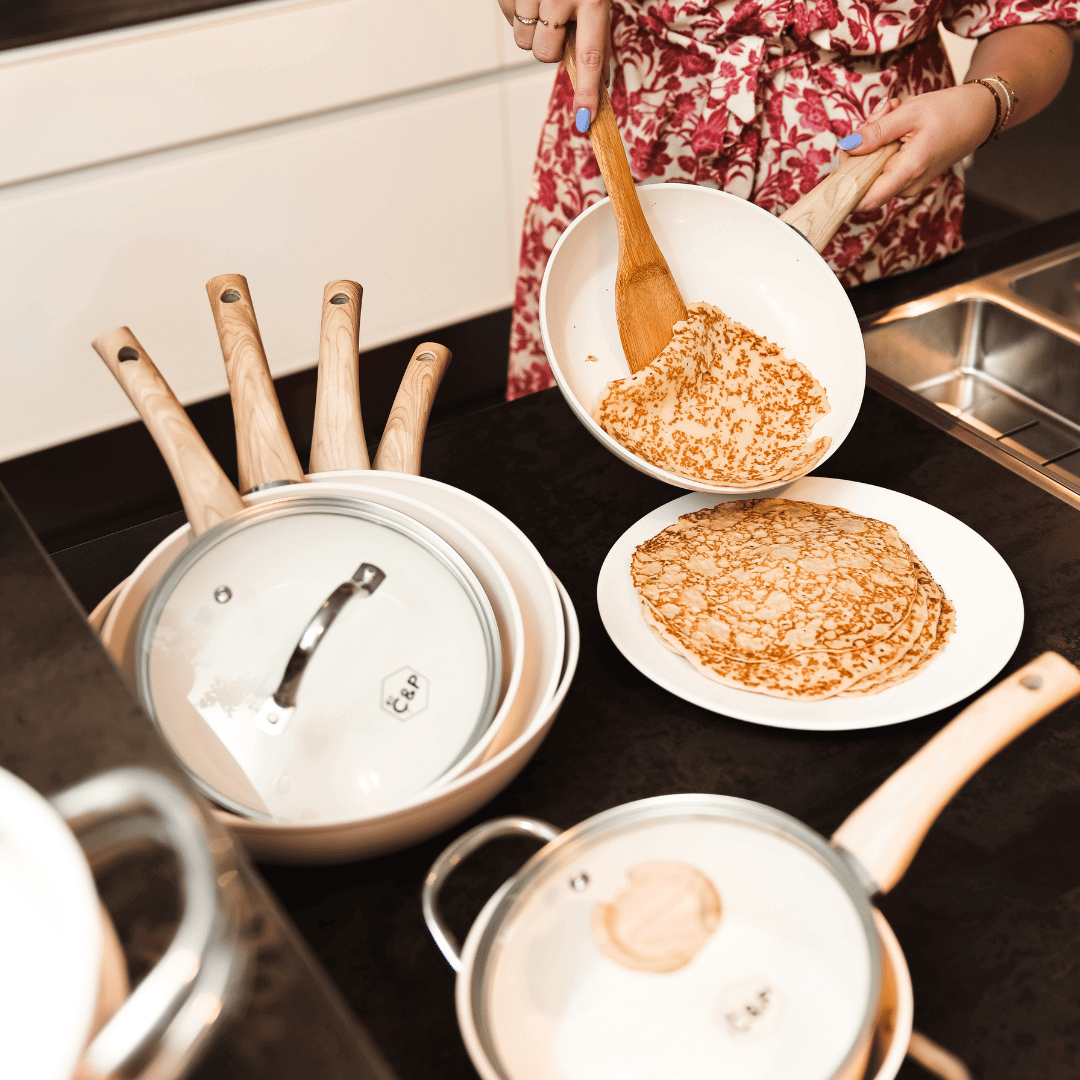
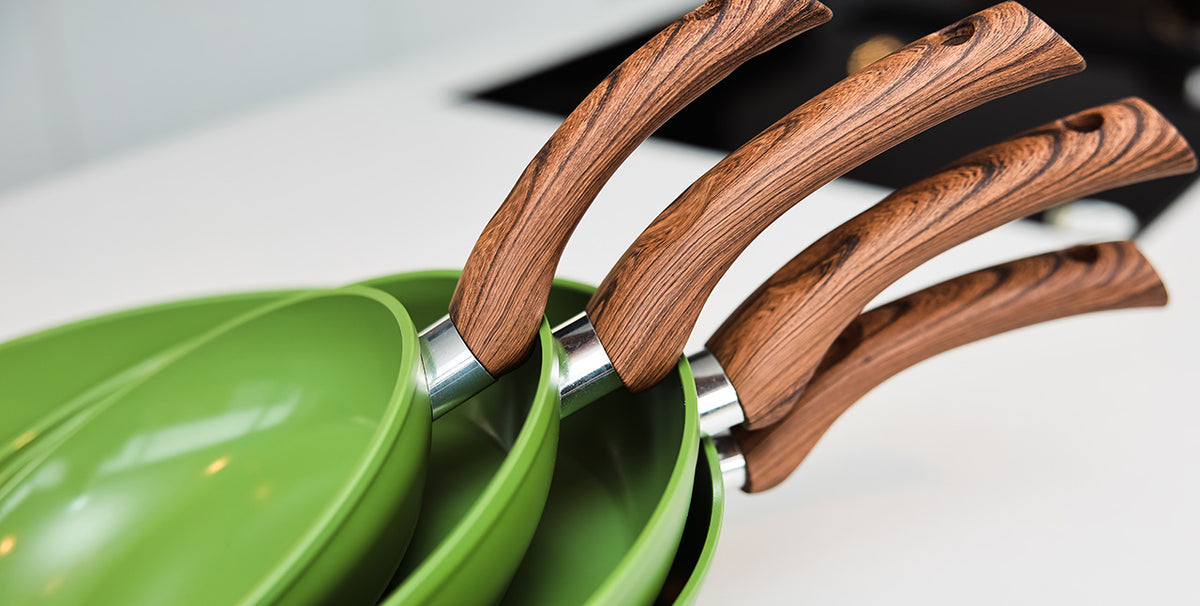
Space is gold in a studio. Pans that nest into each other save you half a drawer. When buying, look for flat handles or pans that are stackable. Place pan protectors between stacked pans so your non-stick coating doesn't end up scratched.
Hang larger pans on a rail or hook instead of stuffing them into the cupboard. Saves searching while cooking and instantly gives your kitchen its own look.
Safety: the small things nobody tells you
A few practical tips that make student life easier:
- Always use a properly fitting lid when you let something simmer, you save energy and cook faster
- Place pans with the handle pointing inwards on the hob, prevent knocking them off by accident
- Keep an oven mitt within reach, not on the other side of the room
- Don't clean hot fats with cold water, it splatters and is dangerous
- Don't forget to switch on the extractor hood, your landlord will thank you
Induction or not: one answer for everything
Moving again to a new room or house in a year or two? Big chance you'll deal with induction by then. By buying induction-ready pans now, you don't have to repurchase anything later. Pans are a small investment piece you take with you for five to seven years easily.
Gift idea for the home front
Are your parents, gran or aunt still looking for a leaving gift? A good pan set is a hundred times more practical than a second coffee machine. Forward the link of a complete starter set for induction, and you get a present you use every day. Many students are still happy a year later with that one choice from mum. For those who want to choose in even more detail: get inspired by our guide on the sauté pan if that one versatile extra pan ends up on your wish list.
Finally: cook with joy, not stress
Your student years are a life phase you'll never forget. The dishes you learn to make in those tiny kitchens stay with you for years. Good pans are not a luxury, they are the base with which you invite friends, keep yourself healthy and secretly learn that cooking yourself is almost always tastier and cheaper than ordering in. So choose pans that go along with your life, not pans you throw out again in six months. Cook & Pan happily helps you on your way with sets that not only look great on your Instagram, but also just do what they should do: get a tasty meal on the table.
💡 Please note: we love cooking with boldness, but safety always comes first. Read more on our disclaimer page.