



























Enamel sounds fancy. It looks fancy. And it sits on a surprising number of pans in your kitchen, often without you noticing. But what is enamel, exactly? A coating, a glass layer, a marketing term? And why does Cook & Pan choose to use enamel exclusively on cast iron, and not on aluminium or stainless steel? Time to lift the glass for a moment.
Enamel is not paint, it is glass
Enamel is literally a layer of glass. A mixture of silicates and minerals is applied to a metal base and then fired in an oven at over 800 degrees. At that temperature the mixture melts and fuses with the metal. What remains is a hard, smooth, non-porous surface that is both beautiful and functional.
So this is not a coating you spray on, the kind that flakes off after a year like cheap non-stick layers. Enamel is physically bonded to the metal, on a molecular level. That is also why it feels different. Crisper, cooler, smoother.
Why enamel almost always sits on cast iron
In theory, enamel can be applied to several metals, but in practice it usually goes onto cast iron or carbon steel. The reason is simple: you need a base that can withstand the high firing temperatures and does not warp during the enamelling process. Cast iron is exceptionally suited for this.
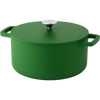
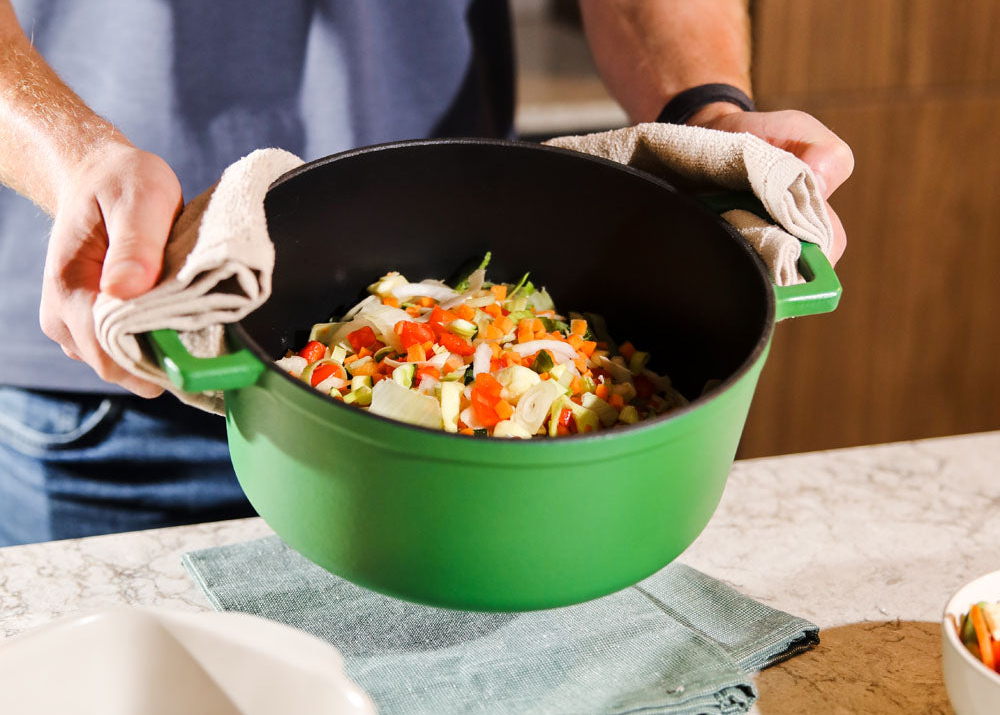
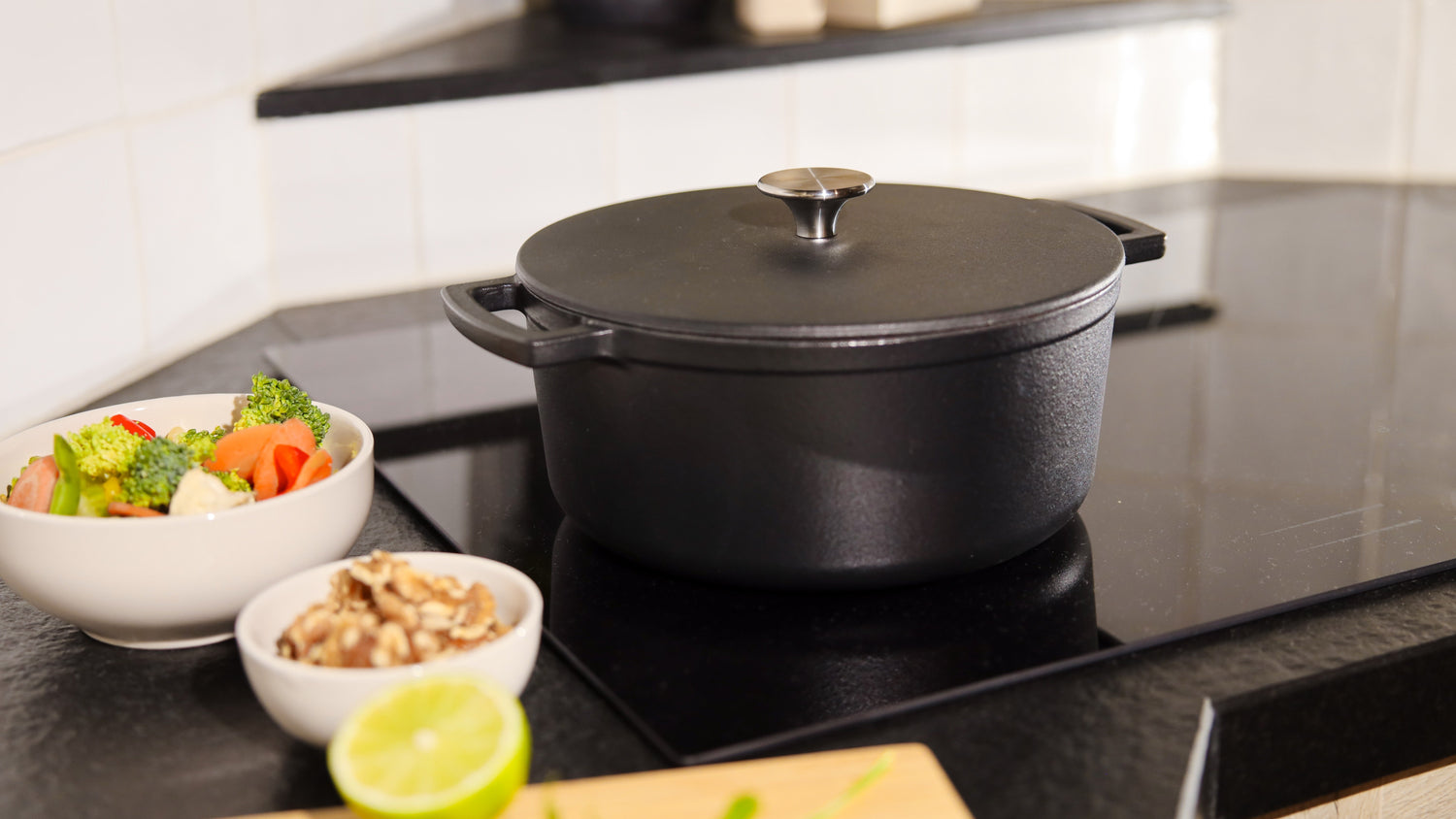
At Cook & Pan we use enamel exclusively as a coating on cast iron. Not as a separate product line, not on aluminium, and not as a gimmick. It sits on our cast iron casserole pans because that is where it adds the most, both technically and culinarily. Want to see how that looks? Have a look at the enamelled cast iron casserole pans.

The advantages of enamel on cast iron
The combination of cast iron plus enamel is no accidental marriage. The two materials reinforce each other. The cast iron delivers the mass, the heat retention and the lifespan. The enamel takes care of the smooth surface, the protection and the colour.
- No seasoning needed. Bare cast iron has to be seasoned to build up a natural non-stick layer. With enamelled cast iron you skip that step. The enamel is your protective layer.
- Acid resistant. Tomato sauce, wine, lemon juice, vinegar. Bare cast iron reacts to those and gives a metallic aftertaste. Enamel stays chemically neutral, even during hours of slow cooking.
- Easy to clean. The smooth surface allows little to stick. Rinse, a bit of warm water, done.
- PFAS-free and chemically inert. Glass does not react with your food, regardless of temperature. No synthetic substances, no off-gassing fumes, no migration into your dish.
- Beautiful. Honestly: enamelled cast iron just looks the part. From the pan on the hob straight to the table.
The heat of cast iron stays fully intact
People sometimes think enamel softens the unique heat properties of cast iron. It does not. The enamel layer is microscopically thin compared to the mass of the cast iron. Once up to temperature, your enamelled casserole behaves exactly like a regular cast iron casserole: heat builds slowly, lingers for hours, and spreads evenly across the base.
That makes these pans ideal for slow cooking. Beef stew that gets to simmer for hours, bread that develops a crisp crust in the oven with the lid on, a tagine or a simple soup that gets to sit on the lowest setting all afternoon.
What to keep in mind
Enamel is hard, but not indestructible. Glass is brittle, and that goes for this layer too. A few things to keep in the back of your mind:
- Avoid impacts. A hard knock on the rim or a fall onto a tiled floor can cause chips in the enamel. Once damaged, it cannot be repaired.
- Heat gradually. Never put a cold enamelled pan on a very hot burner. Start on low, give it two to three minutes to warm up evenly. Thermal shock can cause craquelure: fine hairline cracks in the enamel.
- Use a maximum of 70-80 percent induction power. No boost function, no full power. Cast iron conducts heat very efficiently: medium is more than enough.
- No cold water stream on a hot pan. Let it cool on the worktop before you rinse it.
- Account for the weight. A 24 cm casserole quickly weighs 4 kilos. Wonderfully solid on the hob, less fun if you lift it from cupboard to hob daily.
Hassle-free maintenance
The smooth enamel surface asks for little. Hand washing always takes priority over the dishwasher, even though enamel can technically handle a wash cycle. Dishwasher tablets are aggressive, and the eco mode runs with concentrated detergent that dulls the shine over time.
Stubborn residue dissolves with a layer of warm water plus two tablespoons of baking soda. Bring it briefly to a boil, turn off the heat, let it cool, and the lot lifts off. No scouring pads, no steel wool. A soft brush or cloth is enough.
Do not forget the unglazed rim. The top edge of many enamelled cast iron pans is bare cast iron. Wipe it now and then with a drop of vegetable oil to prevent surface rust. A second of work, years of joy.
Which dishes shine the brightest?
Enamelled cast iron feels at home in anything that takes time. Think of:
- Beef stew, ossobuco, coq au vin, pulled meat
- Bouillabaisse, fish soup, mussels in white wine
- Bread baked in a closed pot in the oven
- Risotto, paella, pilaf
- Goulash, ratatouille, oven stews
- Confit duck, pulled pork, slow-cooked shoulder
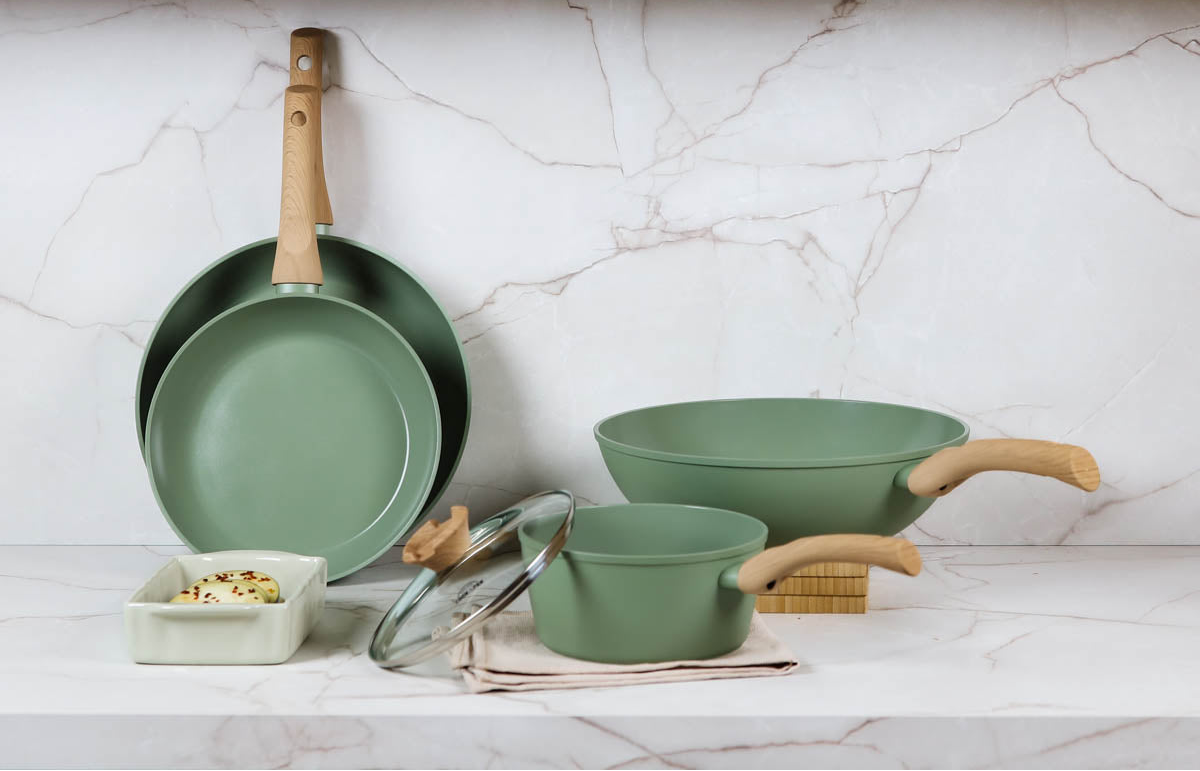
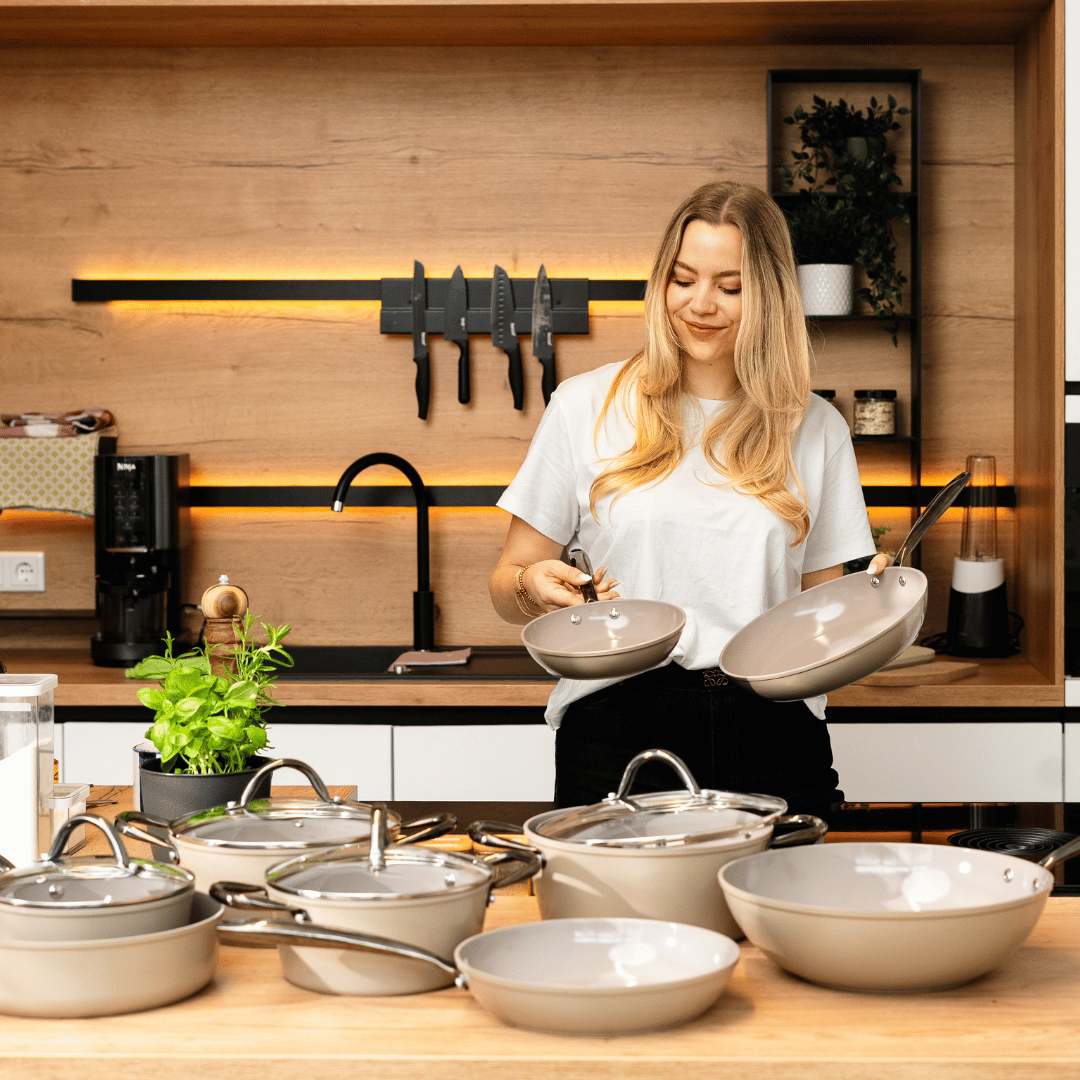
For quick frying, a light aluminium pan with ceramic coating is more practical: less weight, faster heating. That is what our other series are for. But for anything that gets to simmer, enamelled cast iron is the gold standard. Want to learn more about slow cooking? Read slow cooking without sticking.
How long does an enamelled cast iron pan last?
With normal use: decades. Literally. Cook & Pan offers 25 years of manufacturer's warranty on the cast iron body of these pans. That is not a marketing number, that is a direct consequence of the material. Cast iron does not wear like other metals. It gets stronger the more you use it.
The enamel layer has a different story. With good care it stays in top form for years. Light craquelure after a long time is normal and part of the material: it does not affect performance. What is not covered by the warranty is damage from impacts, overheating or dishwasher degradation. Those are user errors, not material defects.
How to recognise good enamel?
Not all enamelled pans are equal. With cheaper versions you often see a thinner layer that chips faster and is applied less evenly. What to look for?
- Even shine and colour, also on the inside
- No visible bubbles or irregularities under direct light
- Tight, finished rim with no rough spots
- Solid weight: light cast iron does not exist
- A maker that warranties the cast iron body
Want to dig deeper into material choice? Then also read these 5 questions to ask yourself before buying a casserole pan.
Does enamelled cast iron suit your cooking style?
Quick self-check. Answer yes to at least three of these and enamelled cast iron is something for you.
- You enjoy slow cooking, braising, stewing or slow roasting
- You are okay with a heavy pan in exchange for heat retention
- You also regularly put your pan in the oven or directly on the table
- You do not want synthetic coatings or PFAS-containing layers
- You would rather invest properly once than start over every five years
Sounds like you? Then have a look at the casseroles in different sizes: 20 cm, 22 cm or 24 cm. Or dive straight into the full casserole pan category.
Enamel in your favourite colour
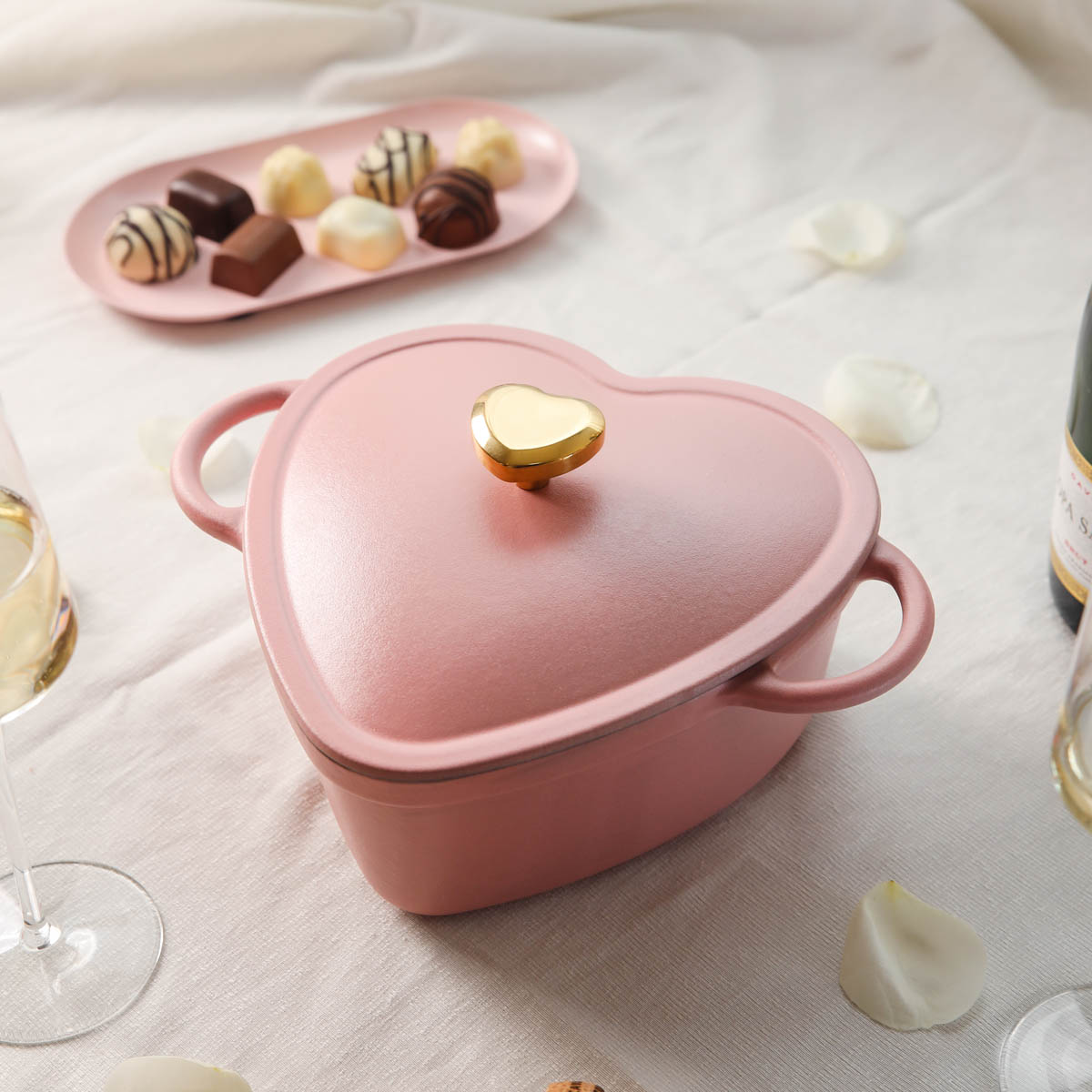
One of the loveliest properties of enamel is that the colour sits in the material. No paint that wears off, no sticker that peels, just glass in a shade that lasts for years. Cook & Pan offers enamelled cast iron pans in colours that still look cheerful after ten years, from warm earth tones to bright accents. Fancy something with character? Take a peek at the sage shade or the deep blue version.
Enamel is not a separate product category, it is a property
Finally, a common misconception. People sometimes ask for "enamel pans" as if it were a separate category, comparable to aluminium or stainless steel. But enamel is not a material the pan itself is made of. It is a layer, a property, a finish. The pan underneath determines the behaviour.
At Cook & Pan, enamel always means: glass on cast iron. The benefits you get, you get mainly thanks to that cast iron base. The enamel makes it cleanable and beautiful, but the cooking power sits in the mass underneath. Anyone claiming otherwise is selling you a story that does not hold up technically.
Happy cooking.
💡 Please note: we love cooking with boldness, but safety always comes first. Read more on our disclaimer page.


