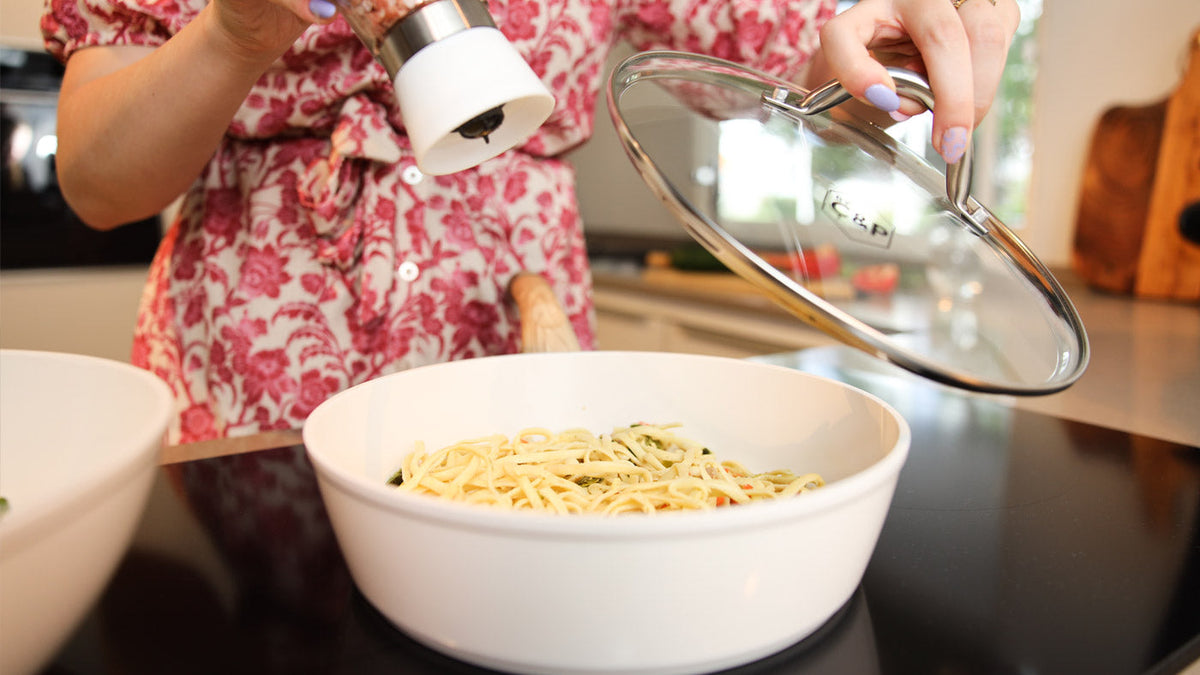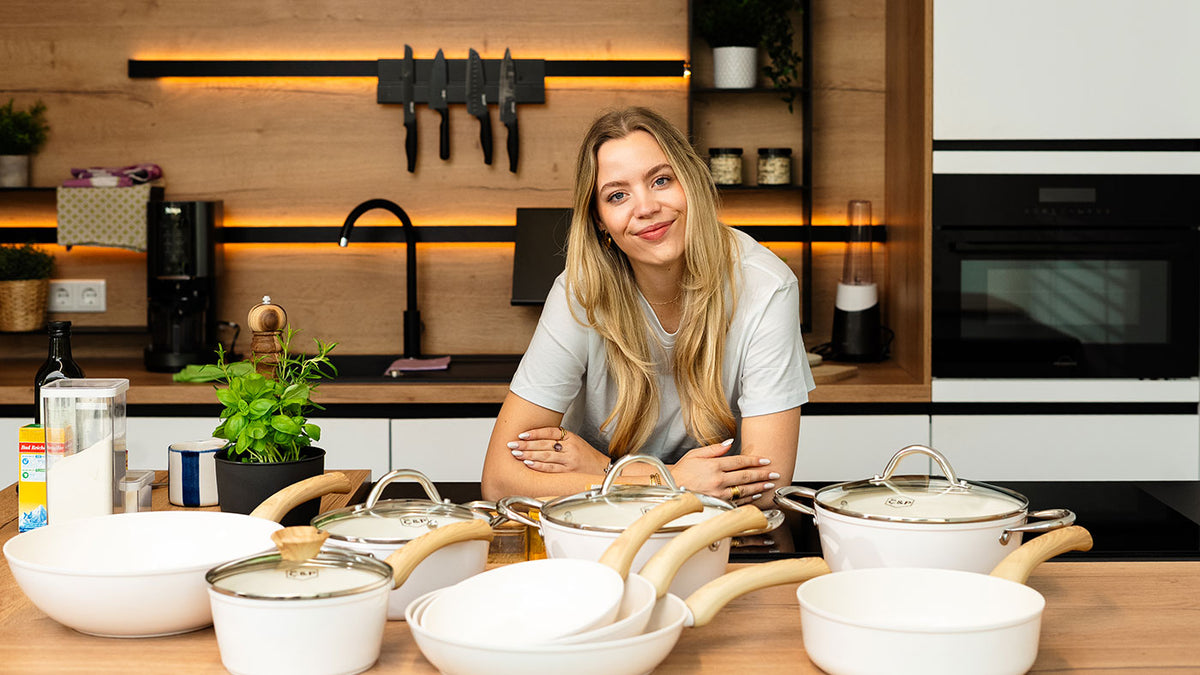


























Buying a casserole pan feels like choosing between 400 models that all shine, sizzle and claim to be the best. Spoiler: the best casserole pan does not exist. What does exist is a casserole pan that fits you perfectly, and you find it by asking yourself five simple questions. No marketing fluff, no shiny clichés, just an honest step-by-step plan that lets you check out without regrets.
Why a casserole pan is not an impulse buy
A good casserole pan lasts ten years. A bad one six months. That is quite a gap, especially when stews, goulash or pulled meat are on your mind. A casserole pan is the workhorse of your kitchen: deeper than a frying pan, cosier than a sauté pan, and suitable for anything that needs more than fifteen minutes of simmering. Before you click "order", you want to know what you are buying and why.
The shortest route to the right choice? Five questions. Answer them honestly and you will have picked your casserole pan within ten minutes.
Question 1: What are you actually going to cook in it?
Sounds trivial, but this is the question most people skip. And it shows: six months later a far too small casserole pan stands on the stove while the stew threatens to overflow. Write down what your typical dishes are.
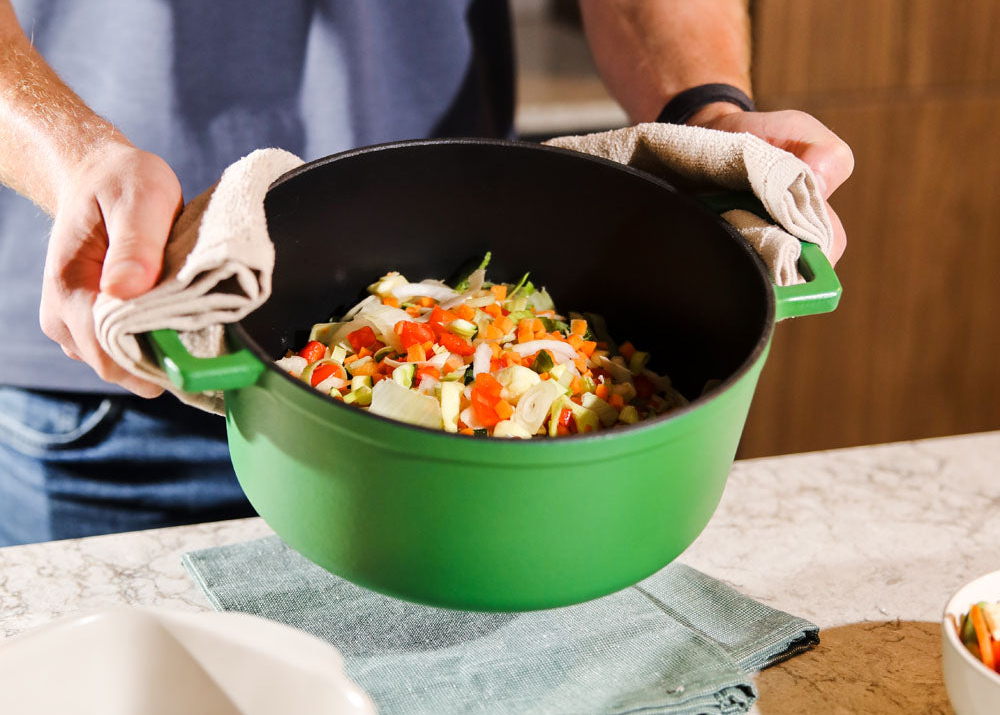
- Stews, hash, goulash or chili: you want height and a thick base.
- Rice dishes, paella or risotto: wide beats deep.
- Searing a piece of meat, then making a sauce: a heavy casserole pan with good heat distribution wins.
- One special dinner a month: no pro-grade beast required.
Decide on the dish first, then the pan. Not the other way around.
Question 2: Which heat source do you cook on?
The wrong pan on induction is a waste of your money and your nerves. Induction needs a magnetic base, so always check whether the casserole pan is induction-ready before you check out. Cooking on gas or ceramic? You have more freedom, but still watch heat distribution and weight.
Not sure if your choice performs well on induction? Before you decide, read induction casserole pans: what to look out for and you will know instantly which details matter. Already certain about your heat source? Jump straight to our induction casserole pans.
Question 3: Cast iron, stainless steel or aluminium?
This is the material moment. Each option has its own character.
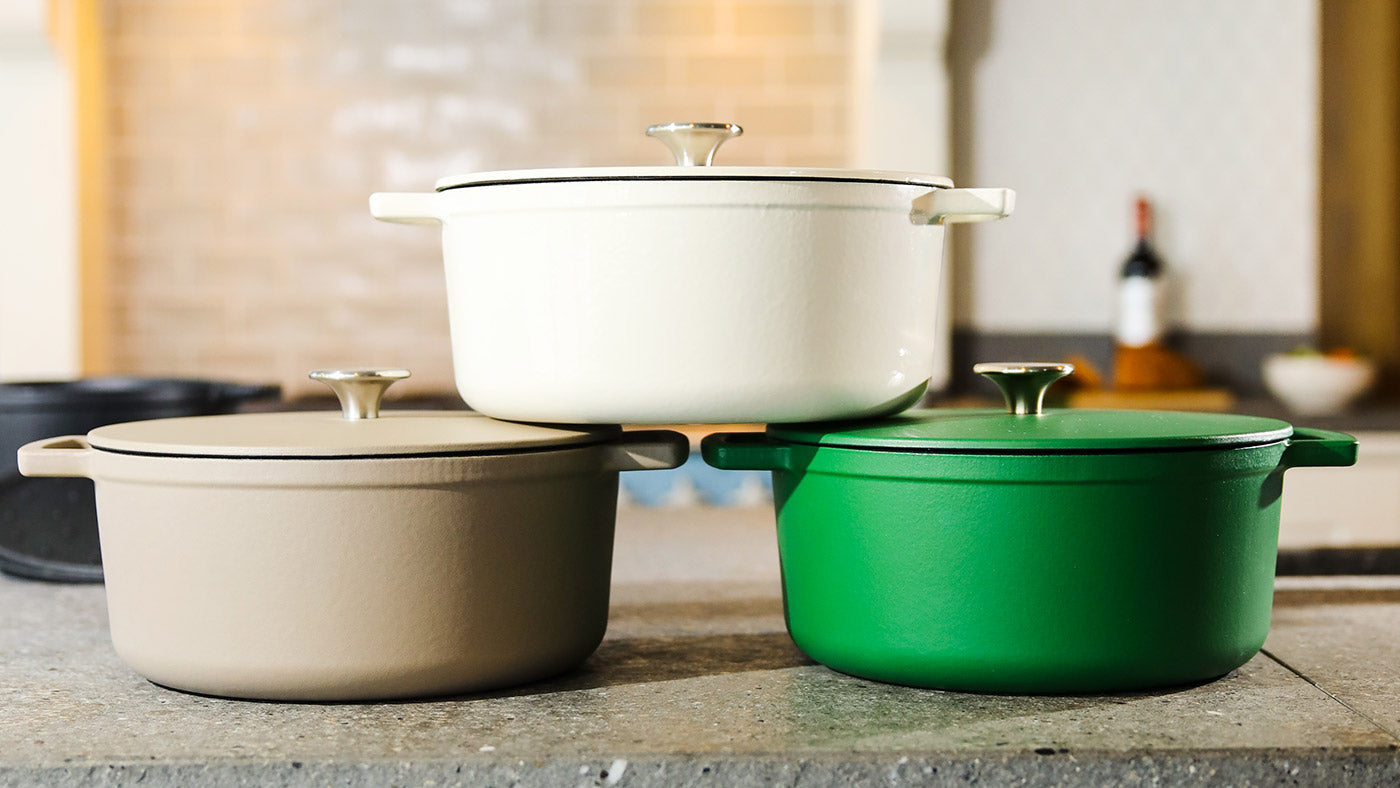
- Cast iron: the heavyweight. Holds heat endlessly, perfect for slow braising and roasting. Can last a lifetime if you treat it well.
- Stainless steel: the all-rounder. Sturdy, low-maintenance, reacts quickly to temperature changes. Ideal if you love sauces and flambéing.
- Aluminium (coated): the lightweight. Less heavy to lift, quick to heat up, friendlier on the wallet.
No clue which direction fits your style of cooking? Cast iron, aluminium or stainless steel breaks down the differences in detail. Want that heavy feel and lifetime value? Browse our cast-iron casserole pans.
Question 4: How many mouths do you usually cook for?
A 20 cm casserole pan for a family of five is asking for trouble. But a 28 cm pan for one person is unnecessary heavy lifting. Use these rules of thumb:
- One person or a compact household: a 20 cm casserole pan is plenty.
- Two people with a healthy appetite: a 22 cm casserole pan is spot on.
- Three to four people: a 24 cm casserole pan is the sweet spot.
- Five people or more, or you love leftovers for tomorrow: 26 to 28 cm.
Still in doubt? Go one size up. An overfull casserole pan steams, a half-full one sears, and steaming is rarely what you want.
Question 5: How important is PFAS-free to you?
Honest answer, please. For some it is a dealbreaker, for others a nice-to-have. Do you simply want the certainty that your pan does not leach anything unnecessary at high temperatures? Then PFAS-free is a logical choice. Not a top priority but you still want the latest? Then it can weigh in without leading the decision.
What "PFAS-free" really means, and how to spot marketing tricks, is explained in which pans are actually PFAS-free. Want to pick straight from compliant models? Browse the PFAS-free casserole pans. Prefer a different coating? A ceramic casserole pan is a popular route for those who want to avoid synthetic layers.
Pitfalls that ruin your casserole-pan adventure
A few classics you do not want to fall for. Spot them before they steer your decision:
- Choosing a light pan because it seems "handier". Result: sticky bases and hotspots.
- Focusing only on price. The cheapest casserole pan often costs you more in the long run.
- Confusing the diameter with the usable base. A 28 cm pan usually has a base of 22 or 23 cm.
- Forgetting the lid. No lid, no stew. It really is that simple.
How long should a casserole pan actually last?
Short answer: longer than your smartphone. A decent casserole pan handles five years of daily use at minimum, and a good cast-iron casserole pan often lasts a lifetime with a bit of love. Cheap pans with a thin coating sit at the lower end of the spectrum, solid pans with a multi-layered build at the top. Calculate what you pay per year, not what you pay today.
How to make your casserole pan grow old gracefully
No complicated rituals, just a few rules:
- Preheat on medium, never on full blast from cold.
- No ice-cold pan under the tap: it warps the base and stretches the material.
- Prefer wooden or silicone utensils over metal spatulas that scratch the inside.
- Oil cast iron lightly now and then, so the black skin stays beautiful.
Do this and your casserole pan will keep performing like day one.
A checklist for the moment of truth
You have answered all five questions, you know the material, you know the size. One last check before you order:
- Does the pan fit your heat source, induction included if you have it?
- Is the diameter large enough for the biggest portion you normally make?
- Is a lid included, or do you need to buy one separately?
- Is the handle heat-resistant or deliberately cool? That saves accidents.
- Is the pan oven-safe? Handy if you like finishing meat in the oven.
Ready to choose?
Five questions, five honest answers, and you know exactly which casserole pan fits your kitchen. No noise, no bling, just a pan you grab every day without thinking twice. Browse all casserole pans and pick the one that matches your five answers. The right casserole pan is the pan you still gratefully pull out of the cupboard in five years.
💡 Please note: we love cooking with boldness, but safety always comes first. Read more on our disclaimer page.