

























Let's be honest: who hasn't hit the "boost" button? It beckons like a free shot of espresso on a Monday morning. Yet full power on induction is rarely the answer. In fact, at 80% power you'll almost always get better cooking results, save on electricity, and make your pan last years longer. Sounds like a win-win-win, and that's exactly what it is.
The myth that "higher means faster"
We live in a click-order-done culture, so it feels logical: higher heat, faster food. Except induction cooking works slightly differently than your old gas stove. Induction heats the bottom of the pan directly through a magnetic field, so heat transfer is lightning fast. Add a boost on top of that, and the pan skips the phase where heat distributes calmly, giving you exactly the opposite of what you wanted: hotspots in the middle, cool edges, and a steak that stays raw inside while it's already charred outside.
Why 80% on induction is the sweet spot
A good pan conducts heat smartly, not maximally. At 80% power the temperature rises gently, heat spreads evenly across the entire base, and your fat or butter gets time to glisten without burning. You cook on the heat your dish needs, not the heat your stove can muster. That saves on flavour, texture and peace of mind: no smoky smell in the extractor, no panic when the phone rings.
What boost really does to your pan
The boost function is designed to bring water to a rapid boil, not to heat pans. A pan on that setting takes a thermal shock that's felt most at the bottom. On ceramic coatings we see microcracks form, on aluminum pans the bottom can start to bulge slightly, and on cast iron with an enamel coating you risk hairline cracks in the coating. In short: boost is for pasta water, not for your newest cookware.
Water test: knowing when your pan is ready
So how do you know your pan has reached the perfect temperature? There's a centuries-old trick your parents learned from theirs: the water droplet test.
- Let your pan heat for three to four minutes on setting 6 or 7 out of 9.
- Sprinkle a few drops of water on the base.
- Do they evaporate with a hiss? Your pan is too hot.
- Do they roll around like mini pearls (the Leidenfrost effect)? Bingo, ready to cook.
- Do they just sit there? Your pan needs a bit more time.
The calm preheat routine in three steps
From oven-warm to ready-to-cook in a routine you can do in your pyjamas:
- Place your pan dry on the induction hob and choose setting 5 to 6.
- Wait two to three minutes without adding anything. Yes, really nothing.
- Only then add your fat and ingredients. The pan is ready, you're ready, your dish is going to be a celebration.
Dishes that do love high heat
You get it: 80% isn't a dogma, it's a guideline. Some dishes scream for a short, intense blast of high heat, think of searing a steak or flash-cooking a stir-fry. Even then you don't need boost. Setting 8 out of 9, a minute or two, and you've got the Maillard reaction you were looking for without mistreating your pan.
Why Cook & Pan pans hold heat like champions
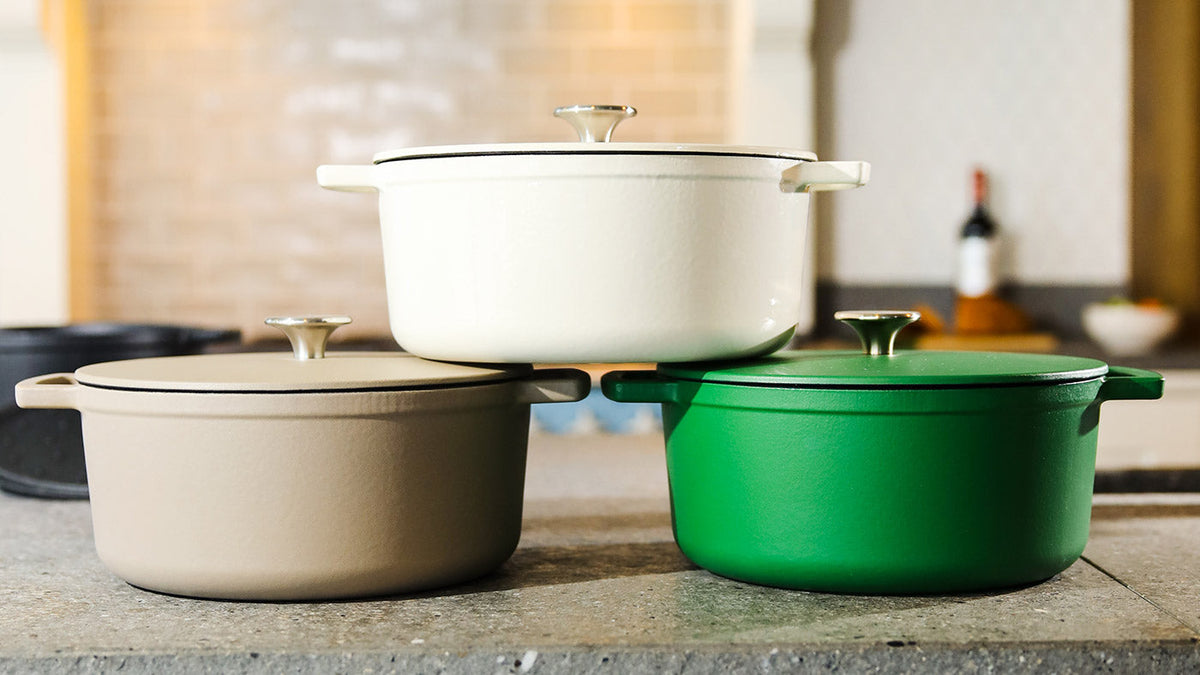
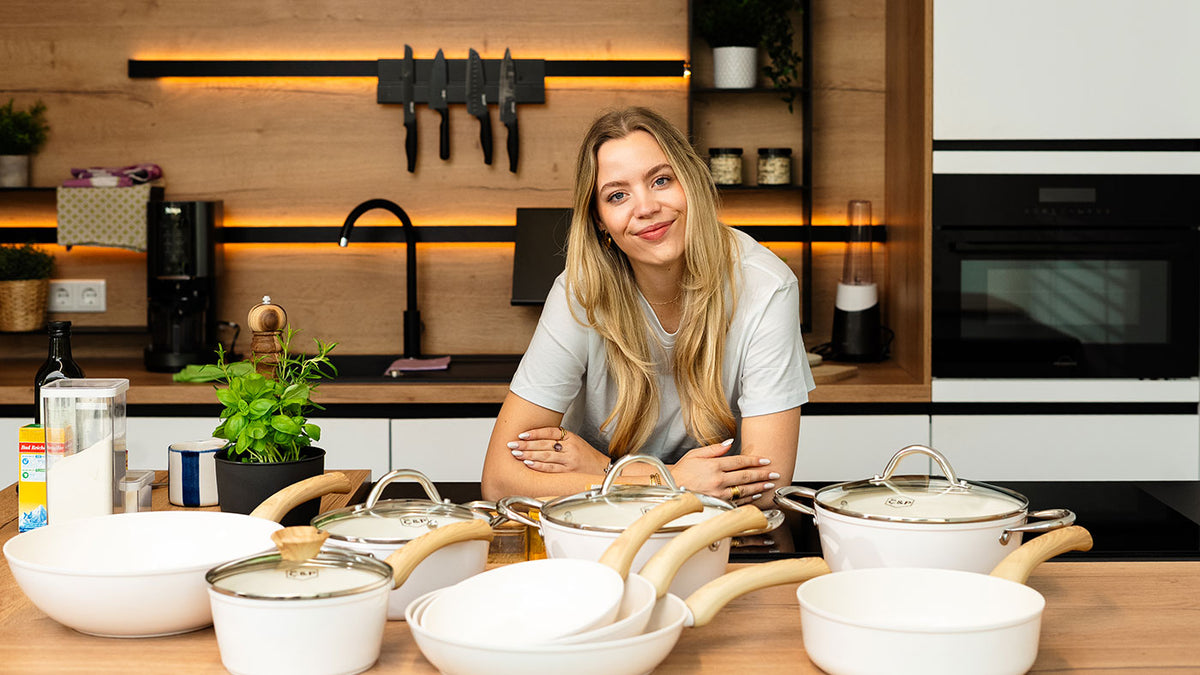
The pans from Cook & Pan, whether it's an aluminium frying pan, a stainless steel saucepan or a cast iron stew hero, are designed to absorb heat evenly and hold it patiently. That means you get more cooking joy with less power: you don't need to crank the hob to 9 to get a nice crust on your chicken. The multilayer base distributes heat right to the edges, so you can fry six eggs at once without the outer ones staying cold. That's not marketing talk, that's physics working in your favour.
The power bill that quietly makes you happy
Cooking at 80% instead of 100% doesn't just save on pan wear, it adds up at the end of the month too. Think about it: you'll use around twenty percent less energy for the exact same result. Over a year of pastas, steaks and stir-fries that adds up nicely. Sustainable cooking starts with how you use your heat source, not just which pan you buy.
Five mistakes you avoid with the 80% rule
- Your pan doesn't warp because the base doesn't have to expand all at once.
- Your fat doesn't burn because it has time to come up to temperature.
- Your dish cooks evenly because the heat spreads nicely.
- Your extractor hood doesn't have to work at full power.
- Your frying pan stays smooth longer, which means longer joy, less replacing.
How to protect your induction hob while you cook
Your induction hob also likes a calm boss. Always place the pan dry on the hob, wipe up spilled fat immediately, and avoid letting sugary sauces dry directly on the glass. This has little to do with your pan and everything to do with a glass hob that wants to stay beautiful for years. A Cook & Pan pan has a flat, smoothly finished base, exactly what an induction hob appreciates.
Frequently asked questions about induction and power
Can I ever put my pan on 9? Yes, briefly, for searing meat for example. Keep it to a maximum of one to two minutes and then dial down.
Why does my pan sometimes squeak on induction? That's not a defect, it's the magnetic field interacting with the base layers. It usually disappears when you bring the power down a bit.
Can I use a base protector? Yes, for anyone extra careful with the hob, an induction mat works fine. It does make the pan heat up slightly slower.
Smart cooking is fun cooking
A good pan deserves a good cook, and a good cook deserves a pan that keeps performing. Choose 80%, choose calm in your kitchen, and choose cookware built to last. The aluminium, stainless steel and cast iron pans from Cook & Pan are made to bring out the best version of your dishes, without needing industrial-kitchen heat. Give it a try. Your induction hob, your pan and your wallet will thank you.
💡 Please note: we love cooking with boldness, but safety always comes first. Read more on our disclaimer page.