
























"Induction-ready", "optimised for induction", "ultra-fast heat distribution". Walk past the pan aisle once and you've swallowed the marketing department's entire dictionary. But what does it actually tell you about how that pan behaves on your hob? Almost nothing. Time to see through the glossy promises and figure out what really matters.
The magnet test, and why it beats every label
Induction works with an electromagnetic field. No magnet, no heat. Grab a fridge magnet, hold it against the base, and within one second you'll know what any sticker, product page or salesperson is trying to tell you.
Magnet sticks? Good news, your pan can handle induction. Falls off? Then "induction-ready" can scream as loud as it likes on the box, your hob couldn't care less.
Aluminium can also do induction (with one catch)
Pure aluminium isn't magnetic. Yet you'll see plenty of aluminium pans that do work on induction. The secret sits in an embedded or pressed-in plate of magnetic steel on the underside. Works fine, as long as that plate is properly bonded and the base is thick enough. A thin, sprayed-on bottom plate is exactly where cheap induction pans start to fail.
Base thickness: the silent killer of a good induction pan
Induction is fast. Too fast for a thin base. You end up with hot spots in the middle, cold edges and burning eggs you can't do anything about. A thick, cast base (four millimetres or more) spreads the heat evenly and forgives a moment of distraction.
Going for the cheapest pan on the shelf? Ten to one the base is too thin. Not dramatic for a single egg, but a shame for the pan after half a year of daily use.
The size nobody checks (and why you should)
An induction zone has a fixed diameter. If your pan doesn't match it, two things can happen: it heats less efficiently, or your hob throws an error.
Rule that always works: pick a pan whose base is equal to the zone, or up to two centimetres bigger. No idea how big your zones are? Your hob's manual lists it down to the millimetre.
The 80% rule that makes your pan last years longer
Here's the win nobody tells you about. Induction is so efficient you rarely need to crank it to full. At 80% you reach the same temperature, just a touch later, with much less risk of warping, overheating and baked-on grease layers that won't come off.
The boost function? Ignore it. Great for getting a litre of water hot in 90 seconds, bad for your pan. For cast iron the rule is even tighter: max 70 to 80 percent, ramped up gradually. Stick to this and you'll be buying your next pan a few years later than your neighbour.
PFAS, non-stick and why ceramic is smart
Classic PFAS-based non-stick coatings have been under pressure for years. Reason: these substances barely break down, are now everywhere (water, blood, raincoats) and have got European regulation moving in every direction.
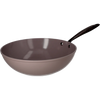
Ceramic non-stick is the PFAS-free alternative. Performs brilliantly at low to medium heat, exactly the range where induction lets you cook most naturally. And that's exactly why a ceramic pan for induction in that combo is so satisfying: induction's temperature control + a coating you don't have to worry about.
Weight and handle: boring, but you'll hold it daily
A heavy pan feels robust in the shop. Three weeks later you're cursing because you need both hands to flip an omelette. Aluminium with a thick base is significantly lighter than stainless steel or cast iron, and that makes a huge difference if you cook often.
On induction only the base heats up, so an insulated handle matters less than on gas. What does matter: does the handle sit firmly (no wobble), is it comfortable to hold, and is it oven-safe for the times you want to finish a dish in the oven.

Aluminium with ceramic coating: the all-rounder
For the bulk of what you cook in a week (stir-fries, omelettes, vegetables, pasta, sauces), an aluminium pan with a ceramic coating is the pragmatic answer. Quick to heat, light, PFAS-free, easy to clean. Plus: at Cook & Pan it comes with seven years of manufacturer's warranty, so no throwaway story.
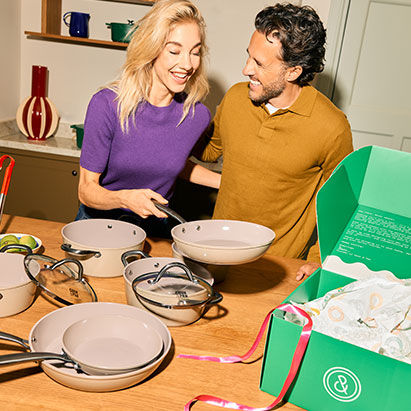
Want the most-used sizes in your kitchen in one go? Look at a pan set for induction. No surprises afterwards, every pan works on your hob.
Stainless steel: for those who love technique and high heat
Stainless steel is scratch-resistant, lasts long and handles much higher temperatures than ceramic. No non-stick coating, so a bit more cooking skill needed (preheating, fat, not stirring too early). The reward: a golden-brown crust on your steak that a non-stick pan can only dream of. Plus the ability to deglaze, meaning turning those caramelised bits into a sauce.
Cast iron: the marathon runner
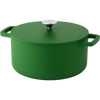
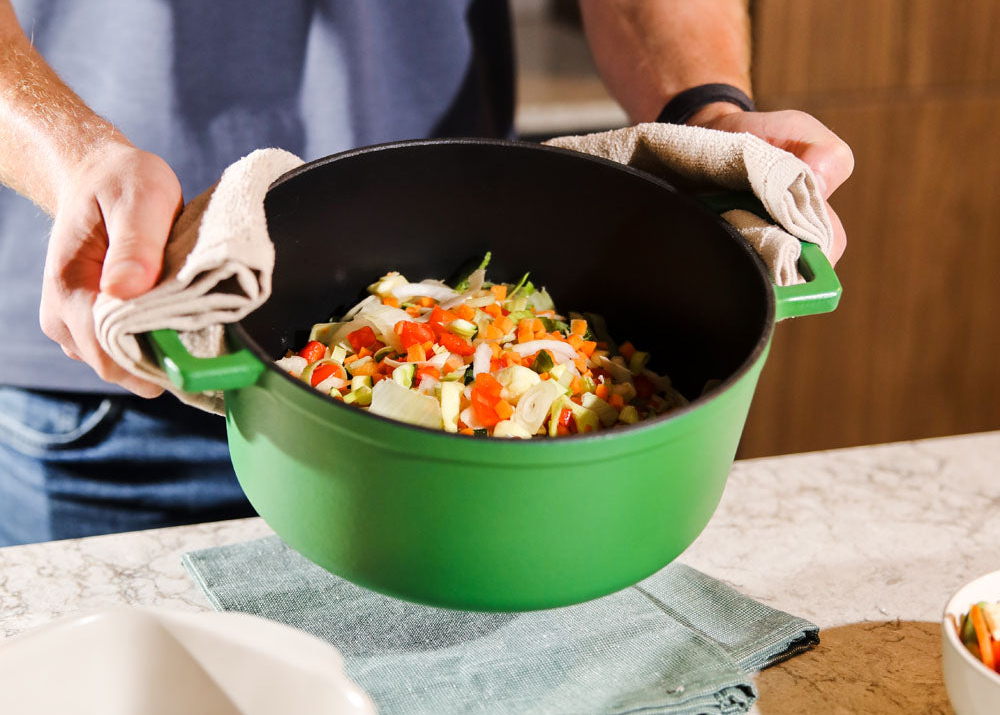
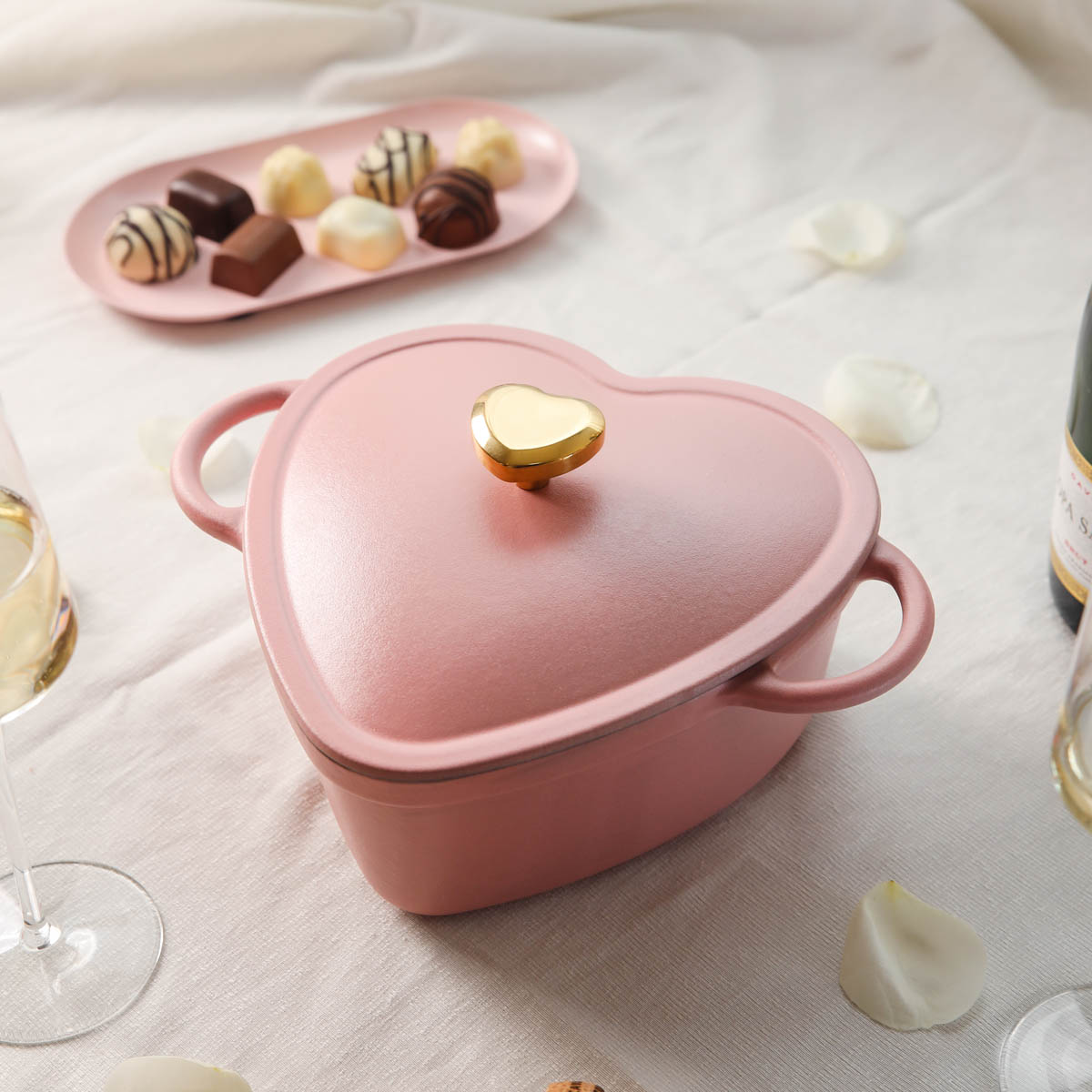
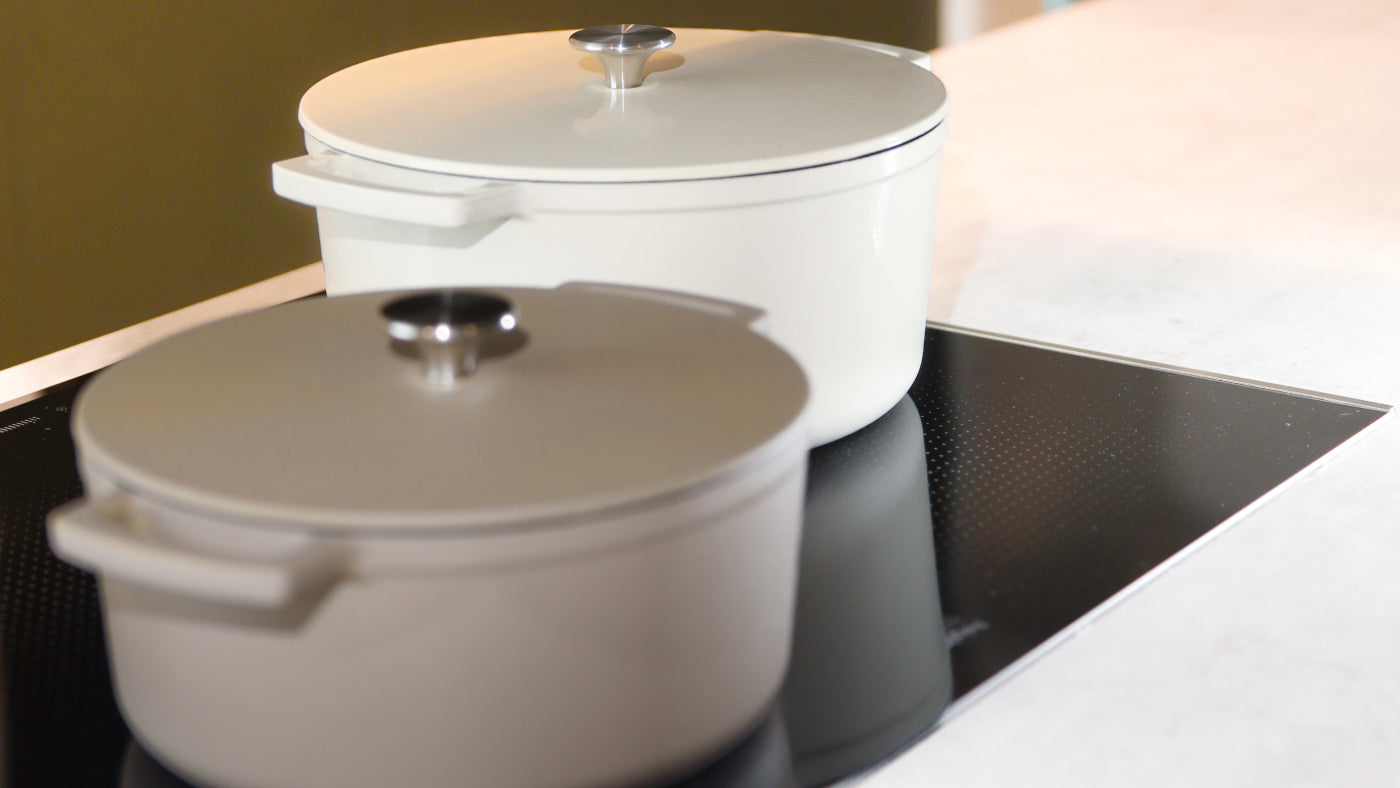
Cast iron heats slowly, but once it's at temperature, it has an iron memory. Ideal for stews, searing on low heat, baking bread in a dutch oven. With a bit of love (gradual heating, hand wash, store dry) such a pan doesn't last years but generations. There's a reason the manufacturer's warranty covers 25 years. Have a look at the dutch ovens if you're ready for a true hob-side workhorse.
The three pans that cover 90% of your week
No overflowing pan cupboard, just a working trio:
- A 28 cm ceramic frying pan for everything that needs to be quick: eggs, stir-fries, fish. See the frying pans for induction for the right size.
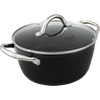
- A 24-28 cm sauteuse with lid for pasta sauces, risotto, a quick curry.
- A cast iron dutch oven for stews, bread, roast chicken, and anything you want bubbling away gently for hours.
Got an empty kitchen cupboard or just moved in? A set is often cheaper than buying pans separately, and you know for sure everything works on induction.
What the marketing doesn't tell you
Three things you won't find on the box:
- "Induction-ready" says nothing about quality, only that the base is magnetic. A sticker doesn't make a pan a good induction pan.
- The boost function is the motorway to a warped base. Keep it for one purpose: bringing water to the boil quickly, then turn it down.
- Dishwasher-safe is a promise from the manufacturer, not a recommendation from the pan. Hand wash + dry immediately extends the life dramatically, especially for coatings and cast iron.
Quick checklist for the shop (or your basket)
- ✓ Does the base react to a magnet?
- ✓ Is the base diameter equal to or just slightly larger than your cooking zone?
- ✓ Is the base at least four millimetres thick and cast or pressed?
- ✓ Is the coating PFAS-free (ceramic)?
- ✓ Is the handle comfortable for daily use?
- ✓ Does the material match how you cook (fast = aluminium/ceramic, craft-style = stainless, slow = cast iron)?
Tick six yeses? Then you're not buying marketing talk, but a pan that in five years will still do exactly what it's supposed to. And if you want to dive even deeper into the compatibility question, also read which pans for induction actually work. Then you're ready for whatever your hob throws at you tomorrow.
💡 Please note: we love cooking with boldness, but safety always comes first. Read more on our disclaimer page.