




















A slight curve can already make a difference
You might know it: you put some butter in the pan and instead of melting calmly in the middle, it slides to the edge. This is often caused by a slight bulge or curve in the bottom. We’re not talking about a big problem, but a few millimeters difference can be enough to make your cooking experience just a bit trickier.
Why a pan becomes warped or bulged
Metal reacts to heat. If a pan heats up very quickly and then cools down too fast, the bottom warps. Also, cooking for a long time on high heat without anything inside can cause this effect. Especially pans with a thin bottom are sensitive to this. So it’s something many people experience, but luckily often easy to prevent.
What this means for your cooktop
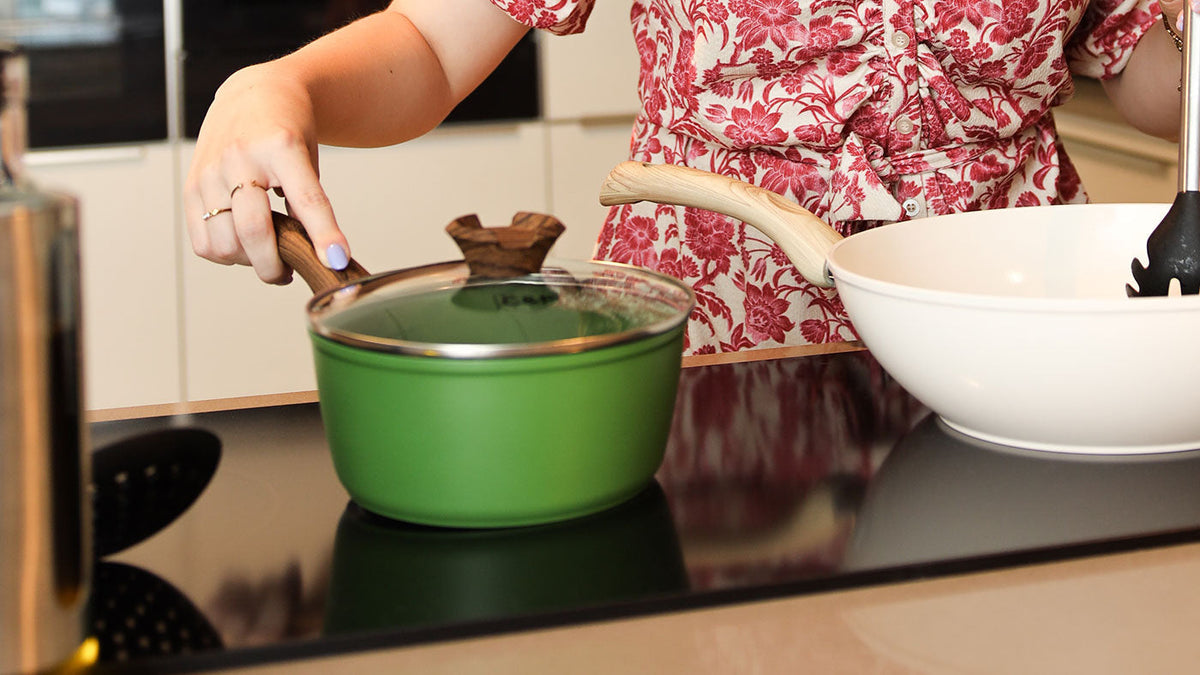
You notice a slight bulge most quickly on induction, because flat contact is crucial there for optimal heat transfer. Your pan then heats up a bit less evenly and oil can run to the edges. On ceramic and gas it’s less noticeable, but even there a truly flat pan naturally cooks nicer and more evenly.

Material makes a difference
Some materials hold their shape better than others:
- Cast iron: robust, heavy and usually stays flat, even at high temperatures.
- Stainless steel: sturdy and reliable, especially with a good multilayer bottom.
- Aluminum: light and heats up fast, but prone to warping without a solid base.
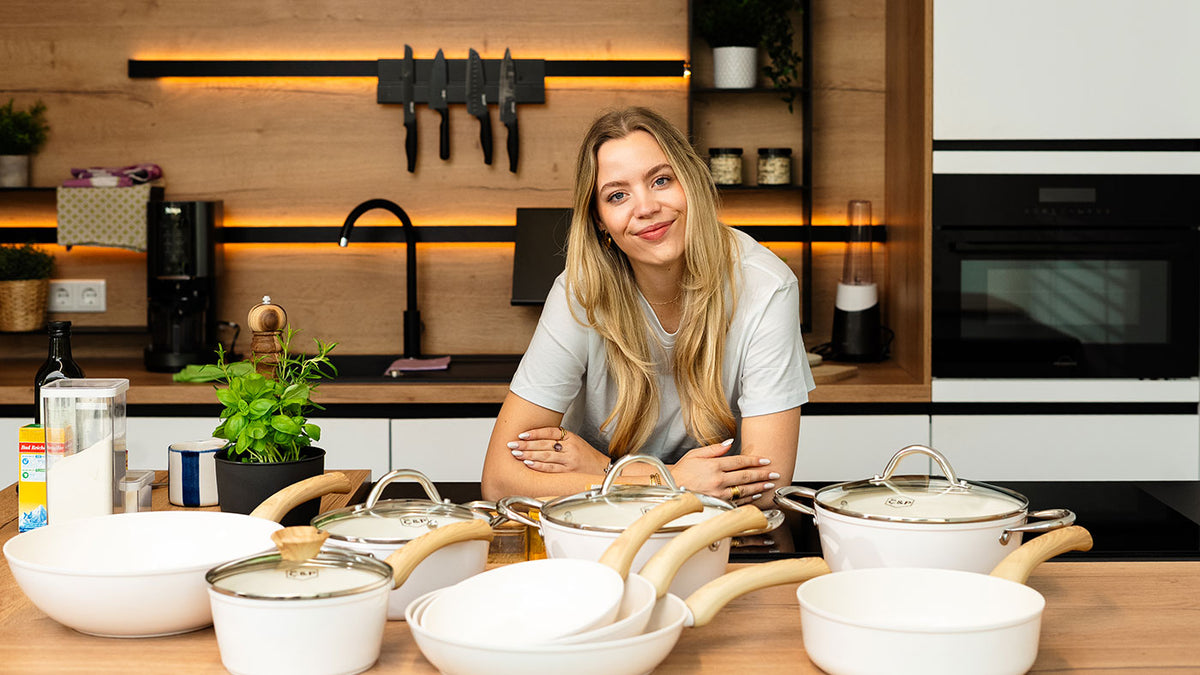
Cook & Pan deliberately chooses thick, smart bottoms for each material type, so your pan resists deformation better and lasts longer.
How to recognize a warped or bulged pan bottom
Wondering if your pan is warped? Try this:
- Place the empty pan on a flat cooktop. Does it wobble or turn? Then the bottom isn’t completely flat.
- Drop a little oil in the middle. Does it immediately run to the edge? Then there’s a slight bulge.
- Put a ruler or card on the bottom. Do you see light underneath? That indicates warping.
How to prevent warping
A few simple habits help keep your pan nice and flat:
- Heat the pan gently and not always on the highest setting.
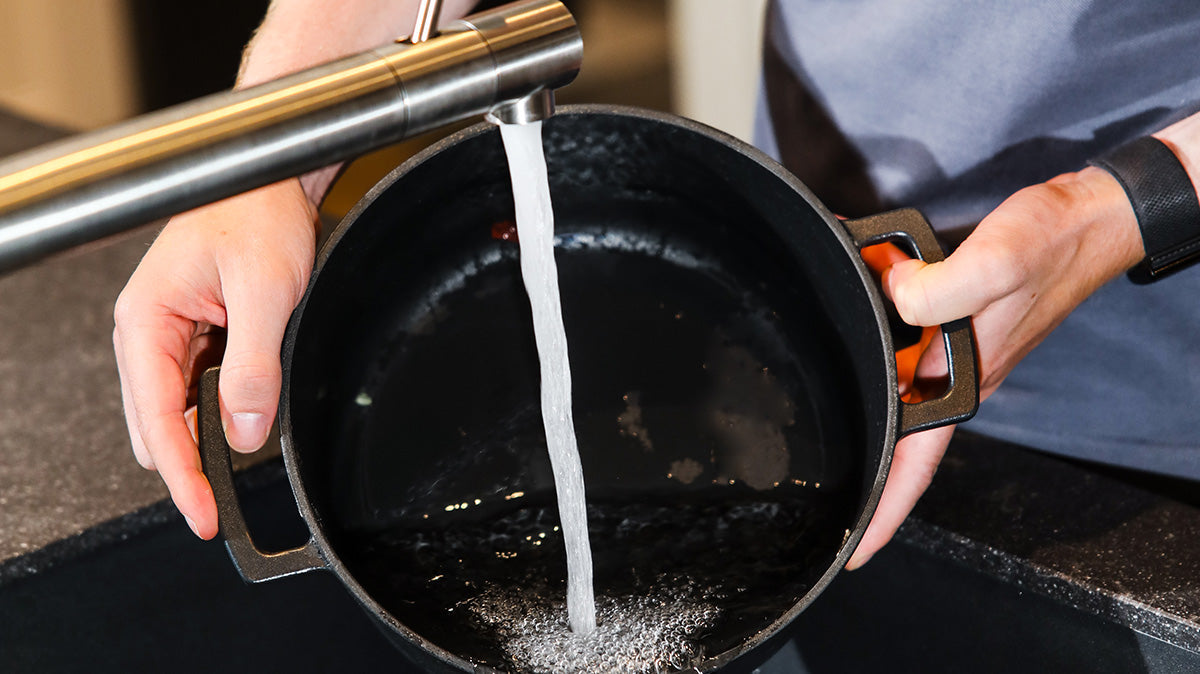
- Never put a hot pan directly under cold water.
- Don’t let an empty pan get blazing hot for minutes.
- Choose a pan with a sturdy, thick bottom.
What you better avoid
A few things increase the chance of a warped pan bottom. So avoid:
- Cold shocks, like ice water over a hot pan.
- Preheating for a long time on the highest setting without reason.
- Dry heating without oil or food inside.
What if your pan is already warped or bulged
Good to know: a slight bulge usually doesn’t make your pan immediately unusable. You can often still cook well with it, especially on gas or ceramic. On induction it might be a bit less efficient, but the pan is often still usable. Getting it perfectly flat again usually doesn’t work, so prevention is always better than cure.
Frequently asked questions
Is a warped pan dangerous?
No, you can just keep cooking with it. It’s mainly less convenient for even cooking.
Does this happen with all pots and pans?
Any pan can warp, but thick bottoms resist deformation better.
Are Cook & Pan pots and pans better at resisting bulging?
Yes, our pans have sturdy bottoms that keep their shape much better, even with daily use.
Why Cook & Pan chooses sturdy bottoms
We know warping is a common frustration. That’s why we design pans with extra sturdy, multilayer bottoms that distribute heat better and prevent deformation. So you worry less and can focus on what really matters: cooking well.
Choose smart and cook worry-free
A slight bulge can be annoying, but it’s no drama. With the right habits and a pan built to stay flat, you cook more relaxed and with more pleasure. Ready for an upgrade? Now you know what to look for – and why Cook & Pan is the smart choice.
💡 Please note: we love cooking with boldness, but safety always comes first. Read more on our disclaimer page.