










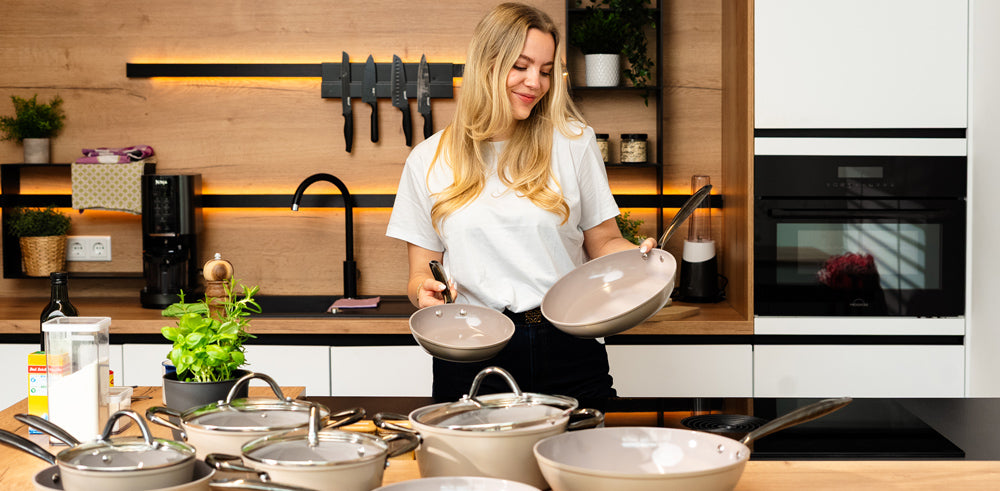
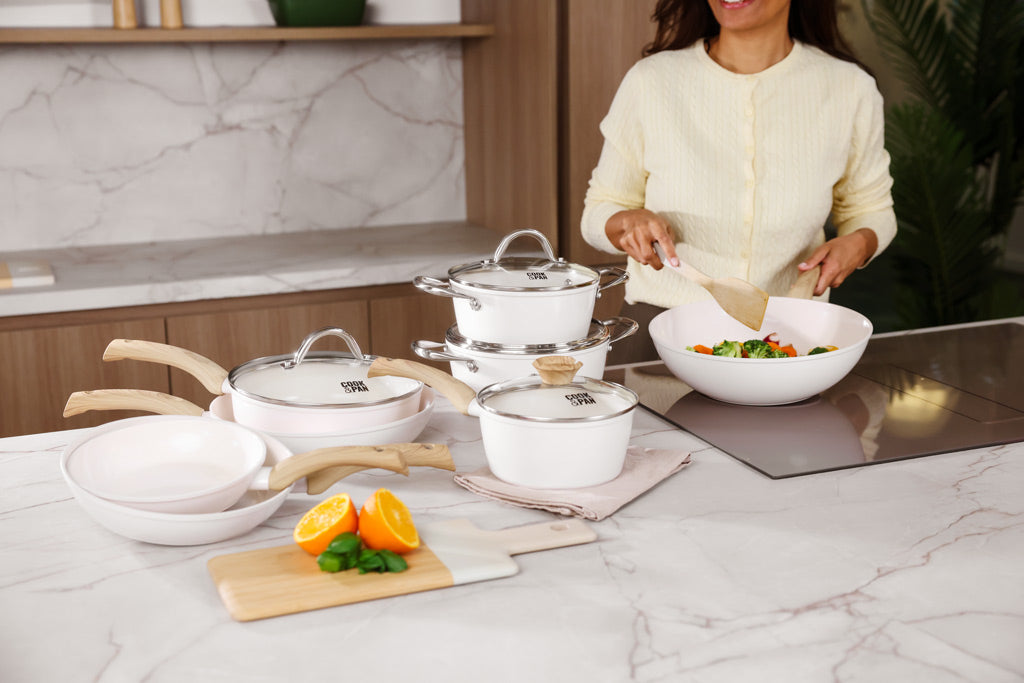
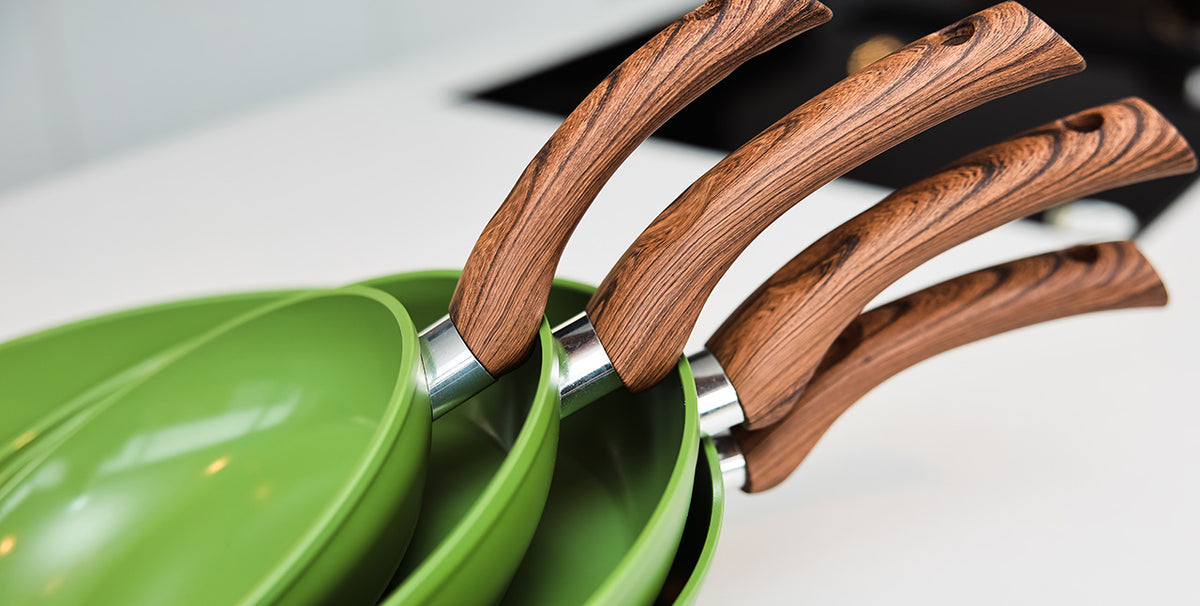








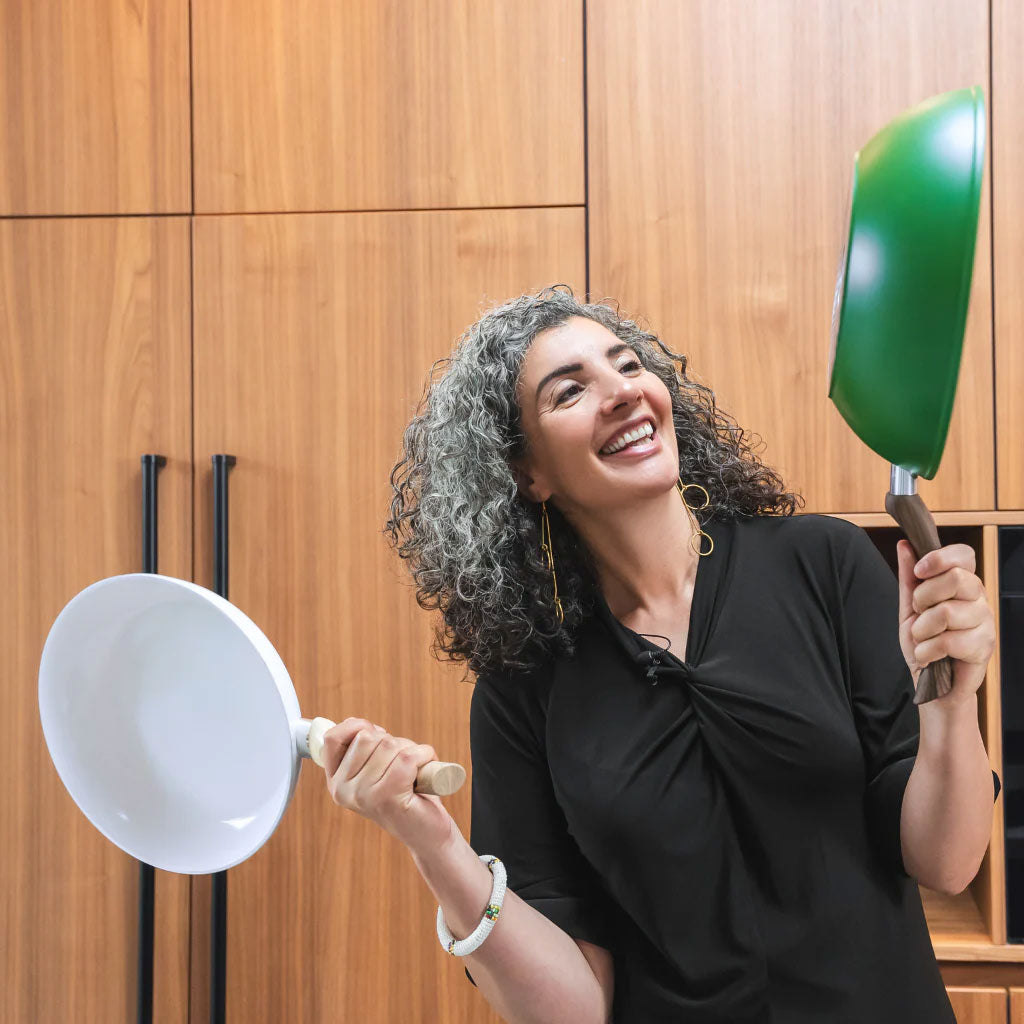


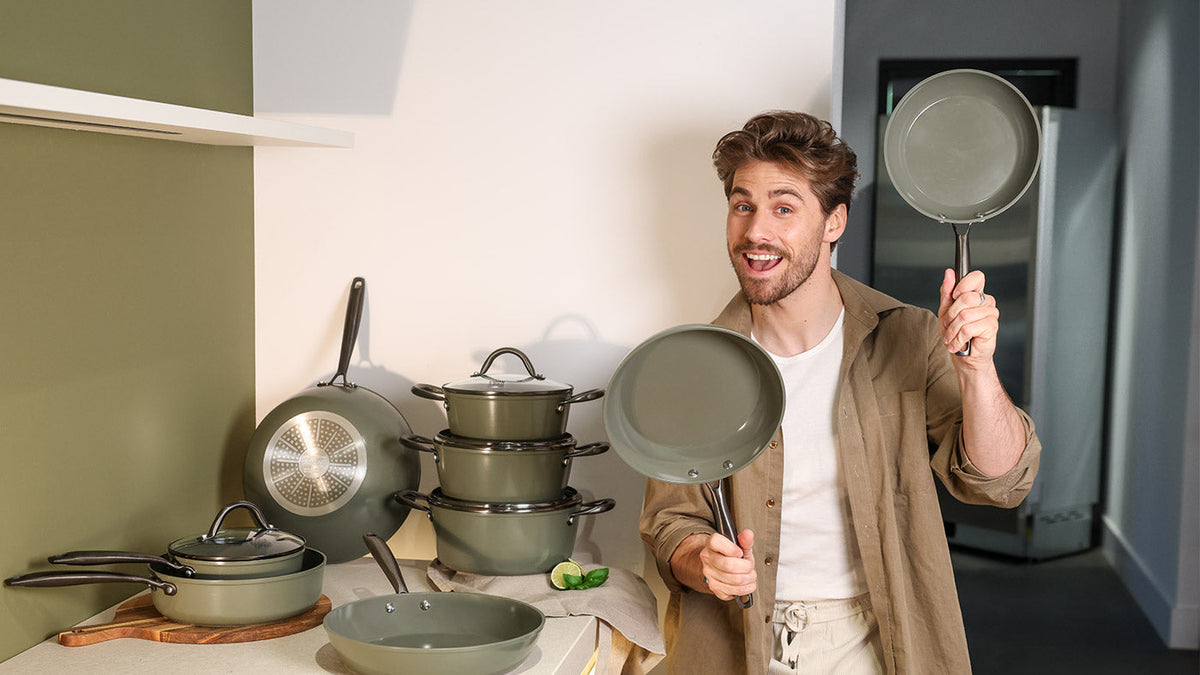
"The best frying pan" doesn't really exist. Not in the way manufacturers want you to believe. What does exist: the best frying pan for your hob, your cooking style and your patience with maintenance. A cast iron pan can be a lifelong love for one cook and a bulky regret for another. So below you won't find a top-10 list with stars, but an honest guide that helps you choose based on what's actually on your worktop at home.
What actually makes a frying pan "the best"?
Ask ten cooks and you get ten answers. Yet the requirements usually come down to the same thing: it should heat evenly, not stick, last for years, work on your hob and not be packed with chemicals. The "best" pan is the one that scores best on these five points for your situation. A 1.500 euro restaurant pan is overkill if you fry an egg twice a week. A six-euro budget pan is exactly that: six euros' worth.
At Cook & Pan we therefore prefer to look at three properties at once: material, fair production and lifespan. More on that below. Don't feel like reading and just want to see what we carry? Then take a look at our complete frying pan collection and come back later.
Start with your hob, because it determines the most
Many buyers skip this step, and that's usually where it goes wrong. A frying pan that isn't induction-ready simply doesn't work on an induction hob. Not "a bit less well", but: the pan just won't get hot. So check first:
- Induction: the pan needs a magnetic base. A magnet from your fridge is your best friend when choosing.
- Gas: almost everything works. Cast iron and stainless steel lead the way; aluminium with ceramic coating also does well.
- Ceramic hob (vitroceramic): a flat, heavy base is important to avoid scratches.
- Electric (solid plate): everything works, but cast iron and aluminium react more slowly than on gas.
Cooking on induction? Then your selection is smaller, but still plenty. Our induction frying pans are all tested on induction bases and deliver fast, even heat without whining or vibrating.
Material: three families, three very different characters
At Cook & Pan we carry three main materials for frying pans. No solid ceramic pans (those don't really exist for daily use), no mystery-mix, no enamel frying pans. Three families, three characters.
Aluminium with ceramic non-stick coating
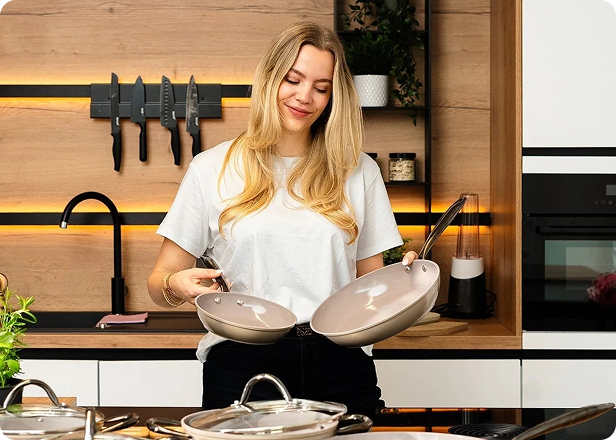
The all-rounder. Aluminium body for light weight and fast heat conduction, with a ceramic coating for the non-stick. Good for eggs, fish, pancakes and anything that needs to be quick. Downside: the coating is the most vulnerable part; gradual heating and wooden or silicone spatulas keep it smooth longer. Take a look at our ceramic frying pans if you recognize this style of cooking.
Stainless steel in 3-layer construction
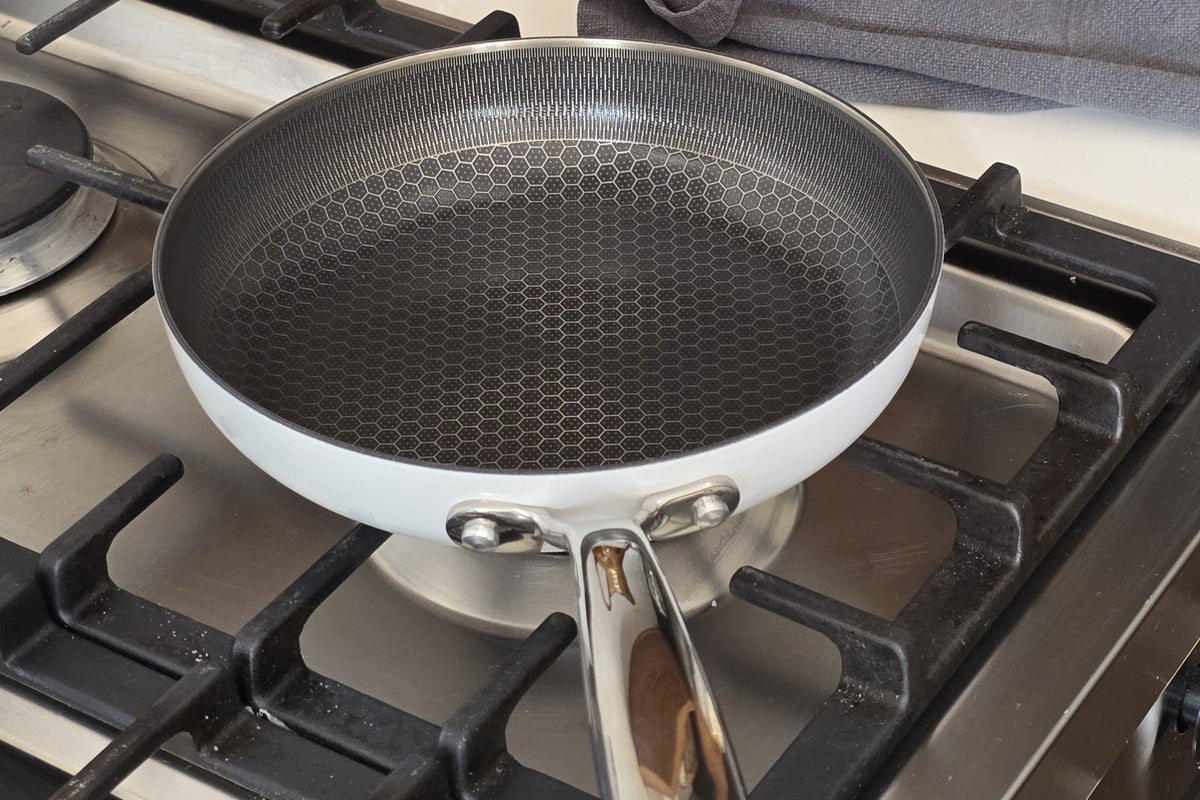
The workhorse. Three layers (stainless, aluminium core, stainless) ensure even heat, topped with a PFAS-free ceramic non-stick coating. The sturdy stainless steel protects that coating. Our stainless steel frying pans are dishwasher-safe; washing by hand keeps the non-stick coating smooth for longer.
Cast iron
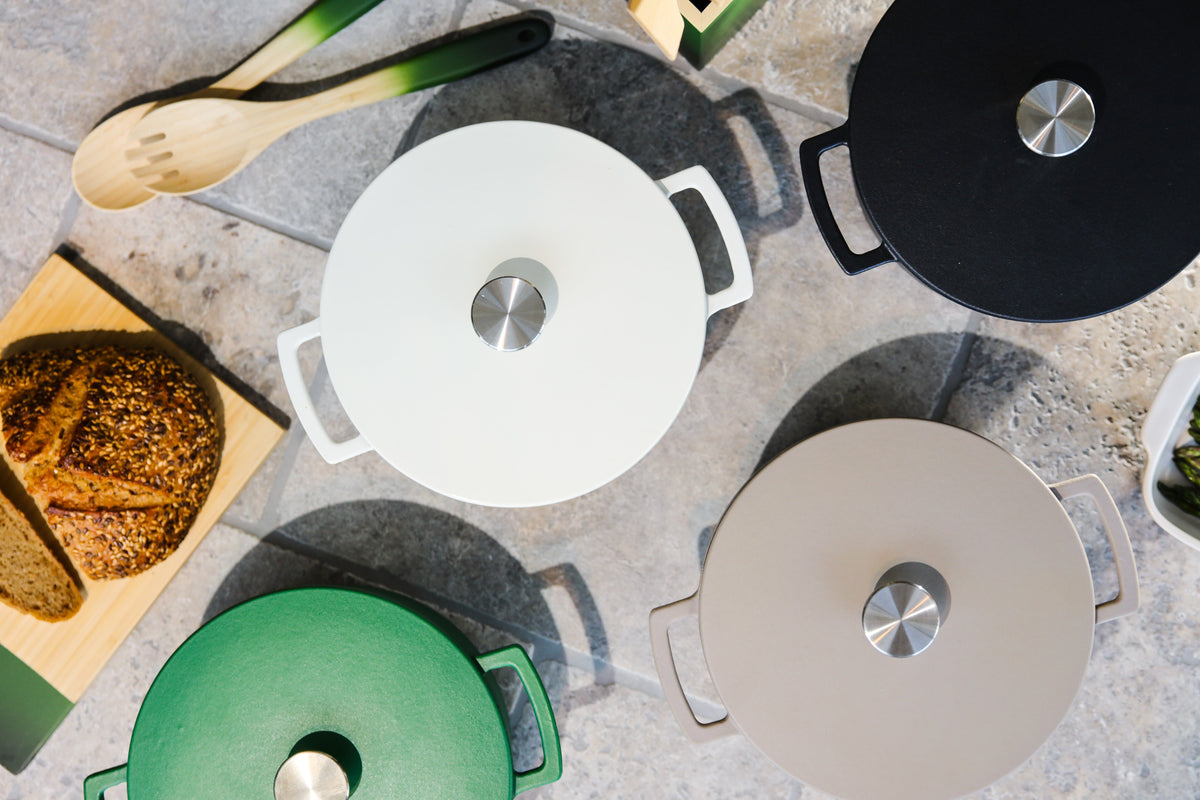
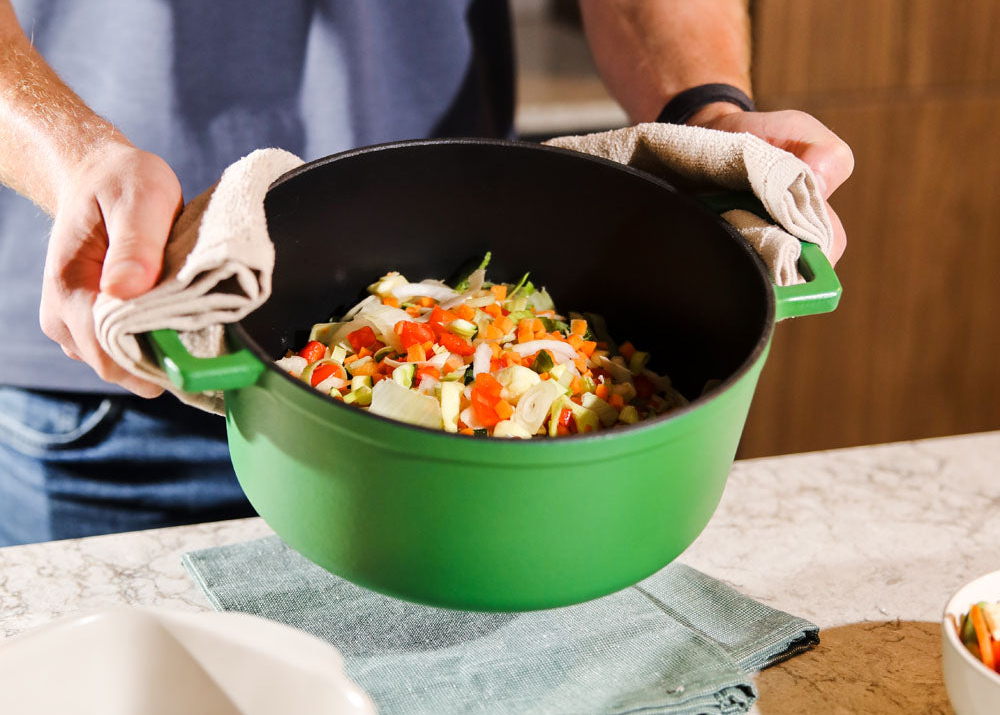
The heirloom pan. Heats slowly, holds heat like a stone in the sun and gets better every year. Not ideal for delicate fish, but perfect for steaks, pancakes, bread and anything that wants a beautiful crust. Heavy (count on 2 to 3 kilos). Our cast iron pans come pre-seasoned out of the box, so you can use them straight away.
PFAS-free isn't a marketing gimmick anymore
Until a few years back, "PFAS-free" was something only the hip brands wrote on their packaging. By now the entire EU is moving towards stricter rules around PFAS (per- and polyfluoroalkyl substances, also known as "forever chemicals"). At Cook & Pan we haven't used PFAS in our coatings for years. Not because we had to, but because we don't want a question mark hanging over our pan above the omelette.
Want certainty? Then filter on our PFAS-free frying pans. Only pans made completely without PFOA, PFOS, PTFE and related substances are listed there.

Which frying pan size suits your household?
This is the second most common regrettable purchase: the wrong size. Too small and you're frying in two batches; too big and you'll burn things more often because heat isn't evenly distributed.
- 20 cm: one person, an egg, an omelette, a reheating pan.
- 24 cm: one to two people, daily use, perfect for pancakes.
- 28 cm: three to four people, the all-rounder for families.
- 30 cm and bigger: large groups, paella-style dishes, or if you like to meal-prep for the whole week.
Torn between 24 and 28? Pick 28. A pan that's too big you can still half-use; one that's too small stays too small. Our 28 cm frying pans are the bestselling size, and not without reason.
How long does a good frying pan really last?
Honestly, it depends mainly on the material and your maintenance. Here's what you can realistically expect.
- Cast iron: a lifetime. Our cast iron pans come with 25 years of warranty on manufacturing and material defects, and in practice they end up with your grandchildren.
- Stainless steel 3-layer (Honey): the stainless steel lasts a very long time; the ceramic coating wears more slowly than on a standard ceramic pan, but it is still a coating to look after.
- Aluminium with ceramic coating: years. The pan itself comes with 7 years of warranty on manufacturing and material defects, and the coating's function is covered for 2 years. In practice you'll notice the coating's smoothness fades first under intensive daily use. Gradual heating and soft spatulas keep it smooth longest.
Not sure whether a ceramic frying pan is for you? At Cook & Pan you can try it at home for 60 days. If it doesn't work as hoped, you simply send it back.
Non-stick versus sticking: an honest take
Non-stick doesn't mean "never sticks". It means you can get away with less fat and that releasing food is easier. A stainless pan asks for a bit more technique (let it get properly hot before adding food) and rewards you with flavourful browned juices. A ceramic pan is more forgiving for those who don't want to bother with technique.
Which you choose depends as much on how you cook as on the material. Love sauces? Stainless. Mostly fry eggs and pancakes? Ceramic. Want the best of both worlds? Then just buy one of each.
What does a good frying pan actually cost?
You buy a good frying pan for between 50 and 150 euros. Below that you compromise on material thickness, coating quality or handle stability. Above that you mostly pay for design, branding or a particular chef's name on the box. A 35-euro pan that's done after a year costs you more over five years than a 90-euro pan that lasts six years. Run the numbers, the result is always the same.
Want a price overview per type? On our frying pan page you'll find every model with price, material, size and compatibility side by side.
The role of the handle, weight and balance
Don't underestimate this. A pan that hangs lopsided on the burner, that's too heavy for one hand, or whose handle gets hot: those are pans that disappear into the cupboard. Always pick a pan up before buying. Does it feel balanced? Can you lift it comfortably, even when full? Does the handle sit well in your hand (small hands, big hands, with or without arthritis)?
Two things to look at:
- Handle material: solid metal can go in the oven, phenol or wood usually not above 180 degrees.
- Attachment: riveted or screwed is more durable than glued.
Maintenance accounts for half the lifespan
A frying pan that's worn out within a year is rarely a quality issue. It's usually a maintenance issue. A few rules that apply to almost any pan:
- Heat gradually. Not setting 9 and then cold water in.
- Use wooden or silicone spatulas on coated pans, not metal.
- Don't run a hot pan under cold water.
- Dishwasher: only if the manufacturer explicitly says so; cast iron and coated pans rather not.
- Don't stack pans without a cloth in between.
A good lid helps too. It keeps moisture in, so your dish cooks faster and you need less fat. Our pan lids fit several sizes at once, so you don't need a separate lid for every pan.
Common regrettable purchases (and how to avoid them)
Four things we hear customers say every week, and how you could have avoided them:
- "Bought too small": when in doubt, always go one size bigger. A 28 cm replaces a 24 cm more easily than the other way round.
- "Didn't work on induction": check before you buy whether the base is magnetic.
- "Coating came off after a year": almost always heated too high without fat or oil, or run through the dishwasher. Read the instructions on first use.
- "Too heavy": cast iron is and stays 2 to 3 kilos. Want something you can lift easily with one hand? Pick aluminium with a ceramic coating.
Which frying pan suits which type of cook?
Finally, a quick match. Recognize yourself?
- The weekday eggs-and-pancakes cook: aluminium with ceramic coating, 24 or 28 cm.
- The steak lover: cast iron 26 cm, optionally with grill ribs.
- The sauce builder: stainless steel 3-layer, 24 or 28 cm.
- The all-round household cook: one ceramic 28 cm and one stainless 24 cm. That covers 95 percent of what you cook at home.
- The health-conscious cook: PFAS-free coated or stainless, no mystery coatings.
Still torn between form and function? Then read our guide on the difference between a sauté pan and a frying pan, or check which types of frying pans there are.

Our pick: how to choose the best frying pan in five minutes
Step-by-step, save it:
- What's your hob? (induction / gas / ceramic / electric)
- How often do you cook? (daily / occasionally / weekend treat)
- What dish type dominates? (eggs and pancakes / steaks and roasting / sauces)
- How many people eat with you? (1, 2, 3 to 4, or more)
- What's your budget? (50, 90, 150 euros)
With those five answers you'll know in 80 percent of cases which pan you're after. The other 20 percent? That's what we're here for: drop us a message and we'll think along, no strings attached.
Frequently asked questions about the best frying pan
Which material is healthier: ceramic or stainless?
Both are safe as long as they're PFAS-free. Stainless has no coating and is technically the simplest; modern-quality ceramic coatings are also fine, as long as you don't crank the heat up high without fat in.
Can a frying pan go in the dishwasher?
Cast iron and coated pans rather not. Stainless 3-layer usually yes, but hand-washing always extends the lifespan. Dishwasher salts and high temperatures aren't ideal for the finish.
How many frying pans do you really need?
Two is enough for most households. A big one (28 cm) as the all-rounder and a small one (20 or 24 cm) for solo dishes. A third cast iron pan is a luxury, not a necessity, but lovely to have.
What's the difference between an expensive and a cheap frying pan?
Material thickness (a thin base warps), coating quality (peels or doesn't), handle attachment (glue versus rivets) and warranty terms. Cheap usually ends up expensive in the long run.
Is a Cook & Pan frying pan PFAS-free?
Yes. Our coatings are free of PFOA, PFOS, PTFE and all related substances. Our cast iron pans don't have a coating in the first place, and the ceramic non-stick coating on our aluminium pans and our stainless steel Honey pans is PFAS-free.
💡 Please note: we love cooking with boldness, but safety always comes first. Read more on our disclaimer page.