



























Filters


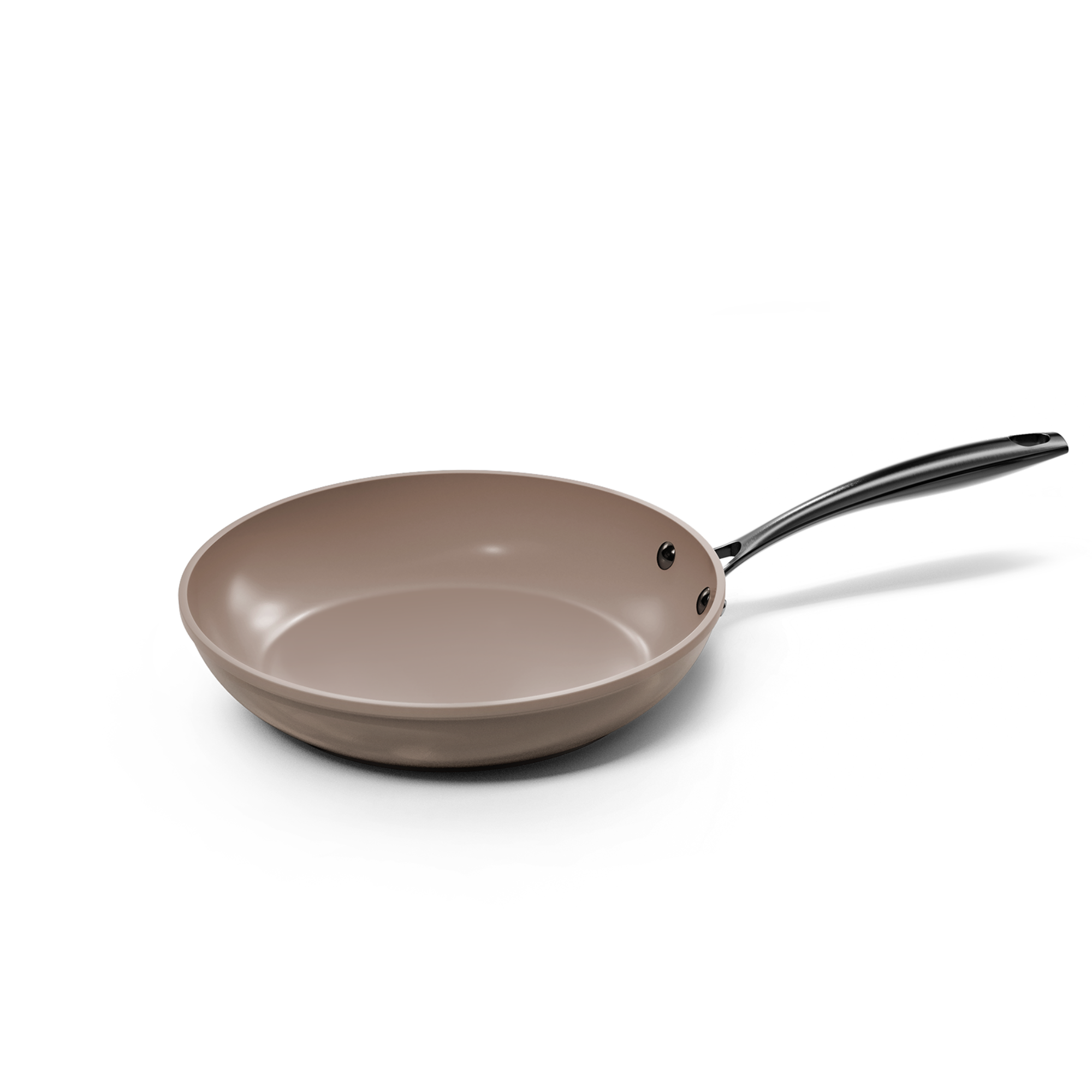

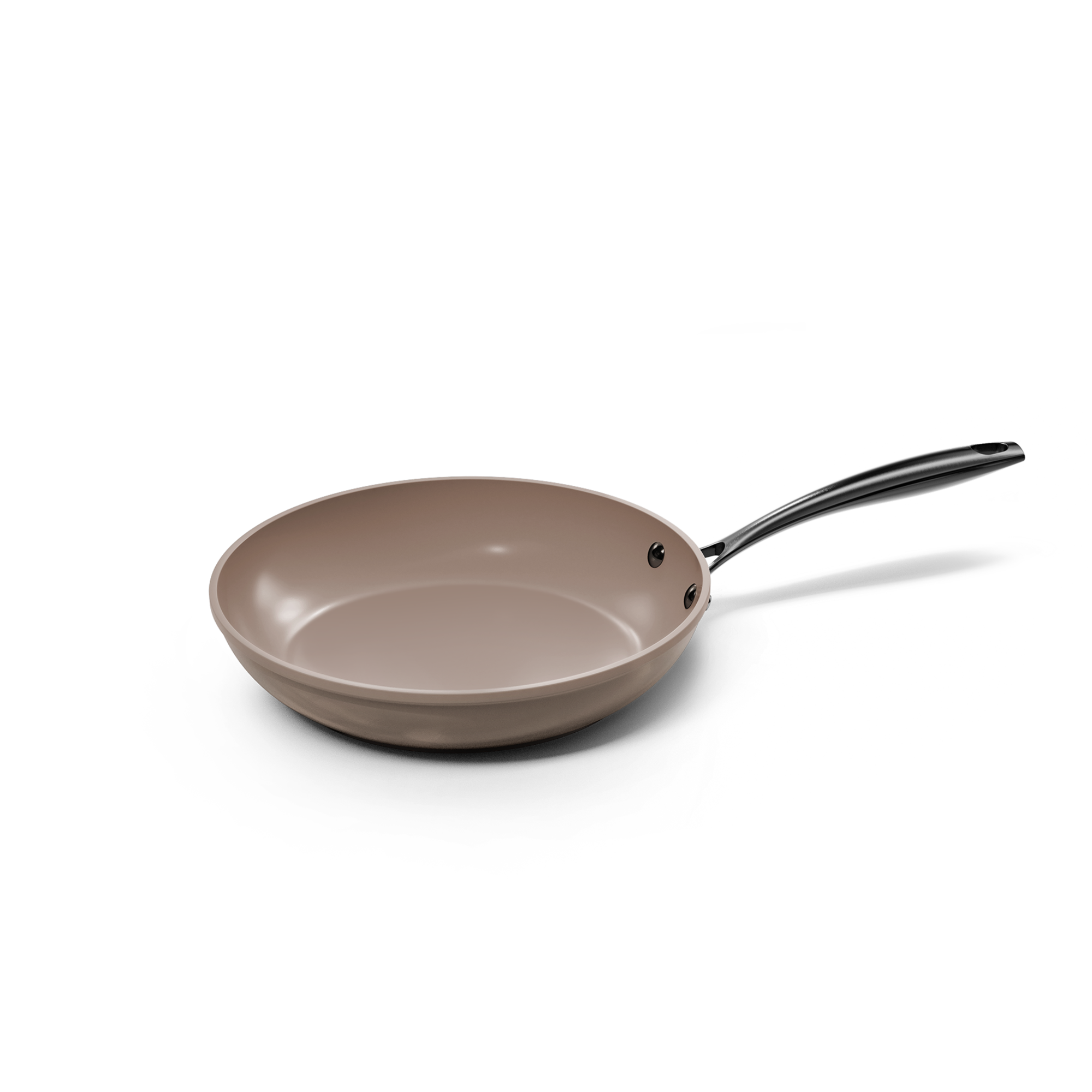








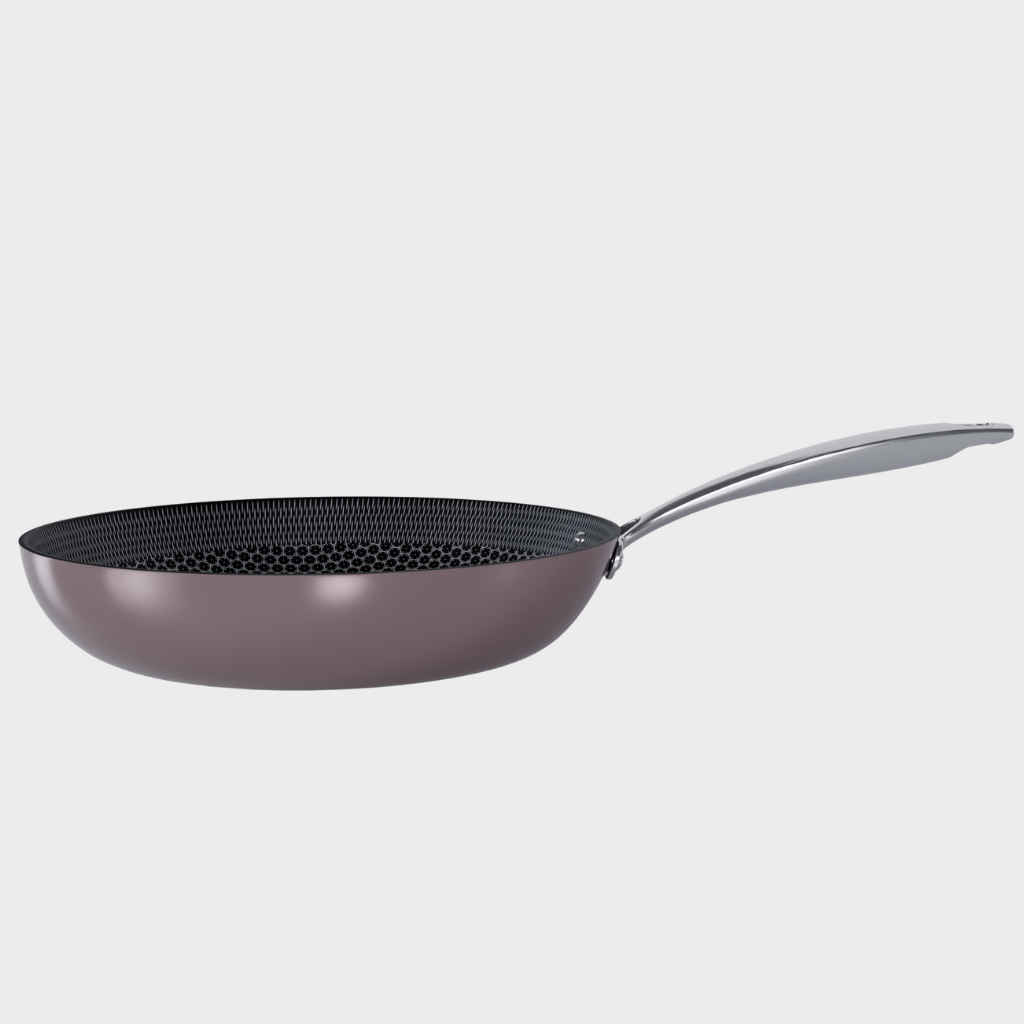


Ceramic frying pan: smooth, light and PFAS-free
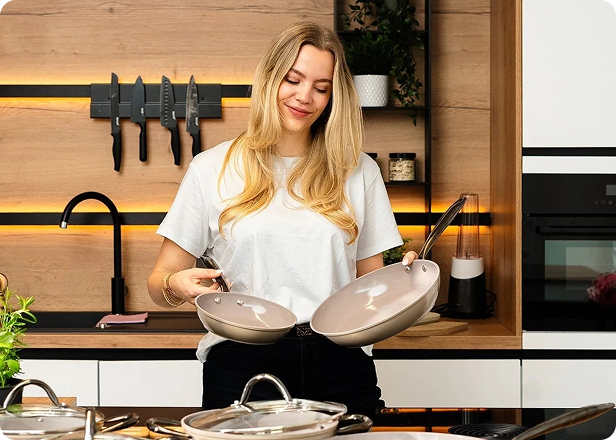
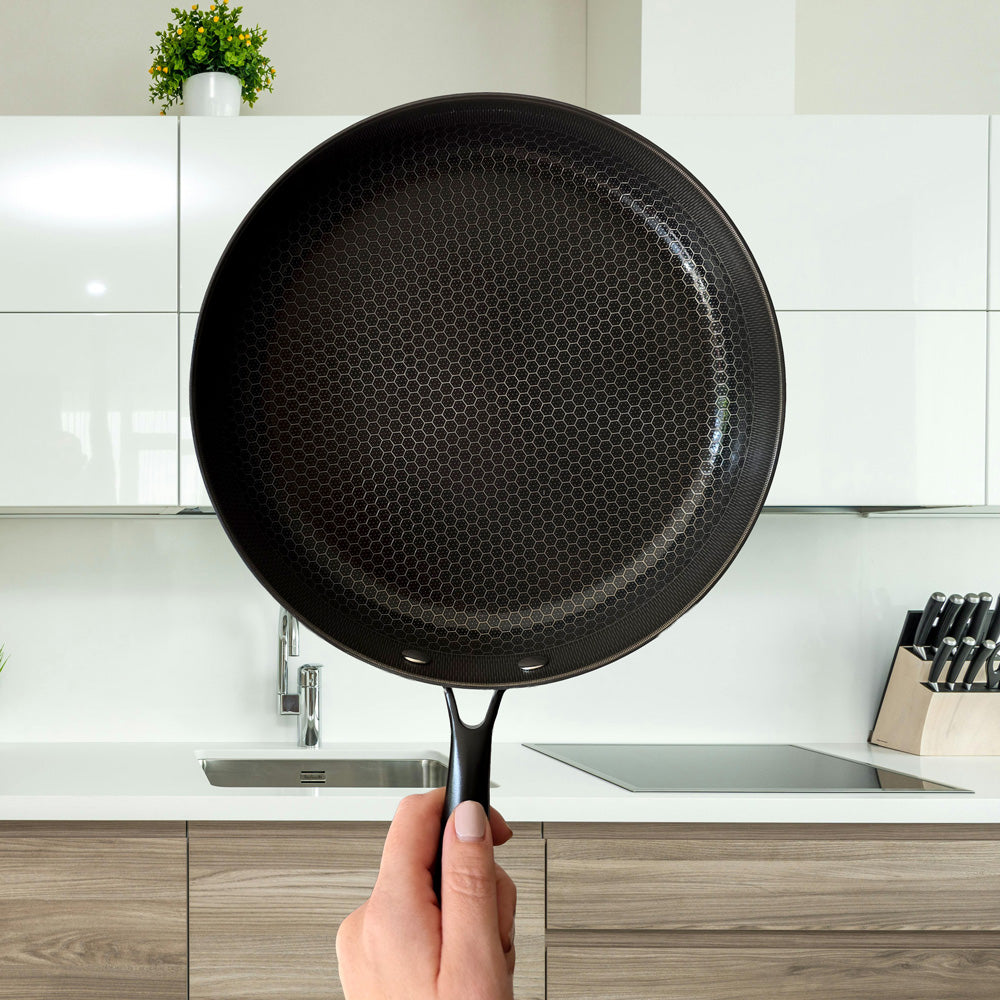
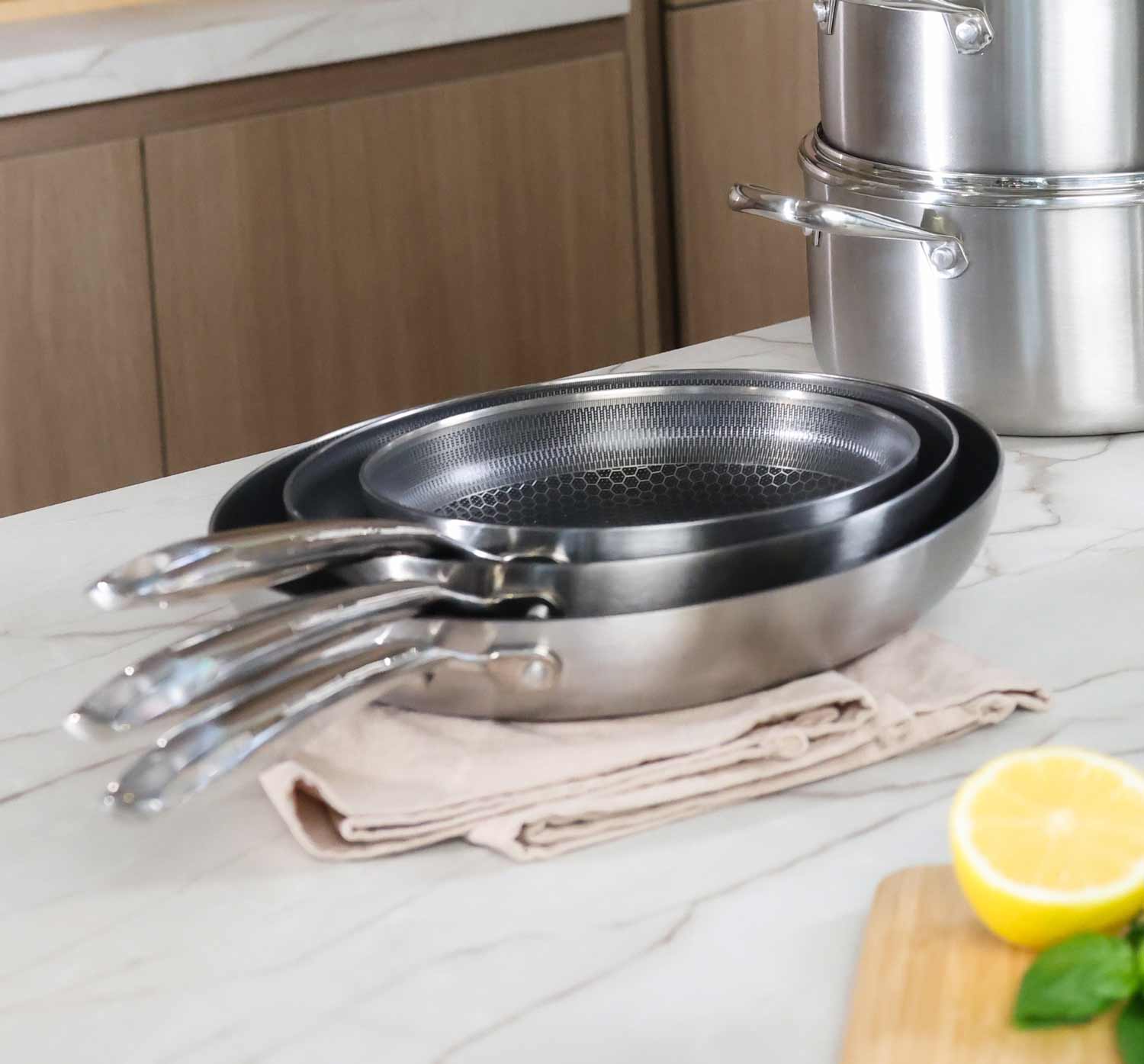
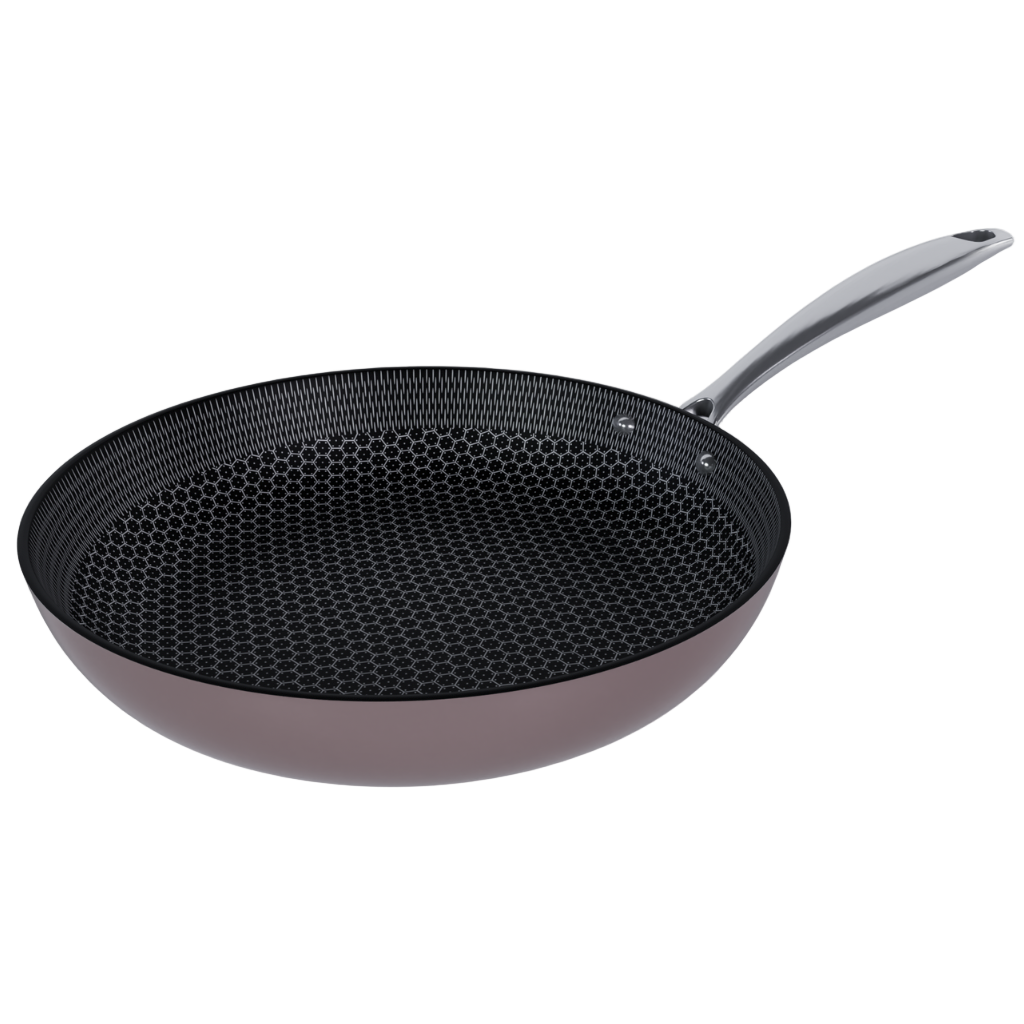
A Cook & Pan ceramic frying pan has a smooth ceramic non-stick coating, without PFAS, PTFE or any other synthetic coating. Your egg slides right out and a drop of oil is all you need. The coating sits on an aluminium body, light and quick to heat, or on stainless steel in our Honey line, extra sturdy and scratch-resistant.
Looking for more than a frying pan? Browse all our ceramic pots and pans, from wok to cooking pot.
How does a ceramic non-stick coating work?
The coating is made of silicon oxide, a mineral also found in sand and glass. It is applied to the pan at high temperature and cured into a smooth, hard layer. No plastic and no polymer, so nothing from the coating ends up in your food, not even if your pan accidentally sits empty on the heat for a moment.
Which ceramic frying pan suits you?
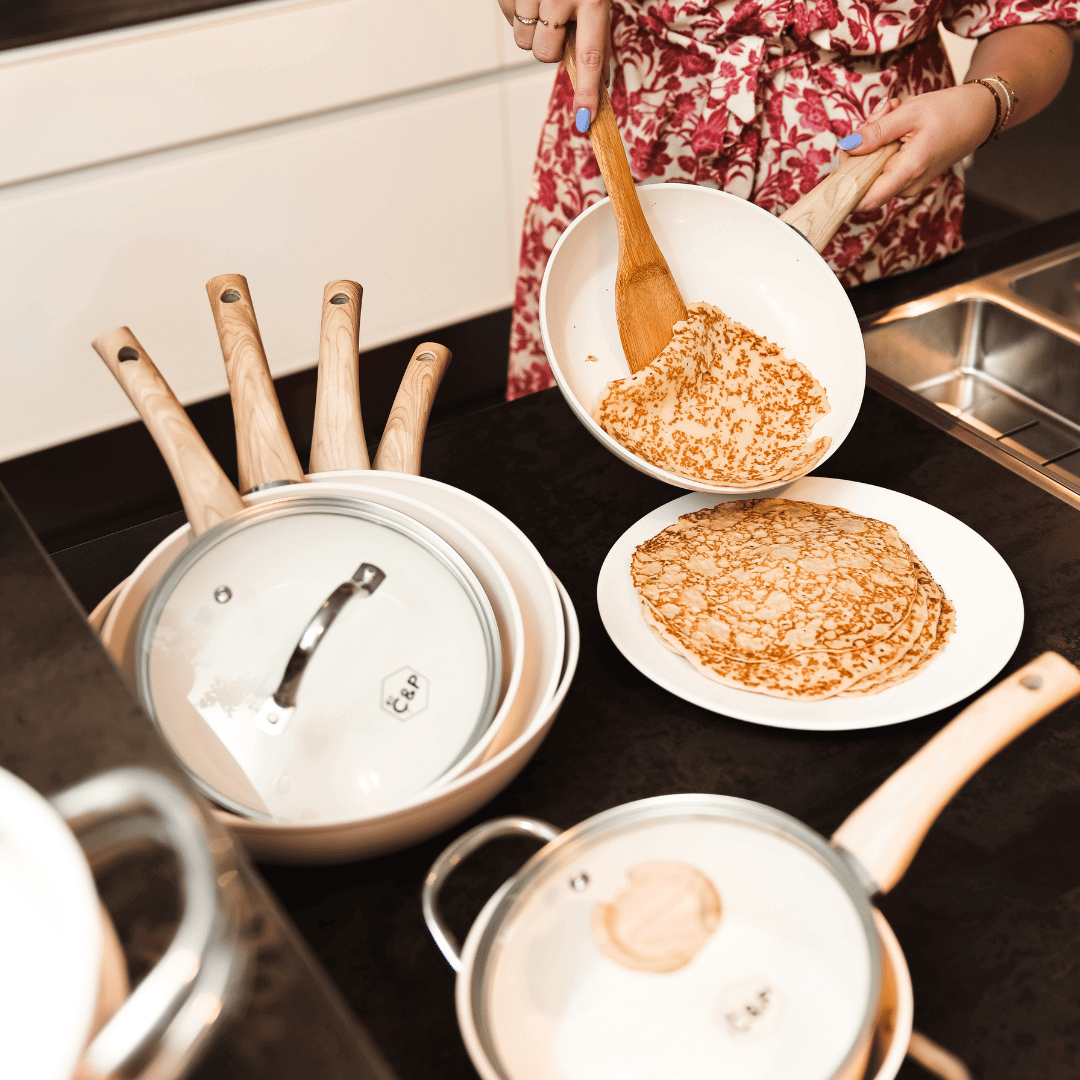
- Ceramic frying pan with aluminium body: light in the hand and up to temperature in no time. Great for eggs, omelettes, pancakes and vegetables.
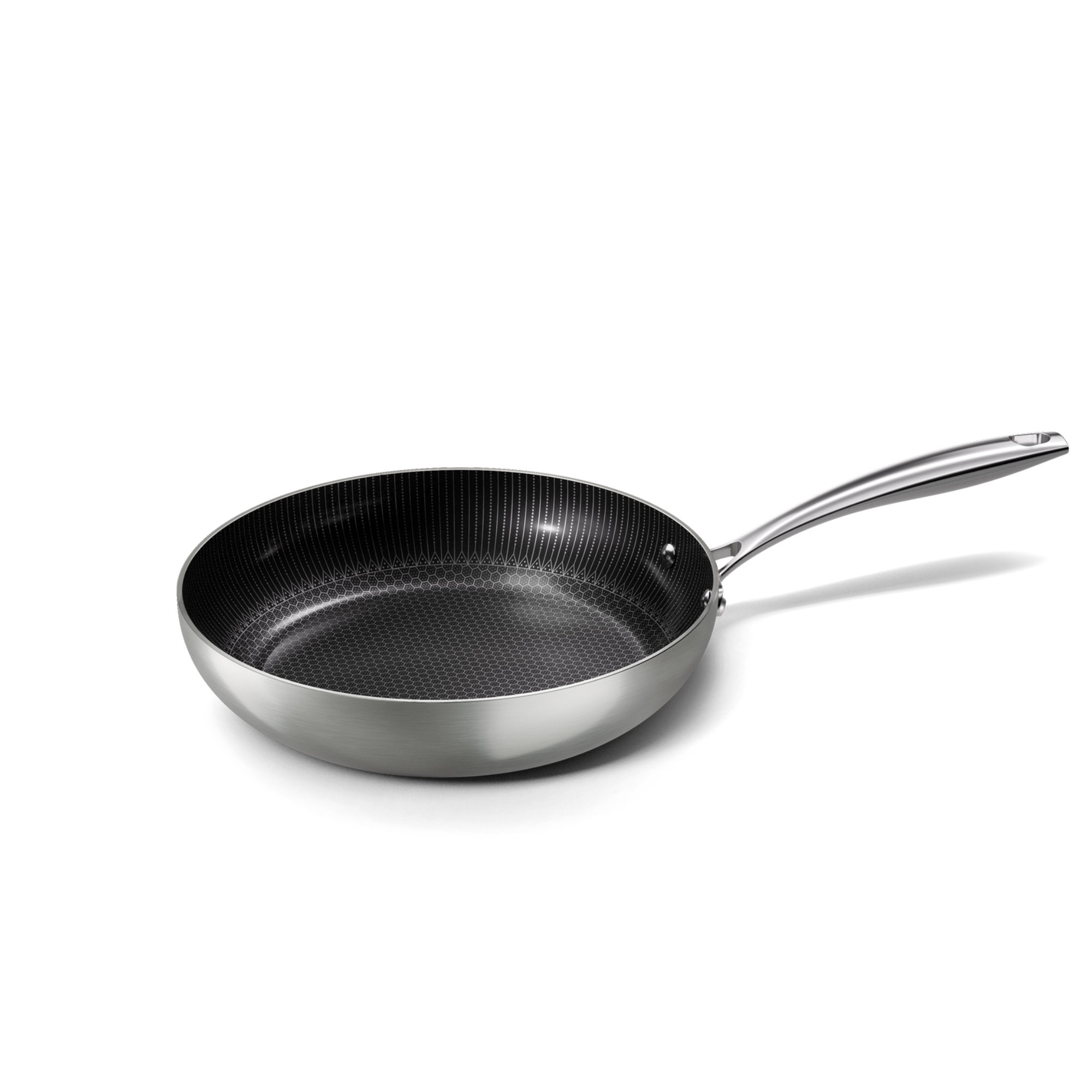
- Ceramic frying pan in stainless steel (Honey): sturdier and extra scratch-resistant, with the same smooth ceramic coating. Also browse our stainless steel frying pans.
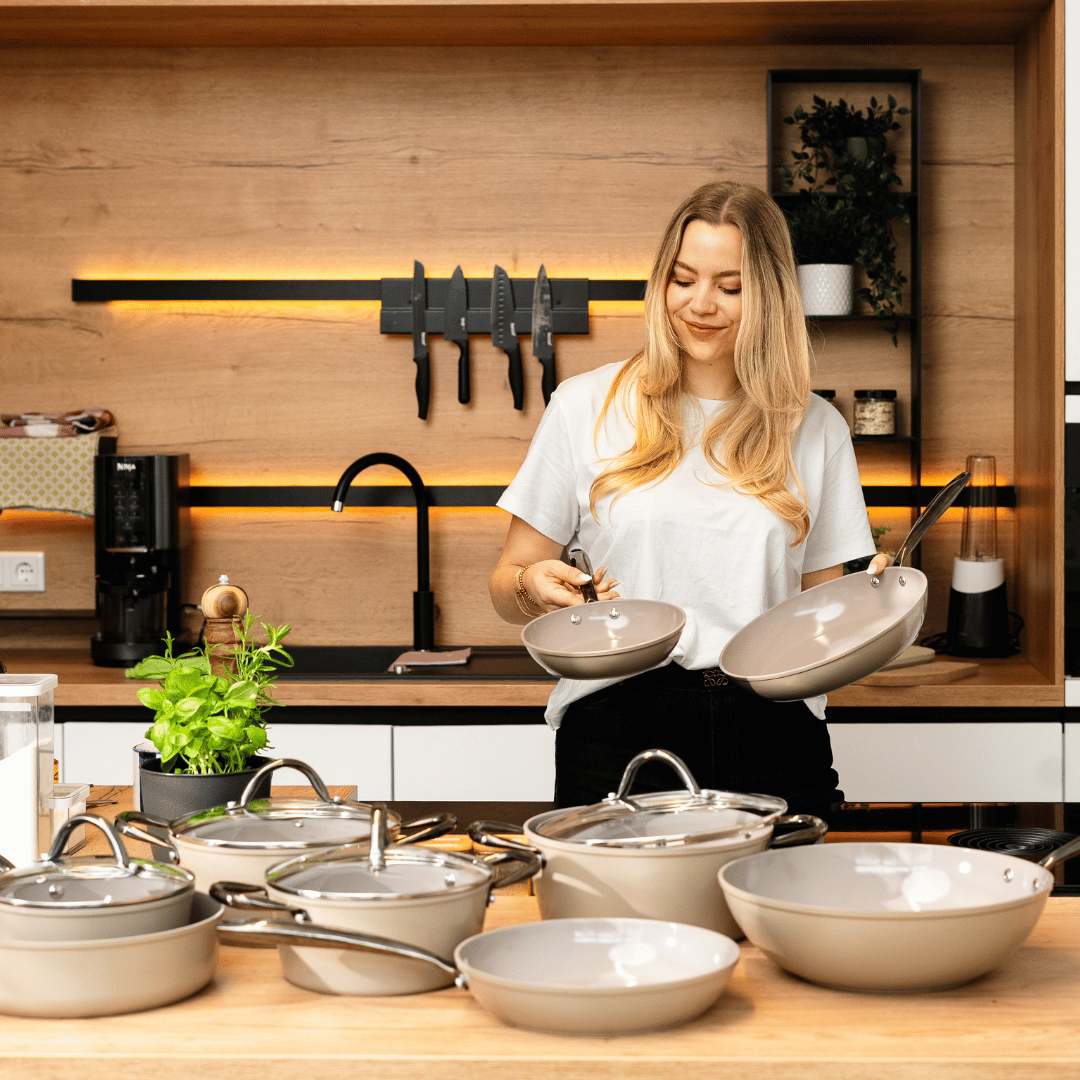
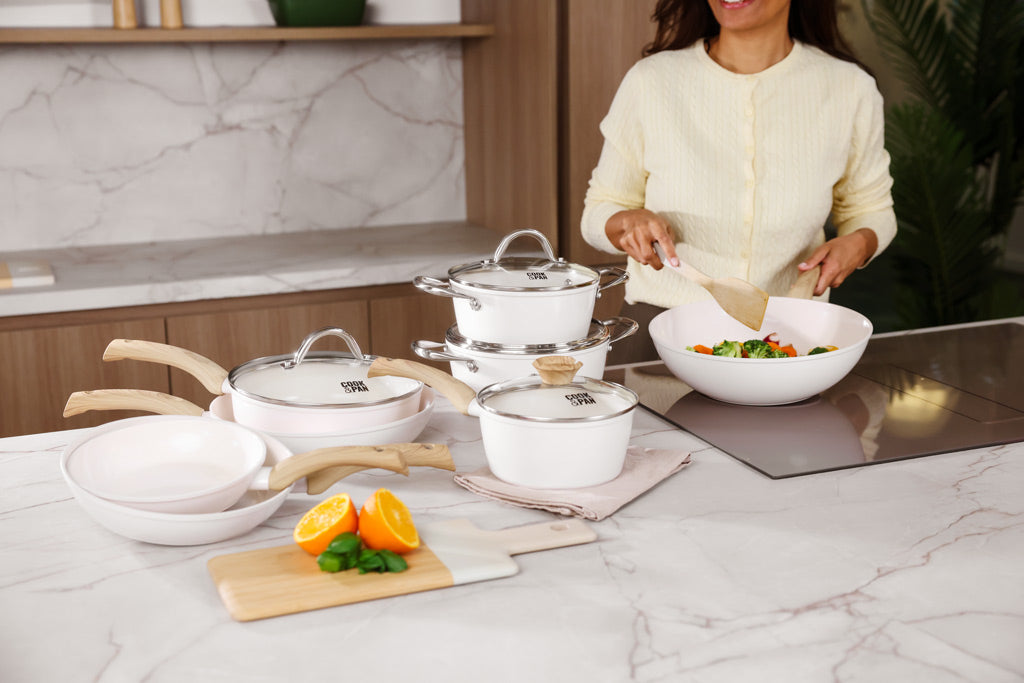
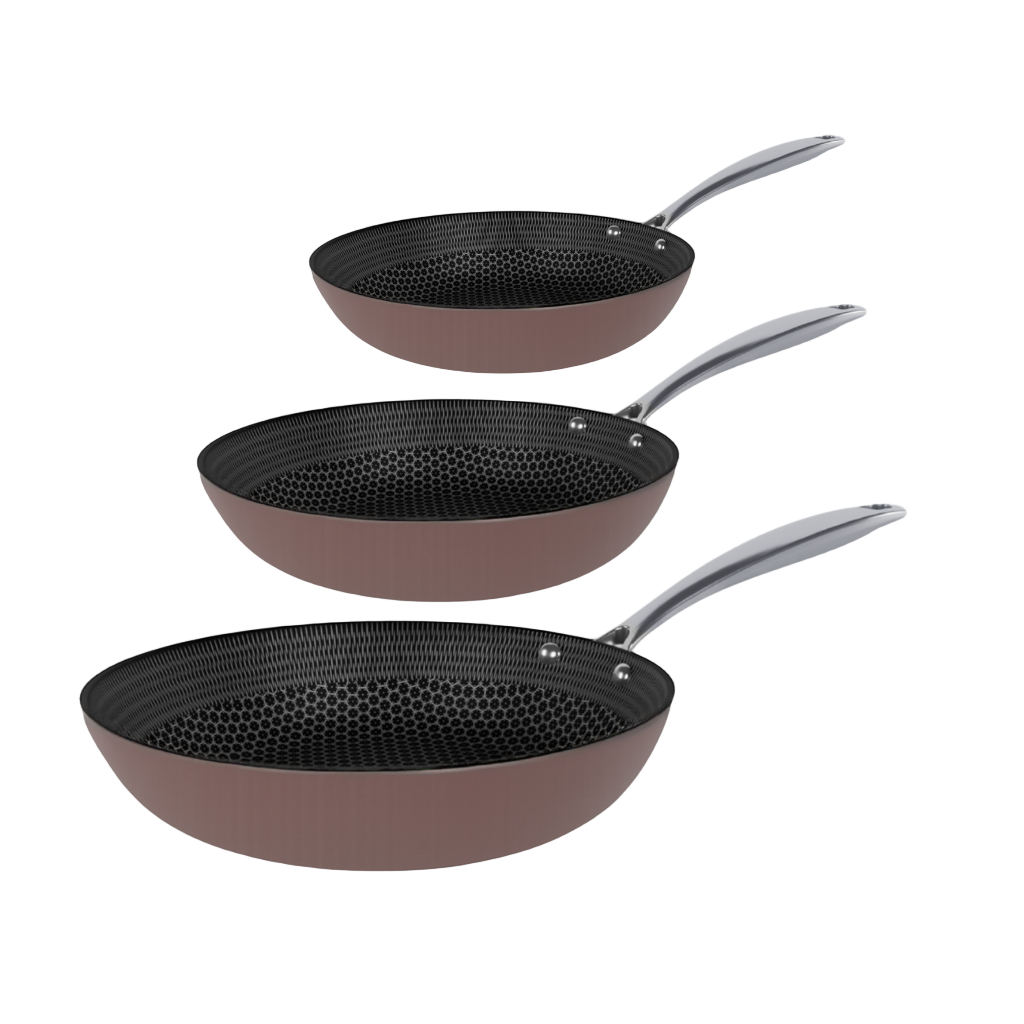
- Ceramic frying pan set: two or three sizes at once, also available with glass lids. Browse the frying pan set.
Ceramic frying pan: which size should you choose?
Choose the size that suits your cooking zone and your household. A 20 cm frying pan is handy for one, a 24 cm frying pan is the everyday all-rounder and a 28 cm frying pan is ideal for the family or a big pancake. Cooking for a full table? There is a 32 cm too.
Ceramic frying pan for induction
Every ceramic frying pan we make has a magnetic base and works on induction, gas, ceramic and electric hobs. Cooking on induction? Take a look at our frying pans for induction as well.
How to keep your ceramic frying pan smooth for longer
A ceramic coating is hard, but it does not like shocks. Cook on a low to medium setting, which is almost always hot enough. Use a wooden or silicone spatula, let the pan cool for a moment before rinsing and preferably wash it by hand with a soft sponge. That way the coating stays smooth for years.
How long does a ceramic frying pan last?
These pans come with a 7-year warranty on manufacturing and material defects and a 2-year warranty on the performance of the ceramic coating. With the right care, you will be cooking with it for much longer. Want to feel whether it suits you first? You get 60 days of try-cooking.
Frequently asked questions about ceramic frying pans
Is there PFAS in a ceramic frying pan?
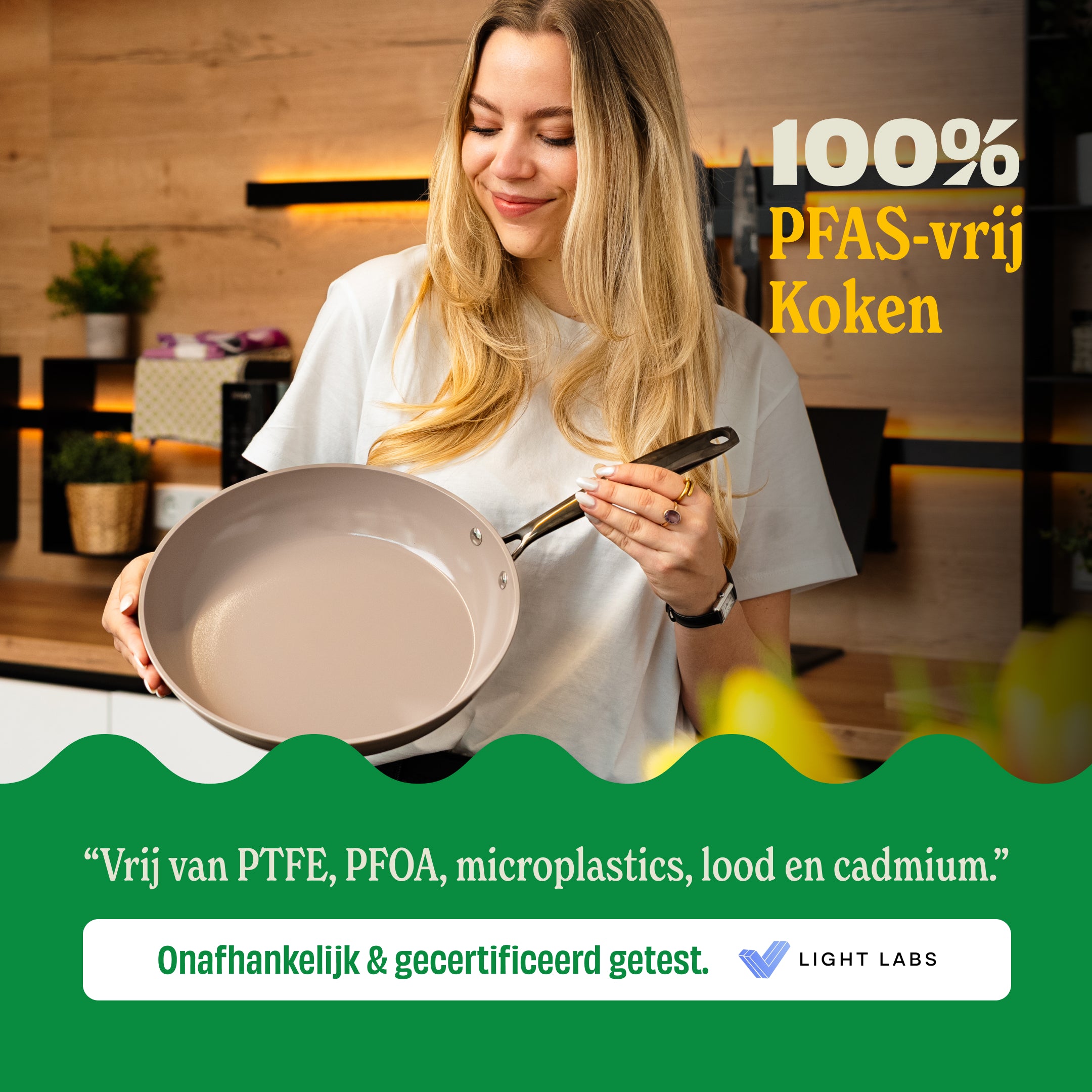
No. Our ceramic coating contains no PFAS, PFOA or PTFE. Want to see all the options? Take a look at our frying pans without PFAS.
What is the difference between an aluminium and a stainless steel ceramic frying pan?
Both have the same smooth ceramic coating. Aluminium is lighter and heats up faster, stainless steel is sturdier and more scratch-resistant. Choose whatever feels best in your kitchen.
Does a ceramic frying pan work on induction?
Yes. They all have a magnetic base and work on every hob.
Can a ceramic frying pan go in the dishwasher?
It can, but washing by hand keeps the ceramic coating looking good for longer.
Why does my ceramic frying pan stick?
Usually the heat is too high, or there is a thin layer of burnt-on fat on the base. Cook on a medium setting and clean the pan thoroughly with warm water and a soft sponge. Then everything slides out easily again.
Can I try a ceramic frying pan first?
Yes. You get 60 days of try-cooking. If the pan turns out not to suit you, just let us know.

PFAS-free, does not stick

60 Days Trial Cooking

Free Shipping

