

























PFAS klinkt als een term uit een wetenschappelijk rapport, maar je hebt het gewoon in je keukenkast staan. En in je gangkast. Diezelfde groep chemische stoffen die jouw oude koekenpan glad maakt, zorgt er ook voor dat je regenjas droog blijft. Toeval? Nee. Het is een familie van duizenden verbindingen die ooit als wondermiddel werd binnengehaald en nu met steeds meer haast wordt buitengewerkt. Tijd om te begrijpen wat er aan de hand is, en wat jij eraan kunt doen zonder je hele huis leeg te ruimen.
PFAS, kort uitgelegd zonder scheikundeles
PFAS staat voor poly- en perfluoralkylstoffen. Een mondvol, maar het komt hierop neer: het zijn moleculen waarin koolstofatomen heel sterk verbonden zijn met fluoratomen. Die verbinding is zo stevig dat hij in de natuur nauwelijks afbreekt. Daar heeft de stof zijn bijnaam aan te danken: forever chemicals. Ze blijven, en blijven, en blijven. In het water, in de bodem, in dieren, en uiteindelijk ook in jou.
Er bestaan inmiddels duizenden verschillende PFAS-verbindingen. Een paar bekende namen: PFOA, PFOS en GenX. Sommige zijn al verboden, andere worden nog volop gebruikt. En precies die diversiteit maakt het zo lastig: zodra de ene wordt aangepakt, duikt er weer een neefje op met dezelfde eigenschappen.
Waarom de chemiewereld er ooit verliefd op werd
PFAS hebben drie eigenschappen waar de industrie smoorverliefd op werd: ze stoten water af, ze stoten vet af en ze houden hitte uit. Dat is een gouden combinatie als je producten wil maken die niet plakken, niet vlekken en niet branden. Geen wonder dat de stoffen sinds de jaren vijftig in talloze toepassingen zijn gestopt. Van pizzadozen tot pleisters, van make-up tot meubels.
Het probleem is alleen: dezelfde eigenschappen die ze handig maken in producten, maken ze ook lastig in je lichaam en in het milieu. Wat niet plakt aan je pan, plakt namelijk wel aan je bloedserum.

De pan en de regenjas: dezelfde stiekeme familie
In een traditionele antiaanbakpan zit vaak een coating uit de PTFE-familie, beter bekend als teflon. Dat is een PFAS-verbinding. In een waterdichte regenjas zit een impregneerlaag die water afparelt, ook vaak op basis van PFAS. Hetzelfde verhaal voor je outdoorbroek, je tent, je skipak en je bankhoes met vlekafstotende behandeling.
Verschillende producten, verschillende vormen, dezelfde chemische trucendoos. Dat is wat ze gemeen hebben. En dat is waarom je ze niet bij toeval steeds vaker tegelijk in het nieuws ziet.
Hoe komt het dan in je lichaam terecht?
PFAS verspreiden zich op meerdere manieren. Bij coatings in pannen kan een deel vrijkomen door slijtage, krassen of oververhitting. Maar de grootste route loopt buiten je keuken: PFAS lekken uit fabrieken en producten in het milieu, komen in grond- en oppervlaktewater terecht, en eindigen vervolgens via drinkwater, vis, vlees, groenten en eieren weer op je bord.
Onderzoek van het RIVM laat zien dat vrijwel iedere Nederlander al meer PFAS in het bloed heeft dan gezond is. Niet vanwege één pan of één jas, maar vanwege jaren van blootstelling uit allerlei hoeken tegelijk. Goed nieuws: jij bepaalt zelf welke nieuwe bronnen je nog binnenlaat.
Wat zegt de wetenschap over de risico's?
De European Food Safety Authority heeft de gezondheidsgrens voor PFAS de laatste jaren flink naar beneden bijgesteld. Er is steeds meer bewijs dat langdurige blootstelling samenhangt met een verzwakt immuunsysteem, hogere cholesterolwaarden, schildklierproblemen, leverklachten en een verhoogd risico op bepaalde vormen van kanker. Bij kinderen kan het de werking van vaccinaties verminderen.
Geen reden tot acute paniek, wel een hele goede reden om kraan dicht te draaien waar dat kan. Vooral op plekken waar de blootstelling hoog en goed te vermijden is. Zoals in je keuken.
Vier signalen dat jouw pan oude PFAS-coating heeft
- De pan is meer dan vijf jaar oud en je weet niet zeker waarvan de coating gemaakt is.
- Op de bodem zitten krasjes, putjes of kleine afgesleten plekken.
- Je ziet hier en daar een randje van de coating loslaten of opbollen.
- Eten begint te plakken op plekken waar het vroeger vrolijk wegschoof.
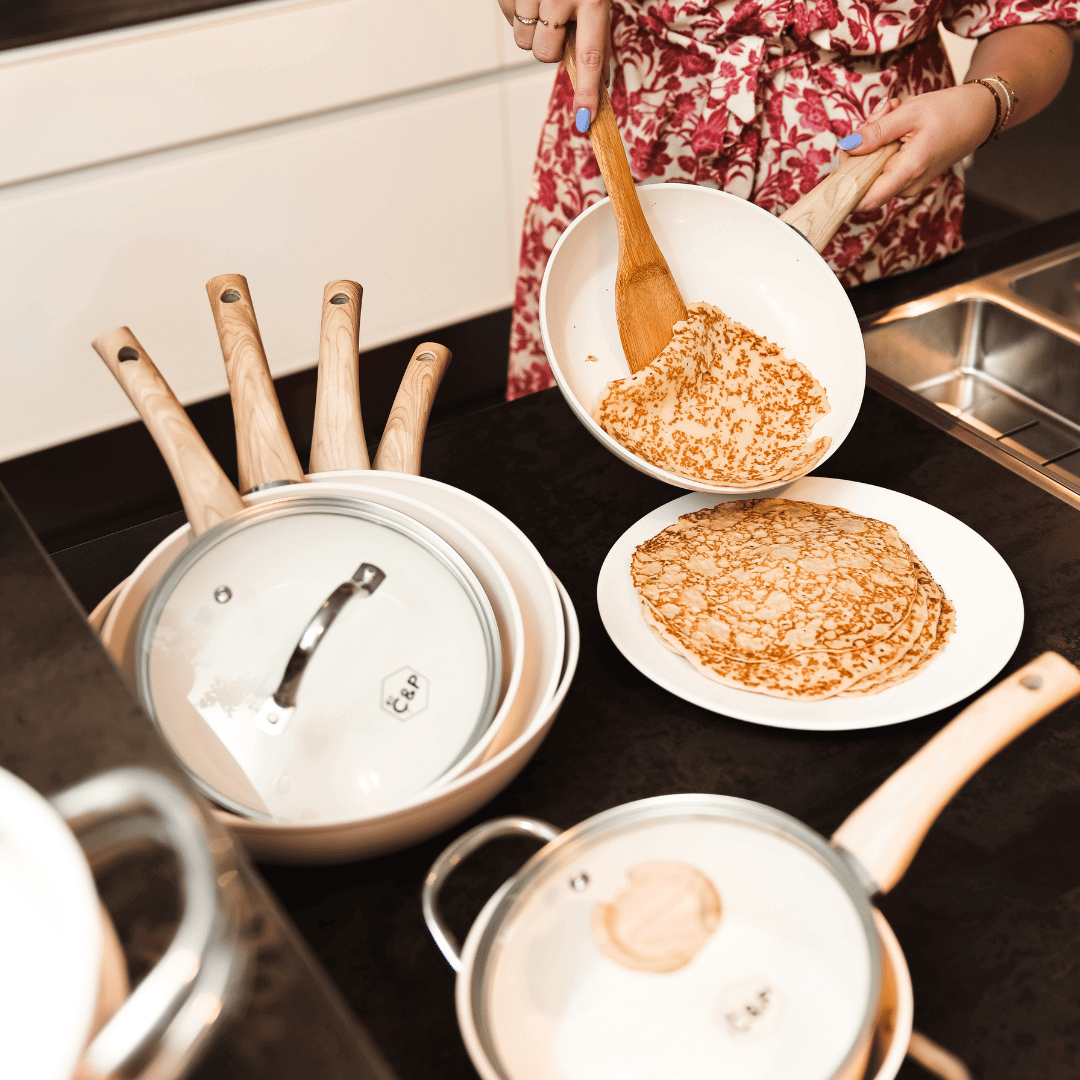
Herken je twee of meer van deze punten? Dan is dit het moment om afscheid te nemen. Een keramische coating is een veilige en moderne opvolger, en je vindt het hele assortiment in onze koekenpannen zonder teflon.
Waarom keramiek een logische opvolger is
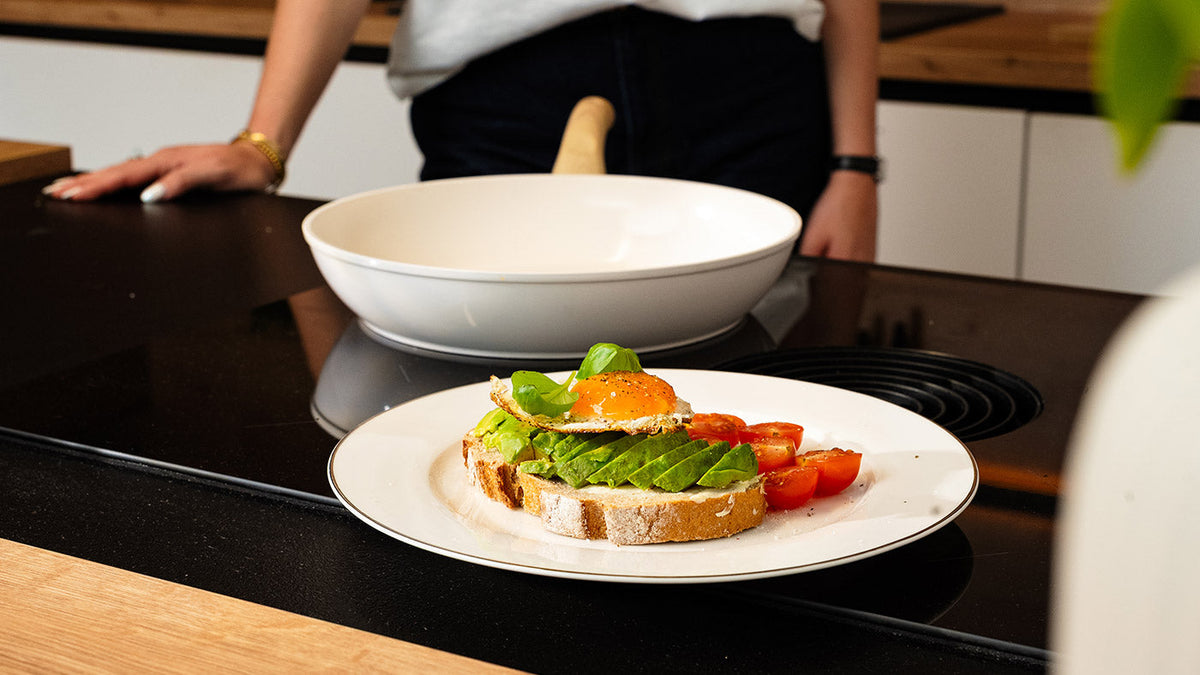
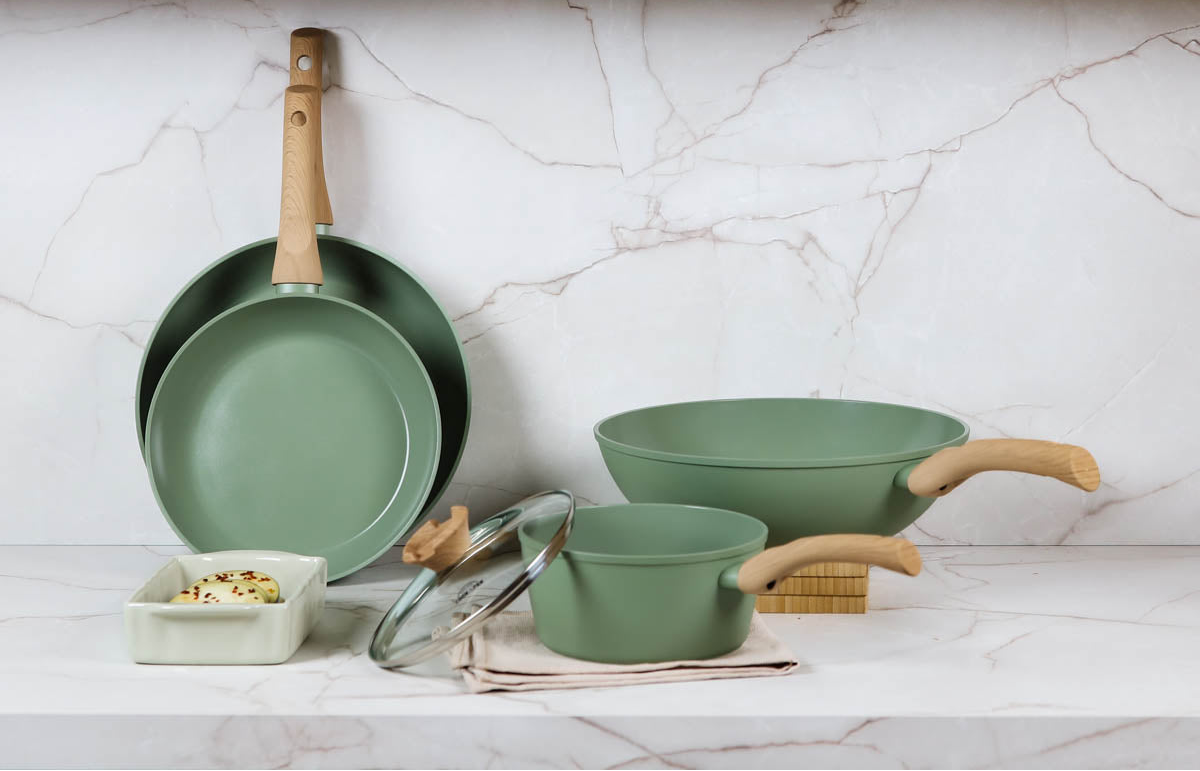
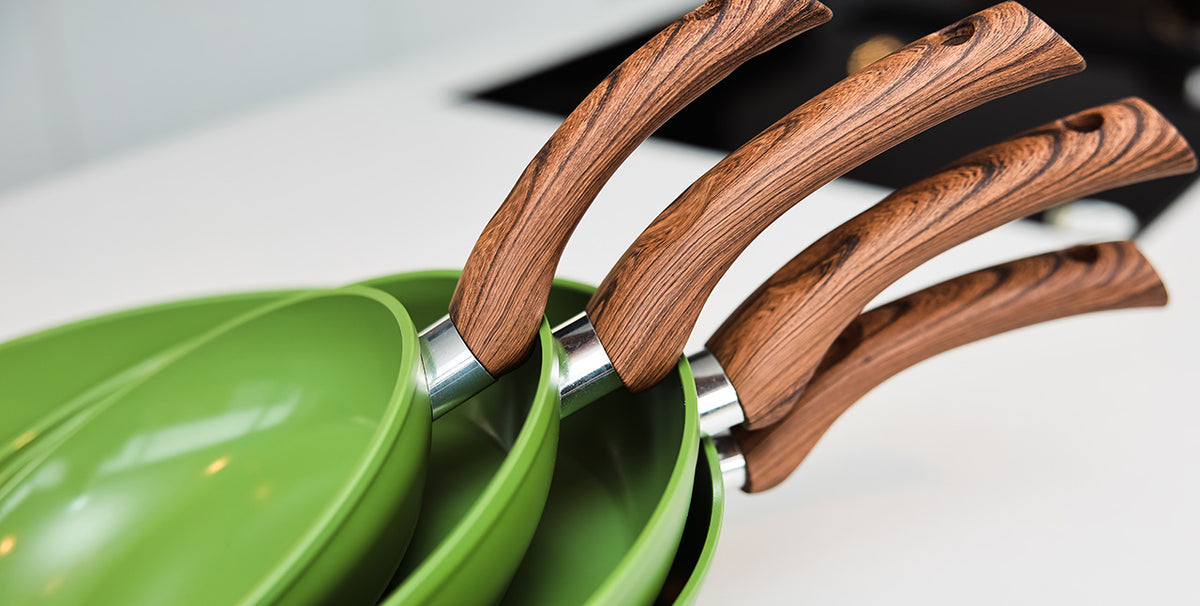
Een keramische antiaanbaklaag bestaat uit een mineraal-gebaseerd materiaal in plaats van een synthetisch fluorpolymeer. Geen PFAS, geen PFOA, geen PFOS, geen GenX. Wel dezelfde gladde bakervaring waar je aan gewend bent, mits je de pan netjes behandelt. Hij verdraagt prima middelhoog vuur, hij houdt zijn antiaanbakwerking jarenlang vast en hij is geschikt voor alle warmtebronnen, inductie inbegrepen.
Wil je weten hoe een keramische pan zich precies verhoudt tot een teflonpan? Lees dan ook eens waarom je in 2026 alleen nog in PFAS-vrije pannen wilt koken.
Niet alleen de koekenpan: ook andere pannen tellen mee
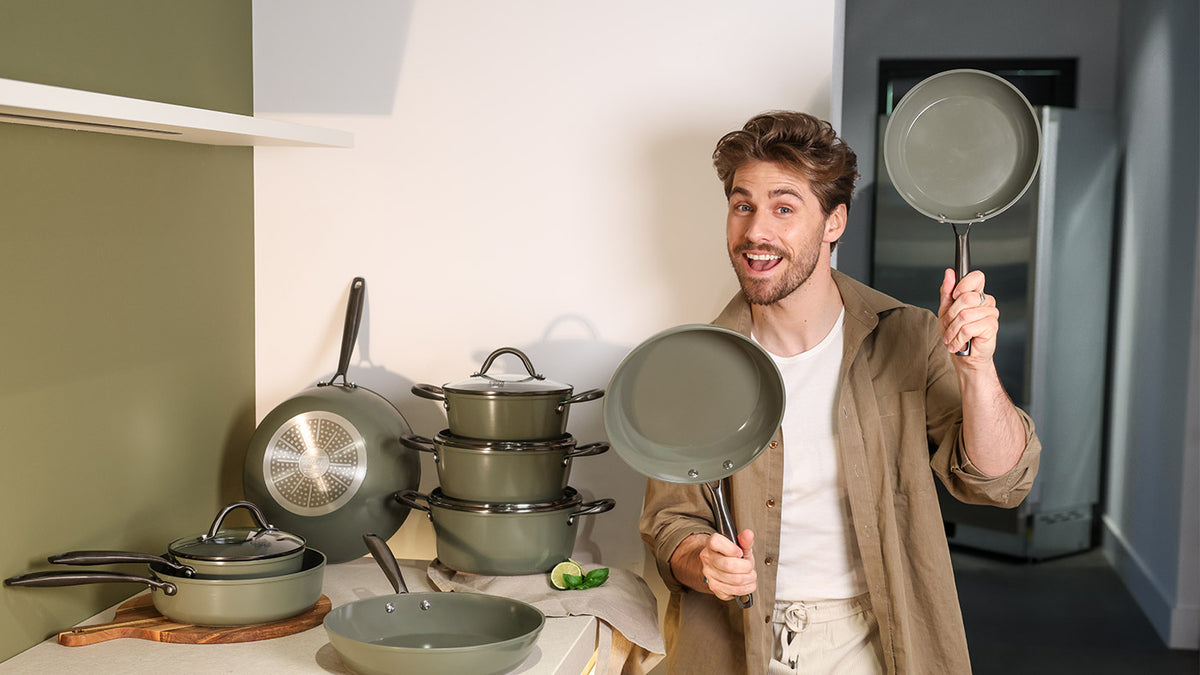
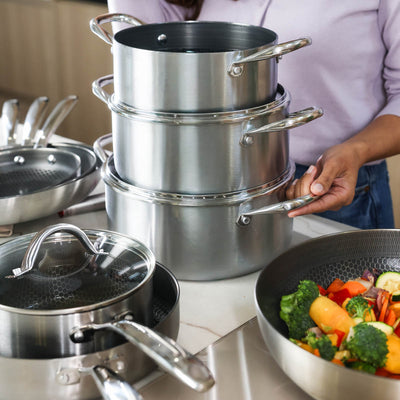
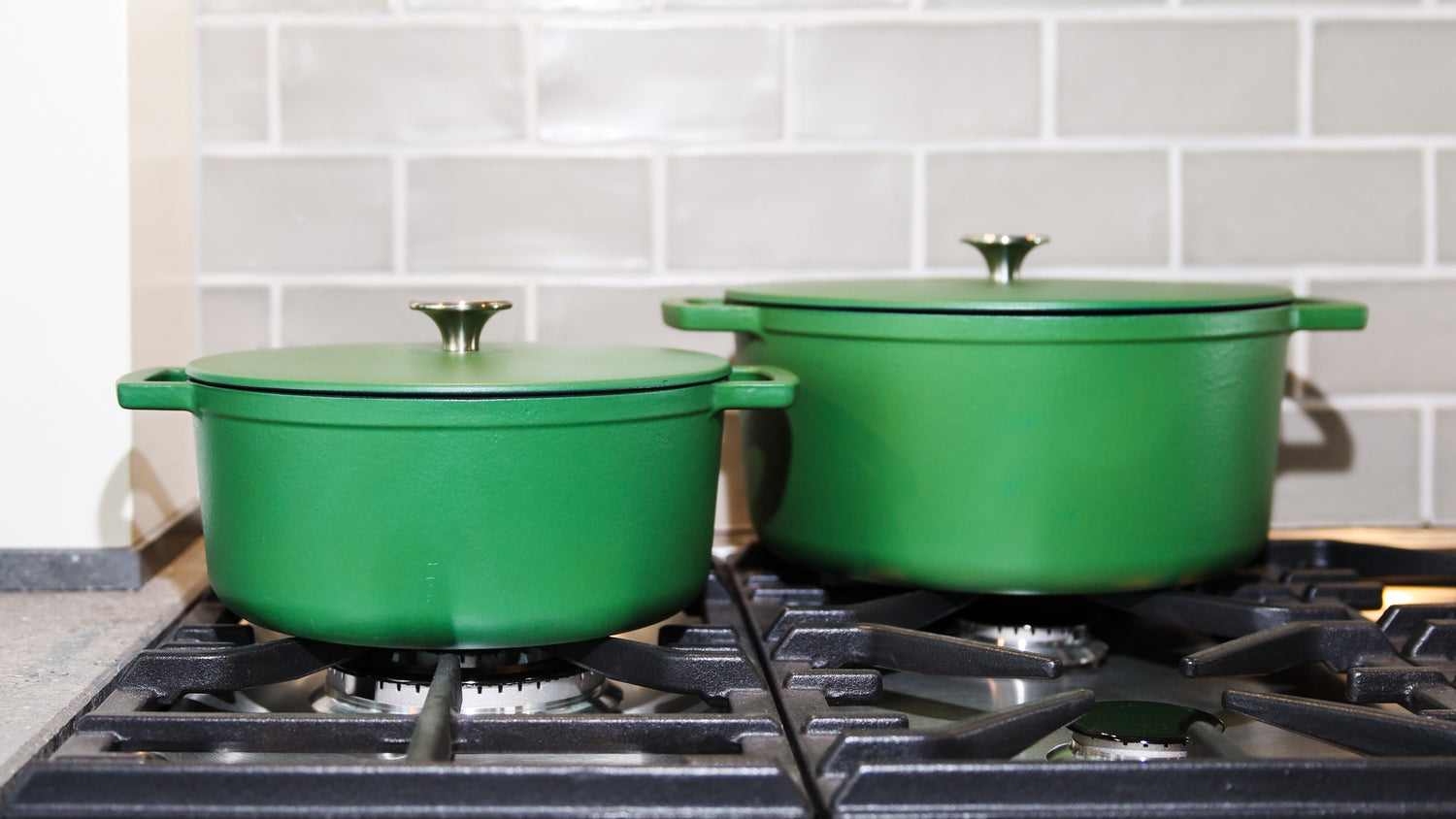
Als je toch bezig bent, is dit het moment om je hele setje door te lichten. PFAS-coatings zaten en zitten niet alleen in koekenpannen. Ook hapjespannen, wokken, steelpannen en braadpannen werden vaak voorzien van dezelfde laag. De goede oplossing is dezelfde: kies bewust voor een variant zonder PFAS.
- Voor risotto, ovenschotels en eenpansgerechten kies je een hapjespan zonder PFAS.
- Voor roerbakken op hoge temperaturen pak je een wokpan zonder PFAS.
- Voor sauzen, soepjes en kleinere porties is een steelpan zonder PFAS de juiste keuze.
- Voor stoofschotels en langere kookprocessen pak je een braadpan zonder PFAS.
Hoe vermijd je PFAS in je regenjas en andere textiel?
Pannen zijn een keuken-onderwerp, maar het PFAS-verhaal stopt niet bij je kookplaat. Bij het kopen van een nieuwe regenjas, outdoorjas of skikleding kijk je voortaan even naar het label. Steeds meer merken zetten er expliciet op dat het kledingstuk PFAS-vrij is, vaak met termen als "PFC-free" of "free of fluorocarbons". Dat is een sticker waar je iets mee kunt.
Sommige merken kiezen tegenwoordig voor wax, siliconen of speciale microvezelweefsels die water afstoten zonder fluorchemie. De waterdichtheid is iets anders georganiseerd, maar voor dagelijks gebruik werkt het prima. Ook hier geldt: hoe minder PFAS je nieuw binnenhaalt, hoe lager je totale blootstelling.
Vijf simpele stappen voor een PFAS-armer huishouden
- Vervang oude antiaanbakpannen door keramische varianten zonder PFAS.
- Check bij nieuwe regenkleding altijd of er expliciet "PFAS-vrij" of "PFC-free" op staat.
- Gebruik geen vlekafstotende sprays meer op meubels, kleding of schoenen.
- Drink filtered water als je in een gebied woont met bekende PFAS-verontreiniging in het kraanwater.
- Vermijd magnetronpopcorn en pizzadozen met vetafstotende coatings, kies voor verse alternatieven.
Geen radicale verbouwing van je leven. Wel een paar kleine keuzes die opgeteld een groot verschil maken voor jouw blootstelling op de lange termijn.
De rol van Cook & Pan in dit verhaal
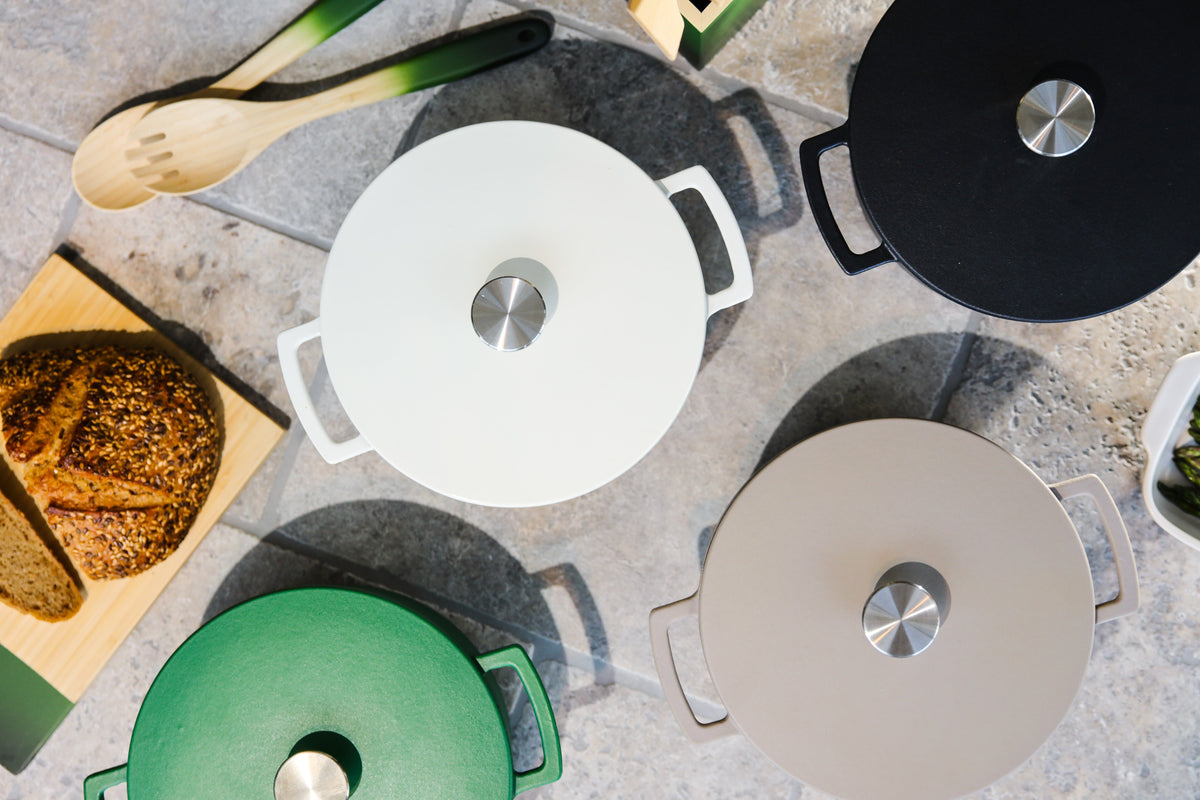
Bij Cook & Pan hebben we van begin af aan gekozen voor coatings zonder PFAS, PFOA of PFOS. Onze keramische antiaanbaklagen zijn ontwikkeld om jaren mee te gaan zonder de chemische balast die bij oude teflonpannen hoort. Plus: we geven 7 jaar fabricage- en materiaalgarantie op onze pannen, en zelfs 25 jaar op onze gietijzeren modellen. Bij gietijzer komt er sowieso geen synthetische coating aan te pas, want het materiaal is van zichzelf al antiaanbak na een goede inbrand-routine.
Dat betekent dat je bij ons niet hoeft te puzzelen wat er nu wel of niet in zit. Geen kleine lettertjes, geen onverwachte chemie. Voor wie het hele assortiment in één keer wil zien: kijk in alle pannen.
Wat doe je met je oude PFAS-pannen?
Stop ze niet bij het oud-papier of in de gewone afvalbak. PFAS-coatings horen bij metaalrecycling, want bij de juiste verwerking kunnen de fluorpolymeren afgevoerd worden voordat het metaal opnieuw wordt gebruikt. Lever je oude pannen in bij de milieustraat onder de categorie metaal, of vraag bij het bouwmarktloket of ze een inleverpunt hebben.
Wil je je hele set in één keer omkatten naar PFAS-vrij? Lees dan onze blog over vijf duurzame en veilige pannen die je nu wilt hebben.
Veelgestelde vragen over PFAS in pannen
Komt PFAS uit een onbeschadigde teflonpan vrij in mijn eten?
Bij een gloednieuwe, onbeschadigde teflonpan is de afgifte beperkt zolang je hem niet oververhit. Maar zodra de coating krast, slijt of boven 260 graden komt, kunnen er wel degelijk fluorverbindingen vrijkomen. Bij hogere temperaturen zelfs schadelijke dampen. Slijtage hoort er nu eenmaal bij, dus voorkomen is slimmer dan opnieuw moeten testen.
Is keramiek echt voor 100% PFAS-vrij?
Een keramische antiaanbaklaag is opgebouwd uit een mineraal sol-gel-systeem zonder fluorpolymeren. Bij een gerenommeerd merk dat dit netjes communiceert, krijg je dus geen PFAS in welke vorm dan ook. Bij Cook & Pan staat dat zwart op wit op elke productpagina.
Hoe lang gaat een keramische pan mee?
Bij goed onderhoud doe je vele jaren met een keramische pan. Concreet betekent dat: niet de eco-stand van je vaatwasser gebruiken, kookgerei van hout of siliconen pakken, niet droog voorverwarmen op hoog vuur en je pan rustig laten afkoelen voordat hij in contact komt met water. Meer onderhoudstips vind je in onze blog over waarom een PFAS-vrije pan ook een fijn cadeau aan jezelf is.
Waarom staat PFAS de laatste tijd zo vaak in het nieuws?
Omdat de Europese Unie werkt aan een breed verbod op vrijwel alle PFAS, en omdat steeds meer drinkwaterbedrijven, ziekenhuizen en wetenschappelijke instituten alarm slaan over de gevolgen voor de volksgezondheid. Het is een onderwerp dat in beweging is, en ook waar reden voor is.
Klein zetje, groot effect
Je hoeft je keuken en je kledingkast niet morgen leeg te kieperen. Maar één PFAS-vrije pan die je oude teflonpan vervangt, is wel een verschil dat dagelijks doortelt. Drie keer per dag koken, jaar in, jaar uit. Reken het maar uit. Dat is een hoop maaltijden zonder onnodige chemie. En dat is precies waar Cook & Pan voor staat: koken zonder zorgen, met materialen waar je rustig oud mee wordt.
💡 Let op: we koken graag met lef, maar veiligheid staat altijd op één. Meer hierover lees je op onze disclaimerpagina.