






















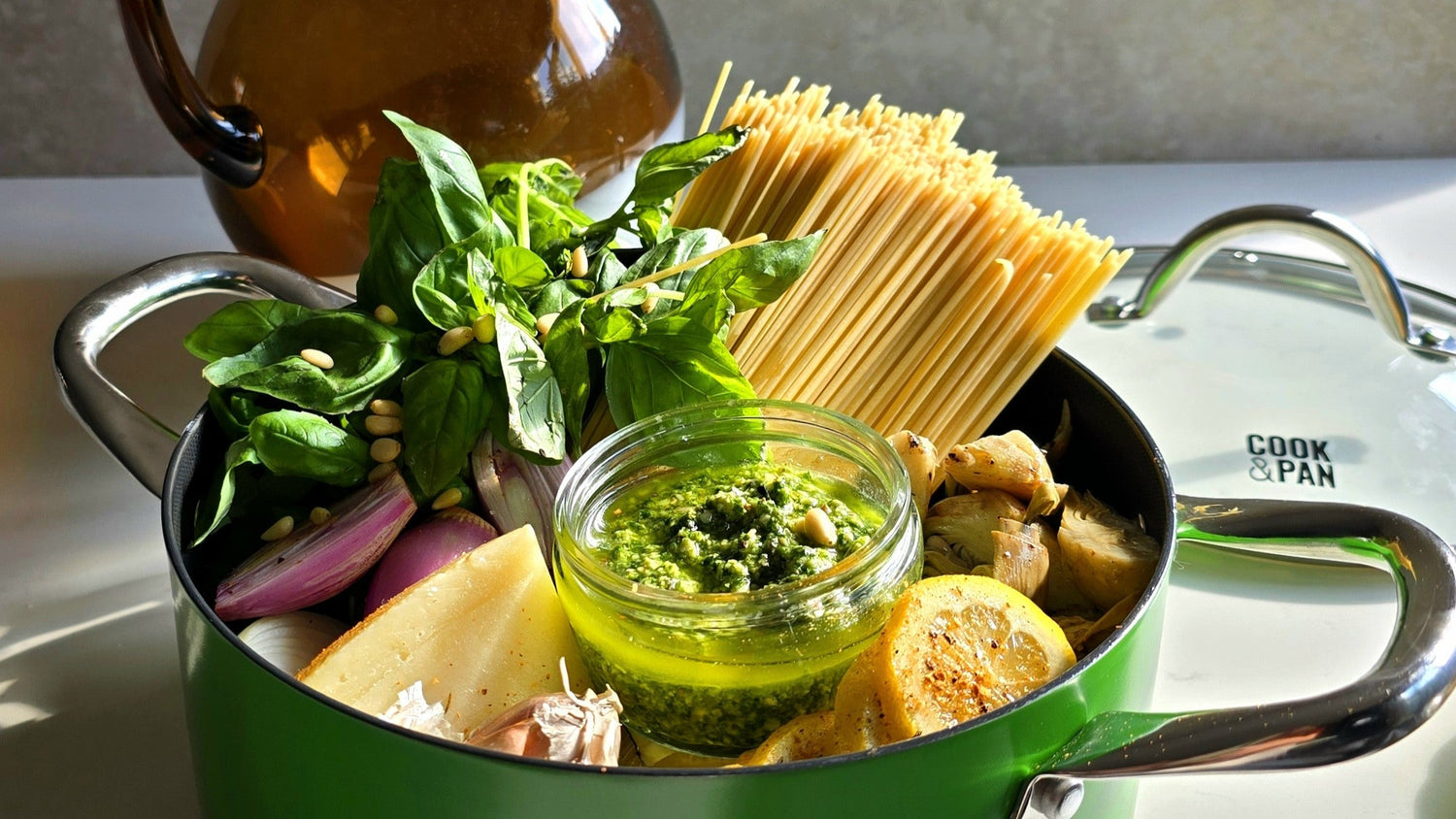
Pasta seems like the easiest dish in the world: water, salt, dough, done. Until your pasta sticks, the water boils over and your sauce gets stranded halfway up the pan. Nine times out of ten, that is not down to your cooking skills, but to the pan. And specifically to its size.
Why a big pot is not a luxury, but a must
Pasta needs three things to cook perfectly: room, movement and a stable temperature. A pot that is too small steals all three at once. The pasta sits in a clump, the water cools the moment 400 grams of spaghetti drop in, and the starch concentrates into a gluey soup. A big cooking pot solves all of that in one go.
The rule of thumb every Italian nonna lives by: at least 1 litre of water per 100 grams of pasta, ideally a litre and a half. For a family of four who likes to eat, you are quickly looking at 6 to 8 litres. A standard 20 cm pot with 3 litres of capacity does not come close.
The maths: how many litres do you really need?
Here are the numbers in a row, so you know which pot belongs in your kitchen:
- 2 people, 200 grams of pasta: at least 3 litres of water, so a 22 to 24 cm pot.
- 4 people, 400 grams of pasta: at least 6 litres, a 24 to 26 cm pot with high sides.
- 6 people, 600 grams of pasta: at least 8 litres, a 26 to 28 cm pot.
- Pasta night for 8: go for 28 cm or a dedicated stockpot, otherwise you cook in shifts.
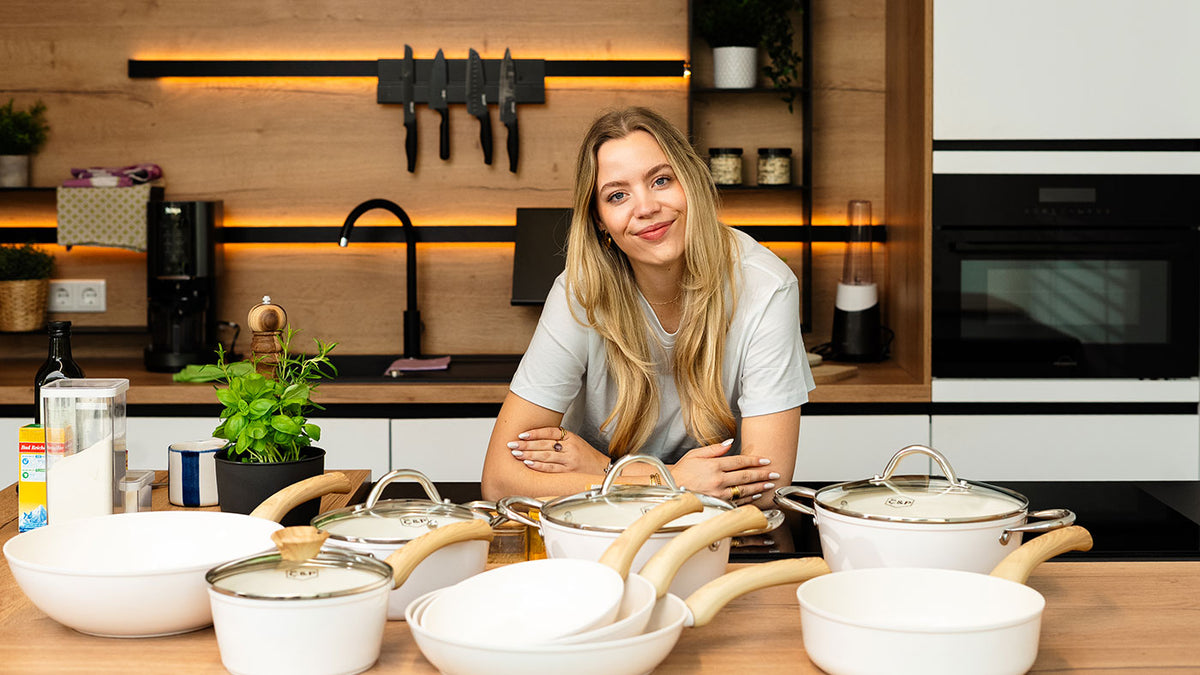
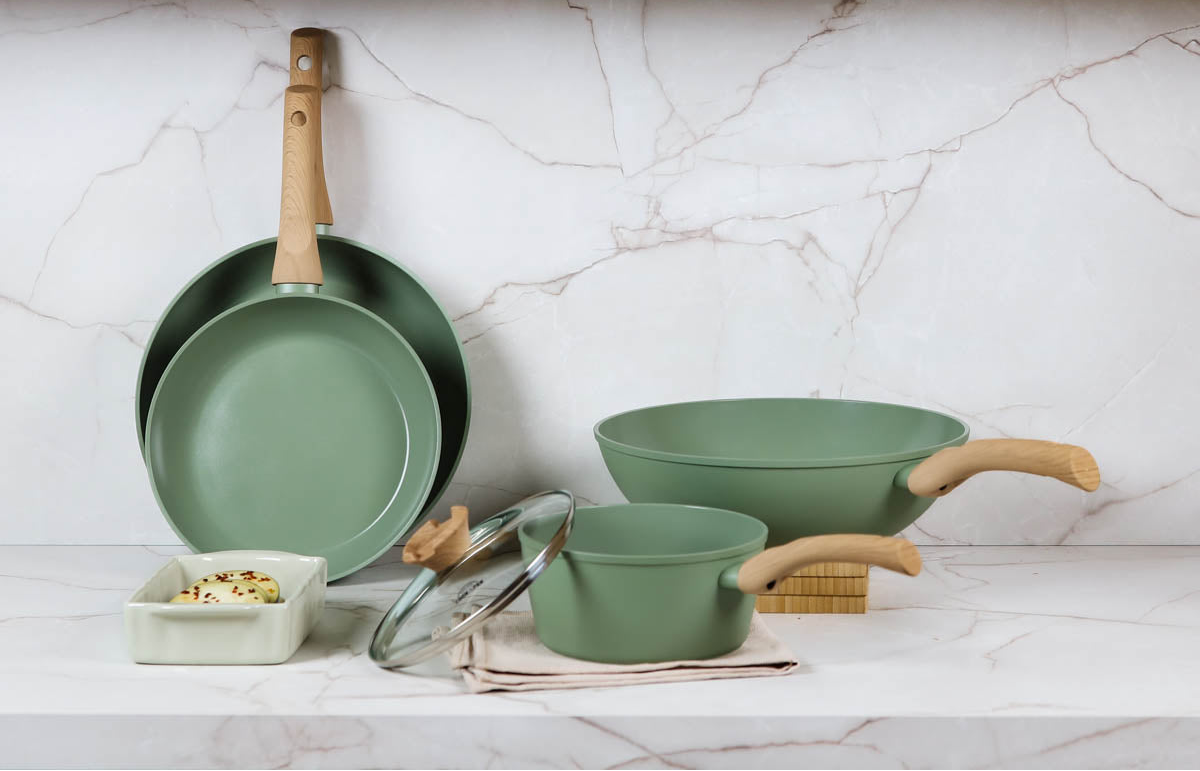
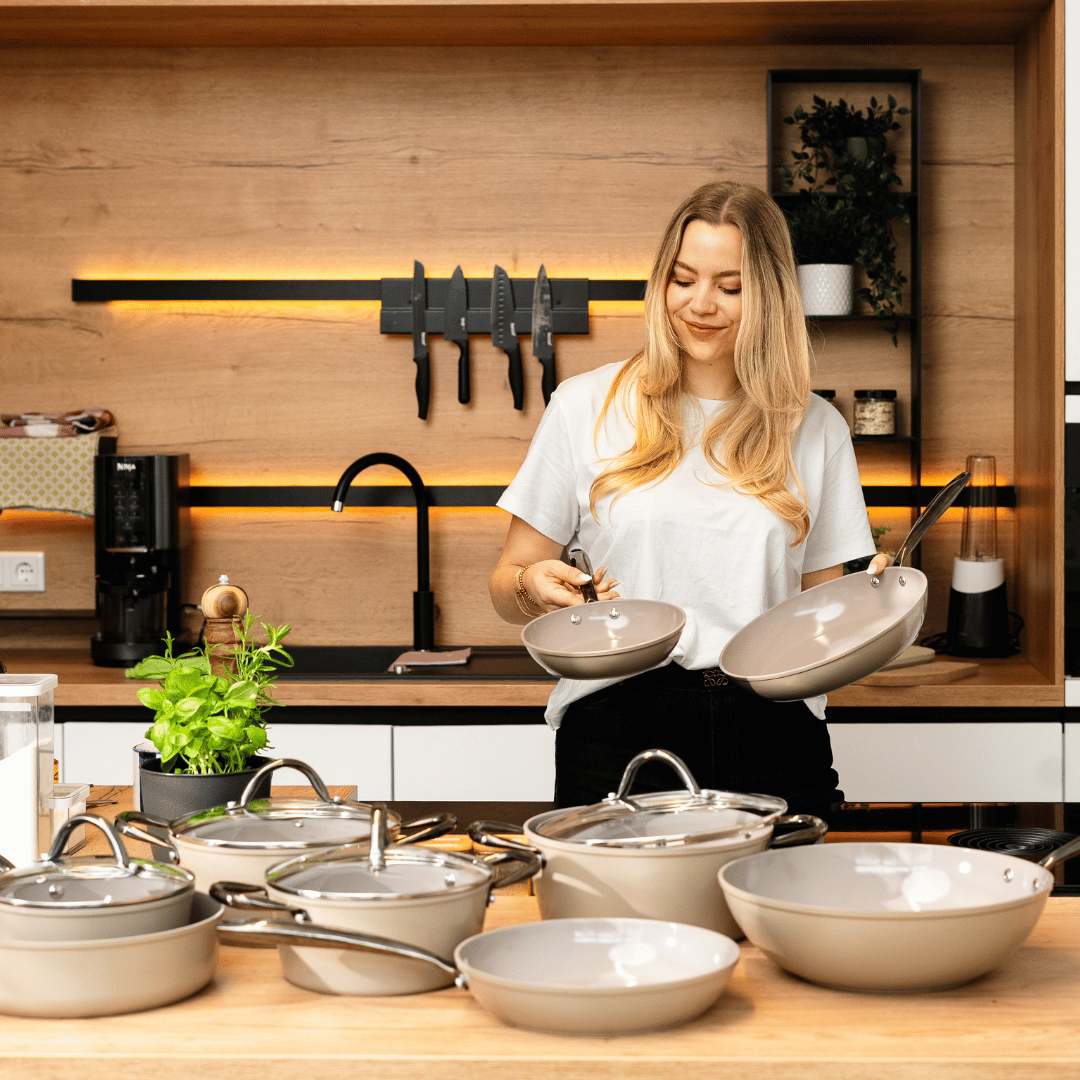
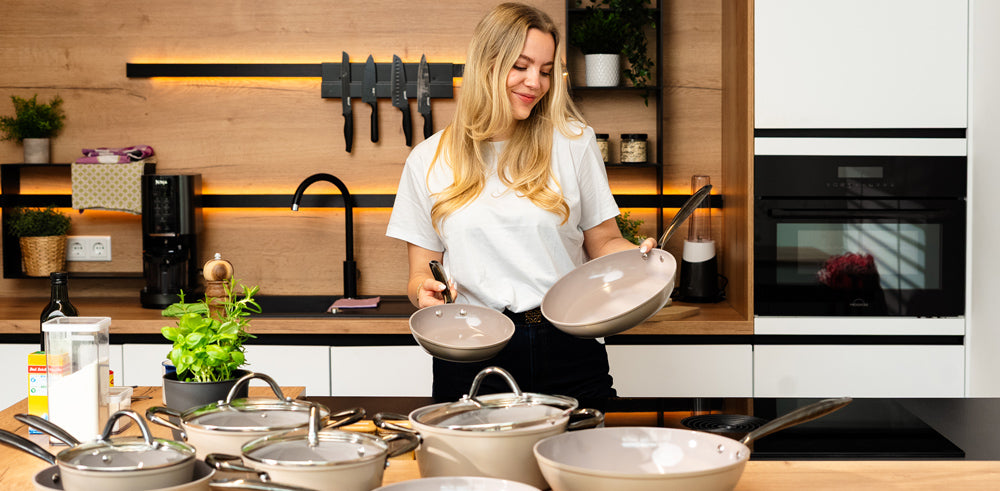
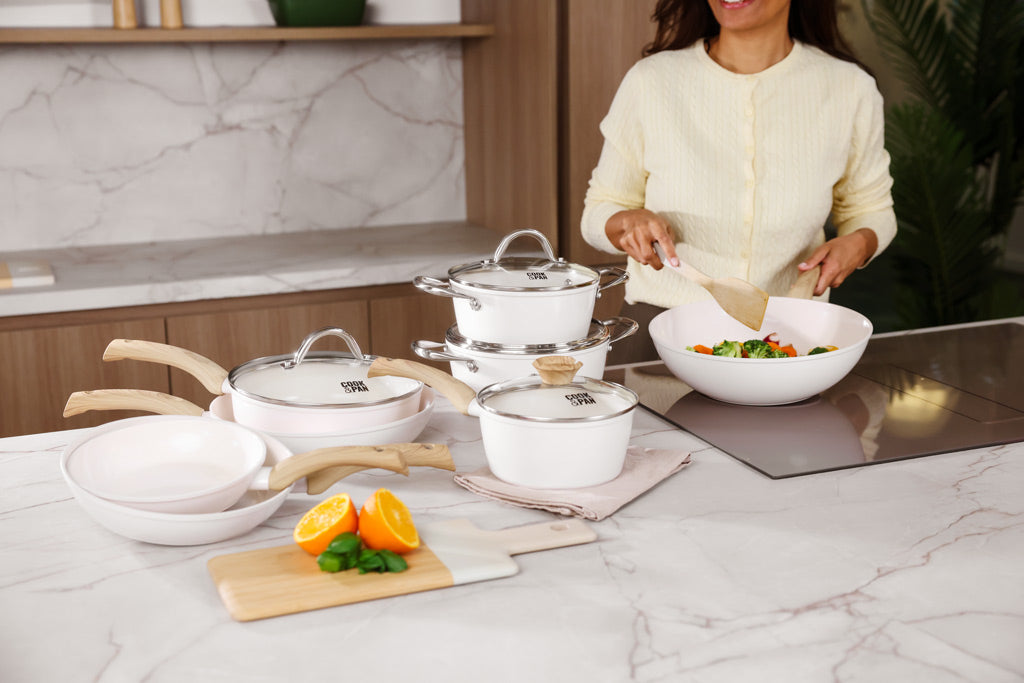
In our cooking pots you find every common size side by side, so you can compare which one suits your cooking rhythm.

Diameter or height: watch both
A big pot is not just a wide pot. For pasta, height is what matters most. 25 cm spaghetti will not fit in a shallow saute pan, and farfalle or penne need vertical room to swirl while cooking. Aim for a pot with at least 13 centimetres of wall height and a diameter around 24 cm.
Looking for a pot that hits exactly that size? Have a look at the 24 cm cooking pot, the Goldilocks size for weekday pasta nights.
Which material works best for pasta?
Cooking pasta is no materials science challenge, but there are differences. We line them up.
Aluminium with ceramic coating
Light, even with 6 litres of water inside. Quick to temperature, which saves on the gas bill and on patience. The ceramic interior is PFAS-free, which is extra reassuring during longer cooking times when the water stays in contact with the coating. Our PFAS-free cooking pots are built specifically for this.
Stainless steel
No coating, so no wear. Stainless lasts decades, takes any spatula and handles the hottest flame. The only downside: it is a touch heavier when full of water. For anyone who rarely lifts the pan and wants long-term peace of mind, a logical choice.
Fully ceramic
If you love the soft look of ceramic and a coating that takes high temperatures in stride, our ceramic cooking pots are a fine middle ground. Light as aluminium, with an extra robust coating.
The role of a good lid (often forgotten)
With a lid on, water boils faster and stays at temperature longer once the pasta goes in. On induction that saves a solid two minutes, on gas even more. A clear glass lid is handy: you see when it boils without lifting every time. Take a look at our separate pan lids if yours has gone missing or you want a second size.
The pasta secret of Italian restaurants
Ask an Italian chef the difference between home pasta and restaurant pasta and you will always get the same answer: pasta water. That cloudy, starchy liquid at the bottom of the pot is liquid gold. A ladle into the sauce gives you that signature creamy bind that carbonara and cacio e pepe are known for.
But that trick only works if your water is genuinely starch-rich, and that does not happen in a pot that is too small with too little water. The pasta gets compacted to the point where the starch sticks to the bottom instead of mixing in. Another argument for going big.
Salt: when and how much?
The water should taste like the sea, you often hear. That is right: roughly 10 grams of salt per litre of water. For 6 litres that is around 60 grams, a generous handful of coarse salt. Add it the moment the water boils, not before. Otherwise it takes longer to reach the boiling point and you risk pitting on a stainless base.
- Fill the pot generously with water (1.5 litres per 100 grams of pasta).
- Lid on until it boils.
- Add salt (10 grams per litre), wait for it to come back to the boil.
- Drop in the pasta, stir briefly so nothing sticks.
- Cook without the lid until 1 minute before the al dente time on the packet.
- Scoop a mug of pasta water aside before draining.
What you should never do (but almost everyone does)
- Pour oil into the water: it does not dissolve, it makes the pasta slick so the sauce does not cling.
- Rinse the pasta under the tap: you wash away all the starch, and the sauce will not grab.
- Snap the pasta before cooking: a big pot is the very solution for not having to.
- Drop the pasta into cold water and heat together: you get a mushy top layer.
- Use too little water to save gas: the pasta turns out worse, and the longer cooking time often means you use more anyway.
A big pot is handy for other things too
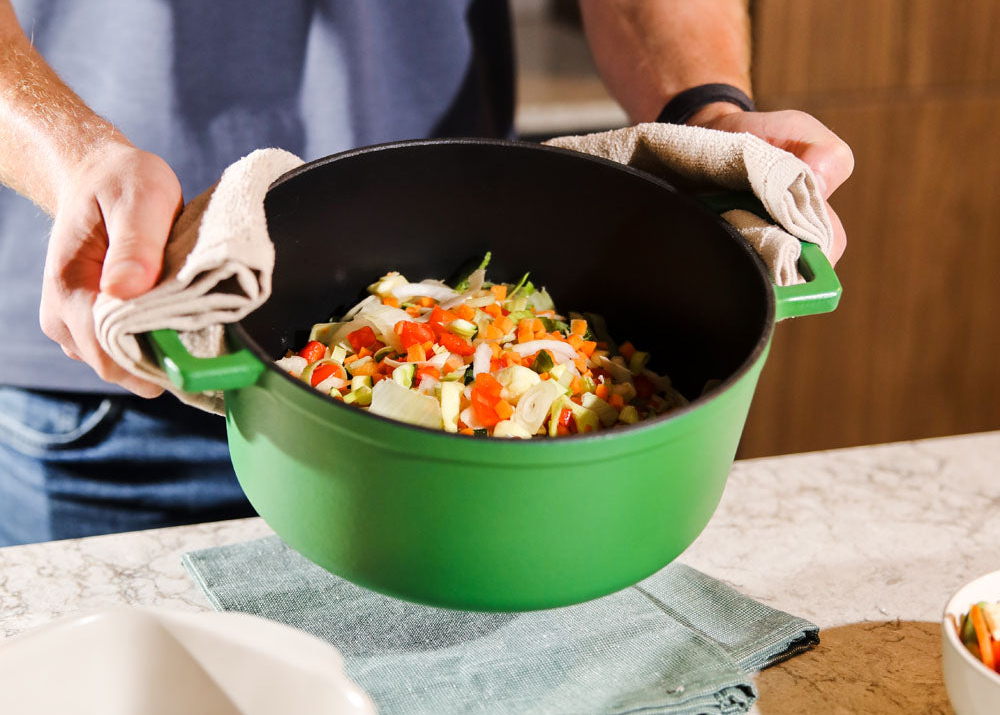
A 24 or 26 cm cooking pot does not just come out for pasta. Soup for the whole family, risotto that needs room to swell, potatoes for mash, mussels on a Friday: it all fits. A good big pot earns its spot in the cupboard through versatility.
For anyone who also wants to cover stews and slow cooking, a separate casserole pan is the logical addition. That way you have the right pan for every dish without overflowing the kitchen.
Sauce pan and pasta pot: the ideal duo
An Italian chef rarely works with a single pan. The pasta cooks in the big pot, the sauce simmers in a separate pan with high sides. At the end, the drained pasta goes straight into the sauce pan with a ladle of pasta water, and the lot is tossed briefly together. That way the strands soak up the sauce instead of swimming in it.
Want to be set up in one go? Our cooking pot sets contain multiple pot sizes, and our frying pan sets include a saute pan as standard, perfect for the sauce.
Lifespan: a big pot is a buy for years
You do not buy a good cooking pot anew every two years. Our cast iron models come with 25 years of warranty, all pans have a 7-year manufacturing warranty, and the ceramic coating carries 2 years. On top of that you get 60 days of trial cooking: if the pot does not click after a good two months of use, you send it back. A big pot is not an impulse buy, it is an investment that runs through your cooking years.
The takeaway: buy one size larger than you think
If you waver between 22 and 24 cm, pick 24. Between 24 and 26, pick 26. A big cooking pot is never a problem in the kitchen, a small one is. Pasta gets the room it deserves, soup fits without boiling over, and you never have to cook in two rounds when guests turn up unexpectedly.
Pasta deserves a big pot. And a big pot deserves a spot at the front of your cupboard.
💡 Please note: we love cooking with boldness, but safety always comes first. Read more on our disclaimer page.