




















Fish is the most unforgiving ingredient in your kitchen. One minute too long and your sole turns rubbery. Wrong pan and your salmon fillet ends up in four pieces on your plate, the skin still cheerfully glued to the bottom. Yet this is almost never the fish's fault. It is almost always the pan's fault.
Why a standard frying pan ruins fish
An average frying pan is built for the heavy lifting: searing steak, sweating onions, flipping a fried egg. Fish does not fit that profile. Fish flesh is fragile, protein-rich and bonds in seconds to any surface that has even a single hot spot. A thin base, a coating that has seen better days or a rim that stands too steep: those are all reasons your fish cooks unevenly, tears when you flip it, or sticks completely.
The pan for fish needs three things: a thick, evenly heated base, a truly smooth non-stick coating and a shape that lets you tilt and baste with ease. Combine those and frying fish goes from nerve-wracking to genuinely addictive.
The winner: a ceramic frying pan
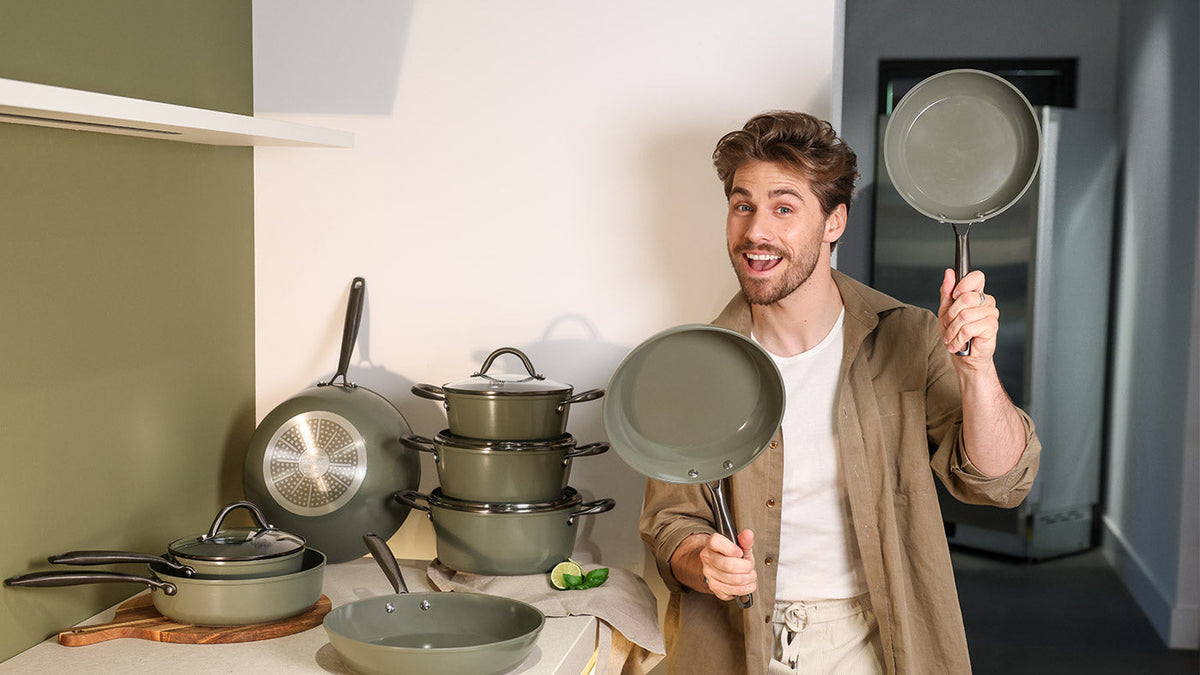
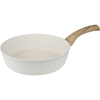
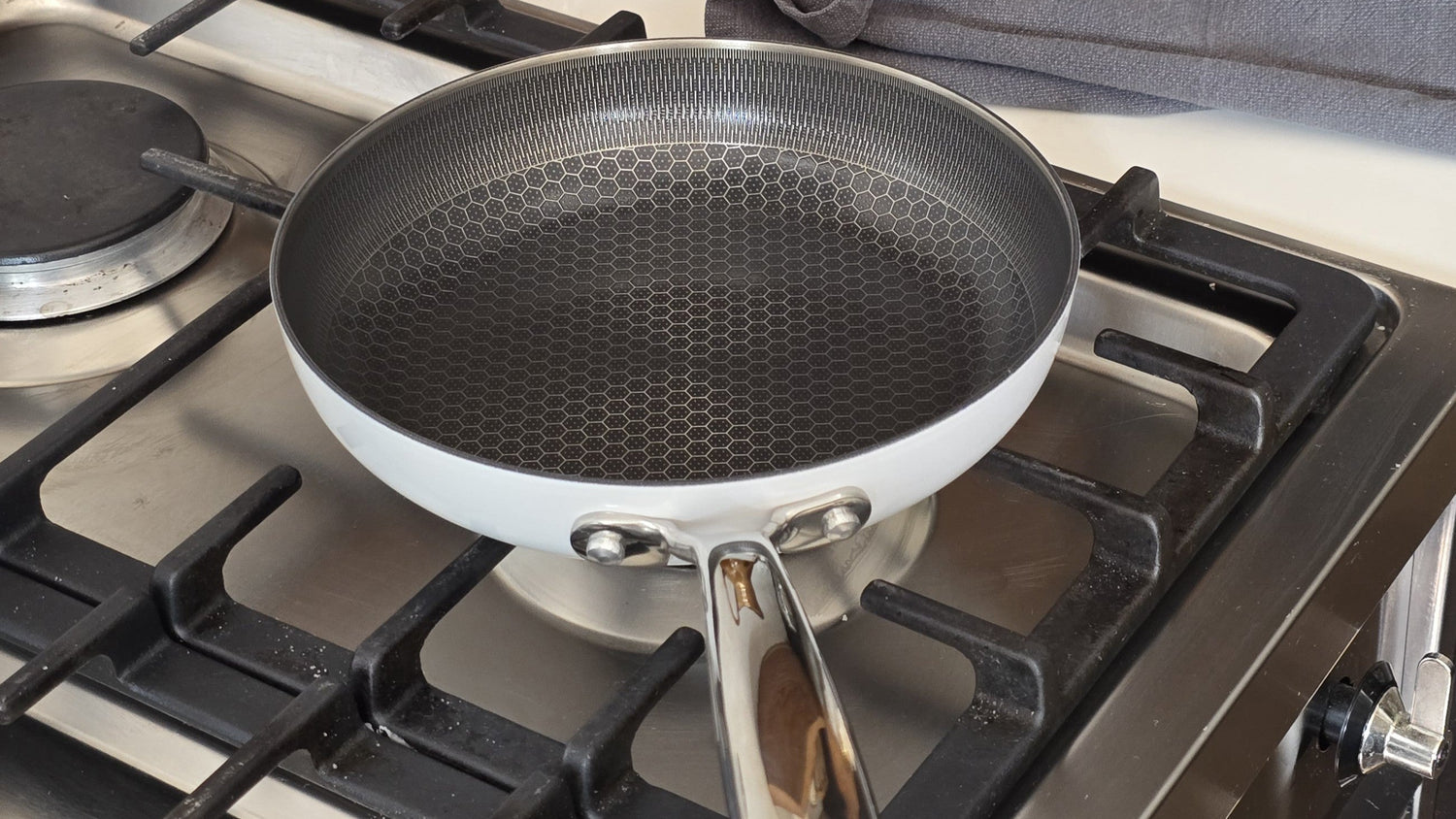
If you had to pick a single pan to cook nearly every kind of fish in, it would be a ceramic frying pan of 26 or 28 cm. The ceramic coating is naturally smoother than a traditional non-stick layer, and it contains no PFAS. For fish that means: less fat needed, less risk of sticking and a skin that comes out tight and crisp instead of frayed across the pan.
For most kitchens we recommend a frying pan without Teflon. Heat spreads evenly, you can tilt the pan slightly to spoon hot oil over the fish, and with normal use the coating lasts for years. Watch the induction setting though: maximum 80 percent power and no boost function, otherwise your pan overheats and the coating degrades faster.
Which fish needs which pan?
Not every fish belongs in the same pan. A simple split helps you choose at a glance:
- White fish (cod, plaice, sole, pangasius): ceramic frying pan, medium-high heat, little oil.
- Salmon and trout: ceramic frying pan with the skin side first, or a light grill pan for stripes.
- Tuna and swordfish: grill pan on high heat for a quick sear, pink in the middle.
- Prawns, gambas, squid: wok pan or sauté pan for fast stir-frying on high heat.
- Mussels, fish ravioli, fish soup: roomy saucepan or sauté pan with a lid.
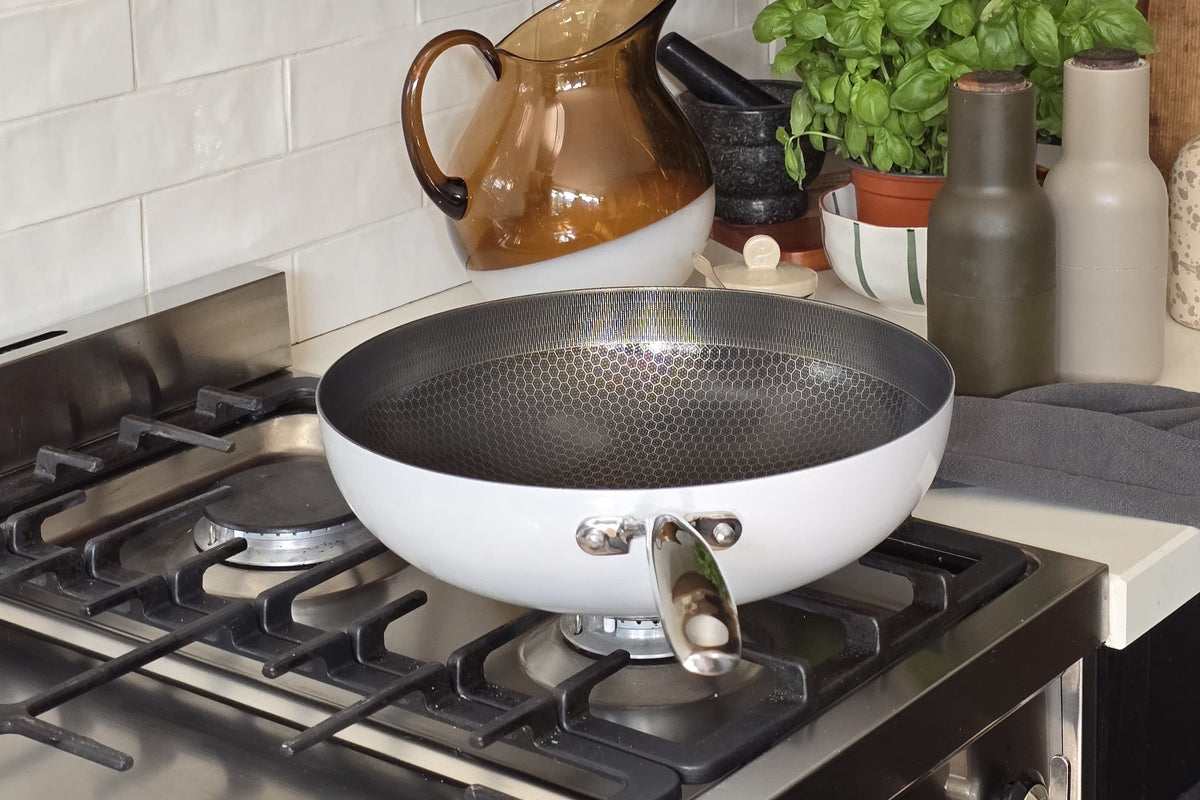
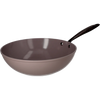
For the firmer fish varieties also have a look at our wok pan: the sloped walls make sure prawns and pieces of fish keep rolling back to the hot centre instead of sticking together.
The grill pan: for stripe lovers
For firm fish like a tuna steak, a salmon piece or swordfish, a grill pan is a treat. The ridges make sure the fish only touches a small part of the base, giving you proper grill marks while letting excess water drain underneath. The result: crust outside, juicy inside.
Important with grill pans for fish: brush the fish with oil, not the pan. A pan with standing puddles of oil between the ridges smokes out instantly, and you end up with a pan full of burnt residue rather than stripes on your fish. A ceramic grill pan combines the best of both worlds: searing stripes plus a coating where fish skin does not stick.
Sauté pan and saucepan: for the sauce lovers
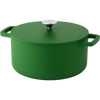
Fish does not always have to be cooked dry. Poaching in stock, braising in tomato sauce or an Italian acqua pazza calls for higher walls and a roomy base. A sauté pan is ideal here: large enough for two fillets side by side, with plenty of room for a bed of vegetables or a creamy sauce underneath.
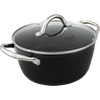
For smaller portions or a dish for two, a roomy saucepan is more practical. You drop the fillet in, add a splash of wine or stock, lid on and within eight minutes you have steamed fish with a complete sauce.

Why cast iron does not work for most fish
Cast iron pans are fantastic for steak, bread and stews. For delicate fish they are usually too heavy and too unforgiving. Fish skin clings mercilessly to a rough or poorly seasoned surface, and once you have to clean the pan after a failed sole fillet, your evening is gone.
Exception: a well-seasoned, smooth cast iron pan works just fine for firm fish with skin you want to sear briefly, like tuna or salmon steak. Always preheat gradually though, otherwise you warp the base through thermal shock.
What you really should not do
The biggest fish mistakes do not come from a lack of technique but from impatience. A few traps that will ruin your fish:
- Not preheating the pan. A cold pan always sticks. Give it two to three minutes on medium-high heat.
- Putting wet fish in the pan. Moisture is the enemy of the crust. Pat dry with kitchen paper before you start.
- Too much oil in the pan. A few drops on the fish itself is often enough. Pools of oil smoke out faster.
- Trying to flip too early. Fish releases itself when it is ready. A spatula that meets resistance is a spatula that has come too soon.
- Straight under the cold tap. A hot pan in cold water is a fast track to a warped base and a cracked coating.
Which colour pan suits your kitchen?
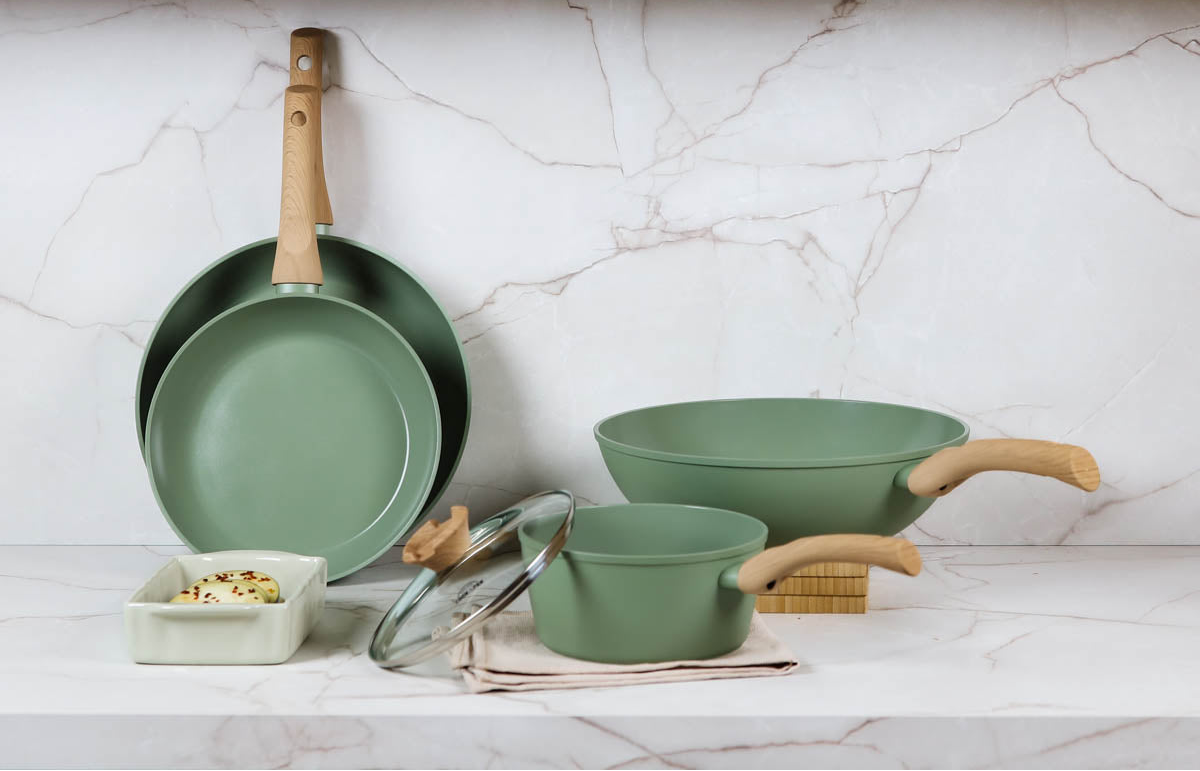
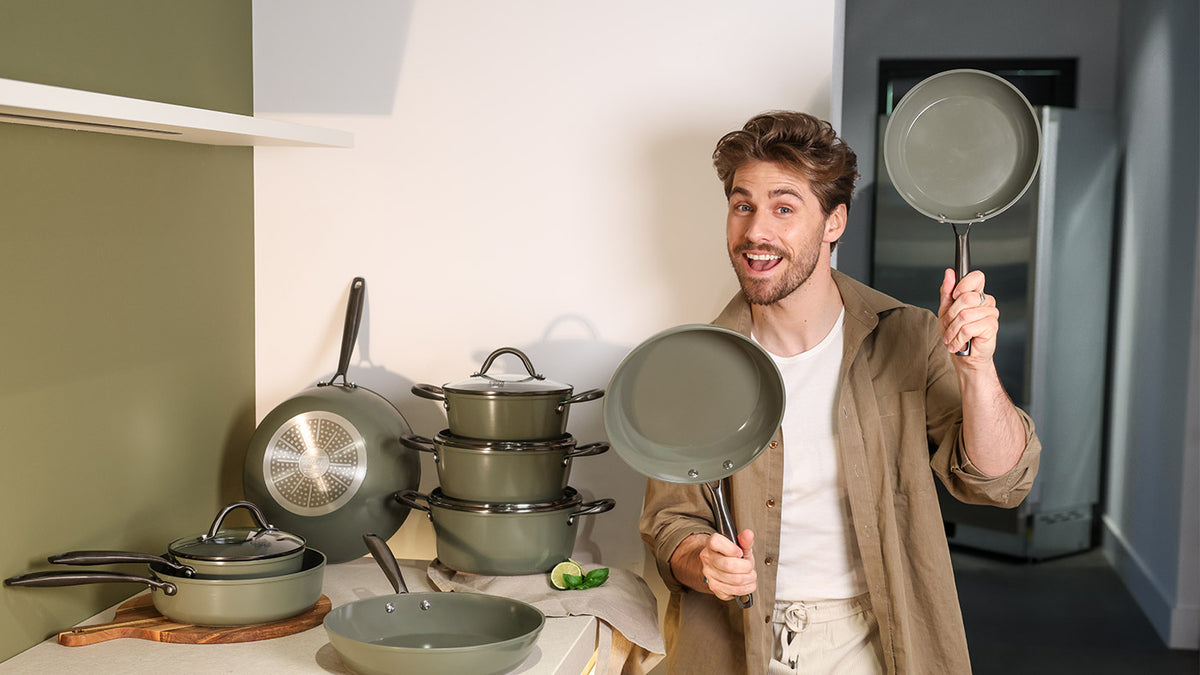
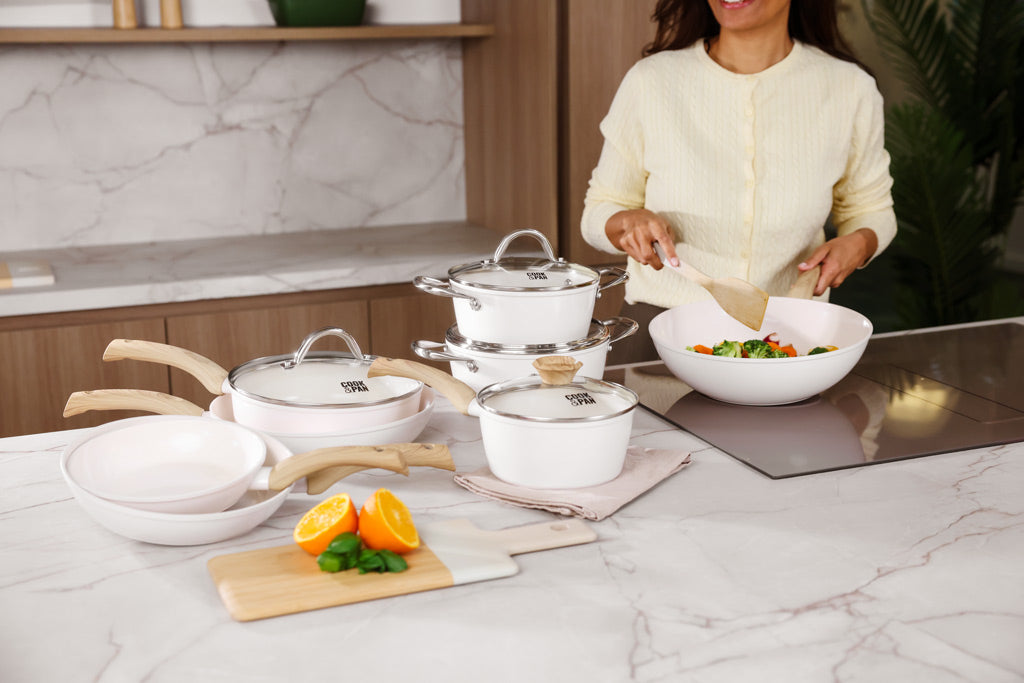
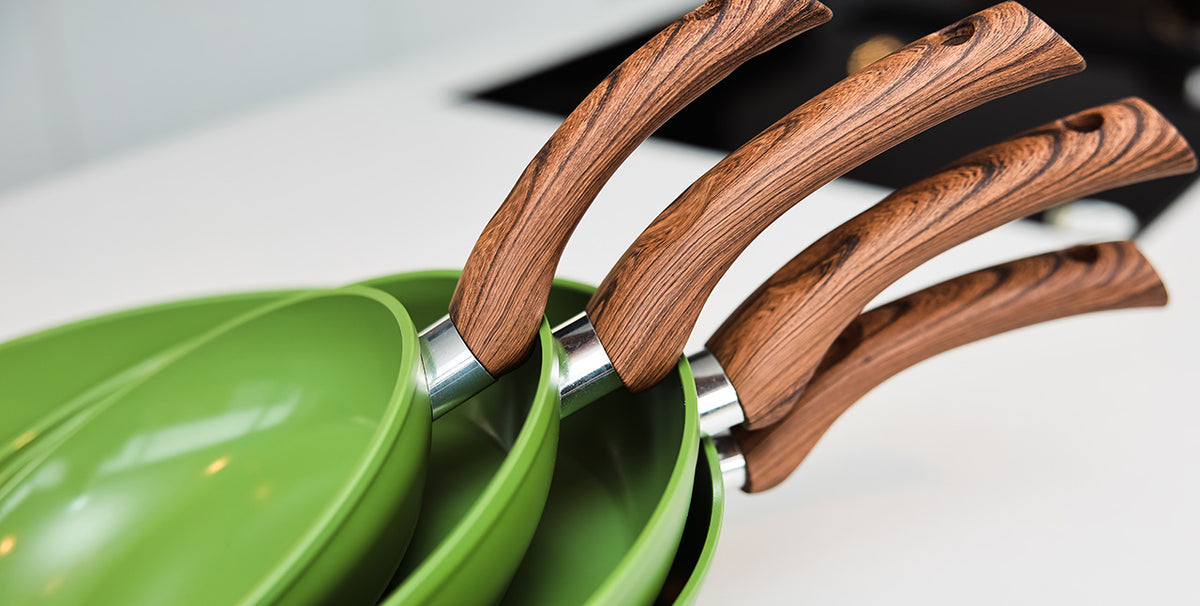
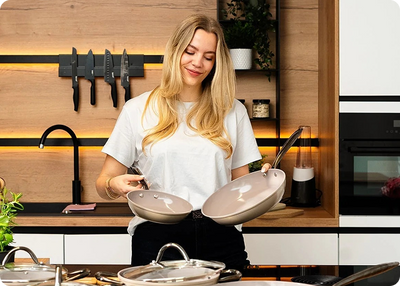
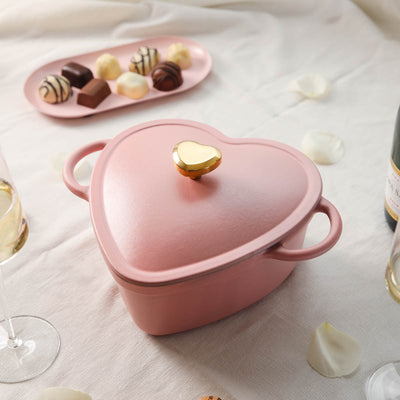
If you cook fish for guests, the pan often goes straight on the table. Suddenly colour becomes an argument. A deeper, warm tone hides splashes better and feels calm next to bowls of lemon and herbs. Our taupe pans sit visually well alongside wood, linen and stoneware; the pink pans bring a playful twist to a strict tableware set. And if your table can always do with a cheerful accent: the yellow pans are pure summer in pan form.
Care: how to keep your fish pan in top shape for longer
A ceramic pan for fish is not a single-use item if you treat it well. A few rules that really matter:
- Hand washing always comes first, even if the pan is officially dishwasher safe. Eco mode and aggressive tablets break the coating down faster.
- Always let the pan cool before you rinse it. Thermal shock is a coating's number one cause of death.
- Use wooden or silicone spatulas, never steel. Scratches look small but are the start of sticky patches.
- No baking sprays. The propellants leave a sticky film you can hardly get off again.
- Store pans with a protector between them. Stacking without protection is an open invitation to scratches.
Which size frying pan for fish?
For one to two people a 24 cm ceramic frying pan is ideal: just enough room for two fillets side by side without sticking. Cooking more often for three or four? Then 28 cm is the logical choice. More important than the exact size: never put too much fish in the pan at once. Two fillets at a time goes well; four fillets will steam instead of sear.
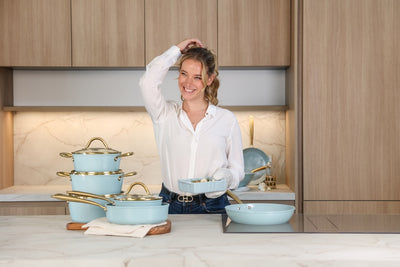
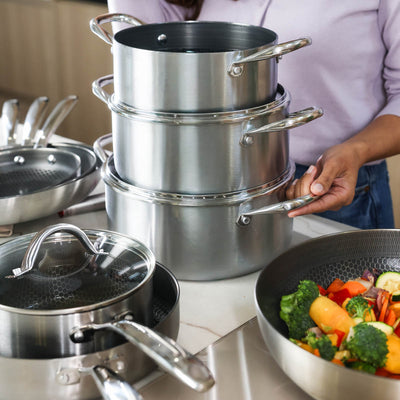
In doubt about the combination? If you cook fish regularly, you get the most out of a duo of ceramic frying pan plus sauté pan with lid. The frying pan for the seared fish, the sauté pan for sauces, poaching and anything that needs a lid. A sauté pan without PFAS is the natural companion: same material, same rules, different shape.
Warranty and worry-free cooking
Our pans are built to last for years. The ceramic non-stick coating comes with a two-year warranty on its function, and all other parts have a seven-year warranty on manufacturing and material defects. Cast iron pans even carry a twenty-five-year warranty. If your new fish pan does not win you over in the first sixty days, you can return it via our trial cooking policy, even after using it a couple of times.
Once more, briefly: the right pan for fish
If you want a golden rule: pick a ceramic frying pan for most fish, a grill pan for firm steaks with stripes, a sauté pan or saucepan for sauce and poaching, and leave cast iron for the meat. Preheat, pat dry, patience when you flip. That is it. And between us: once you have fried fish in a good ceramic pan, you will never cook your salmon fillet in a throwaway frying pan again.
Looking for a gift for the fish king in your life? Read why a PFAS-free pan is the perfect birthday gift. And looking for inspiration for a festive fish dinner? Our top 5 sustainable pans for the holidays takes you further.
💡 Please note: we love cooking with boldness, but safety always comes first. Read more on our disclaimer page.