



















Filters







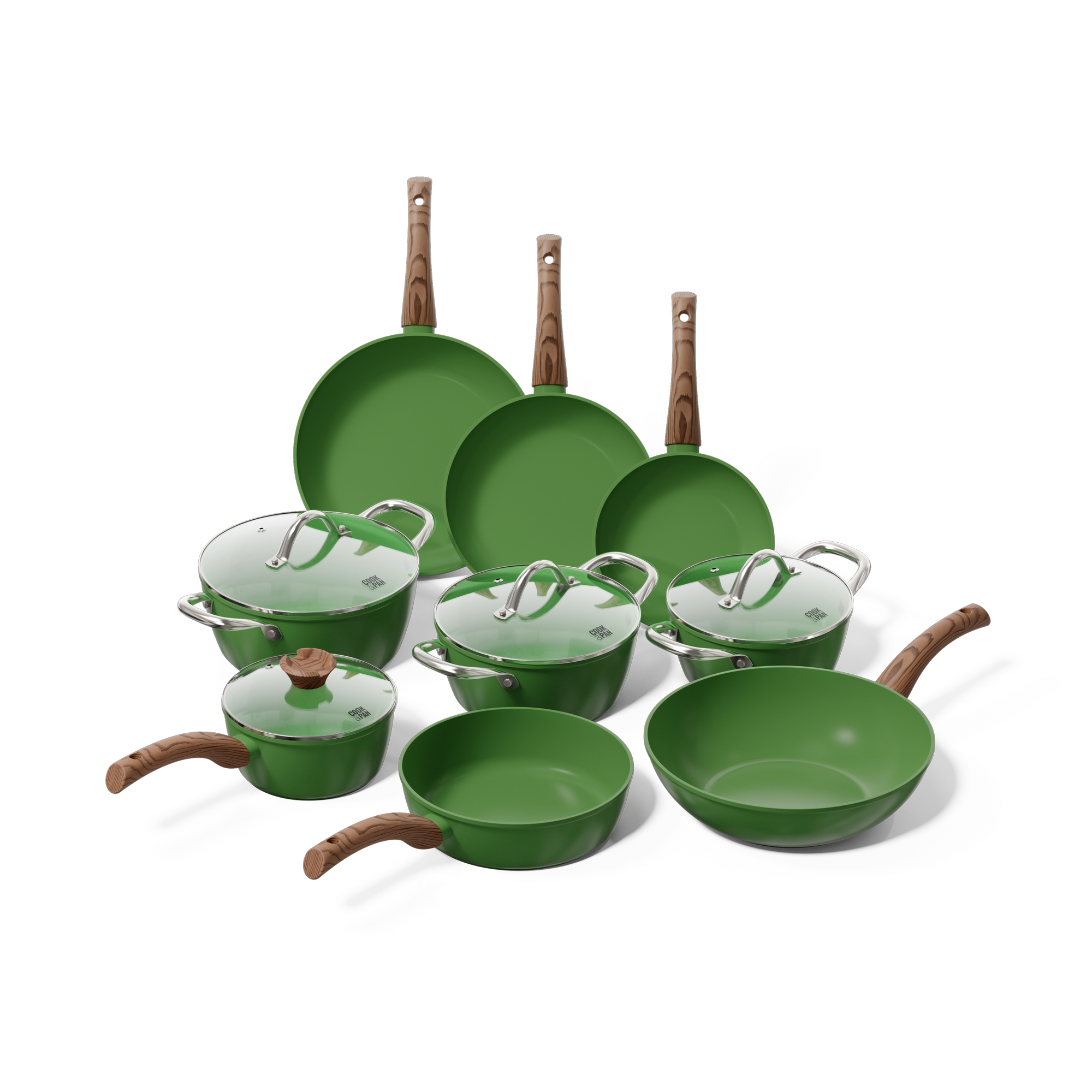


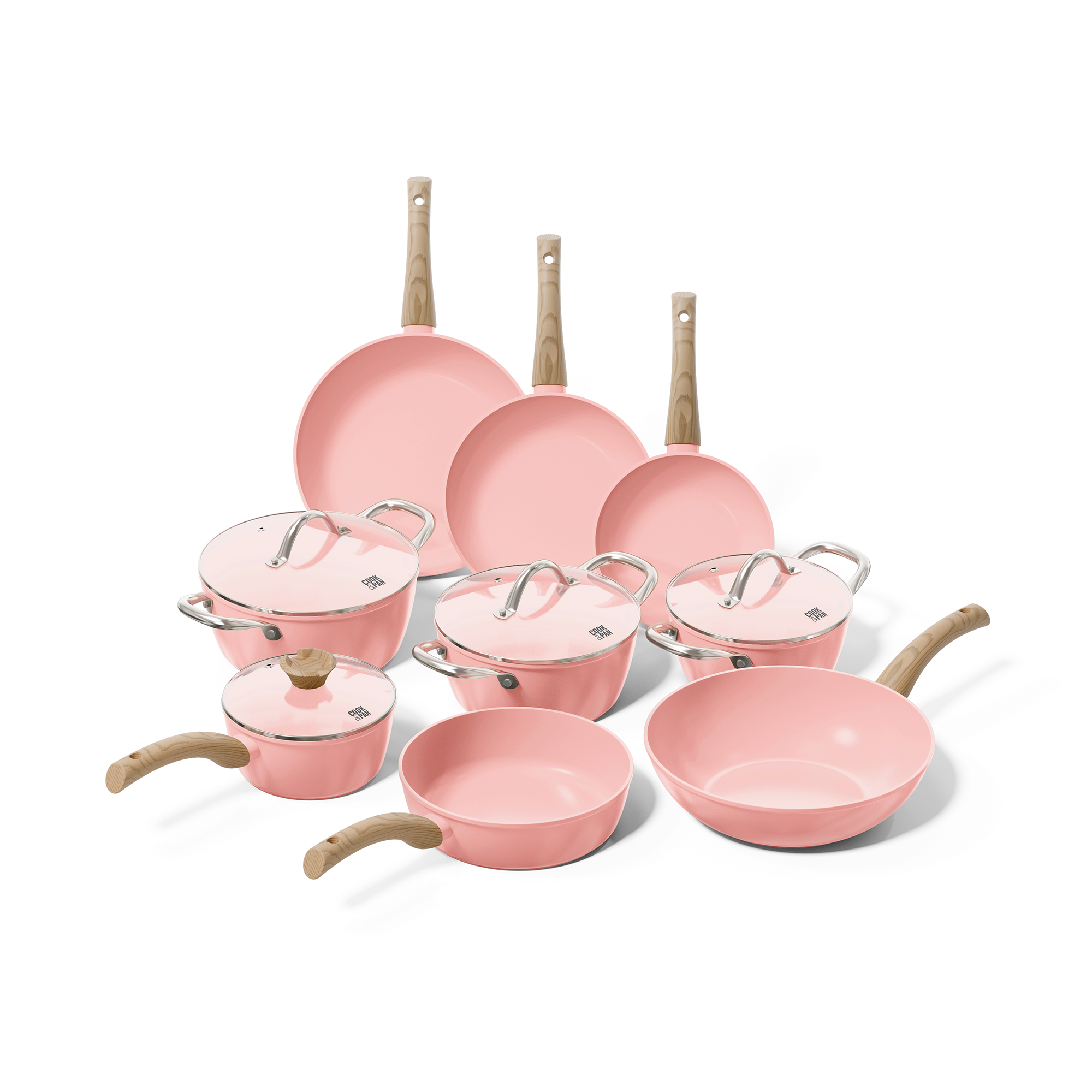
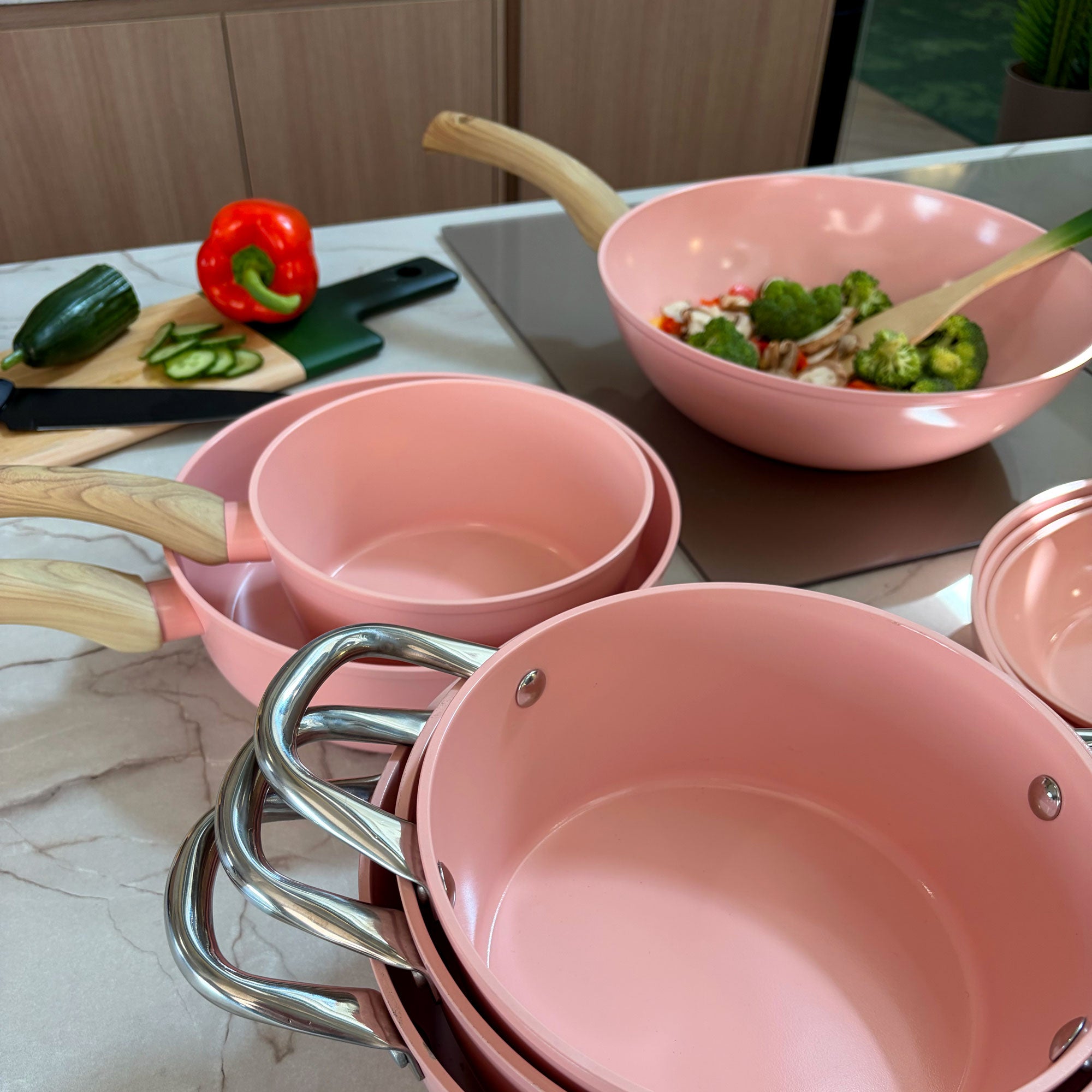

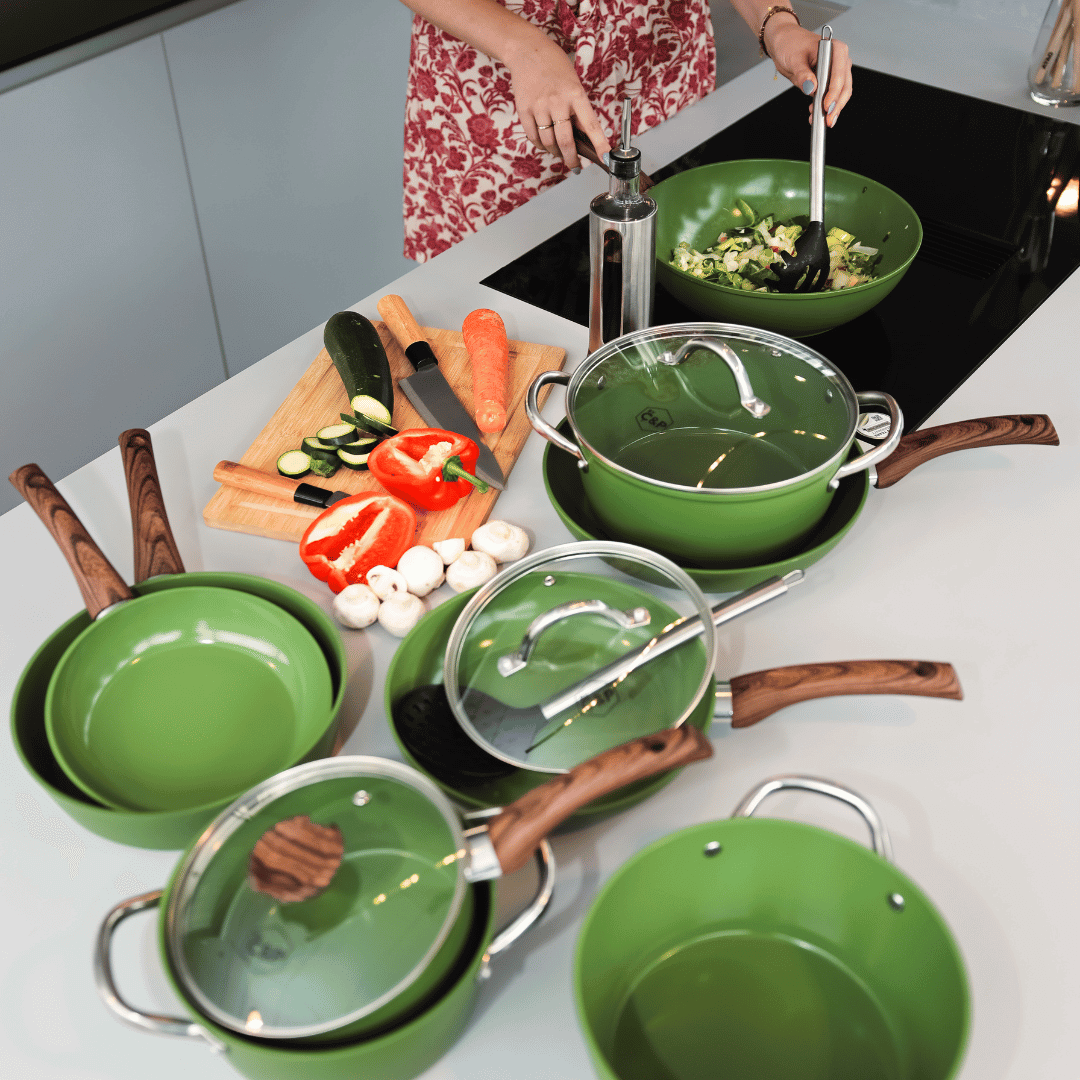








Ceramic pots and pans - smooth non-stick without coating worries
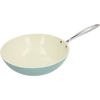
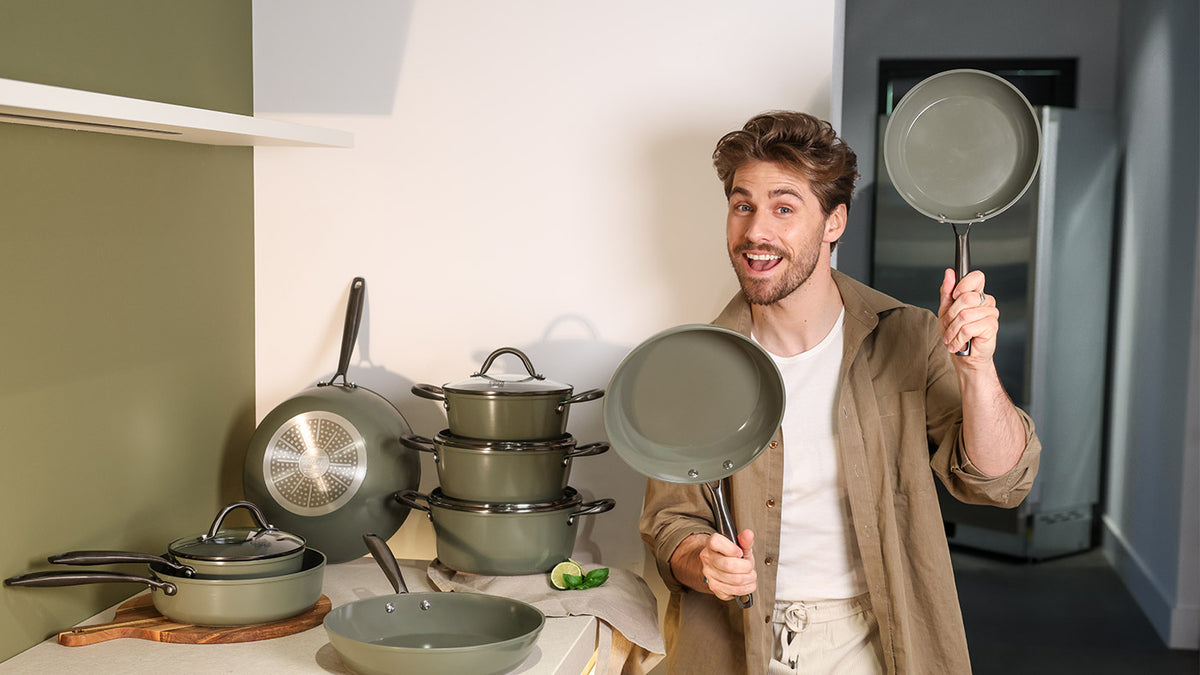
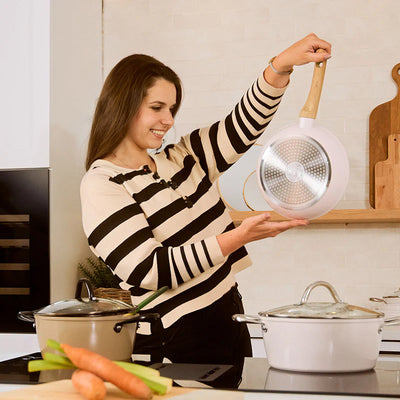
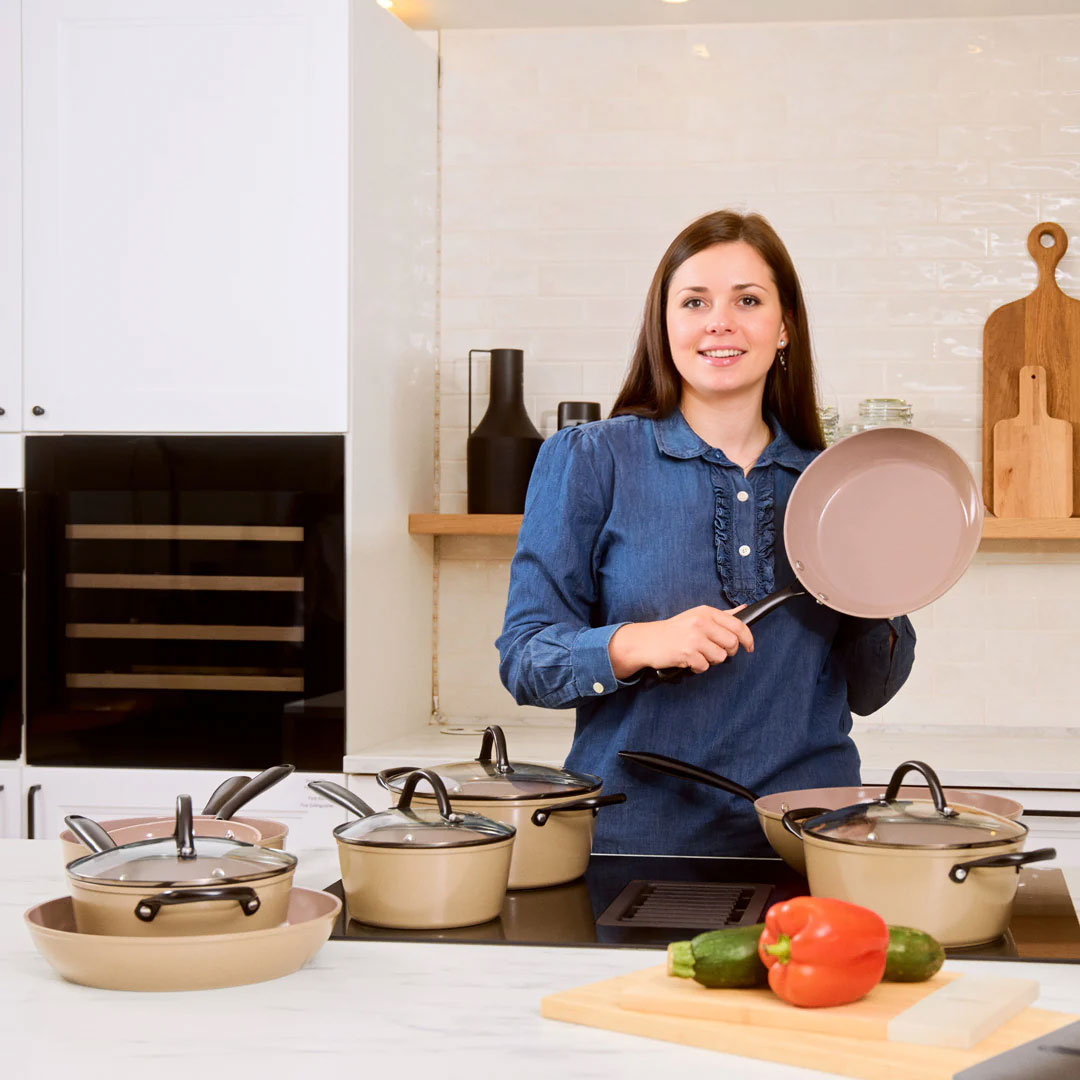
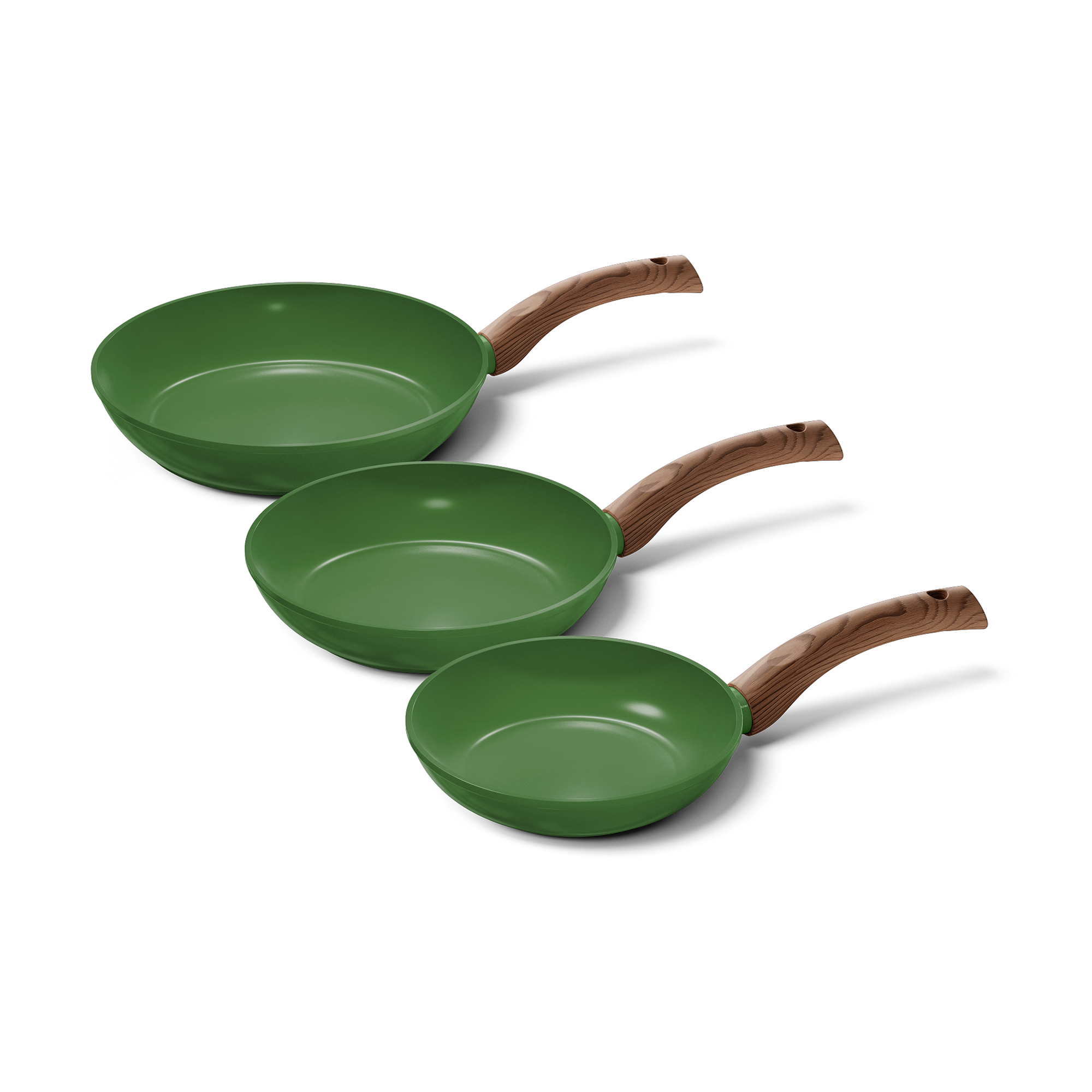
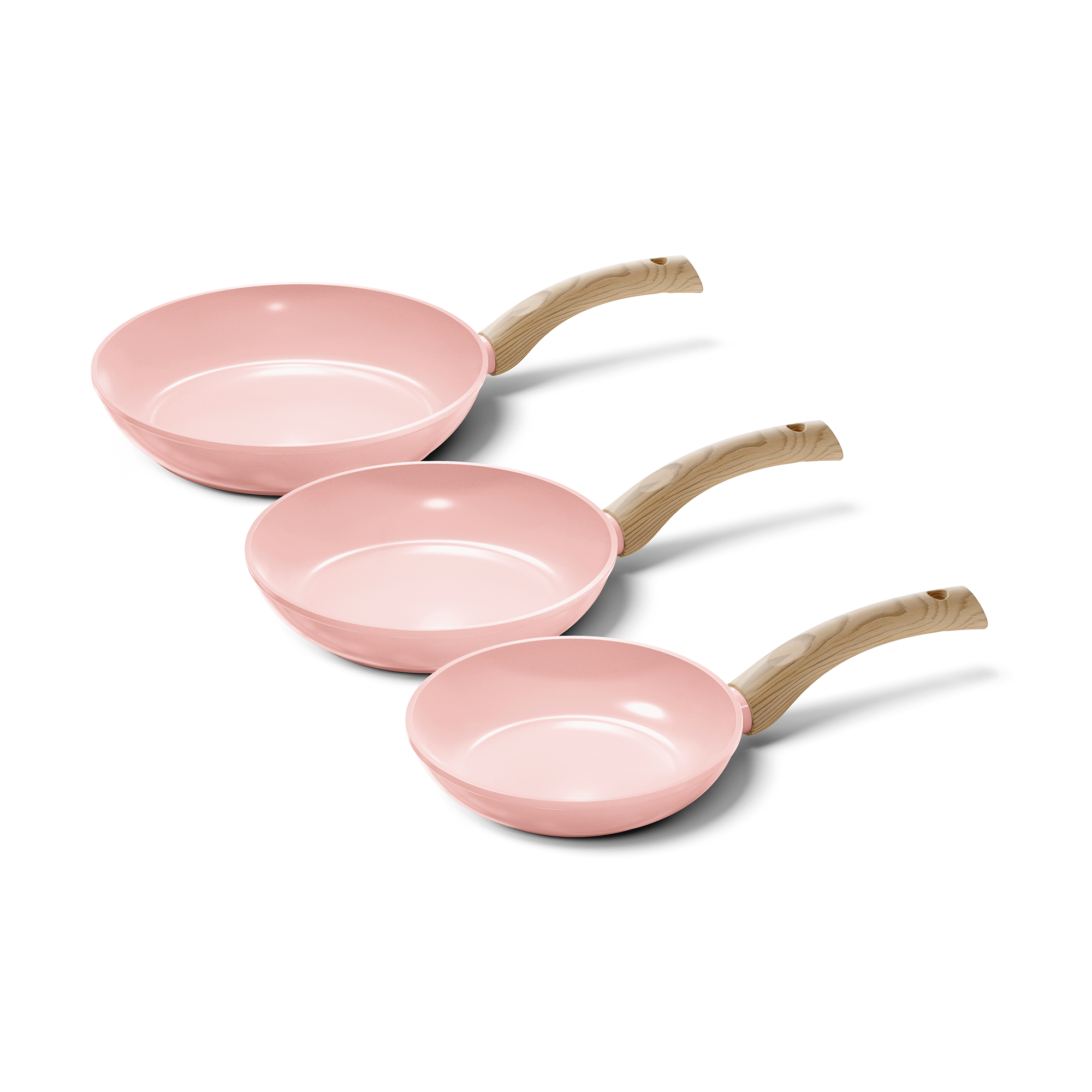
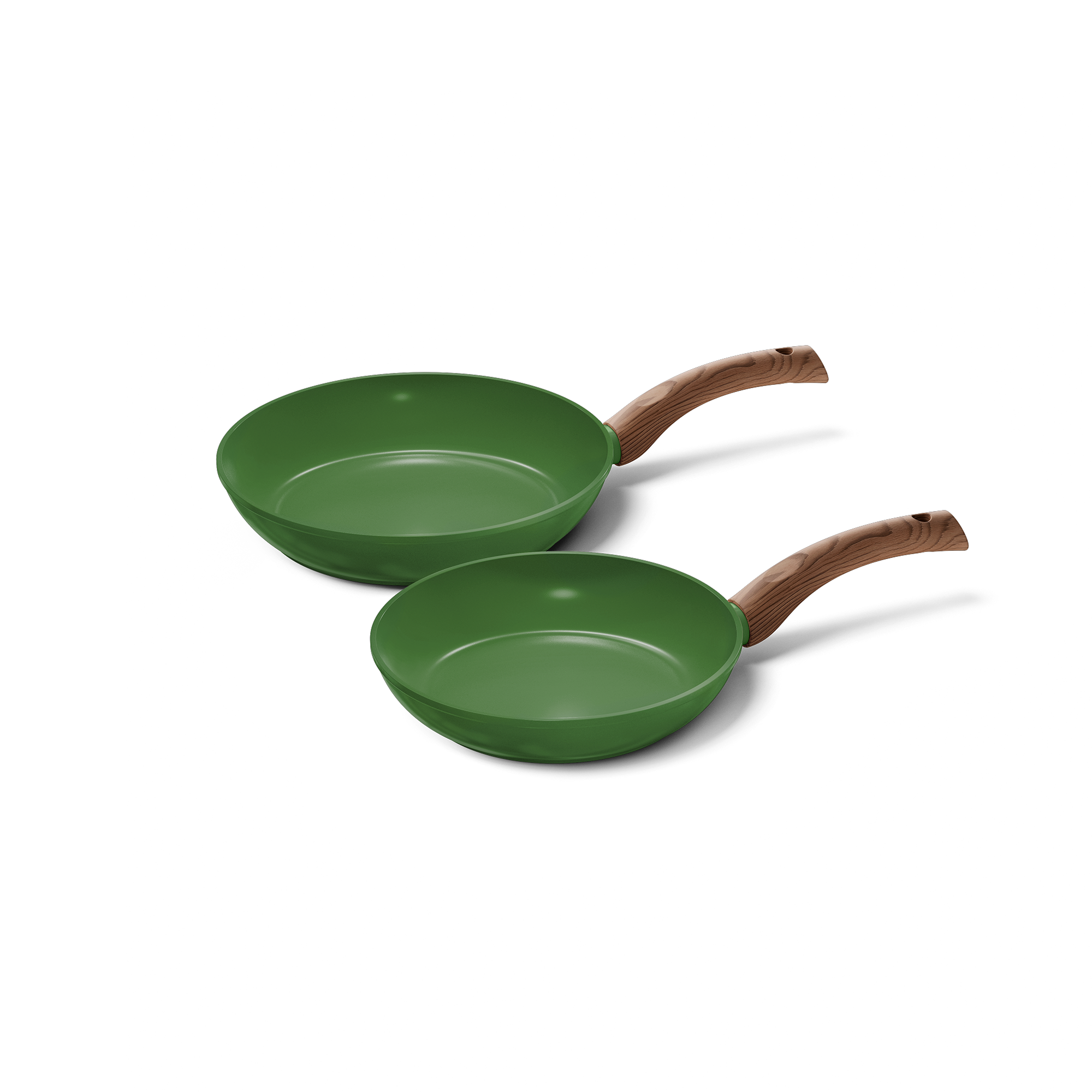
Ceramic pots and pans at Cook & Pan are aluminium pots and pans with a ceramic non-stick coating. The aluminium body keeps them lightweight and quick to heat, the ceramic coating gives you a smooth surface that eggs, fish, sauces or stews slide off without trouble. No PFAS, no PTFE, no synthetic non-stick. An honest choice for anyone who cooks daily and does not want to think about what is in the coating.
How does a ceramic coating work?
The ceramic non-stick layer is made of silicon oxide, a mineral also found in sand and glass. At high temperature this layer is sprayed onto the aluminium body and fused into a smooth, hard finish. It is not plastic and not a polymer; the layer does not release any substances into your food, even if you accidentally heat it dry or simmer for hours. You cook on it like on plain glass: a thin film of oil or butter is enough to release everything.
Which ceramic pan suits you?
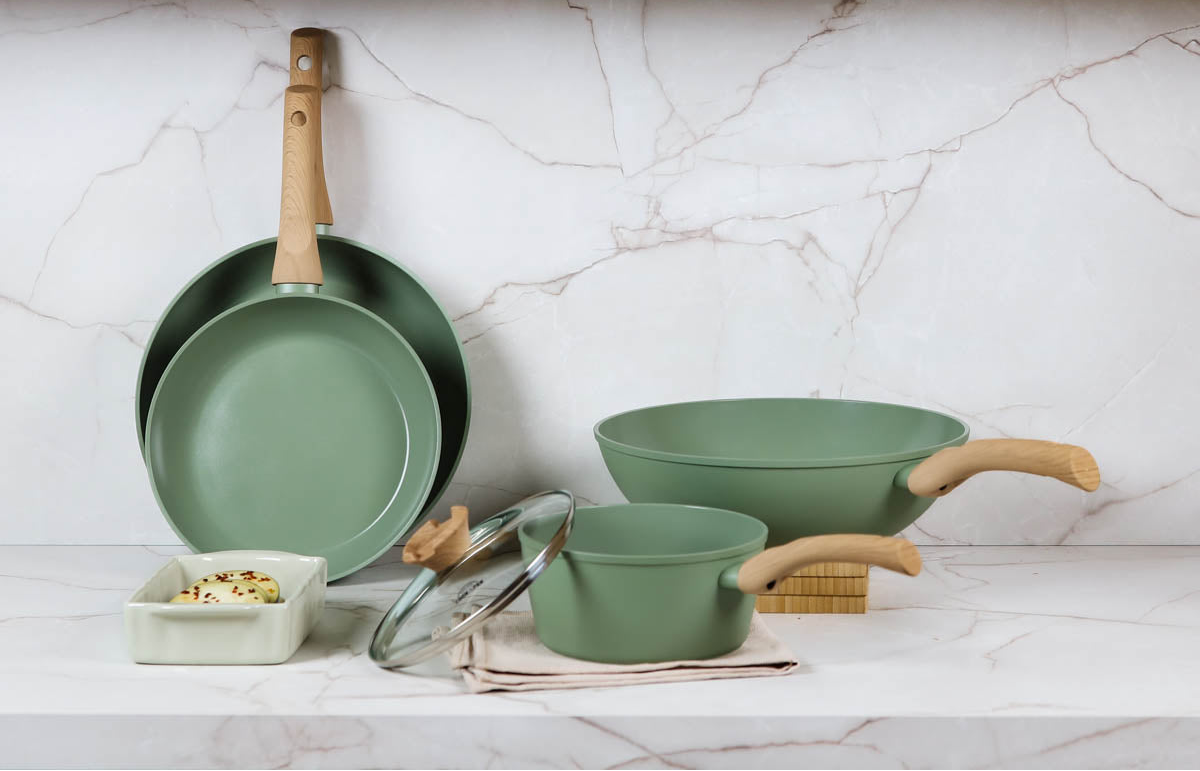
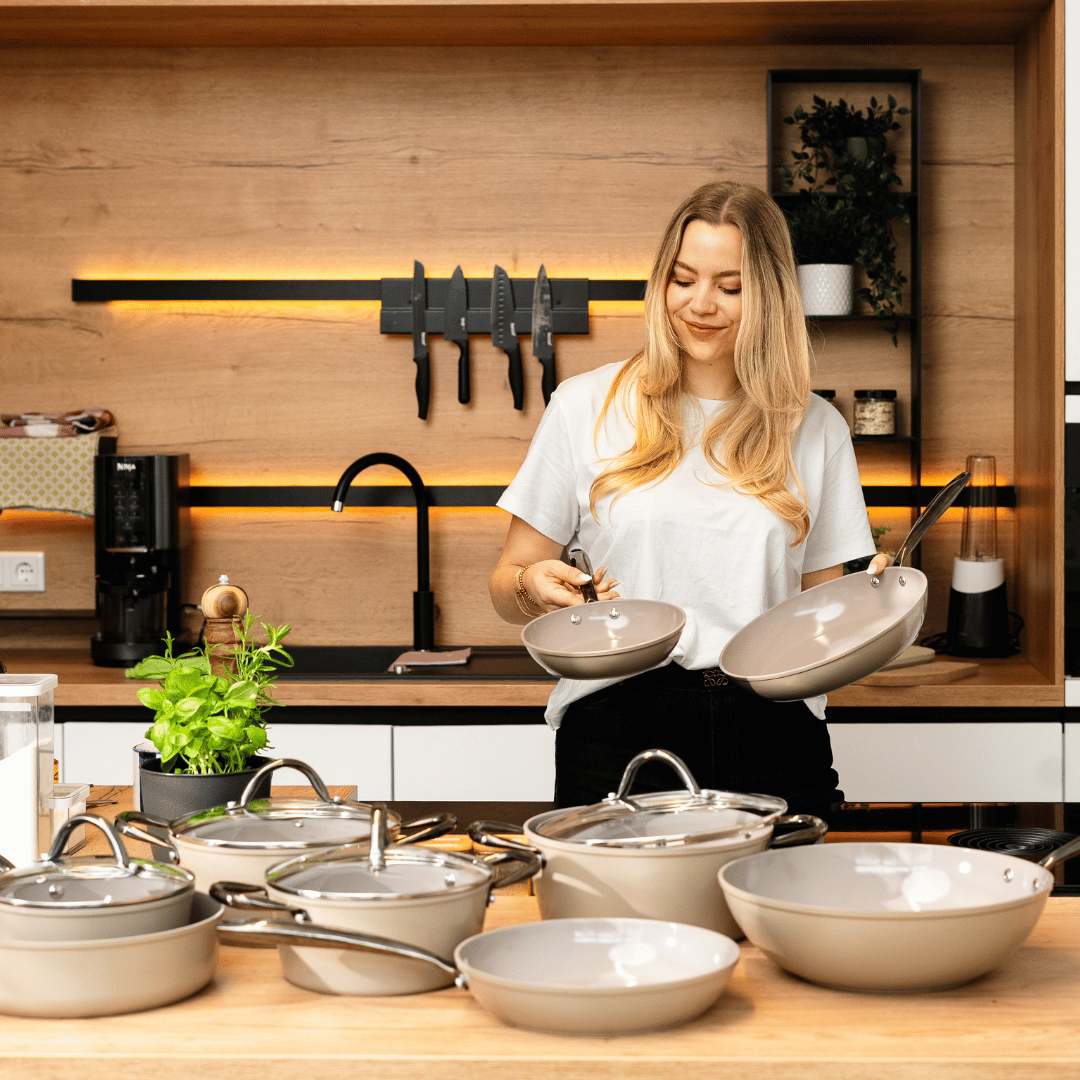
The ceramic range covers every type of pan. Per dish and cooking style there is a matching variant:
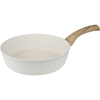
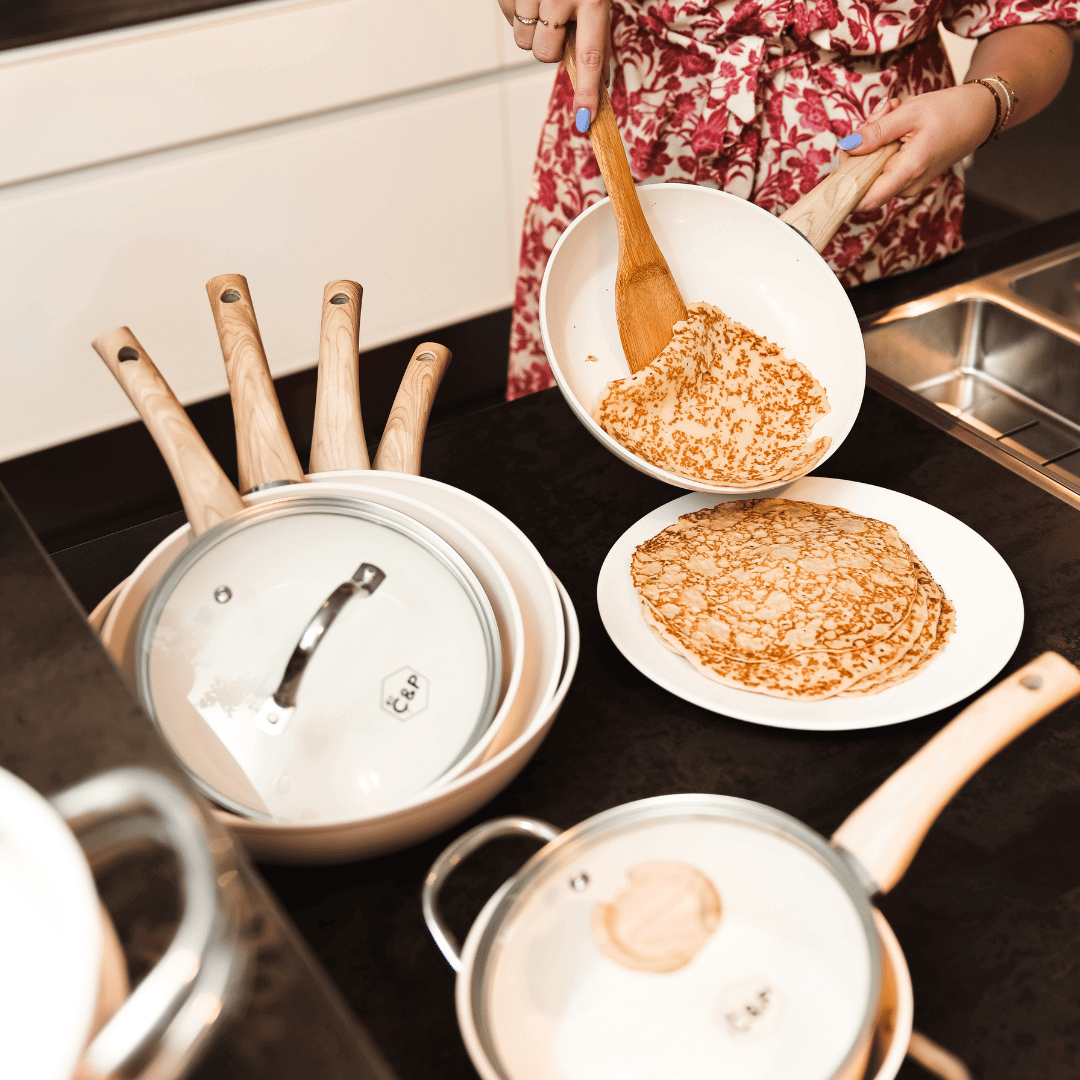
- For everyday frying - the ceramic frying pan for eggs, omelette, pancakes, fish and vegetables.
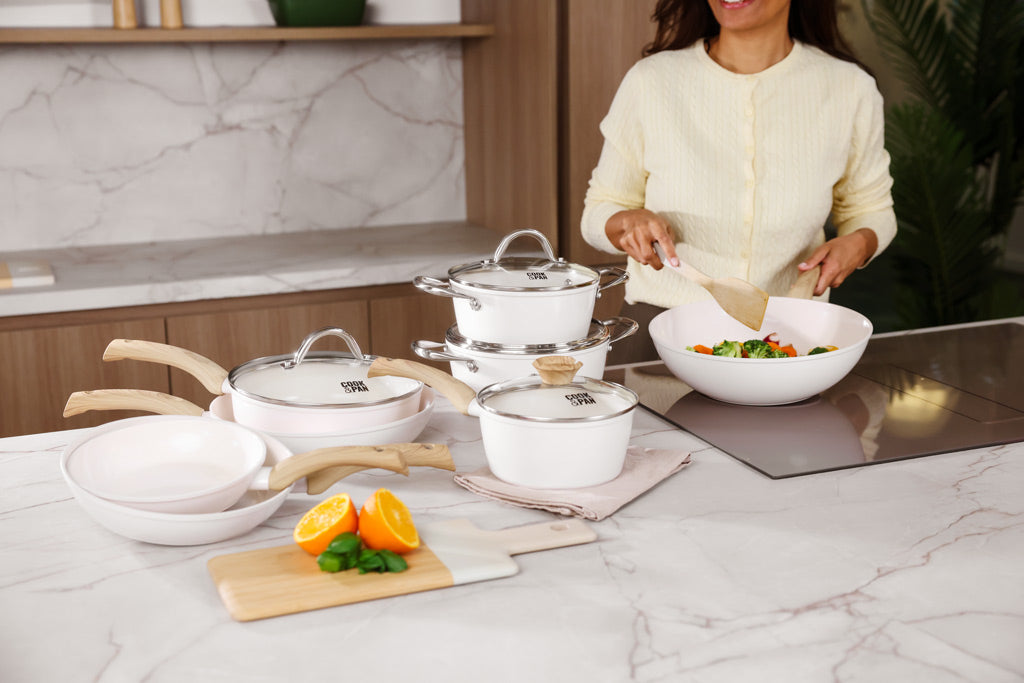
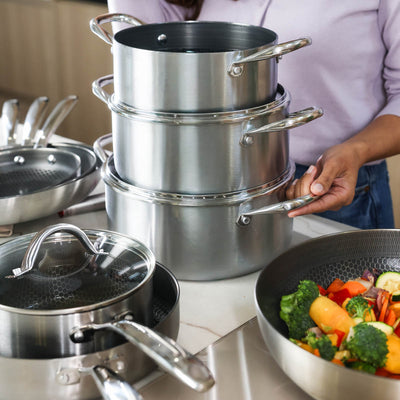
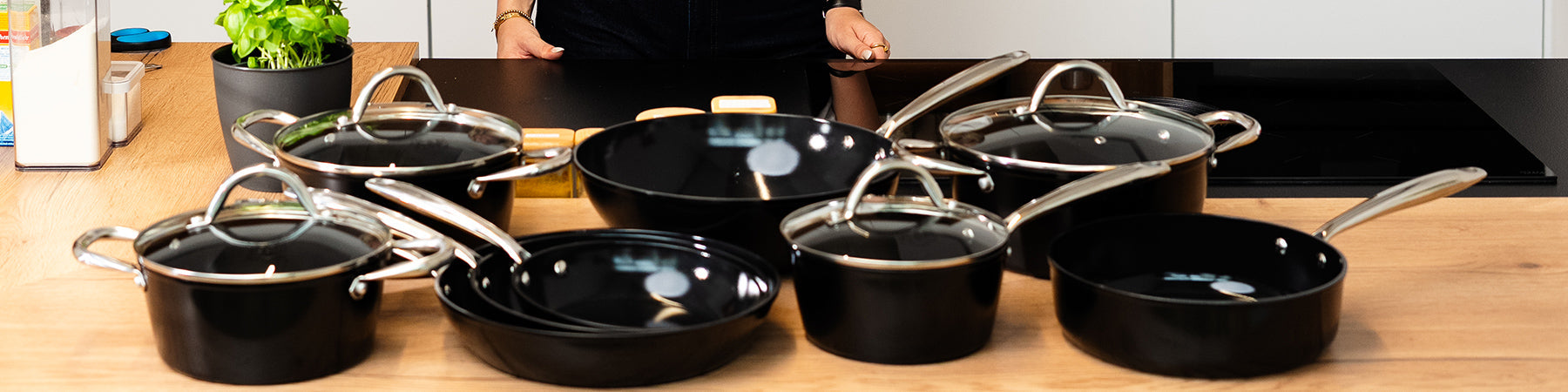
- For all-in-one starter kits - the ceramic pan set as a complete starter for your whole kitchen.
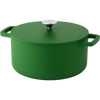
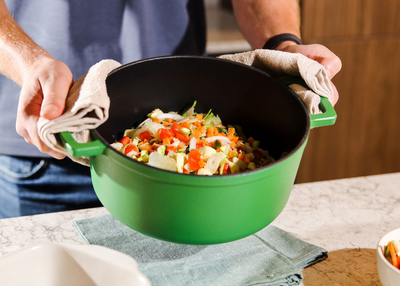
- For stews and big portions - the ceramic casserole pan for stew, hachee and oven-braised dishes.
- For sauces, pasta and risotto in one pan - the ceramic saute pan with high walls for liquid and sauce.
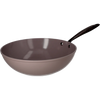
- For stir-fries and Asian dishes - the ceramic wok pan that reaches wok heat fast.
- For pasta, soup and large amounts of water - the ceramic cooking pot that brings water to a boil in no time.
Who are ceramic pans for?
Ceramic pans are ideal for anyone who cooks daily at medium heat and wants a pan that responds fast, offers smooth non-stick and is easy to clean. Good for frying eggs, omelette, pancakes, fish and vegetables, and for sauces or stews where nothing should stick to the bottom. For extreme heat or long hard searing of meat at full power you reach for a cast iron or multi-ply stainless steel pan instead. Want a light pan you can grab easily from the rack and do not have to season? Then ceramic is the right material.
Which hobs do ceramic pans work on?
Our ceramic pans work on every heat source: induction, gas, ceramic and electric. The aluminium body has a ferromagnetic base plate baked in, so the pan picks up heat on induction too. Check your induction zone size and pick a diameter that matches, that way you avoid hot edges. On gas keep the flame under the base and not licking the sides, that extends the life of the coating.
Care: how ceramic pans stay in top shape for long
The ceramic layer is hard but vulnerable to two things: thermal shock and mechanical pressure. So never rinse a hot pan directly under cold water, let it cool down first. Use wooden or silicone spatulas instead of metal, and avoid steel wool or scouring pads. For washing up a soft sponge with mild detergent is enough. Do not stack pans on top of each other without a protective cloth in between, that scratches the coating.
How long do ceramic pans last?
Our ceramic pans come with a 7-year warranty on manufacturing and material defects and a 2-year warranty on the function of the ceramic coating. In practice the pans themselves last for years; what changes first is the smoothness of the coating with intensive daily use. Heating up gradually and using wooden or silicone spatulas keeps a ceramic pan smooth the longest. Want to try it out first? You have 60 days of try-cooking to test your pan at home and still send it back if it does not suit you.
PFAS-free by material choice
Because the non-stick is purely silicon oxide, by definition there is no PFAS, PFOA or PTFE in our ceramic pans. No synthetic polymers, no slow release during heating. Want to see the broader PFAS-free range across all materials? Check our PFAS-free pans hub.
See also
Looking for pans in other materials, like cast iron or multi-ply stainless steel? Check our pots and pans hub for the full range across all materials.

No forever chemicals

60-Day Free Trial

Free Shipping in UK

