















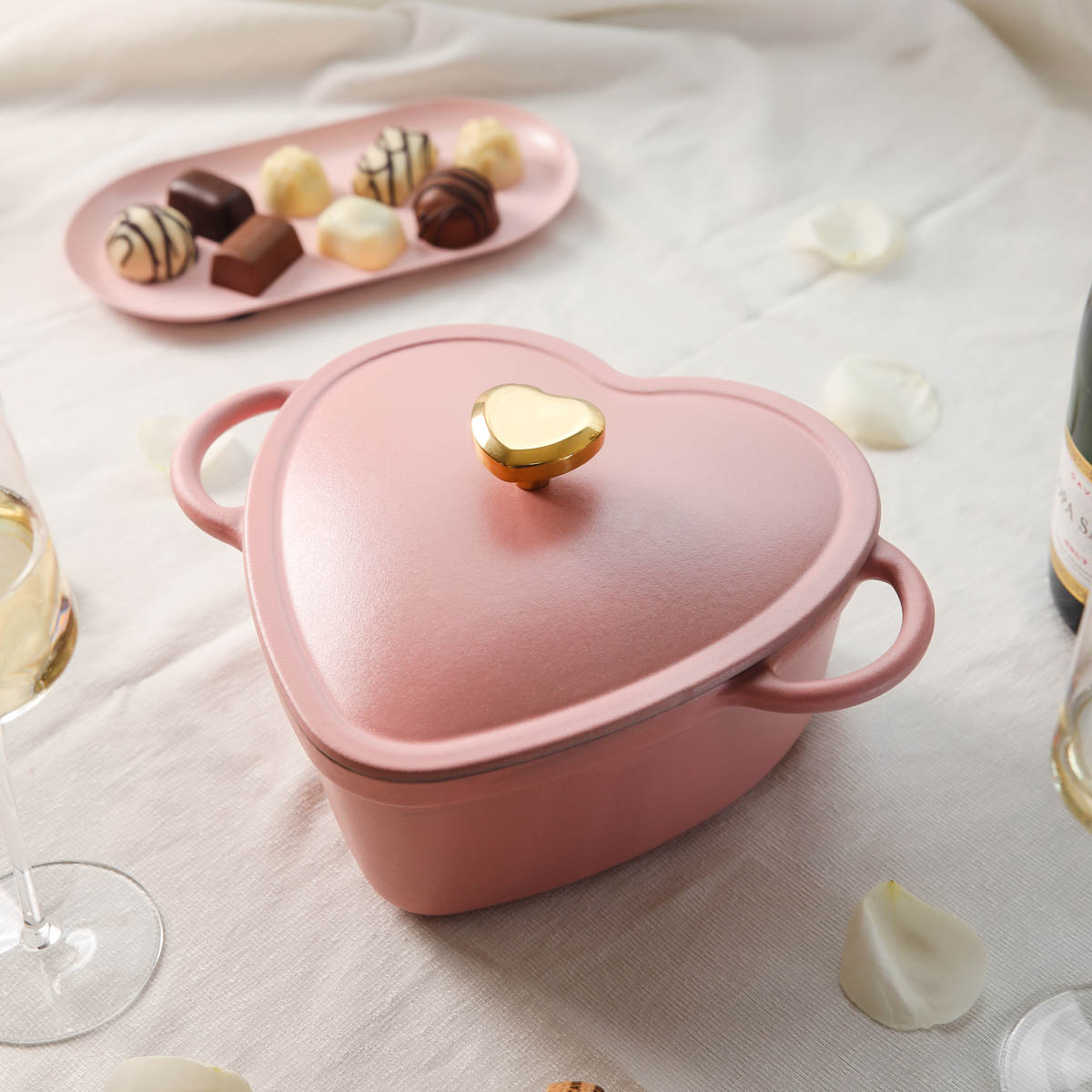







Enamel sounds fancy. It looks fancy. And yet very few people know what it actually is. A layer of paint? A coating like Teflon? A posh word for glaze? Spoiler: it's glass. Melted glass, to be precise, that bonds with the cast iron of your pot. Time to lift the lid.
What is enamel? Not paint, but glass
Enamel is a mix of silicates and minerals that is applied to a metal base and then fired in a kiln at more than 800 degrees. At that temperature the mix melts and fuses with the metal. What's left is a hard, smooth and non-porous surface.
So it isn't a layer that gets sprayed on in a hurry and peels off after a year. Enamel is bonded to the metal, like a second skin. That's also why it feels different: tighter, smoother and a touch cooler than an ordinary pot.
Why enamel almost always sits on cast iron
In theory you can apply enamel to several metals. In practice you mostly find it on cast iron. Makes sense, because you need a base that can handle that high firing temperature without warping. Cast iron does it with ease.
At Cook & Pan we only use enamel on cast iron. All our cast iron dutch ovens are enamelled. Our aluminium and stainless steel pots and pans have something else: a ceramic non-stick coating. More on that in a moment.
Is enamel a non-stick coating?
Yes and no. Honestly: enamel is smooth and doesn't give food much to grip, so it sticks less quickly than in bare iron. That's why people often call it an enamel non-stick coating. But it works differently from the mirror-smooth coating on a frying pan.
With a splash of oil or a knob of butter and a pot that has come up to temperature gently, your stew slides right out. Throw cold meat into a cold pot and hope for the best? Then something might stick. No drama: with a little water and some patience it soaks loose again.
Enamel or ceramic coating: what's the difference?
Both PFAS-free, both smooth, but each has its own talent. The difference in a nutshell:
- Enamel sits on cast iron. Heavy, holds heat for hours and is made for stewing, braising, roasting and baking bread.
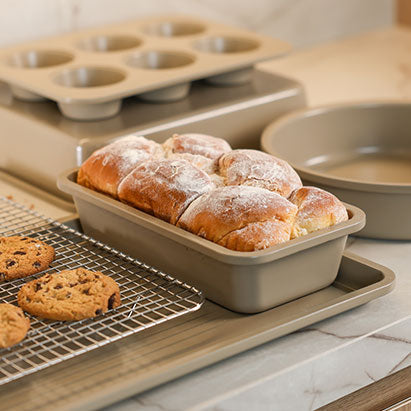
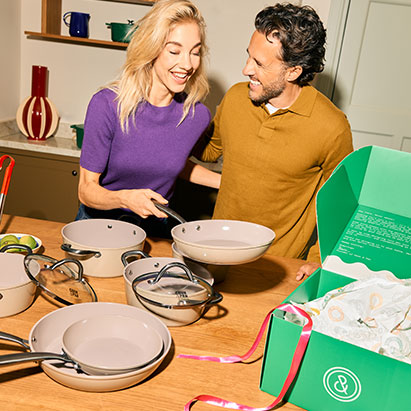
- A ceramic non-stick coating sits on our aluminium and stainless steel pots and pans. Light, heats up quickly and is ideal for eggs, pancakes and a quick stir-fry.
- Enamel is for the long jobs, a ceramic coating for quick frying.
- Both are free from PFAS, PFOA and Teflon.
Want to know exactly what's in that ceramic layer? Take a look at our pots and pans with a ceramic non-stick coating or read on about what PFAS is and why you don't want it in your pan.
The benefits of enamel on cast iron
Cast iron and enamel aren't a couple by accident. They make each other better. The cast iron brings the mass, the heat and the durability. The enamel brings the smooth surface, the protection and the colour.
- No seasoning needed. Bare cast iron has to be seasoned to build up a natural layer. With enamelled cast iron you skip that step.
- Acid-resistant. Tomato sauce, wine, lemon, vinegar: bare cast iron reacts to them and gives a metallic taste. Enamel stays neutral, even after hours of simmering.
- Easy to clean. The smooth surface gives food little to cling to. Warm water, soft brush, done.
- PFAS-free. Glass doesn't react with your food. No synthetic coating, no fuss.
- Beautiful. From hob straight to table. No serving dish needed, less washing up.

The heat of cast iron stays fully intact
Some people think enamel weakens the heat of cast iron. Not true. The enamel layer is wafer-thin compared to the mass of iron underneath. Once up to temperature, your enamelled dutch oven behaves exactly as cast iron should: the heat builds gently, lingers for a long time and spreads nicely across the base.
That's exactly why an enamel pot is so good at anything that takes time. Read more in our blog about slow cooking without sticking.
What do you cook in an enamel pot?
Enamelled cast iron feels at home with anything that simmers, braises or goes in the oven. Think of:
- Beef stew, goulash, osso buco and coq au vin
- Fish soup, bouillabaisse and mussels in white wine
- Bread baked in a covered pot in the oven, with a crunchy crust
- Risotto, paella and oven bakes
- Chilli and ratatouille
- Pulled pork and slow-roasted shoulder
For quick frying you're better off with a light pan with a ceramic non-stick coating. But as soon as the hob can stay on low all afternoon? Then the enamel pot is your best friend. Still unsure which size or shape suits you? These 5 questions to ask before buying a casserole pot will help you choose.
What to keep in mind with enamel
Enamel is hard, but not indestructible. It's still glass. With these five habits your pot stays beautiful for longest:
- Heat gently. Put your pot on a low heat and give it two to three minutes to warm up. Heating too fast can cause hairline cracks in the enamel.
- A maximum of 70 to 80 percent on induction. No boost, no full power. Cast iron holds heat so well that medium is more than enough. Find out why in why 80% on induction is the new 100%.
- No cold water on a hot pot. Let it cool down on the worktop first.
- Watch out for knocks. A hard bump on the rim or a fall onto a tiled floor can chip a piece of enamel.
- Choose wood or silicone. Metal utensils and enamel aren't good friends.
Caring for enamel without the hassle
Hand washing is the golden rule. Even though enamel can technically handle the dishwasher, tablets and the eco programme dull the shine over time. A soft sponge and a drop of washing-up liquid are all you need.
Something stuck? Add a little water with two tablespoons of bicarbonate of soda, bring it briefly to the boil, turn off the heat and let it cool. After that it comes loose on its own. Don't forget the rim either: it's often bare cast iron. Rub it now and then with a drop of vegetable oil and flash rust doesn't stand a chance. All the tips in one place: this is how you take care of your cast iron pan.
How long does an enamel pot last?
A long time. A very long time. The cast iron of our dutch ovens comes with a 25-year guarantee against manufacturing and material defects. That number isn't a marketing trick, it comes straight from the material: cast iron hardly wears.
The enamel needs a little care. Heat it gently, wash it by hand, and it stays beautiful for years. Fine hairlines after a long time are part of the material and don't affect how your pot cooks. And if it gets a touch less flawless over the years? Read how cast iron with enamel only gets more beautiful with the years.
How to recognise good enamel
Not every enamelled pot is the same. On cheap versions the layer is often thinner and less even. Here's what to look for:
- An even shine and colour, inside too
- No bubbles or bumps when you hold it under a lamp
- A neatly finished rim without rough patches
- A solid weight, because light cast iron doesn't exist
- A manufacturer that dares to guarantee the cast iron
Enamel in your favourite colour
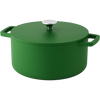
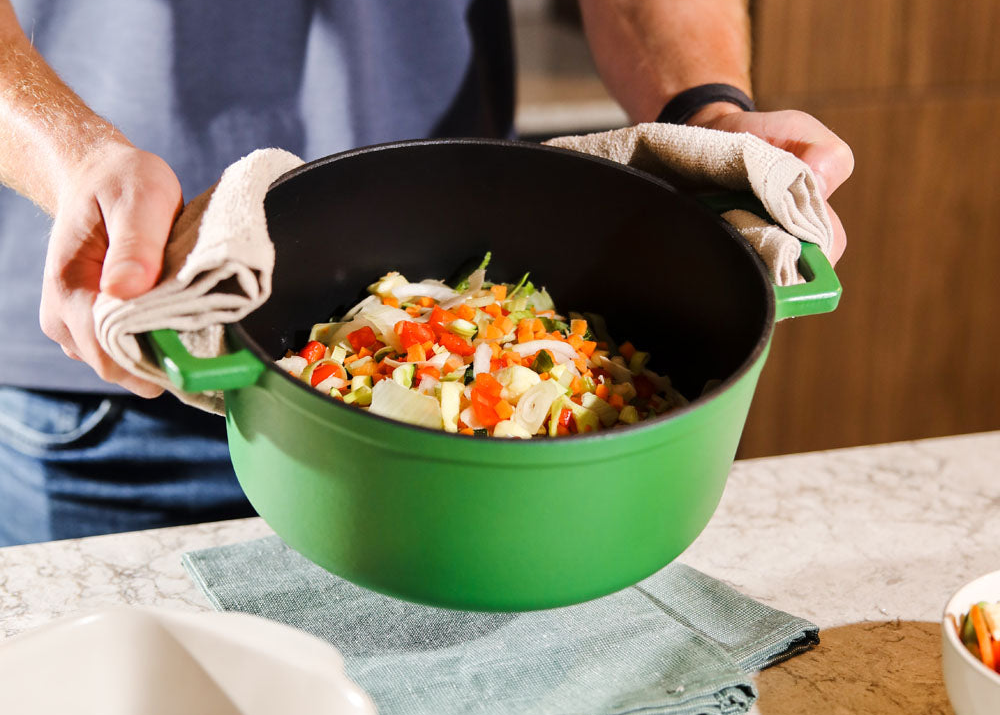
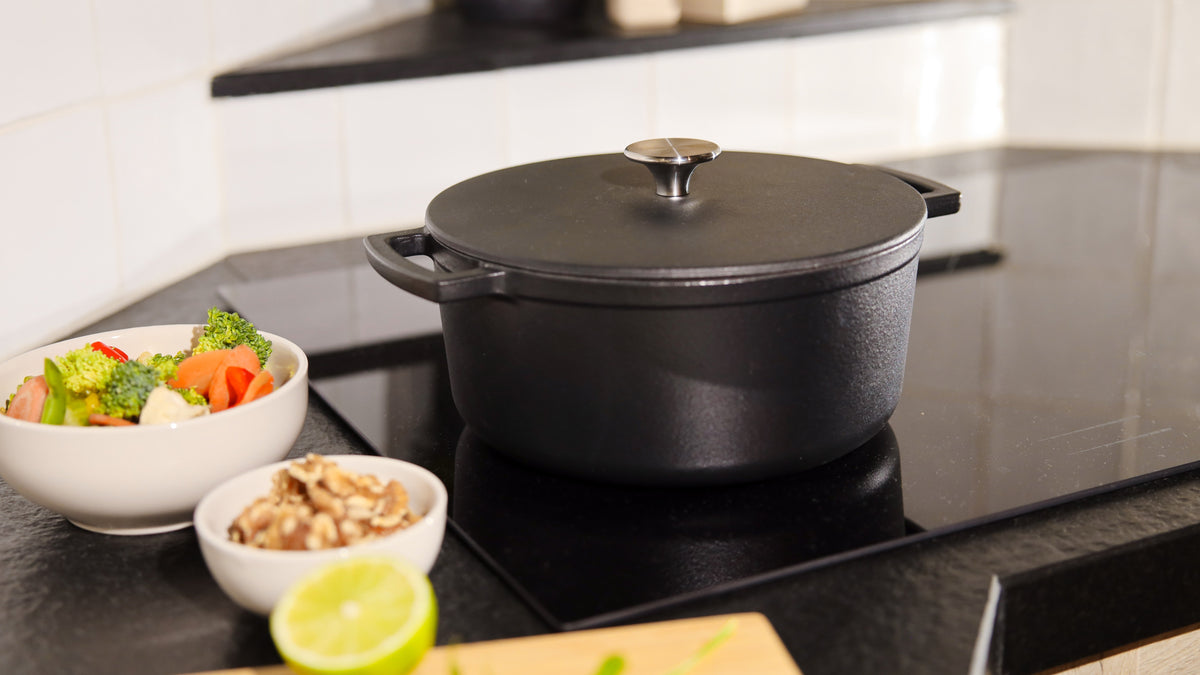
One of the best things about enamel: the colour is in the glass itself. No paint that flakes, no sticker that peels. Our enamelled dutch ovens come in Taupe of Mind, black (Signature), cream (Go Ivory), green (Go Green) and soft green in the Sage collection, among others. Cooking on induction? They all work on every hob, induction included. Discover all our cast iron pans and pick the colour that suits your kitchen.
Frequently asked questions about enamel
Is enamel PFAS-free?
Yes. Enamel is glass and contains no PFAS, PFOA or Teflon. It doesn't react with your food either, even at high temperatures or with acidic dishes.
Can an enamel pot go on induction?
Yes. Cast iron is naturally magnetic, so your enamelled dutch oven works on induction, gas, ceramic and electric hobs. On induction, stick to a maximum of 70 to 80 percent power.
Can an enamel pot go in the dishwasher?
Better not. It's technically possible, but dishwasher tablets and the eco programme make the enamel dull over time. Washing by hand is quick and keeps your pot looking good.
What's the difference between enamel and cast iron?
Cast iron is the material the pot itself is made of. Enamel is the glass layer on top. So an enamel pot is really a cast iron pot wearing a glass coat: the cooking power comes from the iron, the convenience and colour from the enamel.
Can enamel break?
Enamel is hard, but it's still glass. A hard knock or a fall can chip a piece off, and thermal shock can cause hairline cracks. Heating gently and being careful with the rims are the best insurance.
💡 Please note: we love cooking with boldness, but safety always comes first. Read more on our disclaimer page.