


















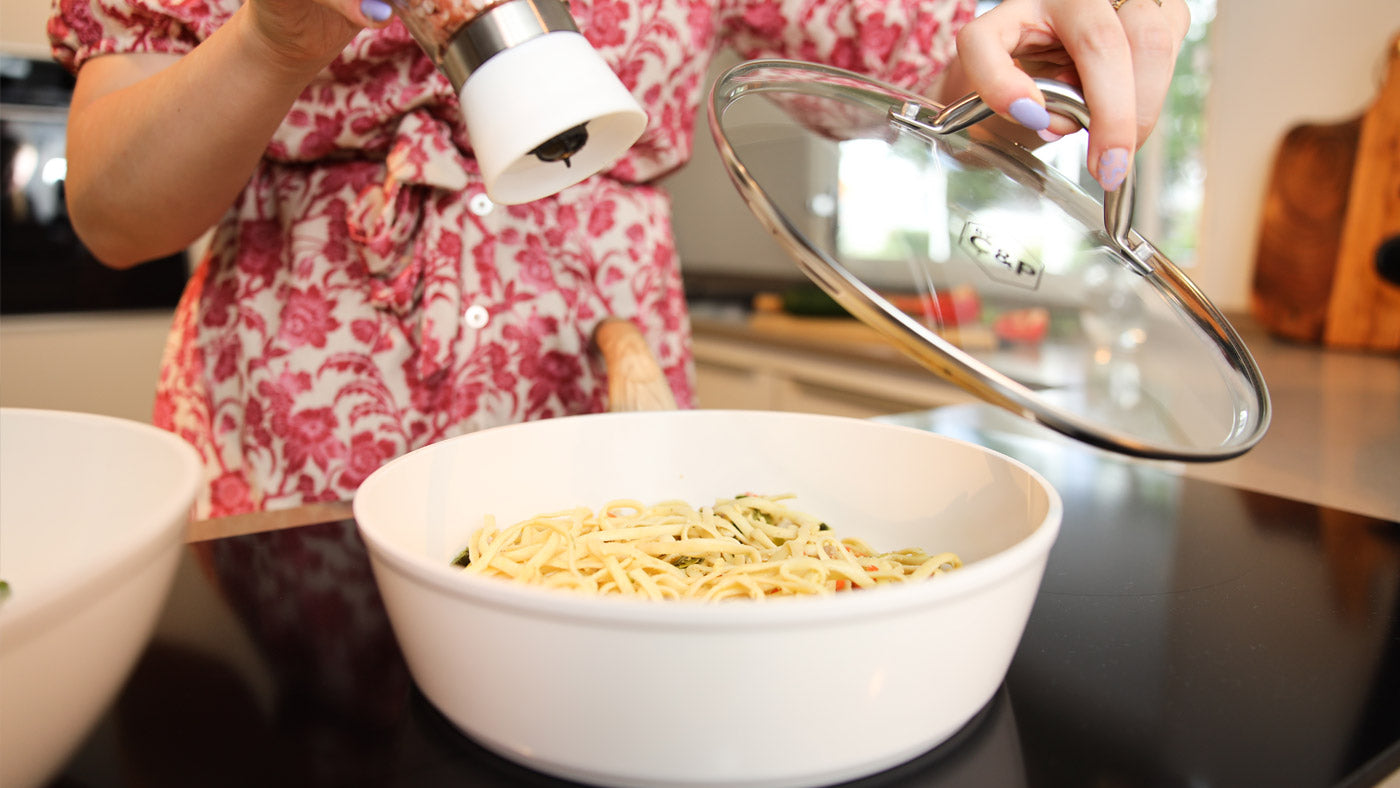
The saute pan is one of the most practical pans in the kitchen, yet many people overlook it entirely. That's a shame, because for a large part of everyday cooking it simply outperforms a standard frying pan. Time to change that.
What is a saute pan?
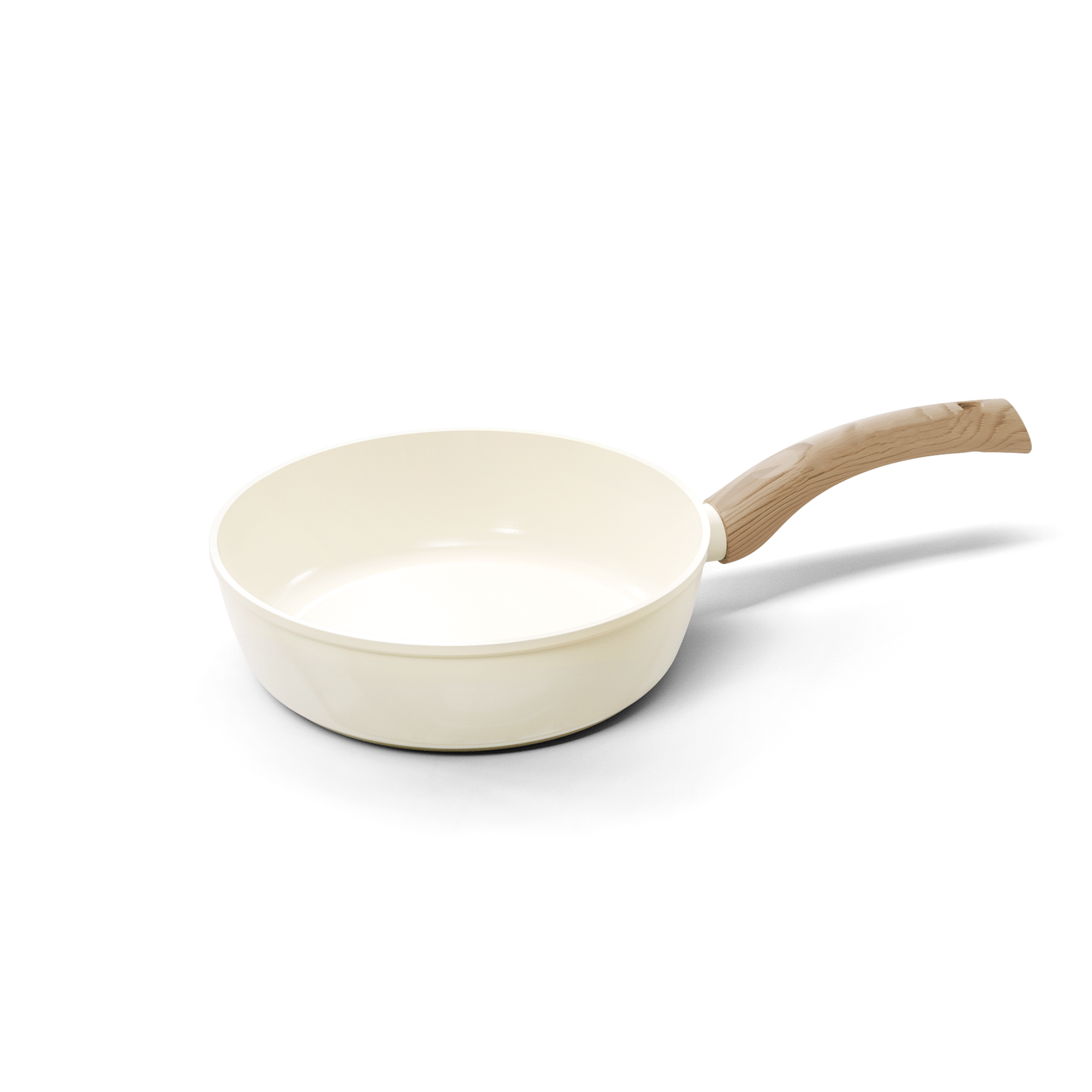
A saute pan is a wide, flat pan with straight, high sides of around 7 to 8 centimetres. That might sound like a minor detail, but the difference in use is significant. The combination of a large cooking surface and those high sides makes it ideal for dishes where you need space and where splashing becomes a problem with a regular frying pan.
A saute pan always comes with a lid. That makes it even more versatile: you can leave a dish to simmer under the lid after searing.
What is the difference between a saute pan, frying pan, or sauce pan?
Saute pan vs. frying pan
A frying pan has sloping, low sides. That works great for quick tossing, but with any liquid in the pan you quickly lose fat or sauce over the edge. The high straight sides of a saute pan reduce splashing and keep sauces and cooking juices neatly inside. The larger capacity also makes it easier to cook for 2 to 4 people.
Saute pan vs. sauce pan
A sauce pan is tall and narrow — exactly what you need for sauces that reduce slowly. The saute pan is much wider, so liquid evaporates faster. That is an advantage when you want to reduce a sauce while meat or vegetables are already in the pan.
What do you use a saute pan for?
The saute pan excels at dishes that combine multiple techniques:
- Sauteing vegetables: the large surface ensures vegetables make contact with the base instead of steaming in a pile.
- Searing meat with sauce: brown the meat, deglaze with wine or stock, and let it simmer with the lid on. All in one pan.
- Pasta sauces: enough room for vegetables, meat, and pasta you toss through at the end.
- Stews for 2 people: too small for a large casserole, too big for a sauce pan. The saute pan is just right.
Why a thick base is essential
Even heat distribution is crucial when sauteing. A thin base creates hotspots — areas where the pan gets locally too hot. Vegetables burn at the edges, meat sticks. A thick base — preferably a layered construction of aluminium and steel — spreads heat evenly across the entire surface.
Look for a base thickness of at least 4 mm when buying. Cheap saute pans skip this, and you feel it immediately in use.
When do you choose a saute pan over a frying pan or casserole?
Choose a saute pan when:
- You sear meat or vegetables and then continue cooking with liquid
- You make a sauce while the other ingredients are already in the pan
- You cook for 2 to 4 people and a casserole feels too large
- You want to limit splashing when stir-frying or sauteing
Choose a frying pan for quick, dry cooking: a steak, an egg, softening an onion. Choose a casserole for large cuts of meat or stews for more than 4 people.
Discover the Snackpan range at Cook & Pan
In the Netherlands, the saute pan is also known as the Snackpan. The name differs, the function is the same: versatile, practical and indispensable for everyday use.
💡 Note: we love to cook with courage, but safety always comes first. You can read more about this on our disclaimer page.