




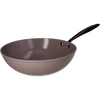

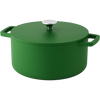

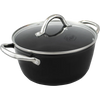


















If your pan says “PFAS-free” on the box, you’re allowed to ask a follow-up question. So what is in it? A good question, and one we as founders never want to dodge. So here’s the honest answer, without the smooth talk. We leave the smooth to the pans.
Why “PFAS-free” on its own isn’t enough
The label is everywhere now. On frying pans, baking tins, toastie makers, you name it. But “free from” only tells you what isn’t in there. It doesn’t tell you what has been applied instead, how it’s made or what you can expect from it. As the founder of Cook & Pan, I think that’s not enough. You cook in it every day, so you deserve to know what with.
A quick recap: what is PFAS again?
PFAS is a large family of synthetic substances that has been used for years to make things slick and water-repellent. Teflon (PTFE) belongs to it too. The problem: PFAS barely breaks down, builds up in people and the environment, and has been linked to health problems in research. Want the full explanation? You’ll find it in our blog What is PFAS? Pans without PFAS and in the story on why we choose a Teflon-free kitchen. PFOA, a well-known substance from the same family, gets its own explainer too: What is PFOA and why don’t you want it in your pan? Here we look at the opposite question.
What’s in our pans? Three materials
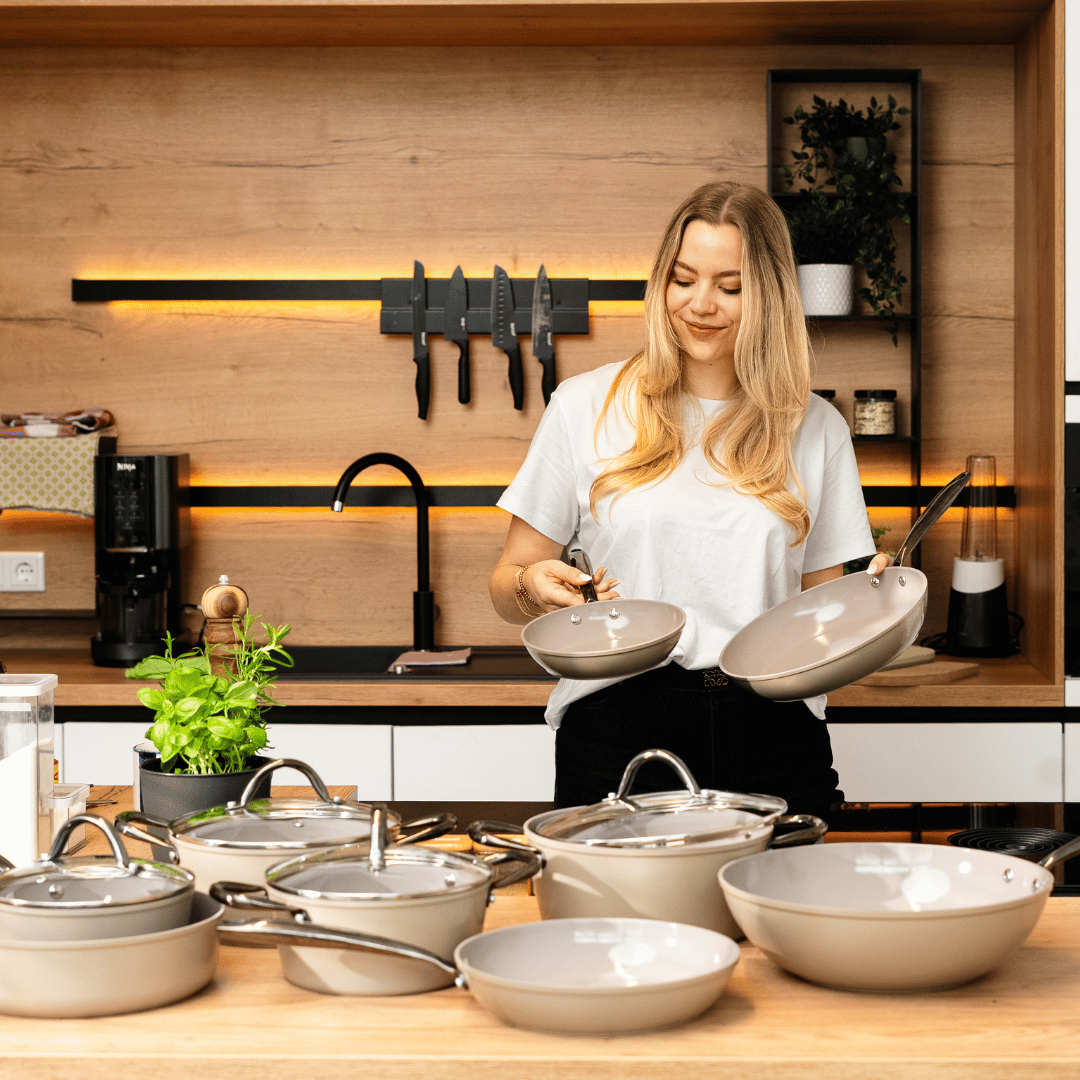
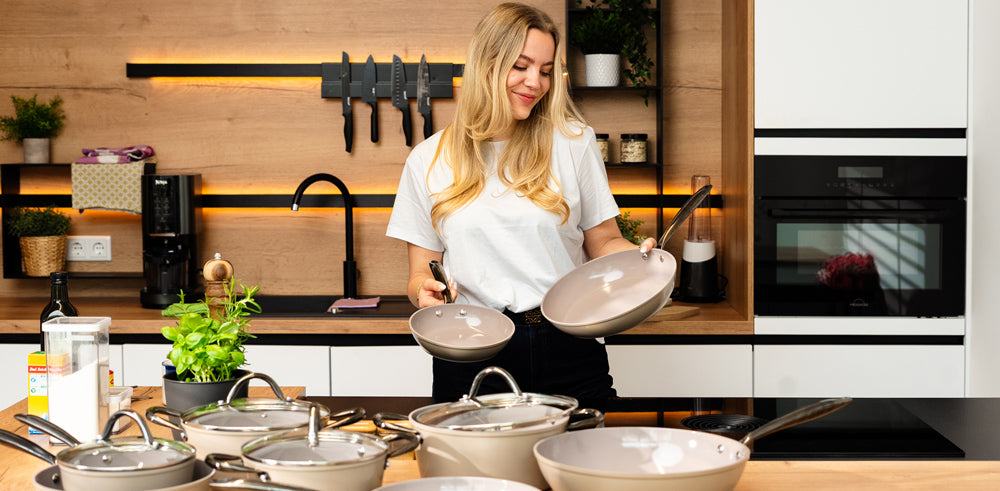
At Cook & Pan you’re dealing with three material families. No surprises, no small print:
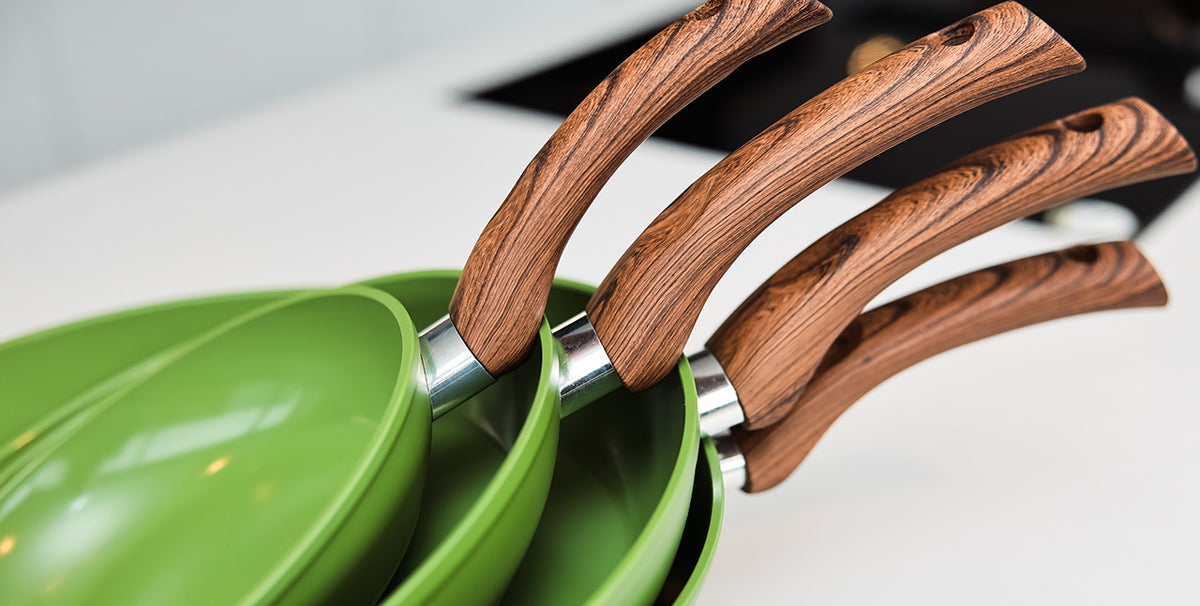
- Forged aluminium with a ceramic non-stick coating: light, quick to heat up and wonderfully smooth, with a magnetic base plate for induction.
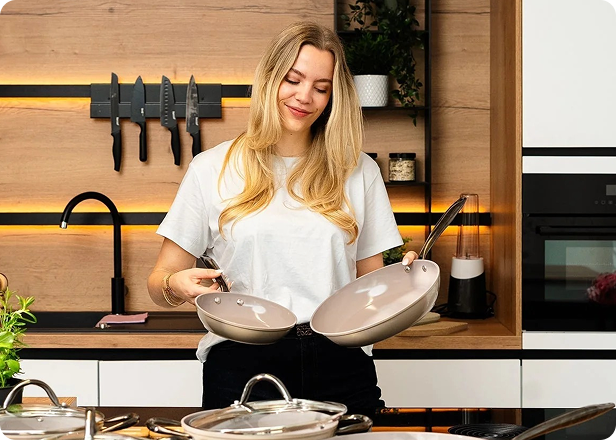
- Stainless steel in a 3-ply construction, with a ceramic non-stick coating: our Honey line. Sturdy on the outside, smooth on the inside.
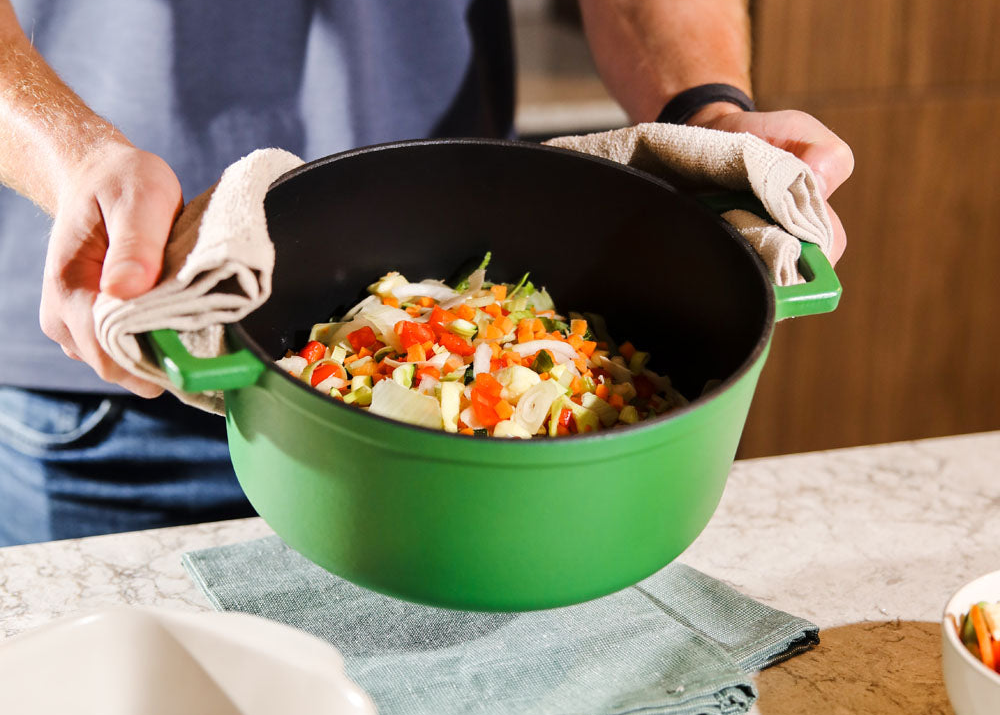
- Cast iron with an enamel layer: heavy, characterful and made to hold on to heat.
Note that first point. Our “ceramic” pans are not made of earthenware or stone. They’re aluminium pans with a ceramic layer on top. We’d rather say it out loud than have you discover it at home.
The ceramic layer: smooth and PFAS-free
The non-stick layer on our aluminium pans is a ceramic sol-gel coating. It sits on the inside and the outside of the pan and is cured in the oven into a smooth, hard finish. It contains no PFAS, PFOA or PTFE. Want to see for yourself? Browse all our ceramic pans in one place.
One line, just for ceramic
“PFAS-free” also depends on where your pan is coated. In factories where PFAS-containing and ceramic coatings run on the same line, residue from one can end up on the other. That’s why we set up a separate coating line with our factory, just for ceramic coatings. No PFAS-containing coating is processed on that line. It takes more effort, but it’s exactly the kind of effort we choose.
Who checks all this?
Not just us. We have our ceramic pans tested independently. The lab Light Labs looked for 30 different PFAS substances, including PFOA and PFOS, and found none: all 30 show “not detected”, meaning below the detection limit. You can check those results yourself on our product pages under “View lab results”. On top of that, our ceramic frying pans have been tested by SGS under the European rules for materials in contact with food and the stricter German LFGB, covering things like migration of substances into your food, heavy metals and colour release. To be fair, a lab measures a sample at a certain moment, which isn’t a guarantee forever. That’s why we also look at how the coating line is set up.
Stainless steel with an aluminium heart
The pans in the Honey line consist of two layers of stainless steel with an aluminium core in between. The steel makes the pan sturdy, and the core spreads heat quickly and evenly. On the inside sits the same ceramic layer. So no, our stainless steel pans aren’t “pure steel without a coating” either. We don’t have that line, and we won’t pretend we do. Want to know more? Take a look at the stainless steel pans from Honey.
Cast iron: the old-school hero in a modern jacket
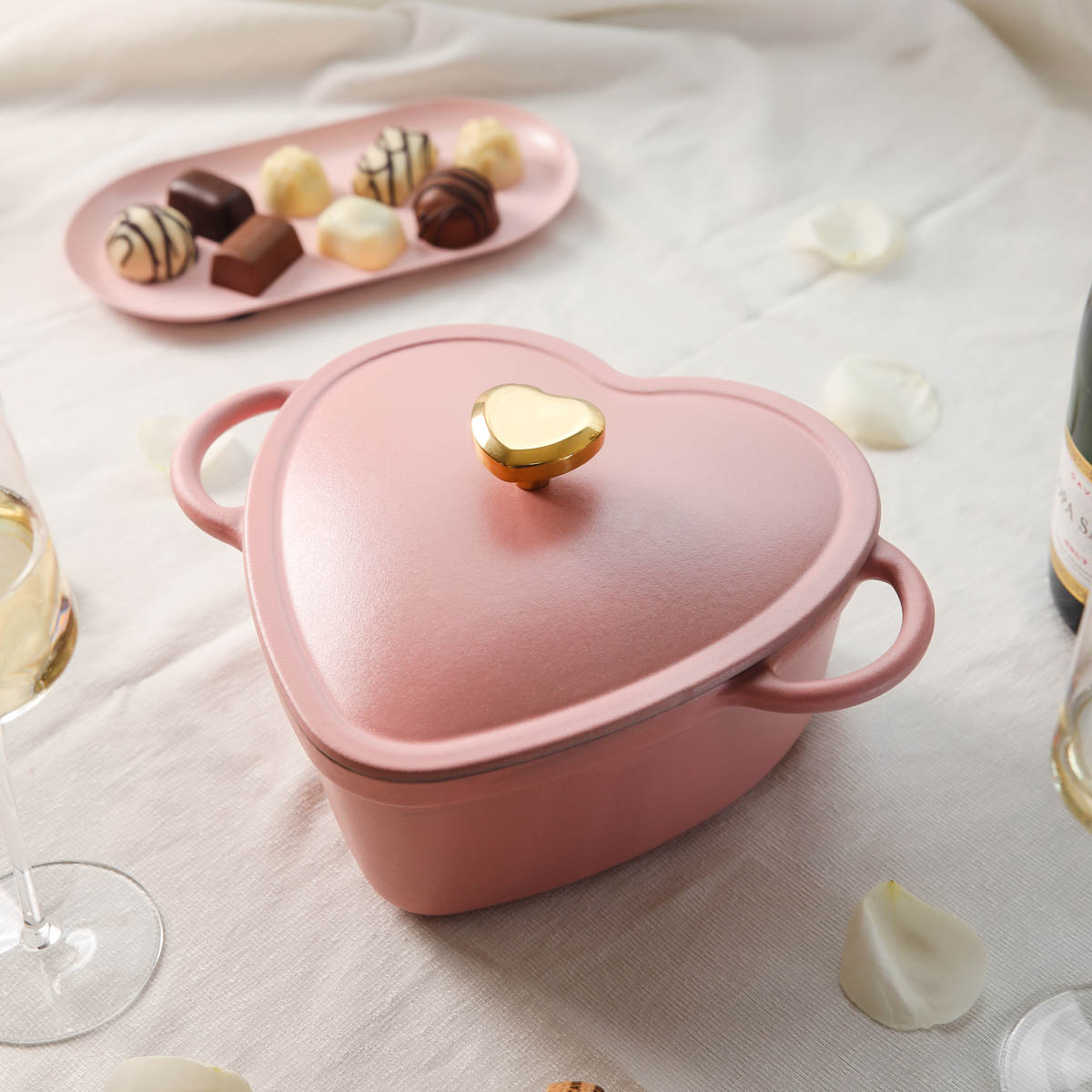
Cast iron is the material that lasts longest in a kitchen. It stores heat and releases it slowly and evenly, perfect for braising and simmering. Our cast iron pans have an enamel layer that protects the iron and makes care easy. There’s no non-stick layer that can wear out, and so no PFAS either. We give 25 years of warranty on cast iron. You’ll find all the models in our cast iron pans.
What you won’t find in our pans
This is the short list I personally care about most:
- No PFAS, no PFOA and no PTFE (Teflon).
- No coating made on the same line as PFAS-containing coatings.
- No promises without proof: you can check the lab results yourself.
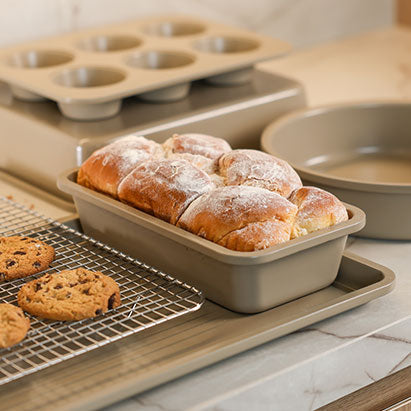
The same goes for our PFAS-free bakeware set. Almost nobody thinks about baking tins, yet they often have coatings too.

Being honest: what a ceramic layer can and can’t do
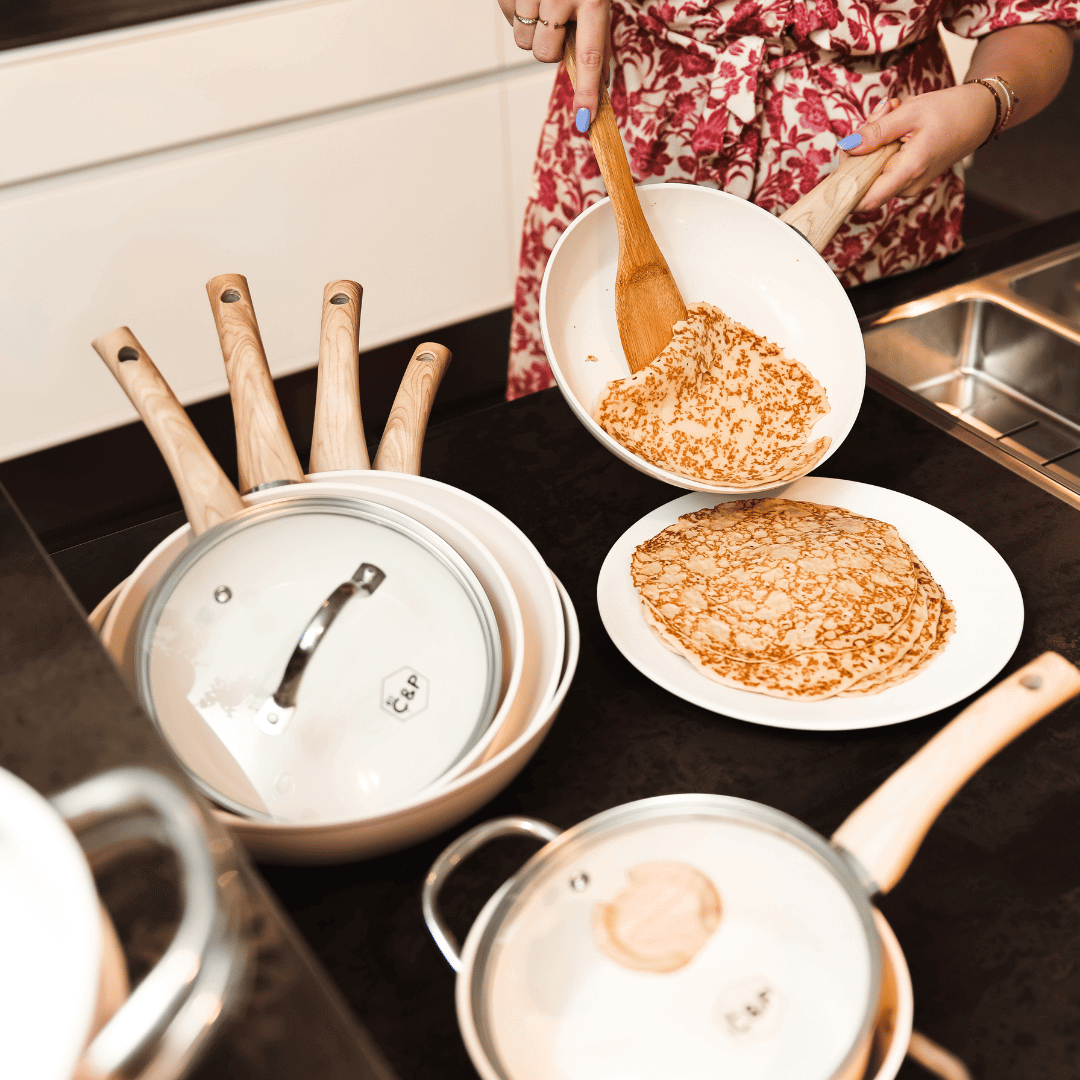
A ceramic pan isn’t indestructible. I want to be upfront about that. The layer is hard, but it doesn’t like shocks or scorching. That’s why it works best on a low to medium heat, with wooden or silicone utensils. For very high heat, like searing a steak, cast iron or stainless steel often suits you better. That’s not a weakness, it’s simply how materials work. For everyday frying you hardly need more than a good frying pan without PFAS.
How to keep your pan looking good
A few simple habits and you’ll enjoy it for years:
- Heat your pan gradually and never leave it empty on the highest setting.
- Use wood, silicone or heat-resistant plastic, never sharp metal.
- Let the pan cool down before rinsing it with water.
- Wash by hand; that’s always the gentlest on the layer.
- Put a cloth or pan protector between stacked pans.
Does a pan need seasoning? Not ours. You can read how that works in Do you need to season a pan? (Spoiler: not ours!).
Our promise: a warranty you can check
Nice words cost nothing, so we put time limits behind them. Our cast iron pans come with a 25-year warranty, all other products with 7 years on manufacturing and material defects, and the performance of the ceramic layer with 2 years. Still unsure? You get 60 days of trial cooking: try it at home and send it back if it turns out not to suit you.
How to choose the pan that suits you
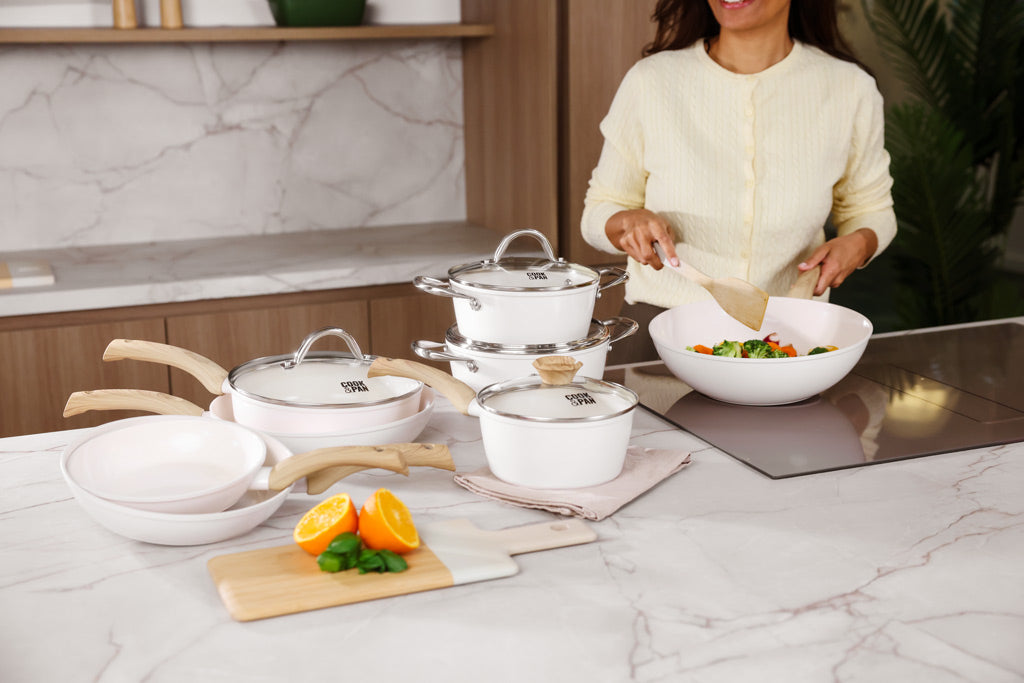
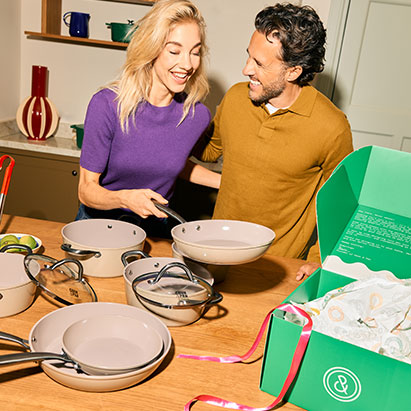
Do you mostly cook eggs, vegetables and pasta? Then aluminium or stainless steel with a ceramic layer is a good fit. Do you love stews and want a pan that lasts for generations? Then cast iron is your candidate. Want to renew your whole kitchen in one go? Take a look at the cookware set without PFAS. And do you cook on induction? All our pans work on it, so have a look at the pans for induction.
So, what do we use then?
A ceramic coating without PFAS, PFOA or PTFE, stainless steel, aluminium and enamelled cast iron. No vague claims, no small print. That you ask questions about what’s in your pan is exactly right, and we’re happy to answer them. Just drop us a message if you want to know more; we’ll explain it the way we would at home.
Teun, founder of Cook & Pan
💡 Please note: we love cooking with boldness, but safety always comes first. Read more on our disclaimer page.