


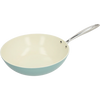

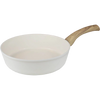

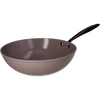

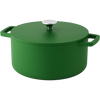














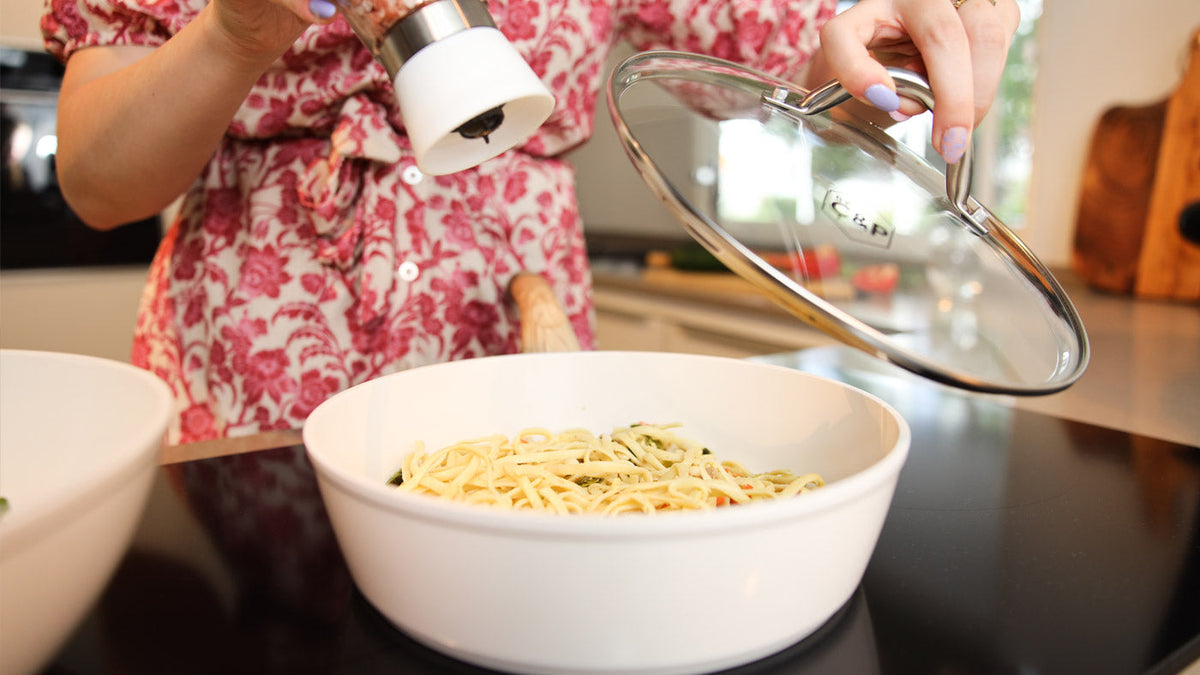
High, straight sides. A generous base. Room for a lid. That is a sauté pan in a nutshell, and honestly: it does more than most pans in your cupboard. You sear in it, you braise in it and you make your sauce in it, all in one pan. Want to see the options straight away? Take a look at our sauté pans.
What is a sauté pan?
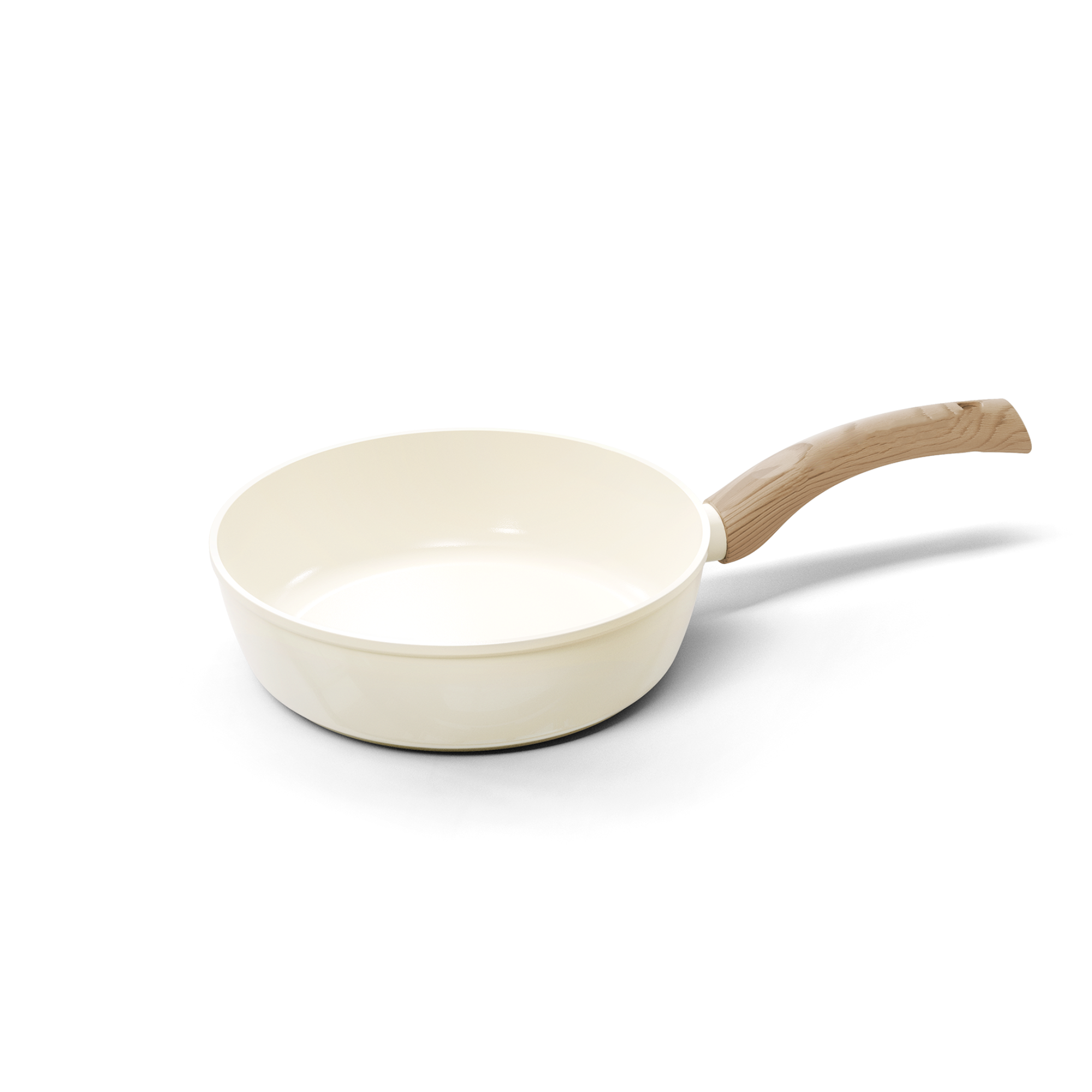
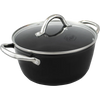
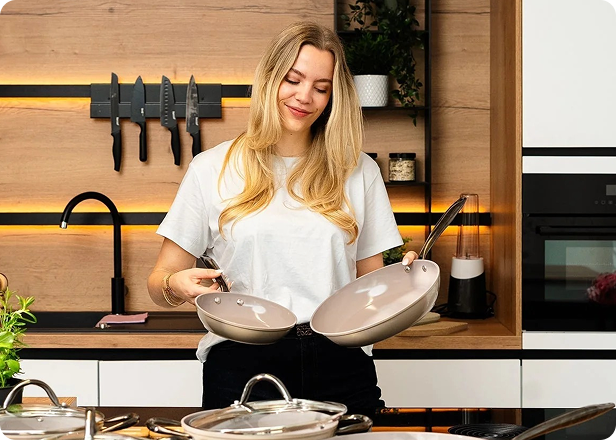
A sauté pan is a wide pan with a flat base and high, straight sides. That puts it right between a frying pan and a casserole pot. The base is big enough to brown meat or vegetables in a single layer. The sides are high enough to pour in stock, cream or tomato sauce afterwards without everything sloshing over.
Put a lid on it and it becomes a pan for braising. One pan doing the job of two.
Where does the name come from?
Sauté comes from the French verb sauter, which means to jump. When you sauté, you cook small pieces of vegetables or meat quickly and toss the pan, so everything jumps up for a moment and flips over. Hence the name.
Sauté pan or sauteuse: is there a difference?
In everyday cooking, not really. Chefs sometimes split hairs over the exact shape, but most people use both names for the same pan: wide, with high sides and made for a lid. At Cook & Pan, we simply call it a sauté pan.
Still torn between a sauté pan and a regular frying pan? In sauté pan vs frying pan we put the differences side by side.
What is the difference between a sauté pan and a frying pan?
A frying pan has low, sloped sides. Perfect when you want to flip an egg, a pancake or a steak quickly. But add a splash of wine or a mug of stock, and things get messy fast. A sauté pan keeps that liquid neatly inside and holds more, so cooking for two to four people is easier.
- Frying pan: fast, dry frying and easy flipping.
- Sauté pan: sear first, then keep cooking with sauce or stock.
Sauté pan or casserole pot: which one do you need?
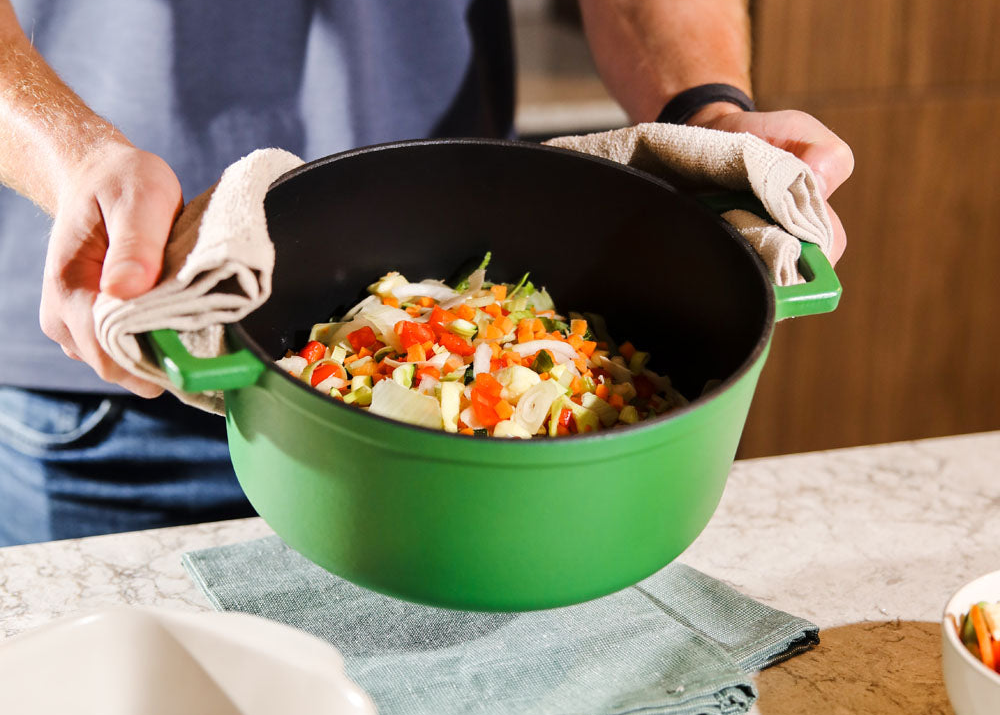
A casserole pot is deeper and heavier. It is made for stews, soups and big batches that can simmer for hours. A sauté pan is shallower and wider. Liquid evaporates faster, so meat and vegetables get more colour. Cooking a stew for the whole week? Grab the casserole pot. For a weeknight curry, risotto or chicken in tomato sauce, the sauté pan gets you there faster.
And how is it different from a saucepan?
A saucepan is tall and narrow. Ideal for slowly reducing a sauce or cooking rice. A sauté pan is wide instead, so a sauce thickens quickly while your meat or vegetables are already in it. Different job, different pan.
What do you use a sauté pan for?
Pretty much anything you sear first and then cook further. A few favourites:
- Sautéing vegetables: the large base lets them sit side by side instead of piled up, so they fry rather than steam.
- Meat in sauce: sear, deglaze with wine or stock and let it simmer with the lid on.
- Pasta sauce: plenty of room to toss the pasta through at the end.
- Risotto and curry: the high sides catch all the stirring and spattering.
- Shakshuka: poach eggs in tomato sauce and take the pan straight to the table.
How to sauté without the fuss
- Heat the pan over medium heat first, before the oil goes in. No need to go higher: a thick base holds the heat well.
- Pat vegetables and meat dry. That way they fry instead of stewing in their own juices.
- Don't crowd the pan. Better two quick batches than one soggy one.
- Stir or toss regularly, so everything browns evenly.
Not sure which fat to use in a pan with a ceramic non-stick coating? Read oil, butter or spray: what really works in your ceramic pan.
What to look for in a sauté pan
- A thick base: spreads the heat evenly, so there are no hot spots where your onions burn.
- The material: aluminium with a ceramic non-stick coating is light and heats up quickly. Stainless steel with a ceramic non-stick coating gives you a sturdier, more controlled feel.
- Your hob: cooking on induction? Check that the pan is suitable.
- PFAS-free: choose a non-stick coating without PFAS, PFOA and PTFE.
- A matching lid: without one, you miss half of what this pan can do.
Which size sauté pan do you need?
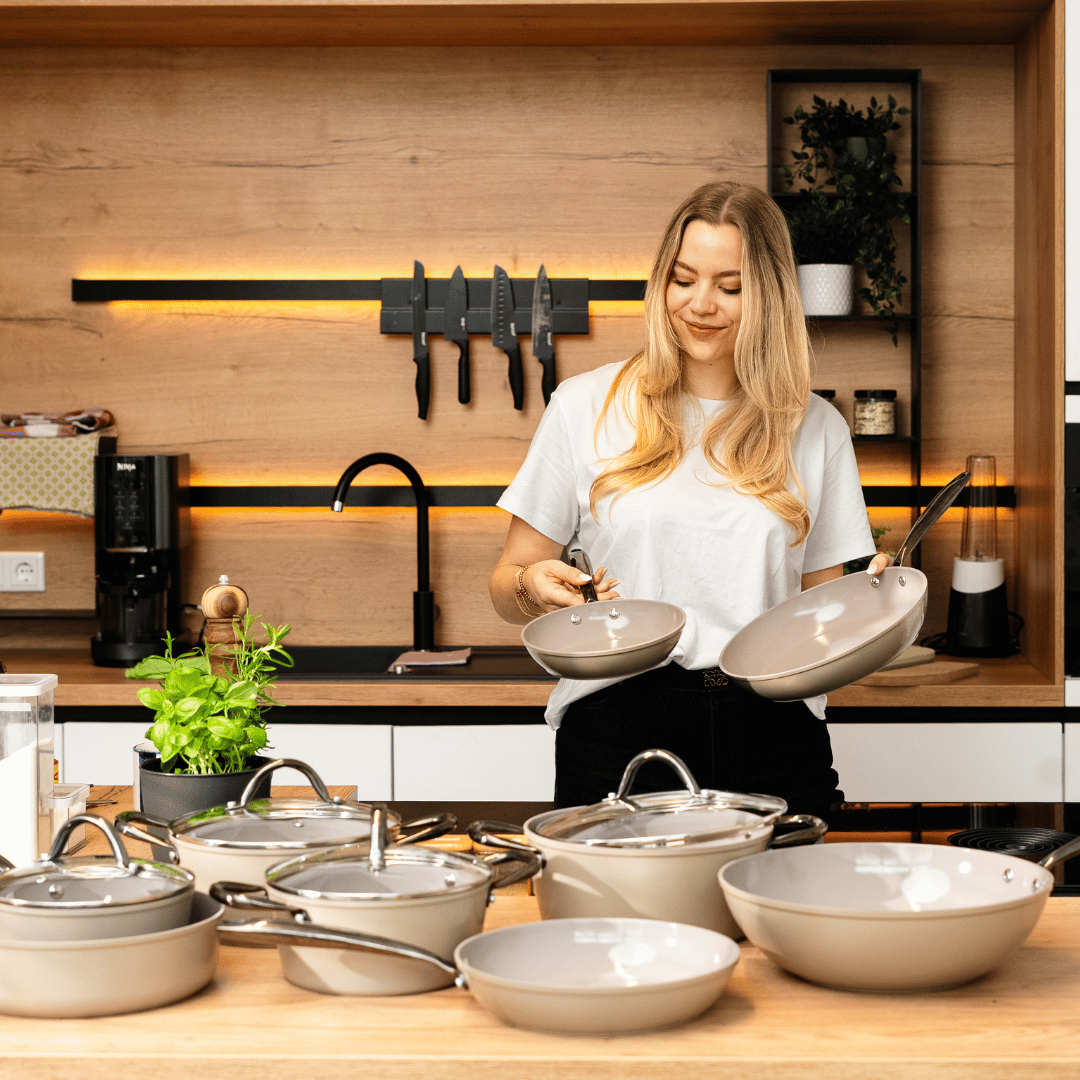
Our sauté pans come in 24 and 28 centimetres. The 24 cm is great if you cook for one to three people or like having leftovers for lunch. With the 28 cm you can easily cook for a family of four. Not sure? Go for the bigger one. A half-full pan browns better than an overcrowded one.
A sauté pan on induction
Our sauté pans work on every hob, induction included, and they can go in the oven too. Handy: sear on the hob, then finish covered in the oven. Cooking on induction? Take a look at our sauté pans for induction.
PFAS-free sautéing
Cooking with a non-stick coating doesn't have to mean PFAS on your plate. Our sauté pans have a ceramic non-stick coating without PFAS, PFOA and PTFE, on aluminium or on stainless steel. No fuss, just food you can serve with peace of mind. You'll find every option among our PFAS-free sauté pans.
Care: how to keep your sauté pan looking good
- Use wooden or silicone utensils.
- Let the pan cool down before it goes under the tap.
- A soft sponge and a drop of washing-up liquid are all you need.
- Stacking your pans? Put a cloth or pan protector in between.
Ready to sauté?
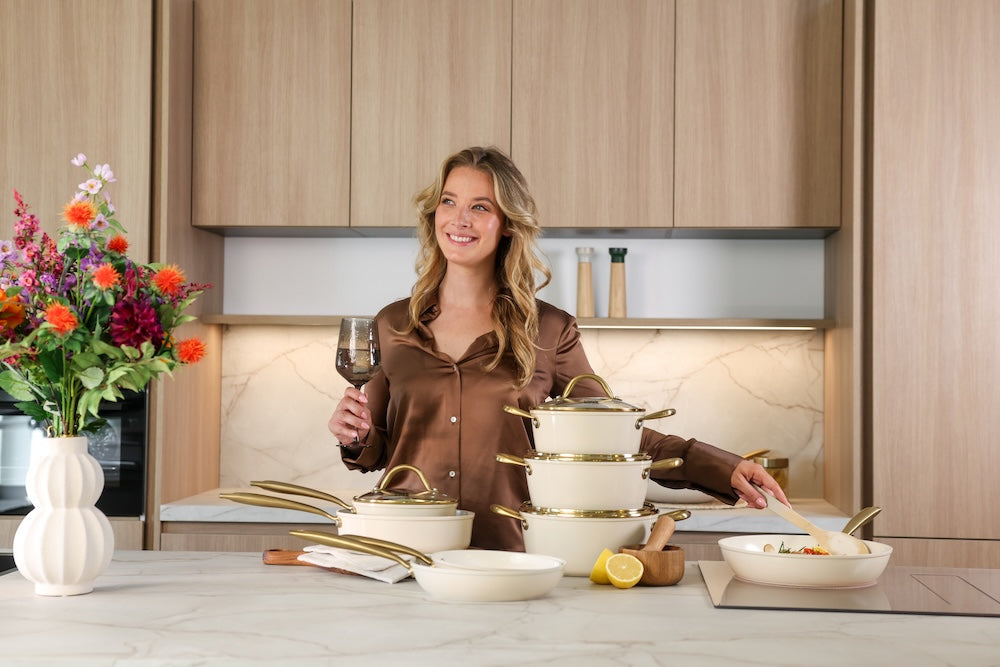
A sauté pan isn't an extra pan that disappears into the back of the cupboard. It's the pan you reach for every week. Searing, braising, making sauce: one pan, less washing up. Pick your size, pick your colour and don't forget the matching lid.
💡 Note: we love to cook with courage, but safety always comes first. You can read more about this on our disclaimer page.