





















Outside it's raining, inside something is bubbling away on a low flame that will soon do exactly what you need: warm you from the inside out. Stews are the grand prize of the autumn season, but without the right pan you'll never get everything out of them. A thin base means scorched onions before you've even reached the sauce, and a lid that doesn't seal is a direct invitation to tough meat. Time to choose cookware that actually holds the whole thing together.
Why a stew demands a different kind of pan
Stir-frying is a sprint, stewing is a hike. A stew pot wants to sit for hours on the same low flame without the bottom burning or the sauce drying out in the pan. That asks for a pan with mass, a base that holds heat and a lid that lets moisture trickle back down. A light frying pan with a thin lid is simply not built for it.
The combination of mass plus inertia is what turns your meat tender and lets your vegetables give in. Without that combination you end up with dry meat and a sauce that looks more like broth.
Five qualities of a good stew pan
- Thick base of at least 4 mm, so hotspots disappear and your sauce doesn't burn
- Heavy, well-sealing lid that lets condensation drip back into the dish
- Oven-safe to at least 200 degrees, so you can move seamlessly from hob to oven
- Capacity of 4 to 6 litres, generous enough for a full pot for the whole family
- Induction-suitable, because most kitchens run on it by now

Cast iron is built for this season
If there is one material tuned to autumn, it's cast iron. It heats slowly, but once it's at temperature it stays there as if nothing is happening. That means: you turn the heat down, put the lid on, and the pan does the rest. Even when you stir halfway through, the temperature doesn't sag. Have a look at the full cast iron collection if you want to see which sizes are available.
Bonus: cast iron goes from hob straight into the oven. Sear on high heat, lid on, three hours in the oven at 140 degrees, done. No second pan, no extra washing up.
A dutch oven is your quiet workhorse
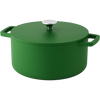
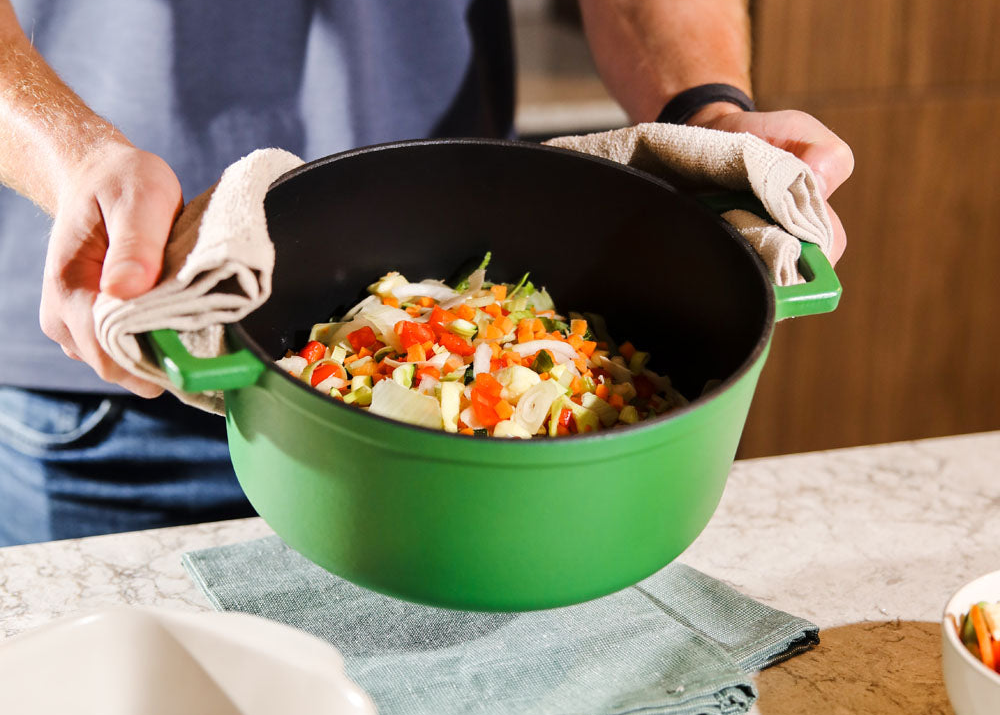
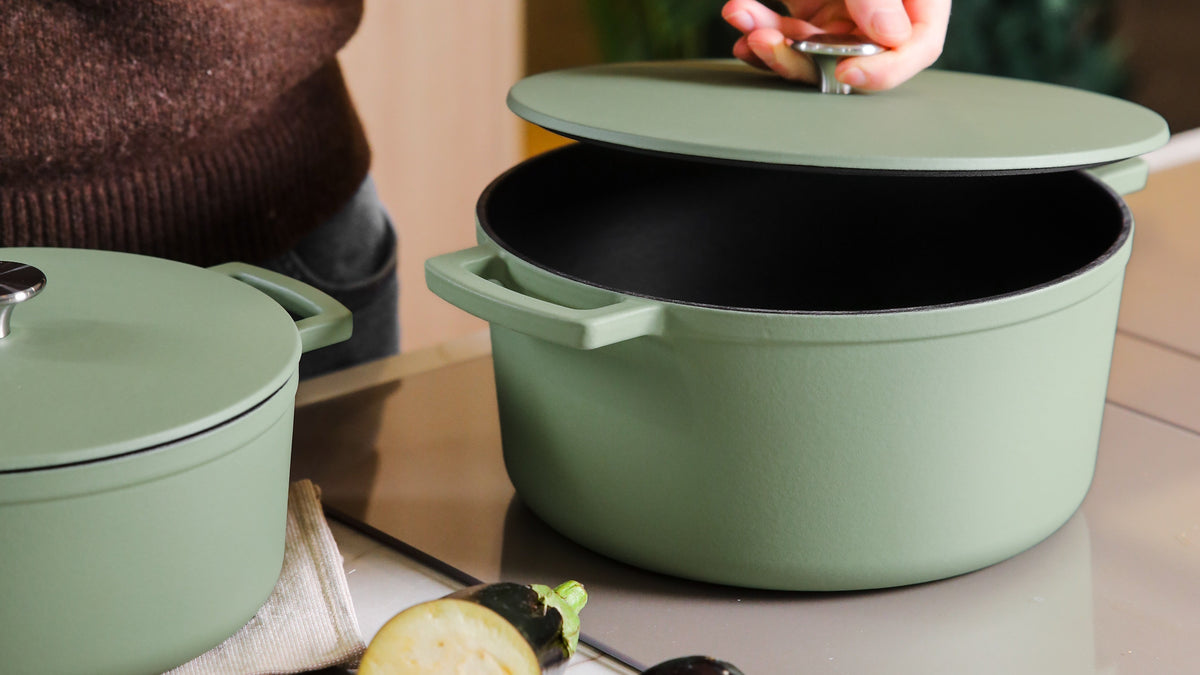
Anyone who would rather work a bit lighter chooses an enamelled dutch oven. It gives you the same heat buffer, but with a smooth interior that doesn't need seasoning and doesn't react at all to acidic ingredients. Tomato sauce, red wine, vinegar: all welcome, nothing discolours and nothing clings to the pan.
For a stew that simmers along comfortably for five hours, that's a blessing. You scoop it empty, give it a rinse and you're done.
Or rather a roomy cooking pot?
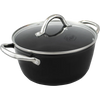
Are you more into long, wet stews like ossobuco or a classic beef stew with plenty of gravy? Then you want volume. A sturdy cooking pot with a thick base does the job nicely, especially if you've got a stew for eight on the menu. Look closely at the base: single-layer plate metal will spread its heat unevenly during long stewing, and you'll feel that immediately on the underside of your meat.
Searing is not optional, searing is the foundation
Don't skip this step. By patting the meat dry and browning it golden in a hot, not-too-full pan, you build the flavour base your whole stew rests on. That brown crust is not a visual trick, it's the layer that will dissolve into your sauce and give everything character.
Give your pieces of meat space in the pan. Too much at once drops the temperature and then you're steaming instead of searing. Better two rounds than one packed pan.
You don't need to rinse the pan
After searing, a brown layer is left behind on the bottom. You don't want to throw that away. Deglaze with a splash of red wine, stock or water and scrape everything loose with a wooden spatula. That layer is pure flavour and goes straight into your sauce. Anyone who skips it misses half the story.
What you toss into the pot this autumn
Seasonal vegetables aren't the stars of stew season for nothing. They're firm, sweet and hold their structure when given hours.
- Carrot and parsnip: bring sweetness and keep their bite
- Celeriac and swede: soak up flavour like a sponge and stay firm
- Pumpkin: in chunky pieces, let it join in for the last forty minutes
- Onion and leek: the foundation, slow caramelisation before you add liquid
- Mushrooms: brown them separately, otherwise they go watery in the stew
Which heat source, which pan?
On gas or ceramic, virtually any pan with a thick base will do. On induction, the base must be magnetic, which is always the case with cast iron and with a good dutch oven too. Looking specifically for something that works on induction without fuss? Then the selection of induction pots and pans is a logical starting point. And if your hob has marks under the rims after a stew session, then this step-by-step plan for stains on your induction cooktop is handy to keep close.
Lids are not a side issue
A good lid does half the work. It keeps moisture in, stabilises temperature and makes sure the bottom doesn't burn. Missing a lid that fits, or do you want extra control with a glass version you can look through without lifting? Pop into the selection of pan lids to see what suits your pan.
You don't want PFAS in your stew pot
Hours of simmering is exactly the kind of cooking moment when you don't want any doubts about what's coming off your coating. All Cook & Pan pans are completely PFAS free, and the ceramic layer we use is made of minerals and quartz sand. Curious about what's in there exactly? Read how our ceramic non-stick coating is built up or dive deeper into the story behind harmful substances in pans.
Temperature: low and lower
The biggest pitfall when stewing is leaving the heat too high. You want to see a bubble come up now and then, no more than that. If it boils hard, meat goes tough instead of tender and your liquid evaporates faster than you can top it up. On induction that often means level 2 to 3. On gas: the smallest flame still burning.
Time is an ingredient
Beef stew with sinew only goes tender after three hours, chicken in around forty minutes, and a game stew wants four hours or more. So plan ahead that you need to start earlier than you think. A good stew isn't made between six and seven, you set it on at three o'clock and pretty much forget about it.
A set casts a wider net
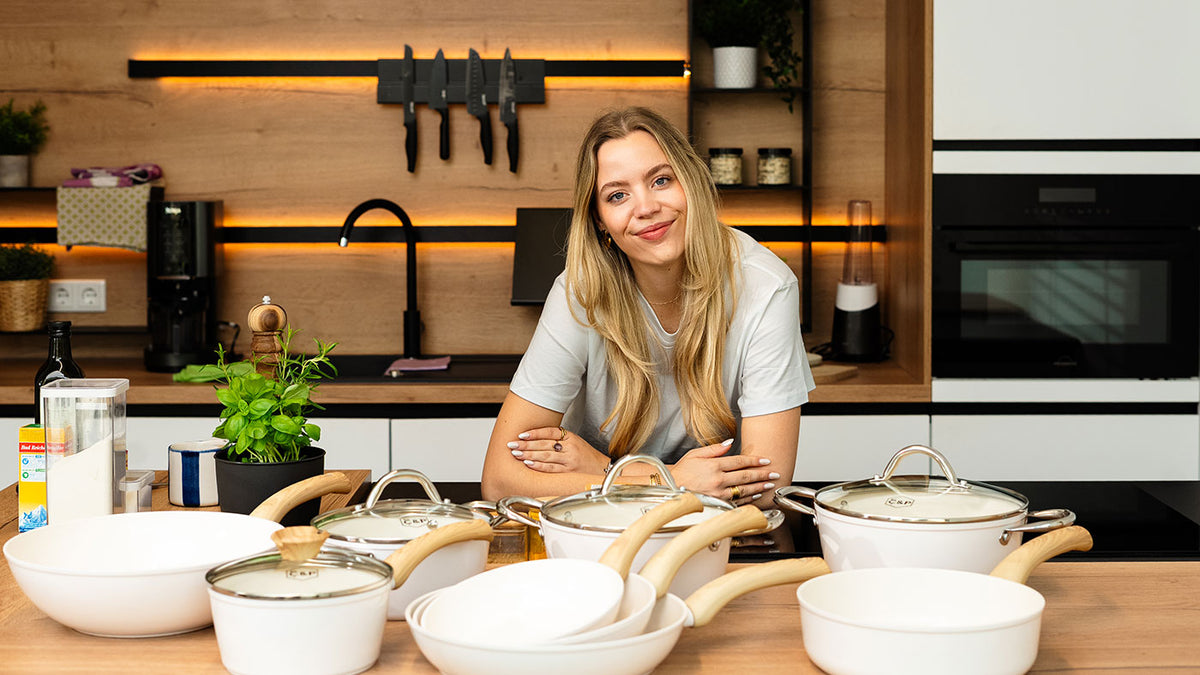
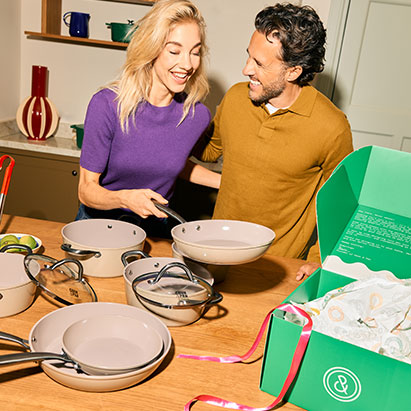
Have nothing at all yet? Then a complete cooking pot set is a smart start. You immediately have the right sizes for whatever you cook, and you know they'll all match in material and look. For stews you pick the largest cooking pot or dutch oven with lid from within the set.
Sauté pan for the quicker work
Not every autumn dish is an hours-long undertaking. For a quick chicken stew or a risotto you want on the table in forty minutes, a deep sauté pan on induction is a better pick than a heavy dutch oven. Read why you always want one in the house or browse the selection of sauté pans for induction straight away.
Storing and reheating, this is how
A stew is always tastier the day after. Let it cool to room temperature, store it covered in the fridge and reheat slowly before serving on medium heat under a lid. Not all at once on high, because then the outer rim dries out while the middle is still cold. Patience, just like during the cooking itself.
The pan that comes back every autumn
A good stew pan is something you buy once and use for twenty autumns. Go for cast iron and there's still a pan waiting for your grandchildren when you're done with it. Pick a dutch oven with enamel and you've got a pan for decades that you can dive into right away with no seasoning needed. Whichever direction it goes: autumn only really starts the moment your pan is on the heat.
💡 Please note: we love cooking with boldness, but safety always comes first. Read more on our disclaimer page.