









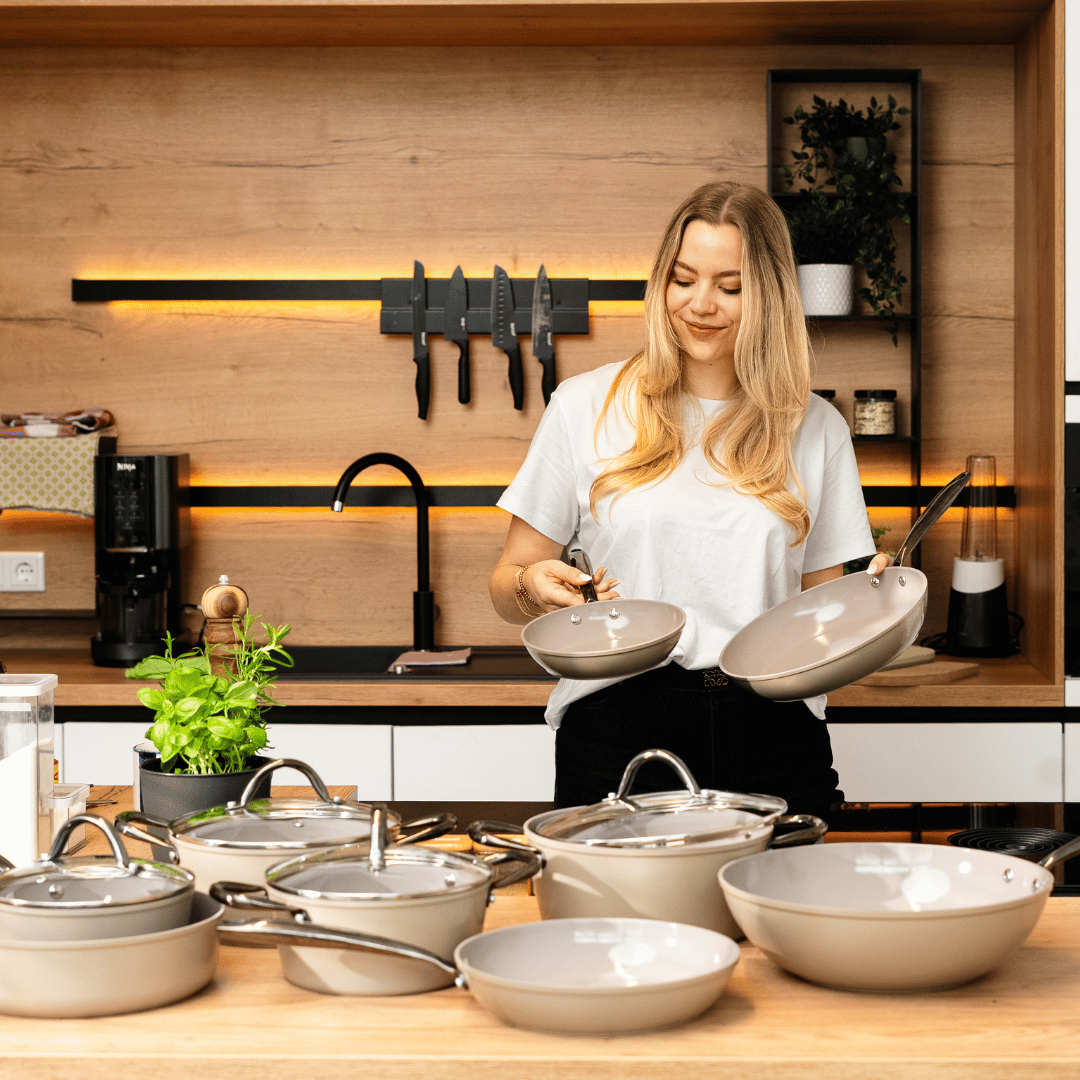

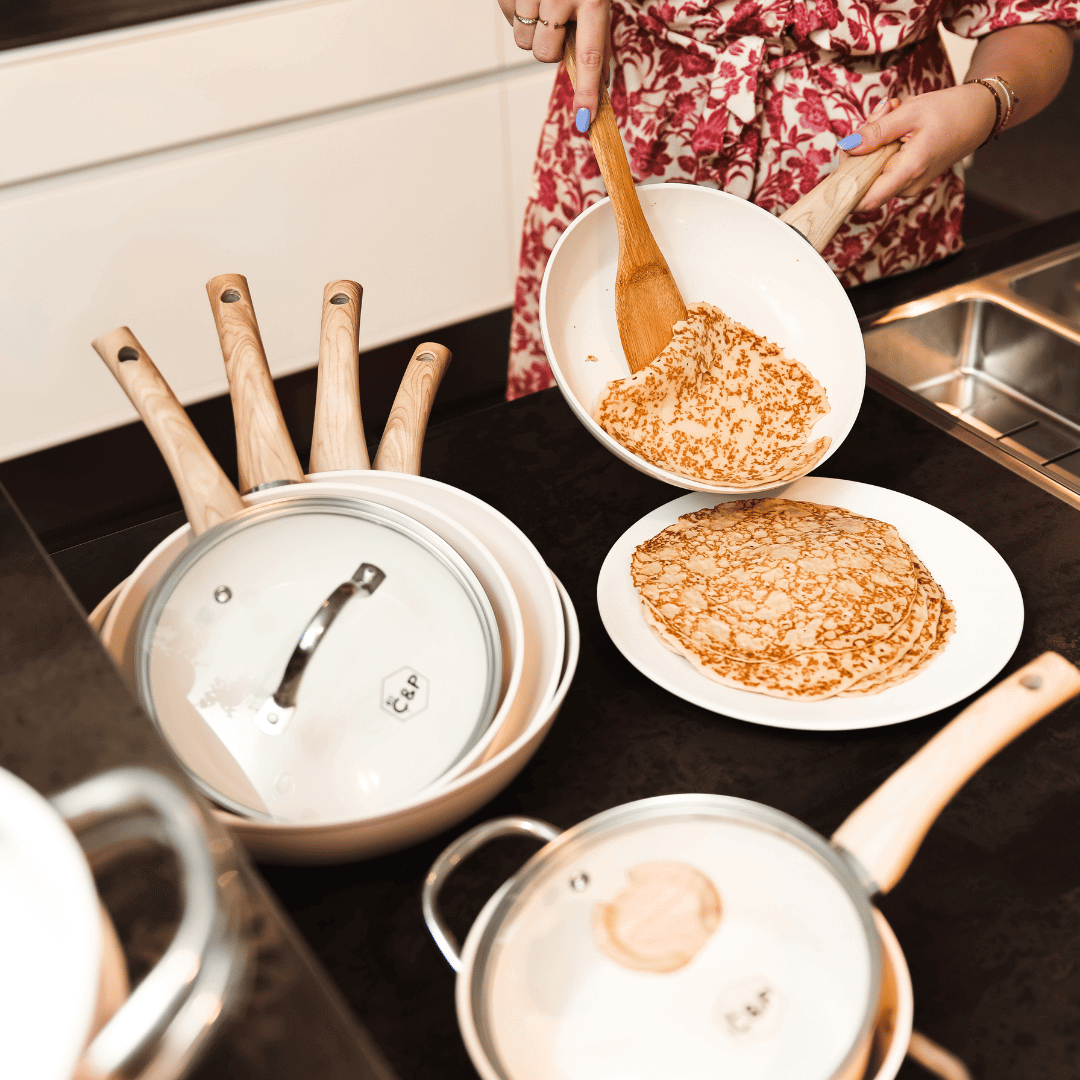


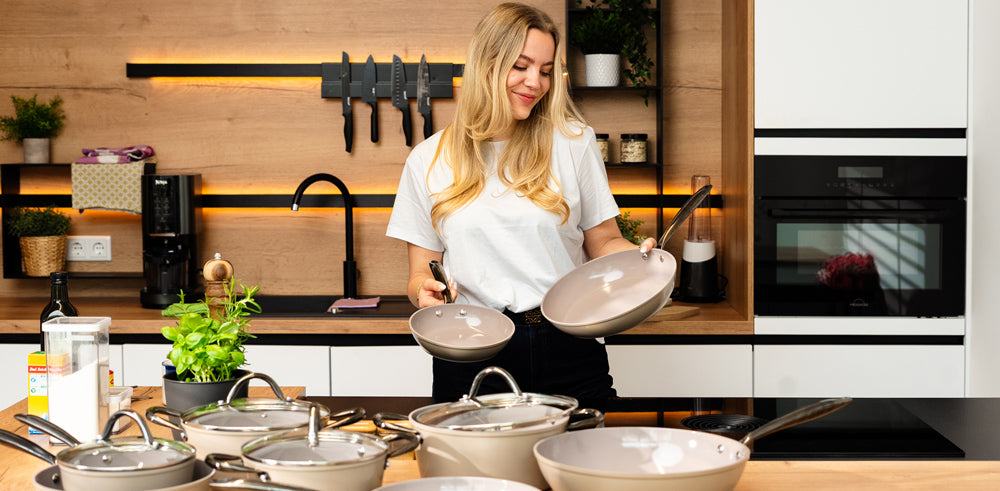
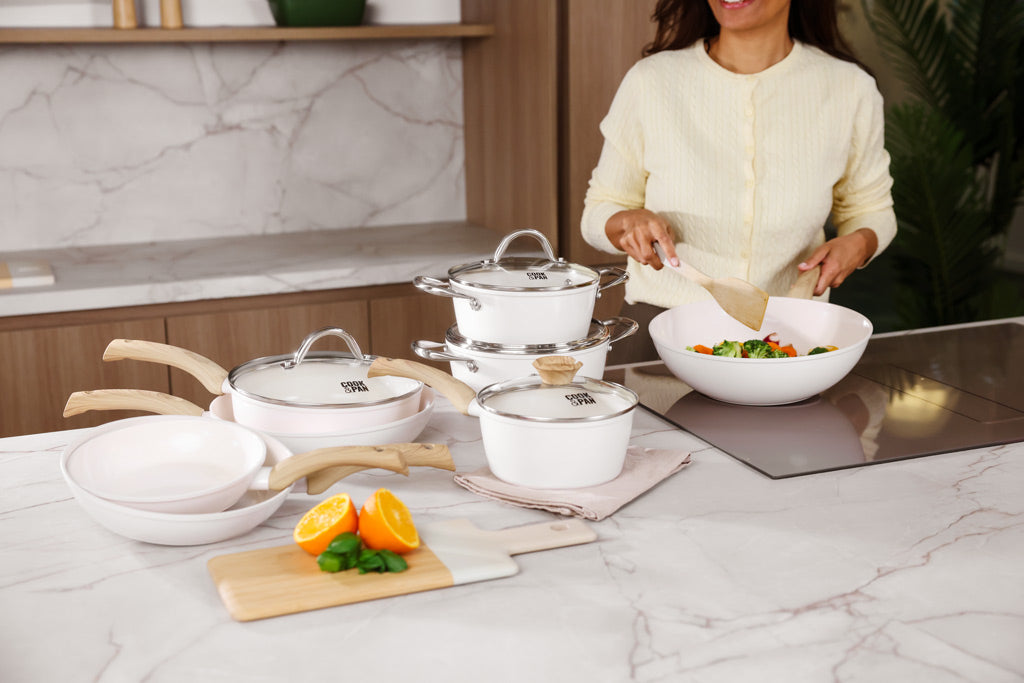













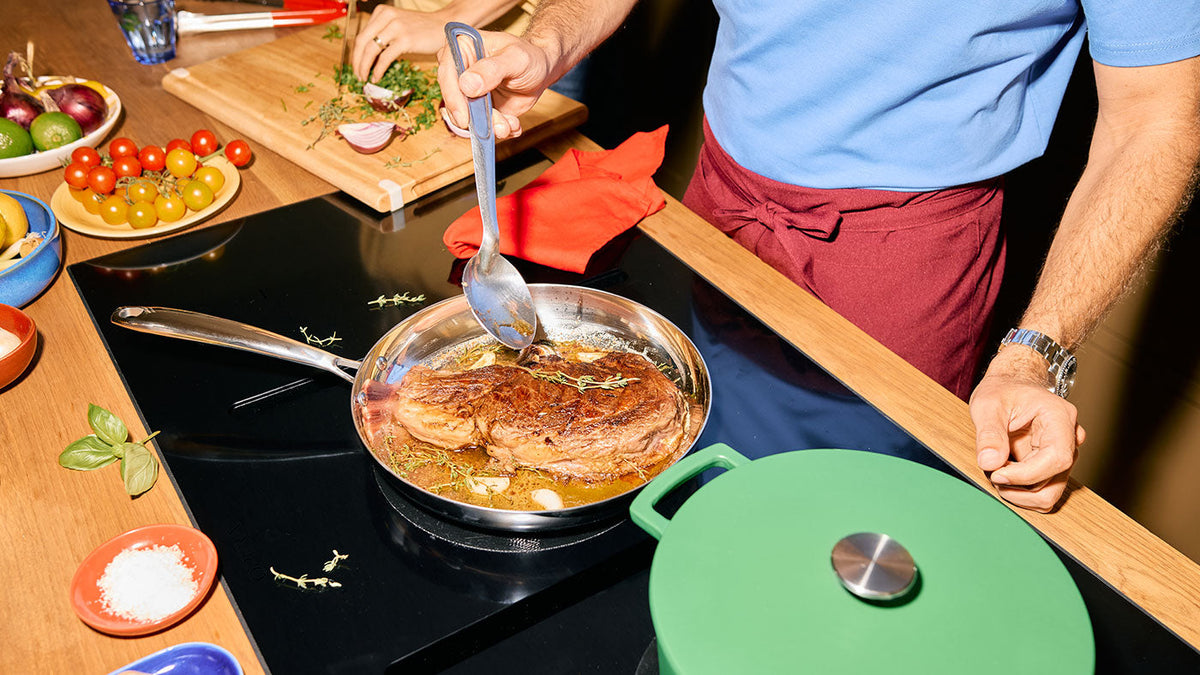
A new induction hob under your worktop, or simply done with that set that sticks more than it cooks? Then you don't want a brochure full of marketing blurb, but an honest answer. Which pan set actually works on induction, stays good-looking for years and doesn't drive you mad when you want to fry something simple? Here's the overview without the fuss. Want to go shopping right away? Then take a look at all our pan sets for induction.
Why an ordinary pan set doesn't always pick up induction
Induction isn't gas or a ceramic hob. An induction plate generates a magnetic field, and only pans with a ferromagnetic base react to it. An aluminium pan without a magnetic plate? Nothing happens at all. A thin pan without a pressed sandwich base? It heats unevenly, leaving that famous black circle in the middle. At Cook & Pan every pan is induction-ready, but unfortunately that's not the standard across the market.
How to test in a minute whether a pan works on induction
Not sure about the pans you already have? Three checks and you'll know:
- Magnet test: take a magnet and hold it against the base. If it sticks, you have a match.
- Spiral symbol: induction-ready pans carry a little spiral symbol on the base or the packaging. With a reliable shop it's in the product description too.
- Check the base: is the underside smooth and flat, without deep scratches or a bulge? Then it makes good contact with the hob. A pan that rattles or rocks is a no-go.
What you actually want from a pan set for induction
Before you start eyeing pretty colours and trendy shapes, check the basics first. A good induction set stands out by these points:
- A pressed, thick sandwich base of at least 4 to 5 mm. That's your guarantee for even heat without hotspots.
- A ferromagnetic base plate that fully connects with the cooking zone. A magnet should stick to the underside, simple as that.
- A flat base that stays flat. Cheap pans warp after a few months, and then your pan rattles while your induction hob gasps for air.
- A coating or material that handles daily use. Rather ceramic (PFAS-free) or multi-layer stainless steel than old-school non-stick.
- A set that fits how you cook, not 12 pieces with 8 left untouched in the cupboard.
Pan and hob zone: size decides the energy
An induction zone gives off the most heat when the base of your pan fits it neatly. A small pan on a large zone wastes space, and a pan that's too big draws more energy than it needs. A 28 cm frying pan on an 18 cm zone is simply wasted power. Look at the shape too: a flat base spreads heat more evenly, and higher sides are handy for dishes with plenty of liquid. So before you choose, also have a quick read of how big your frying pan should actually be, then you won't be choosing on a hunch.
The three series we recommend for induction
Our entire pan set collection with ceramic coating and the stainless steel pan set collection are induction-ready. But within those collections, three series sell the most, and not without reason.
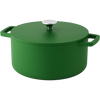
Go Ivory and Go Green: light, clear, no fuss
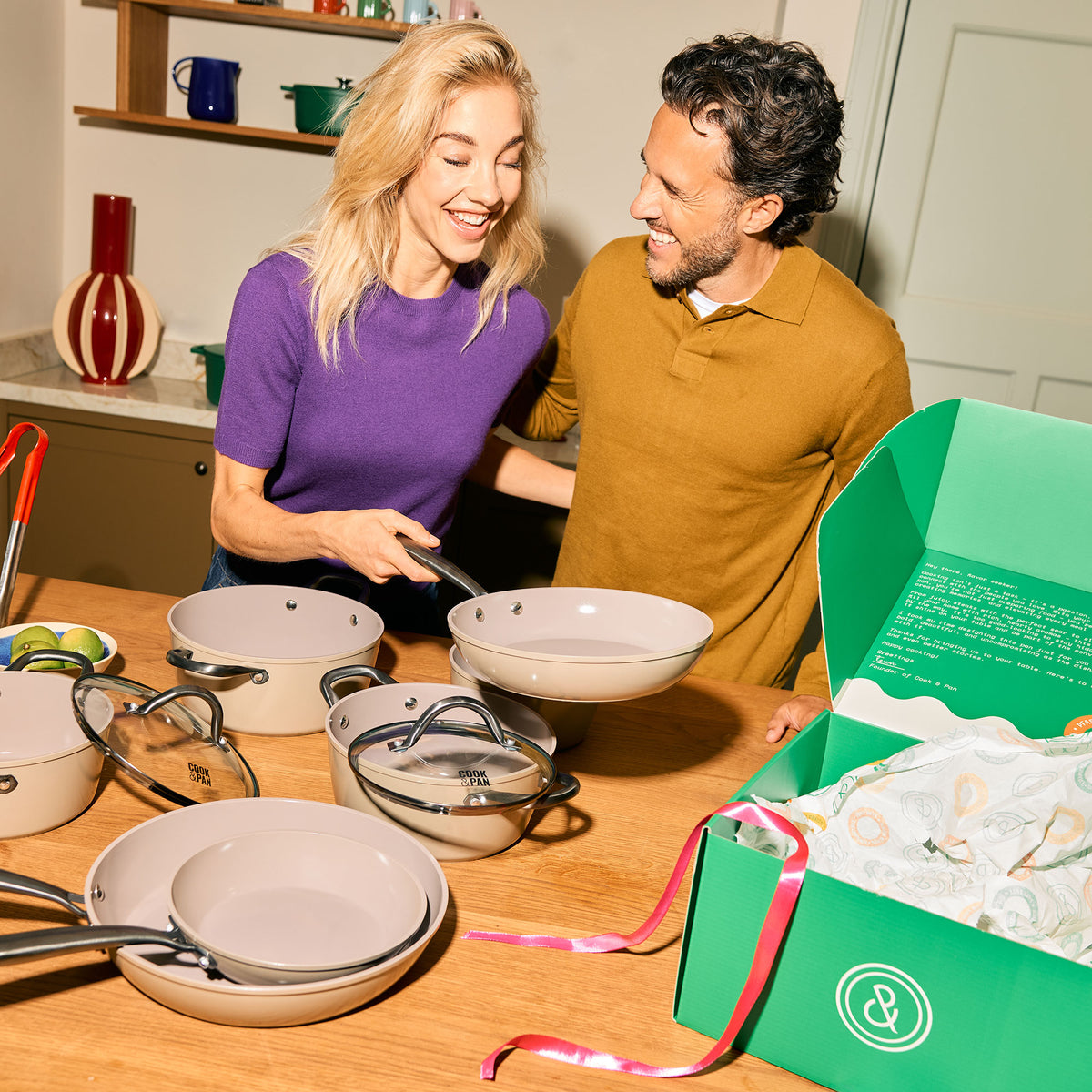
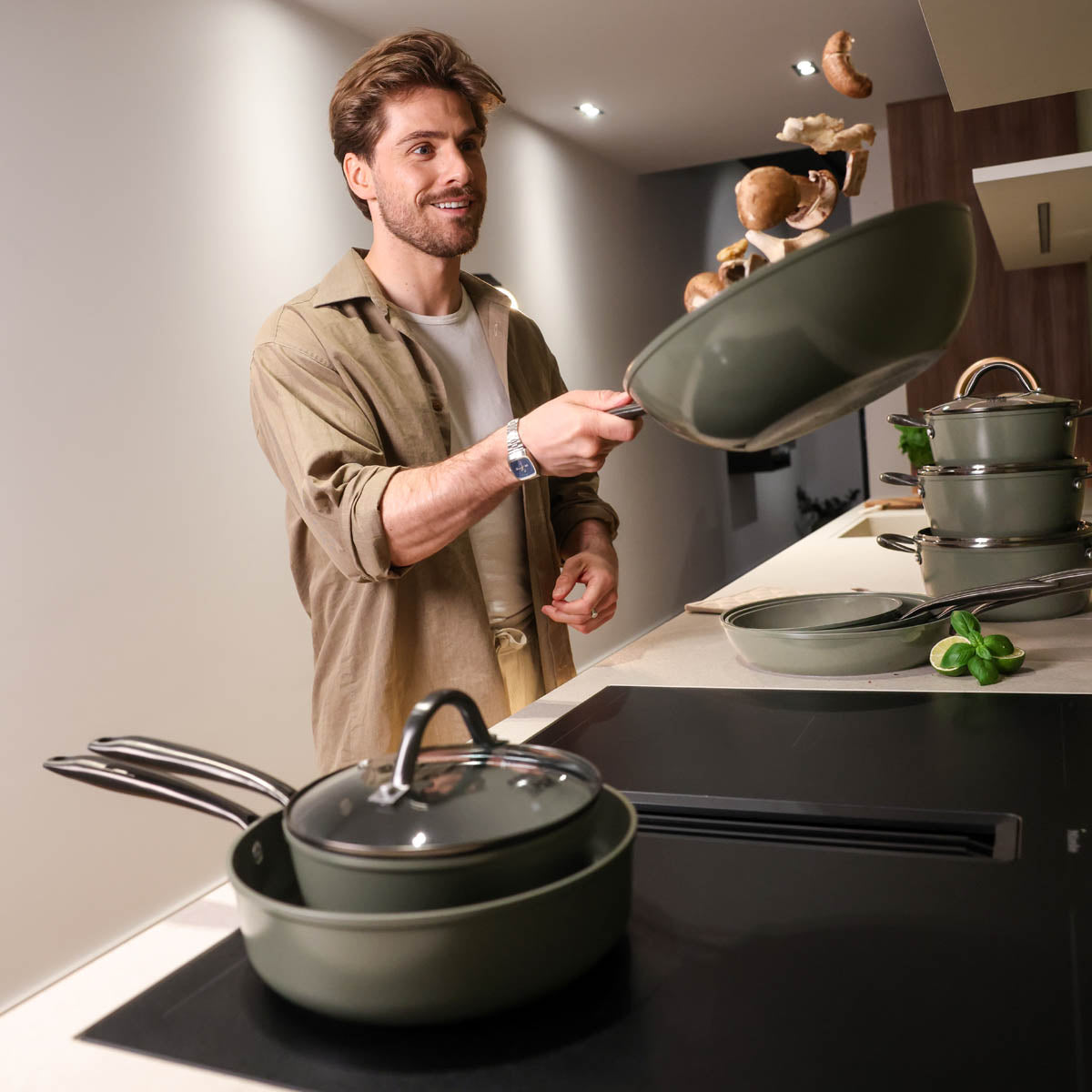
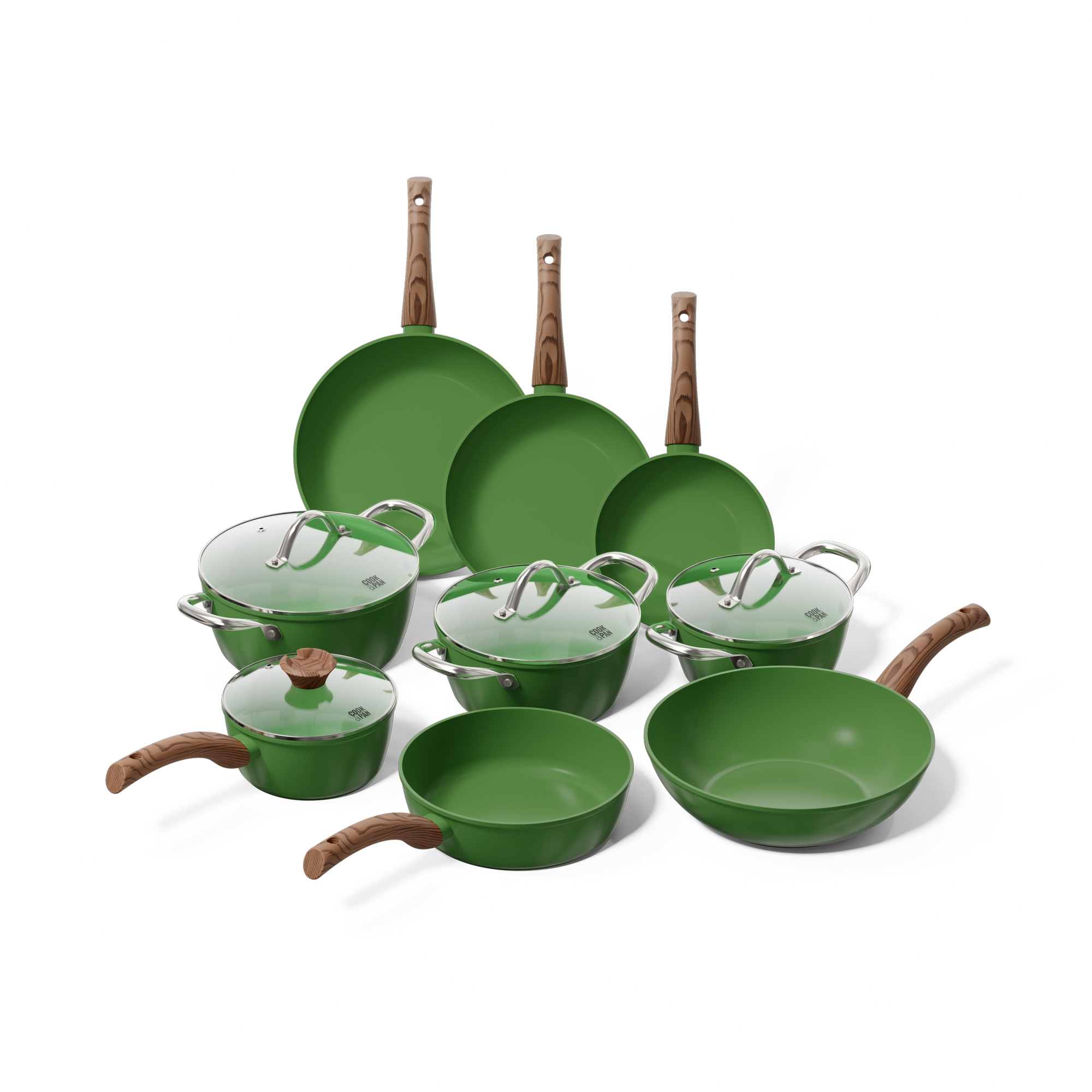
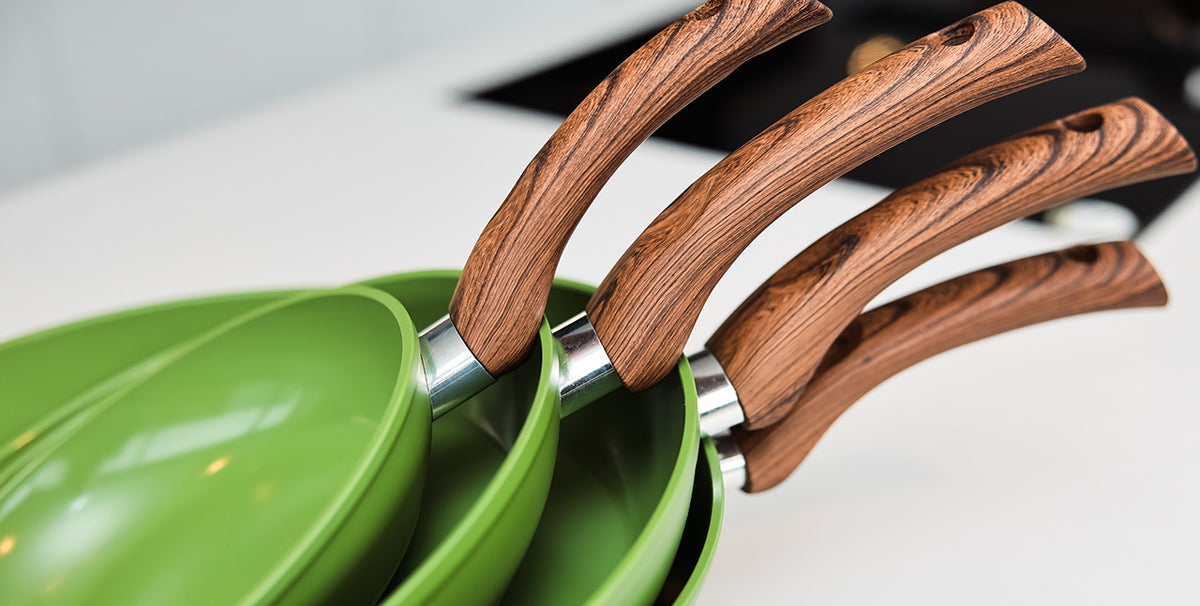
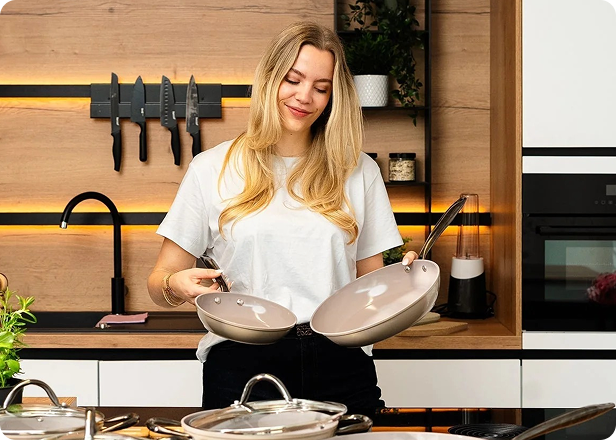
The Go series is made of aluminium with a ceramic, PFAS-free coating and a pressed induction base. Nicely light in your hand, quick to temperature and easy to wipe clean. The cream-coloured Go Ivory and the soft green Go Green both come as a smaller or larger set, suitable for singles up to families cooking every single day.
Signature: sturdy, roomy, for the keen home cook
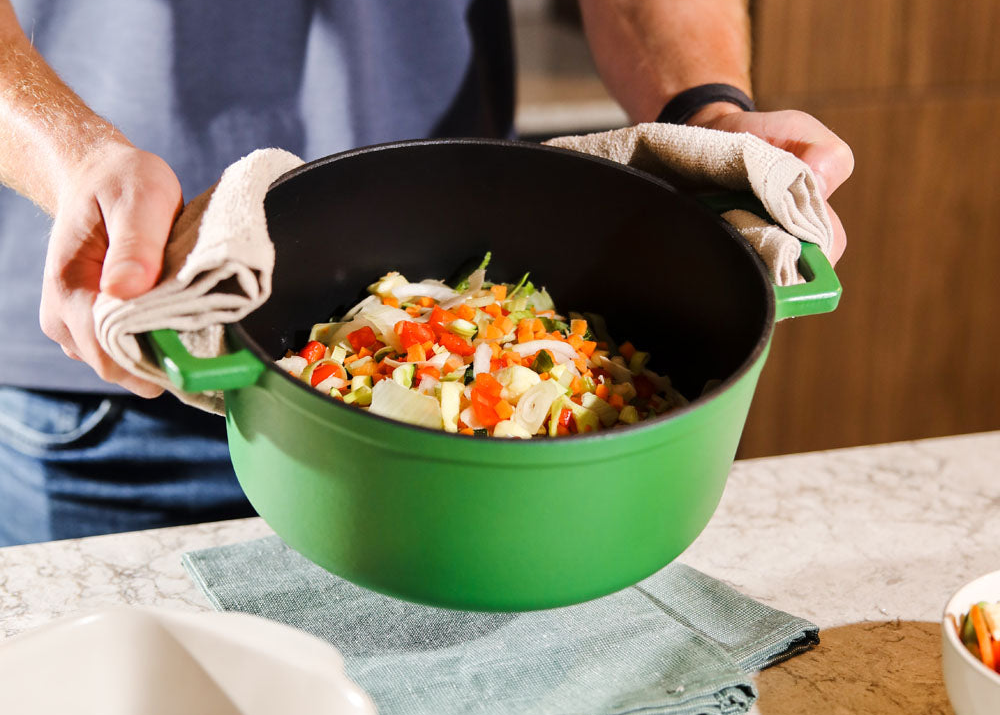
Same ceramic coating, but heavier and more spacious. You feel it straight away in your wrist: the Signature is built for those who regularly cook for several people or often run multiple pans at once. The slightly higher rim also makes it lovely for sauces and stews.
Honey: stainless steel for those thinking long-term
Want to combine the toughness of stainless steel with a smooth ceramic surface inside? Then Honey is your set. Sturdily built in stainless steel, with a PFAS-free ceramic non-stick coating and perfect for induction. Heavier than aluminium, yes, but that comes with the territory if you want something robust.
How many pans do you actually need?
More pans doesn't mean better cooking. For an average household a set of 5 to 7 pieces is usually plenty. A 9-piece set is nice if you often cook for groups or like to juggle multiple courses at once. Doubting the right combination? Then have a quick read of which pans you need for a family of 4 before you bite into a set with half of it sitting unused.
The 80% rule nobody tells you about
This is THE point where most pan sets fail, and it's rarely the pan's fault. Induction is ridiculously powerful, and you almost never need to push it to the max. At Cook & Pan we recommend a maximum of 80% power, and boost functions you simply leave alone. That goes for our pans and for any other decent pan on the market. Whoever cranks it straight up to 9 or 10 warps the base, burns the coating in and thinks the pan is rubbish. Spoiler: the pan did exactly what you asked.
Why cooking on induction is so smart
Still wondering whether induction is for you? These are the reasons so many people make the switch:
- Fast and precise: you control temperature and time very accurately, so you fry and roast like a pro.
- Safer than gas: the hob itself barely gets warm and cools down quickly. A zone only responds when there's a pan on it.
- Cleaner air: no flame, so no gases in your kitchen.
- Economical: induction loses far less energy than gas, which you'll see on your energy bill.
- Easy to clean: no grates or gas burners, just a smooth surface you wipe clean in one go.
Ceramic or stainless steel: which suits you?
Both work fine on induction, but they behave differently.
- Aluminium with ceramic coating (Go and Signature): heats fast, non-stick effect, ideal for eggs, fish, pancakes and anything that needs to be quick. PFAS-free and with 7 years manufacturing warranty plus 2 years on the coating.
- Stainless steel with ceramic coating (Honey): heats up a touch slower, but is exceptionally sturdy. Wonderful for searing, browning, deglazing, slow stewing. Here too: 7 years manufacturing warranty and 2 years on the coating.
What's inside a good set
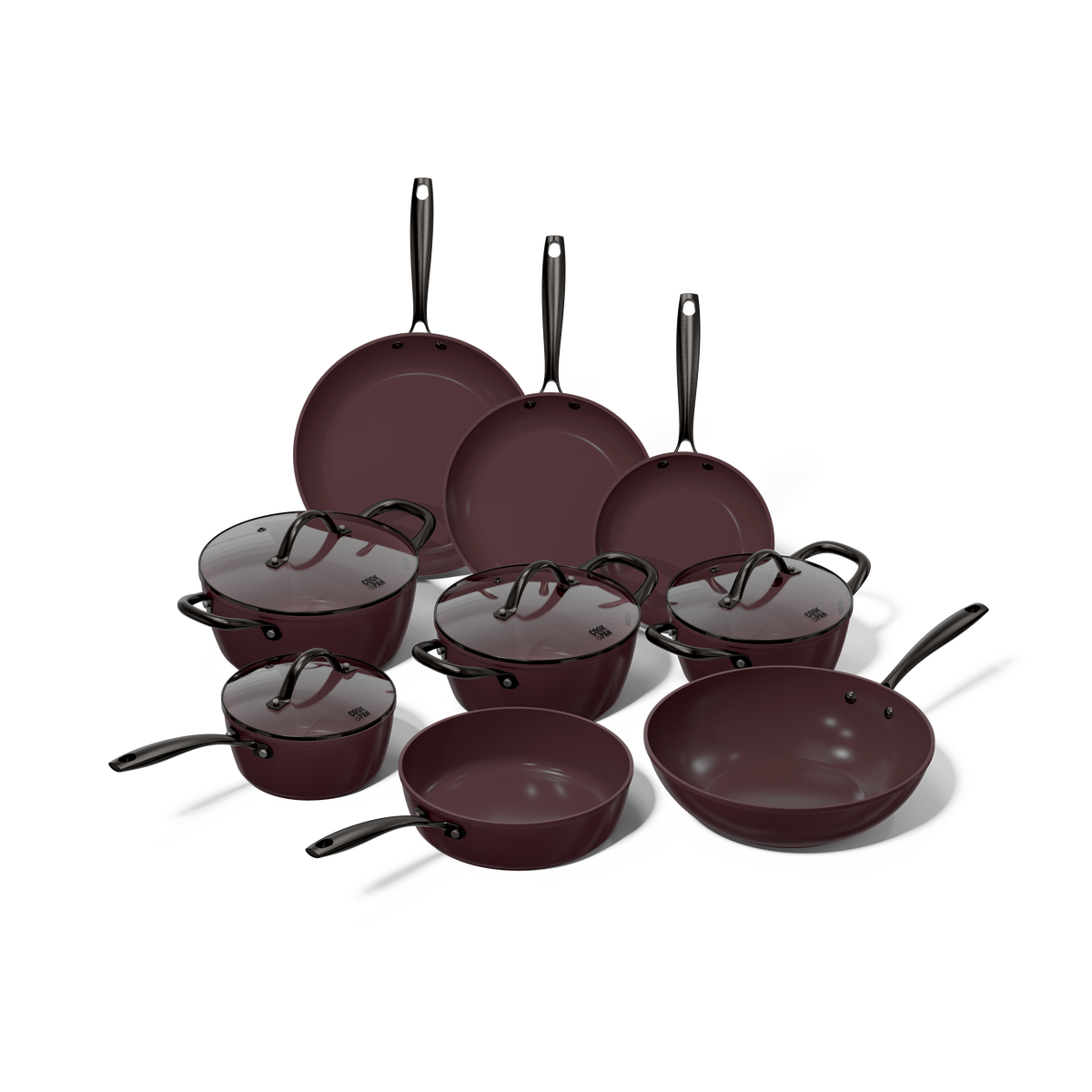
A complete pan set for induction has at least:
- A frying pan of 24 or 28 cm for daily frying duty.
- A sauté pan with lid for sauces, risotto and wok dishes without the wok.
- A saucepan of 16 to 20 cm for vegetables, potatoes or pasta for two.
- A larger saucepan of 22 to 24 cm for soup, stew or pasta for the whole family.
- Often a 16 cm milk pan added for sauces and tomorrow's reheating.
Not sure what you want piece by piece? Have a look at the separate induction sauté pan and the induction cooking pot, then build exactly what you need.

The pact with your pans: how to make them last for years
A decent pan set isn't a throwaway. Stick to these rules and your induction set will stay your favourite kitchen buddy for years:
- Preheat gradually. Empty pan, low setting, two little minutes, only then drop everything in.
- Use wood, silicone or heat-resistant plastic. Steel spatulas and knives literally scratch your warranty away.
- Pick the right oil. Go for an oil with a high smoke point, such as groundnut or rice oil, or butter. No extra virgin olive oil or cooking spray for high heat: they leave sticky films behind.
- Always let the pan cool down before you rinse it. Hot pan plus cold water is thermal shock, and that's not covered by the warranty.
- Wash by hand. Dishwasher can in a pinch, but never on eco mode and never with all-in-one tablets.
- Stack with pan protectors in between. Otherwise you'll get scratches you'll never polish out.
Warranty that actually means something
Cook & Pan gives 7 years manufacturing warranty on all our pan sets, and 2 years on the ceramic coating. Cast iron (should you want to expand your set later) even gets 25 years manufacturing warranty. Not the drawer-version where you have to submit 14 documents, just simply: if there's a manufacturing fault, we sort it.
And if it still doesn't quite land the way you thought? No drama. With our 60-day trial cooking you try the set at home, and even after a few cooks it can come back if you return it neatly.
Doubting between separate pans or a complete set?
Here's the tipping point: a set is on average a fair bit cheaper than the same pans bought separately, and you instantly get a unified look in your kitchen. Our value sets and bundles show how much you save per combination. Want to compare calmly first before diving in? Then this guide helps: buying a pan set without choice stress.
The health side: PFAS-free isn't marketing hype
The non-stick coating of yesterday isn't the non-stick coating of today. Cook & Pan deliberately chooses ceramic coatings without PFAS, PFOA or other fluorinated compounds. That's not just better for you, but also for what won't end up in your meal afterwards. Want to dig deeper into why that makes a difference? Read avoiding microplastics in your meal and you'll never look at that one old pan in the cupboard the same way again.
Finally: pick the set that makes you happy day after day
The best pan set for induction isn't necessarily the most expensive, and certainly not the one with the most pieces. It's the set that fits how you cook, how much you cook and how you want to maintain it. Rarely cook more than a daily meal? Go for Go Ivory or Go Green. Got a full house and often run multiple pans at once? Then Signature is your friend. Want something sturdy with stainless steel in the lead role? Then pick Honey and you're done.
And whatever you choose: stay under that 80%, skip the steel and leave the boost button alone. Ready to choose? Discover the full range of pan sets for induction, and your pans will dance along with you for years, on any induction hob.
💡 Please note: we love cooking with boldness, but safety always comes first. Read more on our disclaimer page.