





















The smell of onions slowly caramelising, the soft bubbling of a stew, a soup steeping for hours on a low flame. Autumn is the season of patient cooking. But that patience only works if your pan plays along. A thin, worn or warped pan drains the joy long before the dish is done.
So before you put the first hotpot on this week or pull out the soup pot, be honest about what is sitting on your hob. Because a good pan is not a luxury, it is the difference between cooking as a hobby and cooking as a chore.
Why autumn places different demands on your pans
Summer cooking is quick: searing fish, stir-frying courgettes, an omelette for breakfast. The pan sits on the heat for maybe ten minutes. In autumn that flips. Stew meat simmers for three hours, a stock infuses for half an afternoon, a casserole starts on the hob and finishes in the oven. You ask far more of your cookware.
A pan with a thin base heats unevenly. The middle scorches while the rim stays cold. A pan with a damaged coating makes food stick exactly when you want a beautiful crust. A pan without an oven-safe handle forces you to decant halfway through. All small annoyances that come back again and again in autumn.
The difference between cooking joy and cooking stress
Cooking should be a good thing. A moment for yourself after a busy day, or a shared activity on a Sunday. But the moment the pan works against you, that joy disappears at speed. You scrape against burnt bits, lift food out with more force than you would like, and after dinner there is a stack of washing-up that takes another half hour.
With a pan that cooperates, it feels different. You need less fat, you can work on a lower setting, and you do not have to check every two minutes whether something is sticking. Your attention goes to the dish, not the material.

How to spot a pan that cannot handle the season anymore
Not every worn pan is finished, but there are signals worth taking seriously. Run through this list while you open your cupboard:
- The base wobbles when you put the pan on a flat surface. That means it has warped, and the pan will never sit properly on your hob again.
- The coating is flaking or shows bare patches. Food sticks to those spots no matter how much butter you use.
- The handle is loose or feels hot during cooking. Unsafe and inconvenient.
- The pan has dark burnt-in stains on the inside that will not budge.
- The base is discoloured or oxidised on the outside, with marks that look like carbonisation.
- You keep turning the heat up higher than before to get the same result.
One signal does not necessarily mean replacement. Two or three does. Your autumn dishes deserve better.
Which pan suits which autumn dish
The mistake many people make: trying to cook everything in one pan. An omelette and a stew demand very different qualities from your cookware. With a focused selection of two to four pans you have everything covered for the whole season.
For searing and frying
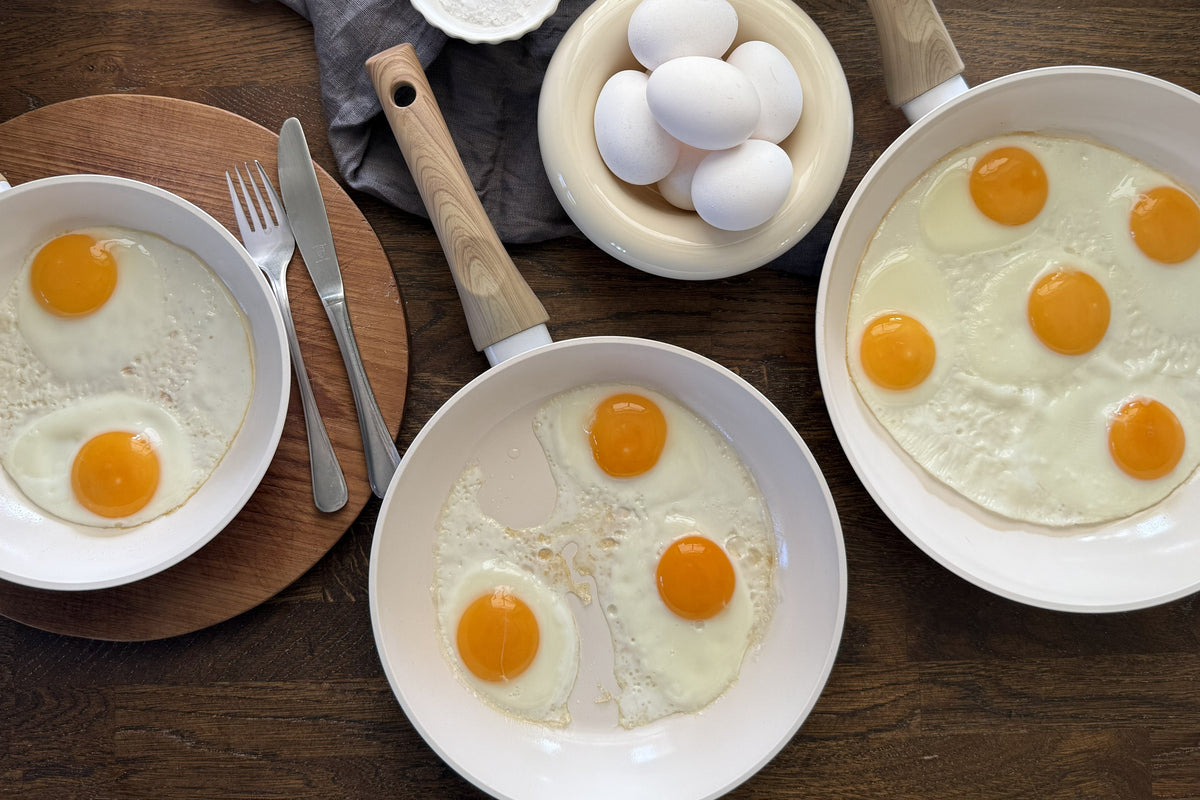
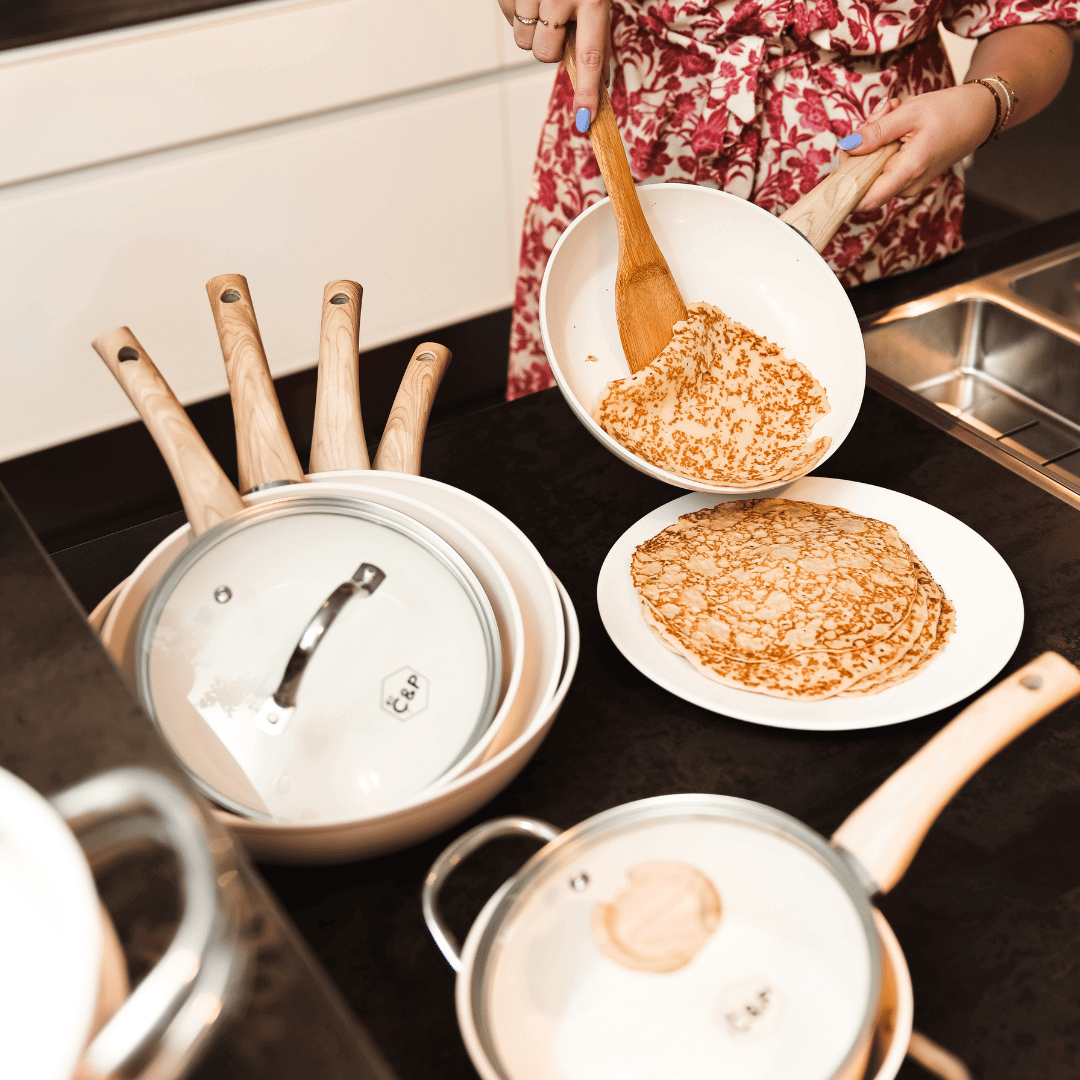
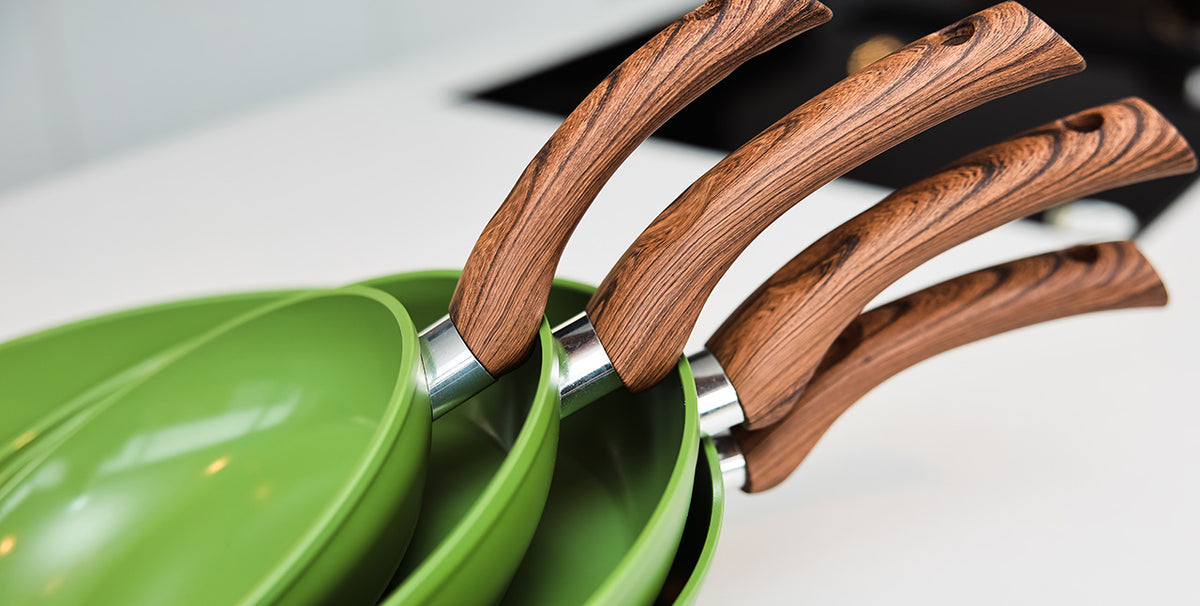
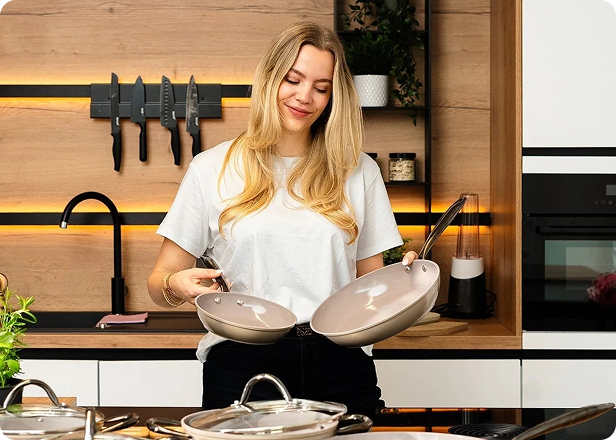
A good frying pan is your workhorse. For schnitzels, chicken breast, mushrooms or an old-fashioned autumn pancake you need a pan that reacts quickly, spreads heat evenly and does not stick. A ceramic frying pan does that without any questionable coating, and it is light enough for daily use.
Choose a size that fits your household. For two people, a 28 cm frying pan is often the sweet spot: big enough for a proper dish, small enough to heat up quickly.
For braising and simmering
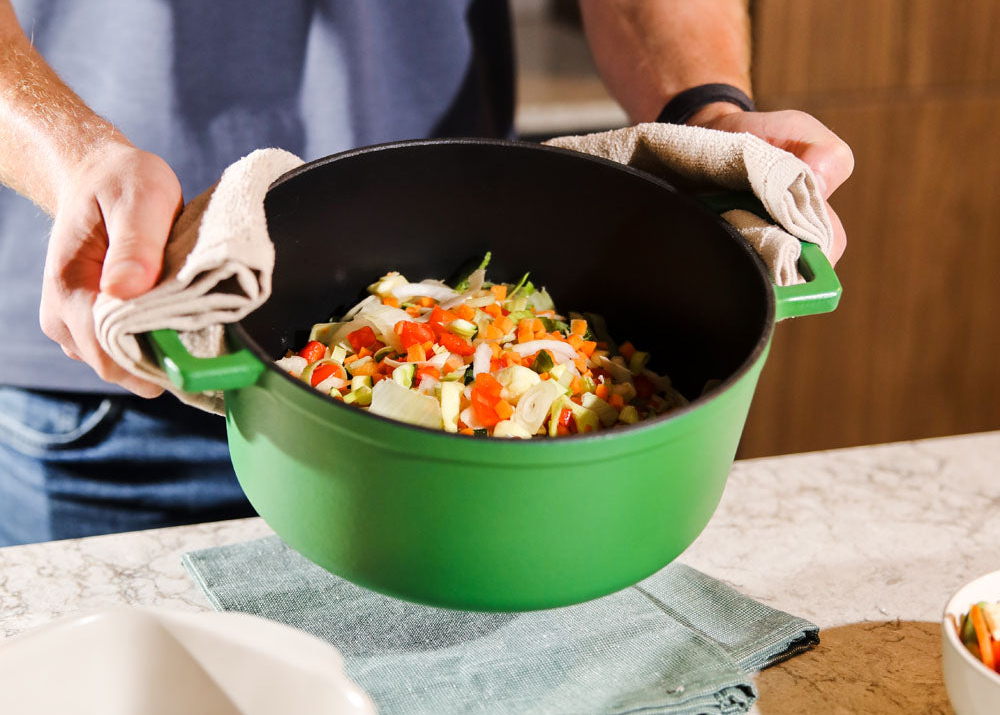
A casserole with a thick base is worth its weight in gold come autumn. It holds the heat, you can sear first and then let it simmer, and often it goes into the oven too. A ceramic casserole has the advantage that nothing sticks to the bottom, even after hours of simmering.
For the big pots full of soup
Pea soup for the whole family, a big pot of pumpkin soup, stock for the week. That asks for volume. A roomy soup pot with a thick base prevents the bottom from burning before the top warms up. Important for long cooking times.
For the in-between class
Between the frying pan and the stockpot sits the sauté pan. Deep enough for a sauce or risotto, flat enough to fry in. A ceramic sauté pan may well be the most versatile pan in your autumn cupboard.
Why ceramic is a smart choice right now
Autumn is the season when you cook more often and for longer. So you do not want a pan to worry about. Ceramic coatings are free of PFAS and other chemicals that can be released at higher temperatures. They conduct heat very efficiently and let food release cleanly, without the need for litres of oil.
Want to dig deeper into why ceramic is becoming the logical choice for so many households? Read our piece on ceramic pans as a smart choice. We explain what ceramic can and cannot do, and how to enjoy it for years.
Slow cooking without sticking
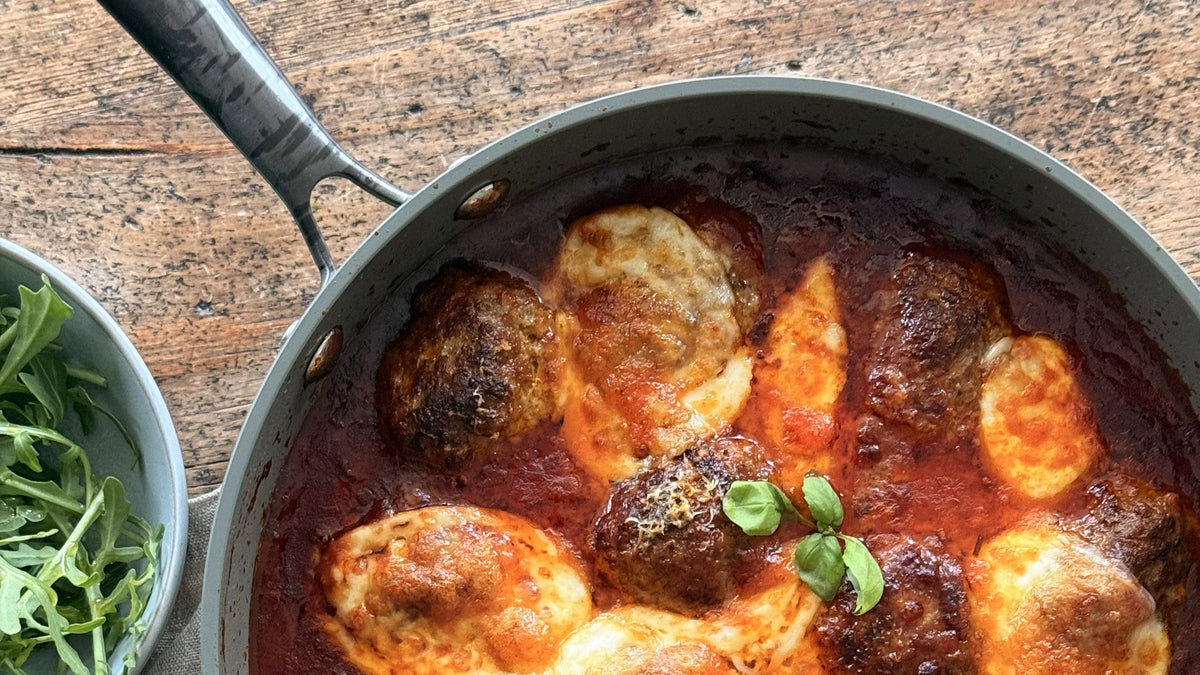
A typical autumn dish is the slow braise. Pulse stew, beef bourguignon, chicken thighs in tomato sauce. The problem many home cooks meet: after three hours of simmering a thick layer sticks to the base that you can never properly clean again. In our article on slow cooking without sticking, we discuss which pans pay off most for slow preparations.
A set that covers the whole season
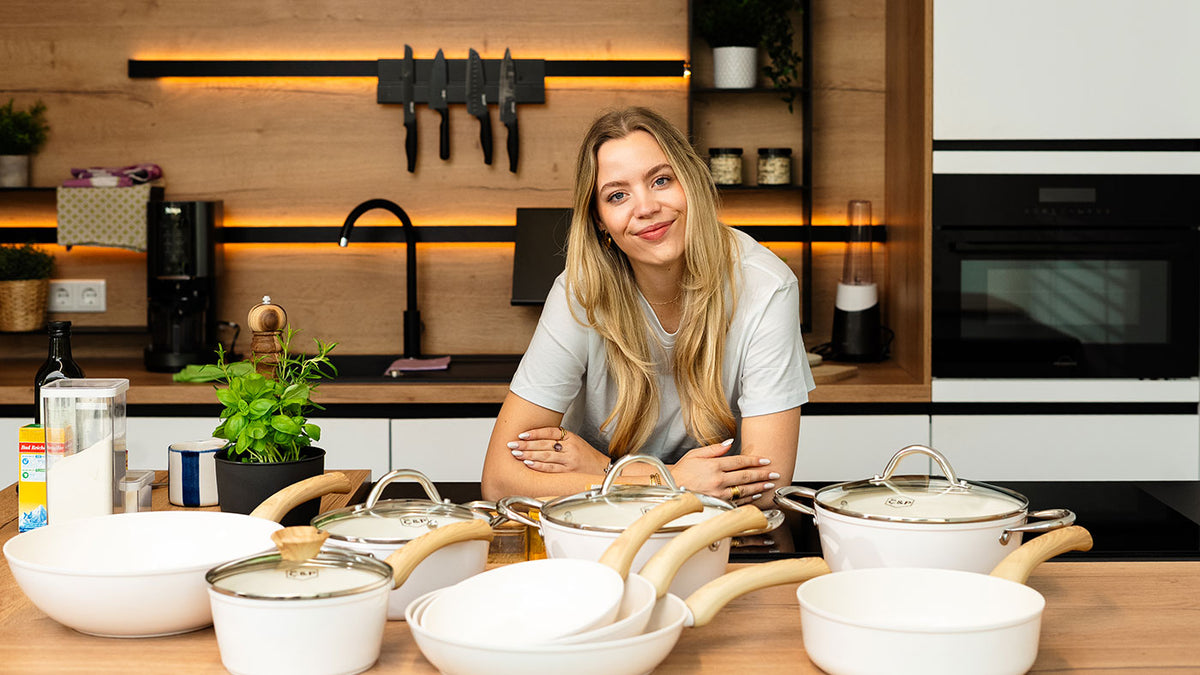
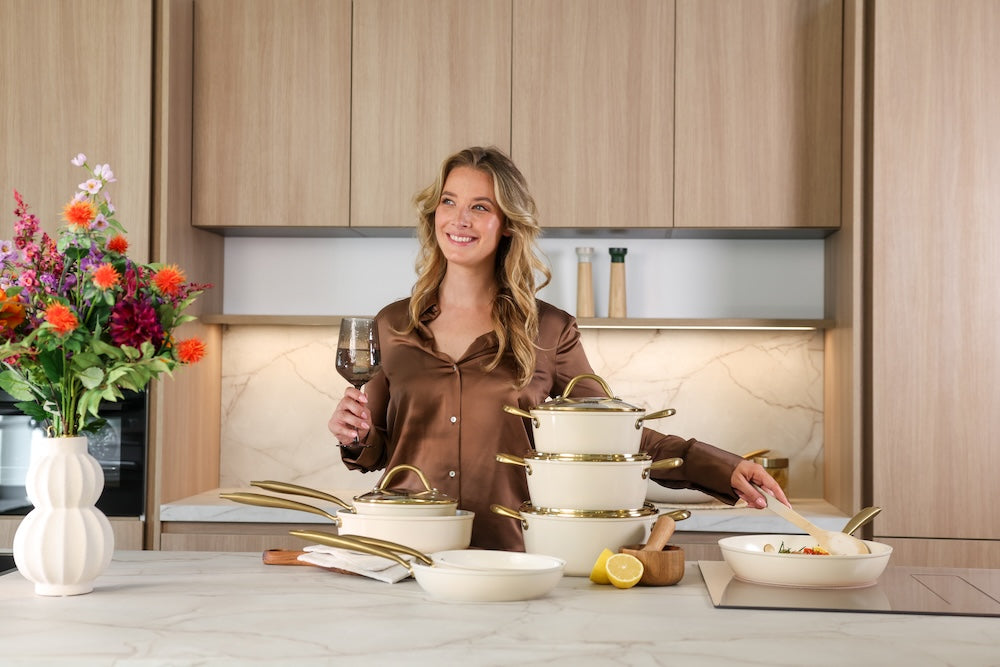
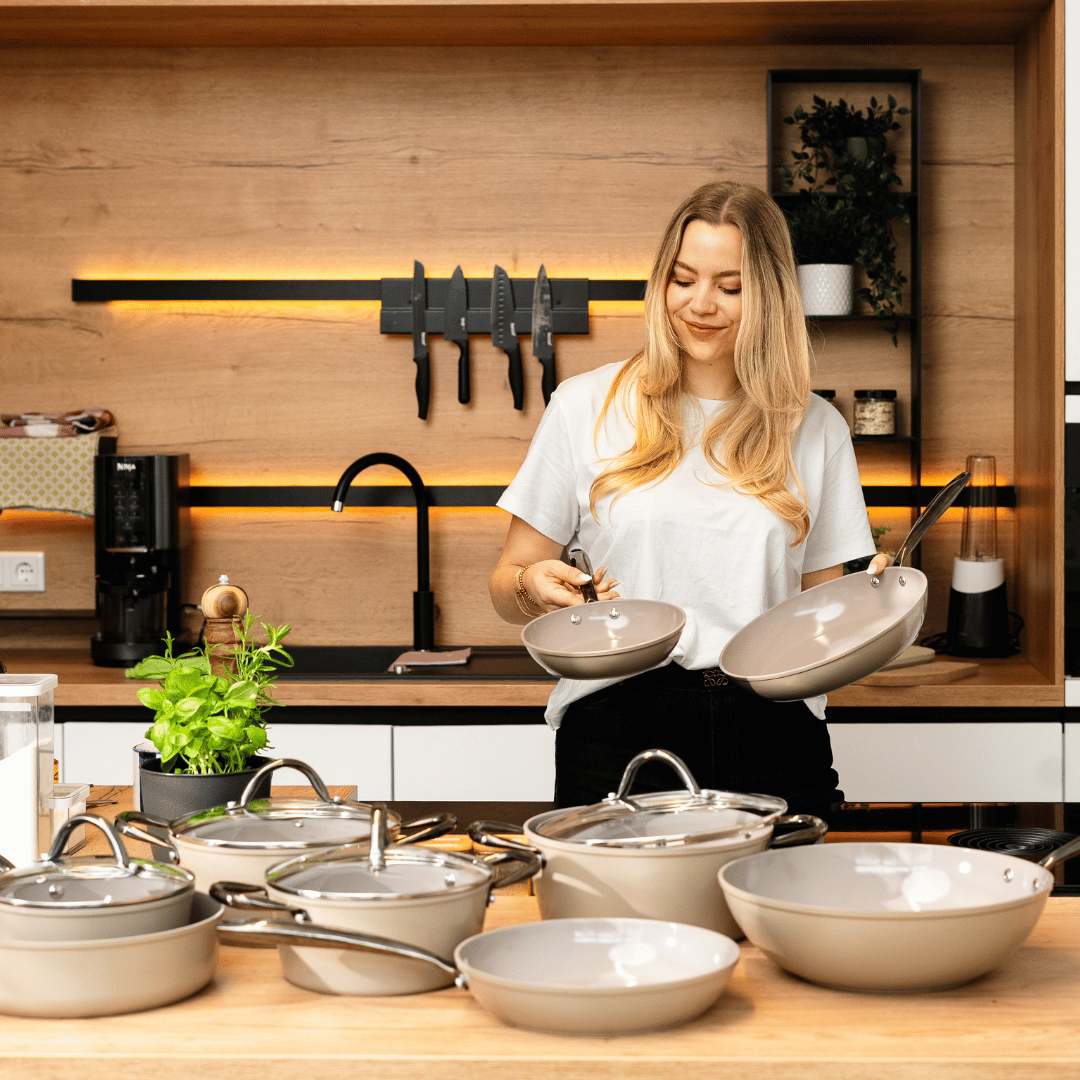
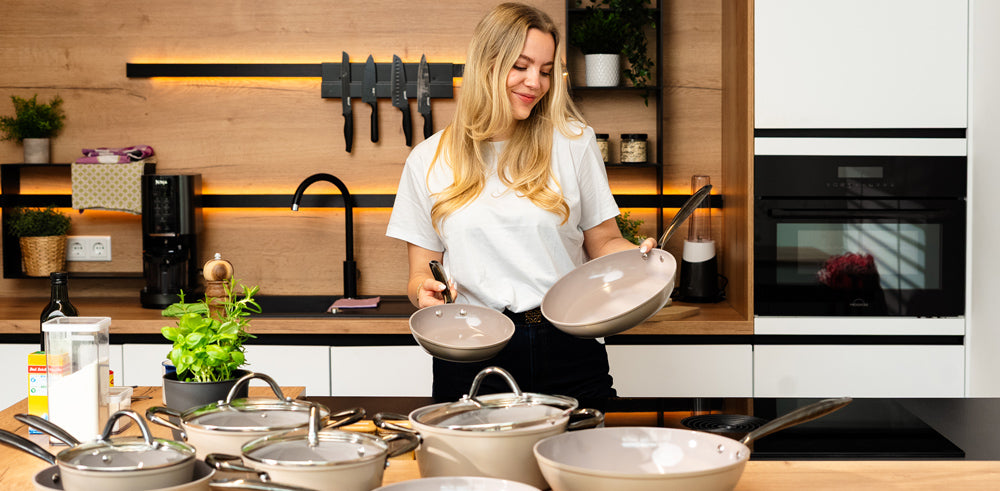
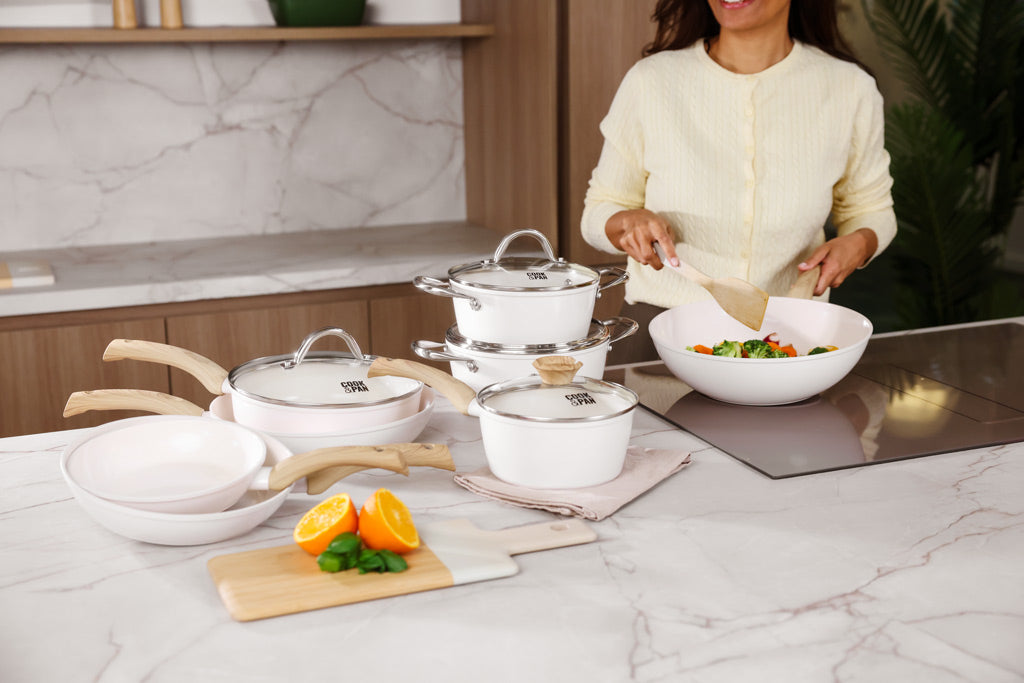
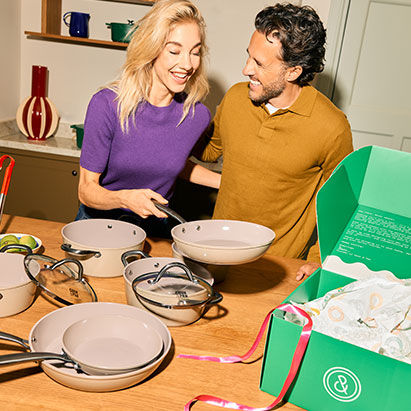
If you want to do it properly in one go, a complete cookware set is often better value than buying piece by piece. You instantly have several sizes at home, all in the same style, and the price per pan is lower than buying them separately. For anyone setting up or refreshing a kitchen, this is the season to take that step.
What you should not do with your pan this autumn
A good pan lasts for years, provided you do not quietly destroy it yourself. A few common mistakes during the heating season:
- Preheating an empty pan on the highest setting. That damages every coating, no matter how good.
- Using the boost function on induction. Power above 80 per cent is almost never needed and causes warping.
- Holding a hot pan under the cold tap. Thermal shock is one of the fastest ways to ruin a pan.
- Using steel utensils. Wood, silicone or heat-resistant plastic, otherwise you score the coating to ribbons.
- Putting the pan in the dishwasher on eco mode. Less water means more concentrated detergent, and that eats every finish.
With a little care, your new pan stays beautiful well into the next heating season.
Investing for the holidays
There is a practical logic to choosing good cookware right now. November and December are the months when you stand in the kitchen the most. Sinterklaas dinner, Christmas dinner, New Year's, cosy Sundays with visitors. A pan that lets you down at those moments is, to put it mildly, annoying.
By picking up a few quality pans now, you benefit for the rest of autumn and have cookware you can rely on during the holidays. That saves stress at the moments you need it least.
Warranty and trial cooking: peace of mind on your investment
A good pan is a long-term purchase. At Cook & Pan you get 7 years of warranty on manufacturing and material defects on our pans, 25 years on cast iron, and 2 years on the function of the ceramic coating. On top of that you can trial-cook every pan for 60 days. If it still does not work as you hoped, you send it back, even after using it a few times.
That gives you room to calmly choose what suits your cooking style, without committing to a single guess. Ideal if you want to overhaul your autumn kitchen properly.
A pan for the year to come, not just for the season to come
Autumn is a fine moment to buy something that lasts. Whoever picks a good pan now will still be cooking with it next summer. And the winter after that. And so on. Read our take on sustainable cooking in 2026, explaining why getting longer life out of your cookware helps both your wallet and the planet.
Make this autumn your best cooking season
It is a small investment with a big effect: cookware that does what it promises. No sticking, no washing-up drama, no annoyance halfway through a dish. Just cooking, in silence or with music, with a glass of wine or a cup of tea, while it grows dark outside and your kitchen is the warmest spot in the house.
No second-rate pan belongs there. What belongs there is a pan that does justice to your cooking joy. A pan you will still feel happy about years from now.
💡 Please note: we love cooking with boldness, but safety always comes first. Read more on our disclaimer page.