





















Sustainability Day lands on your doormat and suddenly everyone is calling for action. Solar panels, electric cars, shorter showers. All good things, but it quickly feels big, expensive and complicated. Meanwhile your kitchen cupboard might be the quietest polluter in the house.
Pans, spatulas, lids, coatings: harmless stuff, we think. Until you realise how much of it ends up in the bin within a few years. No need to panic: with a handful of smart choices you make a difference today. No sermon, just an honest story.
Why a cheap pan costs more than you think
Ten euros looks like a fun deal. But do the maths: a pan that goes in the bin every year costs you fifty euros over five years plus five times the production impact. A pan that lasts five years costs you the same fifty euros, but only once. Don't kid yourself in the short term.
The real bill for a throwaway pan hides in five things: raw material, production energy, transport, broken packaging and the question of what to do with it once the coating flakes off. Want to dig deeper? Read up on how often you should actually replace a pan.
The real question on Sustainability Day
Not "what should I buy?" but "what don't I need to throw away?". That's the mental switch we often forget to flip. Sustainability in the kitchen is about choices that last for years, not a new trend per season.
Start small. One good frying pan instead of three mediocre ones. One sturdy casserole for a lifetime of stews. Whoever buys less but better, automatically buys more sustainably.
PFAS, microplastics and the other invisible visitors
Many classic non-stick coatings contain PFAS, a family of chemicals that breaks down badly and accumulates in soil, water and ultimately in you too. Scratches and high temperatures can release particles. Not nice, not necessary.
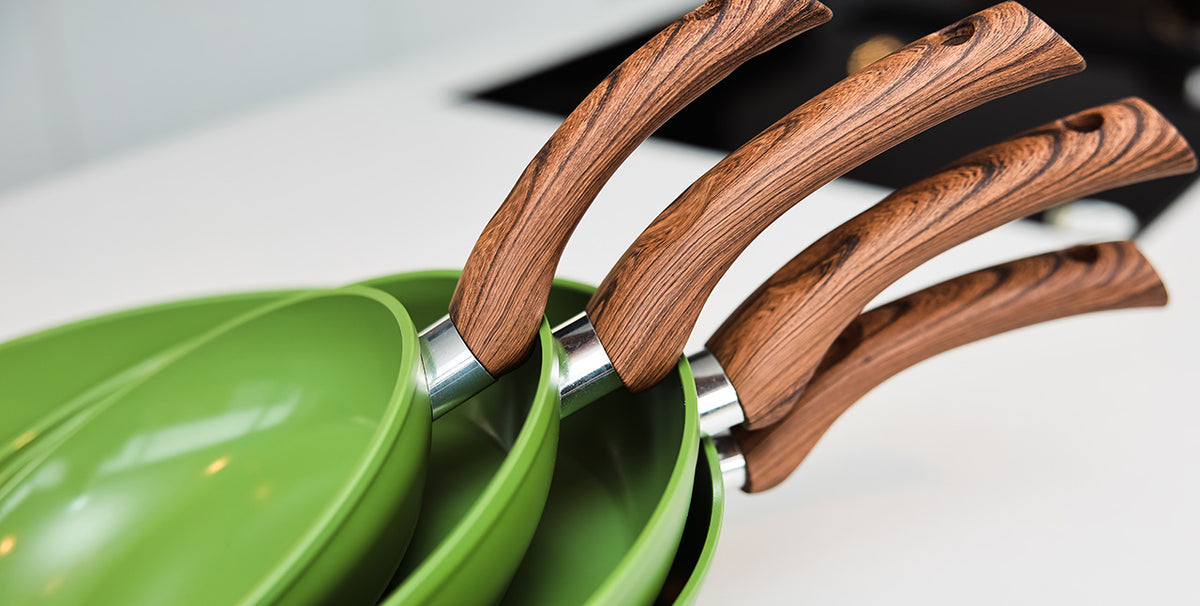
The good way out is a ceramic, PFAS-free coating. For the facts and the myths, read everything about toxic substances in pans and how to keep microplastics out of your pans. Two blogs that explain what you really need to know in half a coffee.
How to spot a pan you'd rather walk past
You don't need to be a chemist to spot a doubtful pan. A few signs that warn you to keep walking:
- Not a word about PFAS, PFOA or coating composition on the packaging.
- A coating that scratches or discolours within a few months.
- No clear warranty period or vague wording about it.
- A handle that already wobbles before you take the pan home.
- A bait price that is too good to be true, with material specs out of nowhere.
A pan with an honest warranty, a specified material and a PFAS-free coating is almost always the quieter but more sustainable answer.
The pan choice that is sustainable on its own
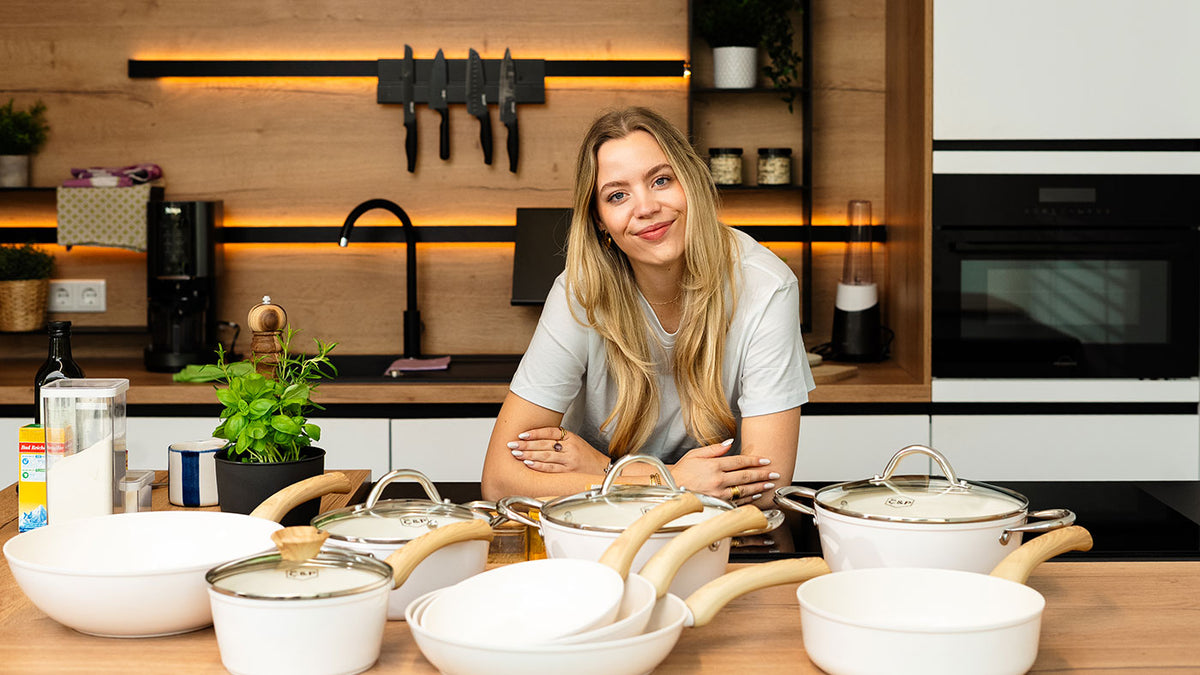
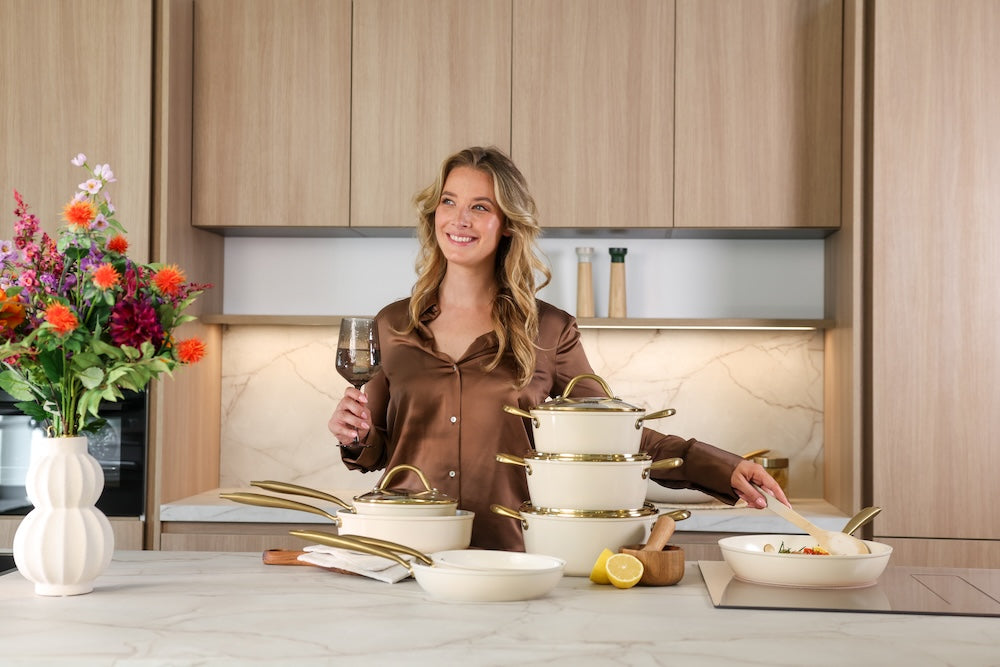
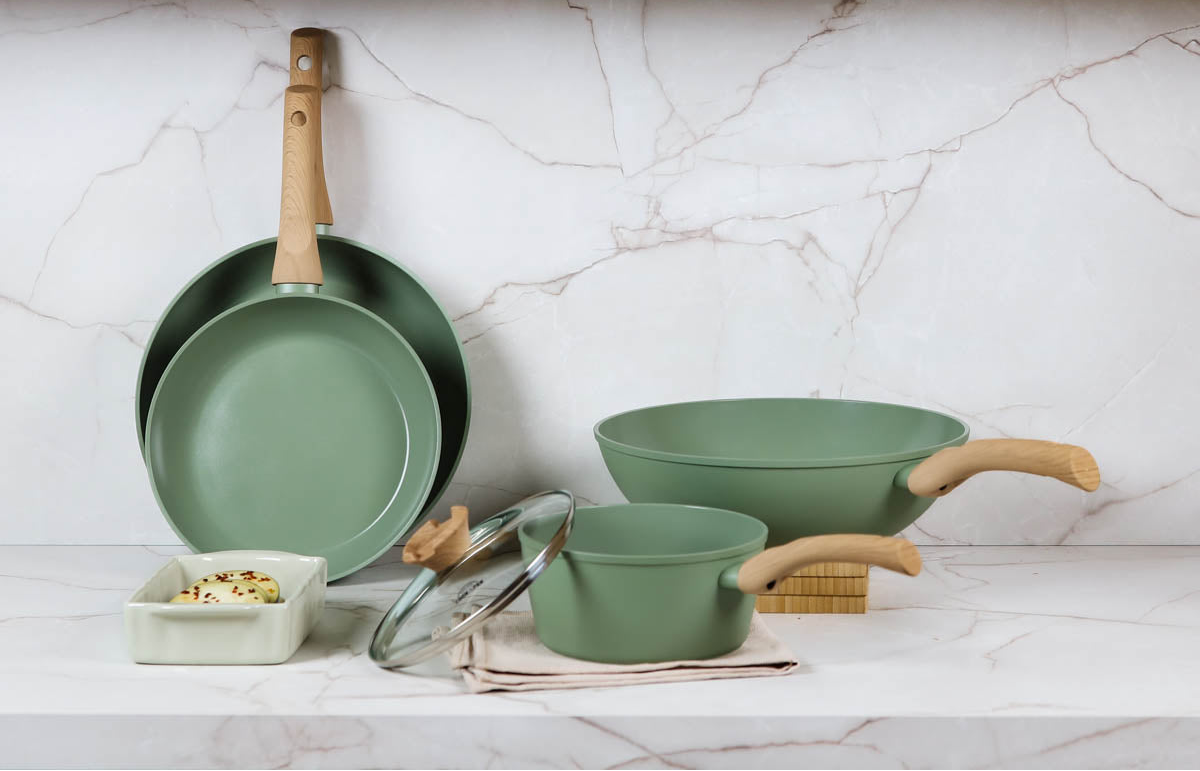
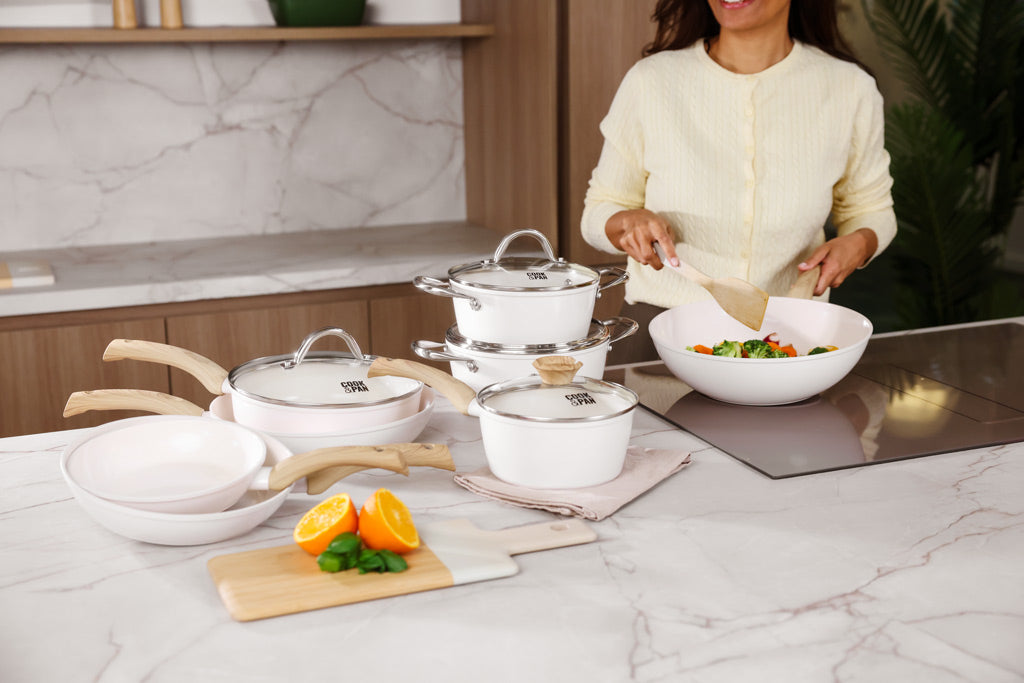
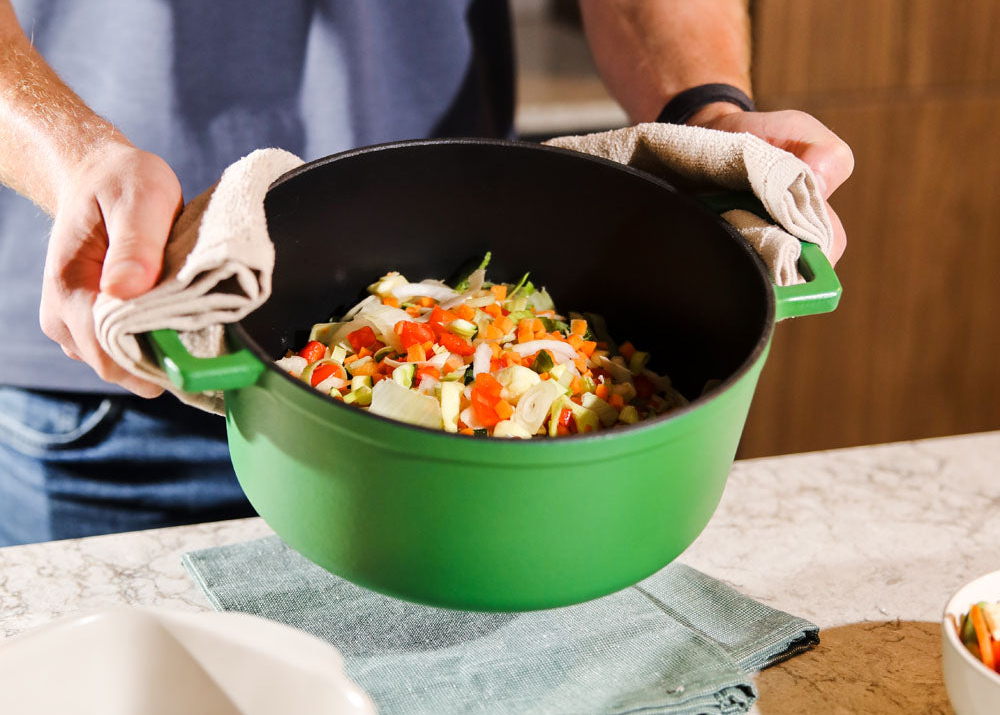
Material and build make the difference between "two years of service" and "two decades of loyalty". At Cook & Pan you choose between three honest options: an aluminium frying pan with a PFAS-free ceramic layer, a stainless steel pan for those who love searing, and a cast iron pan for those who want to pass their cookware on to the next generation.
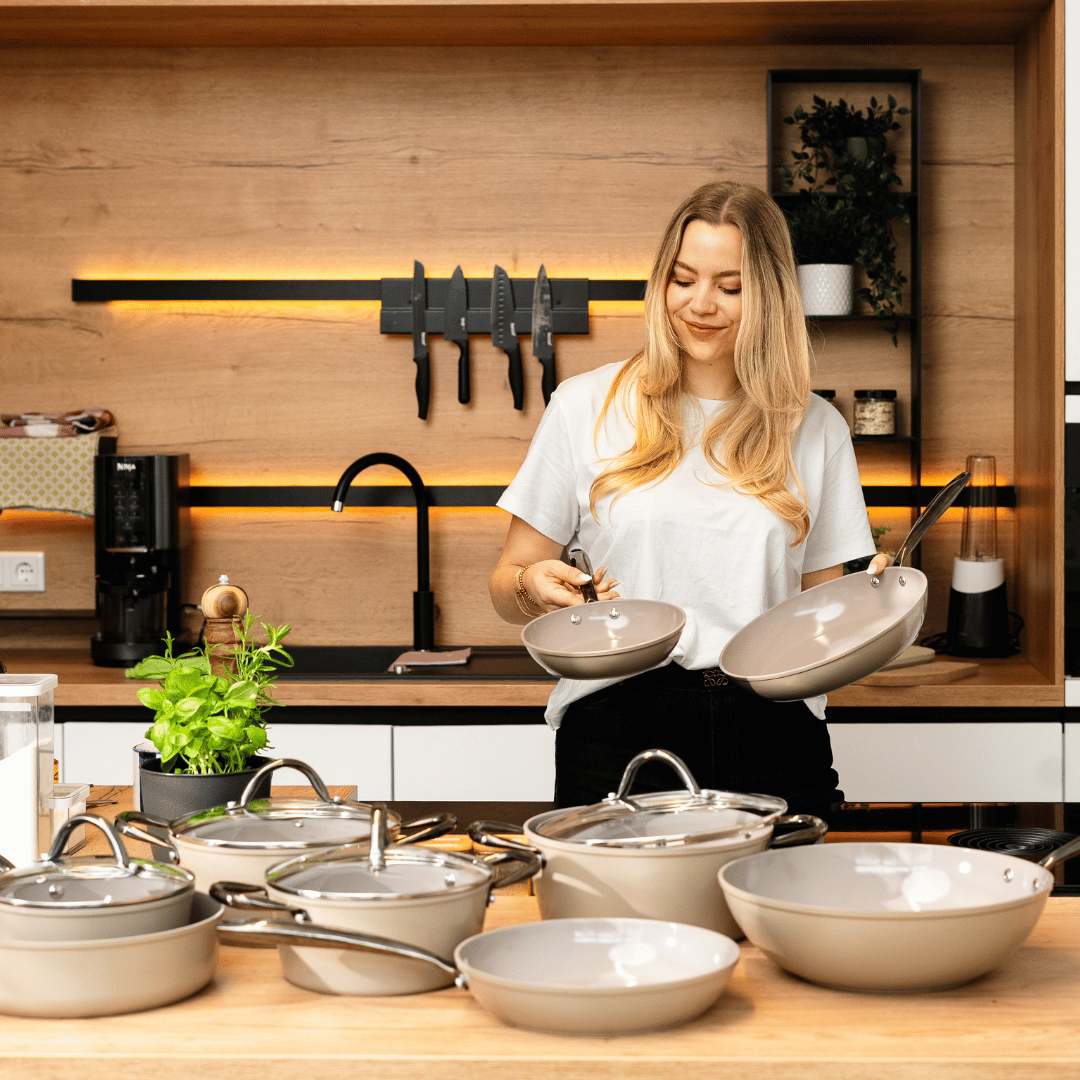
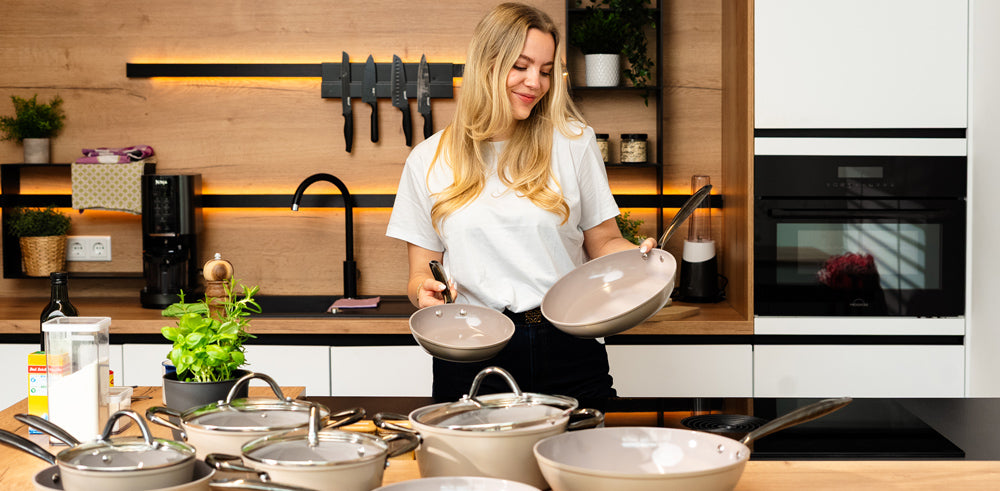
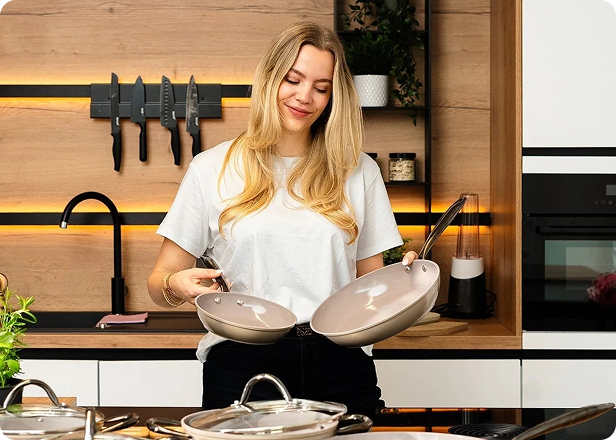
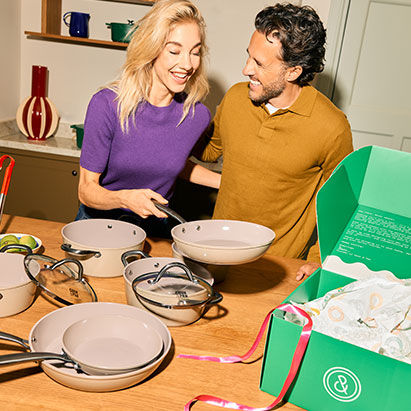
Start at our PFAS-free pan collection if you want to see what a pan without the rubbish looks like. For those who'd rather have a complete combo right away: in the ceramic pan set everything sits neatly together.

Maintenance is your secret sustainability weapon
The biggest sustainability gain is not in what you buy, but in how you treat it. A good pan can last ten years, or three. The difference is in five habits:
- Never heat an empty pan on the highest setting. Gradual warming saves every coating.
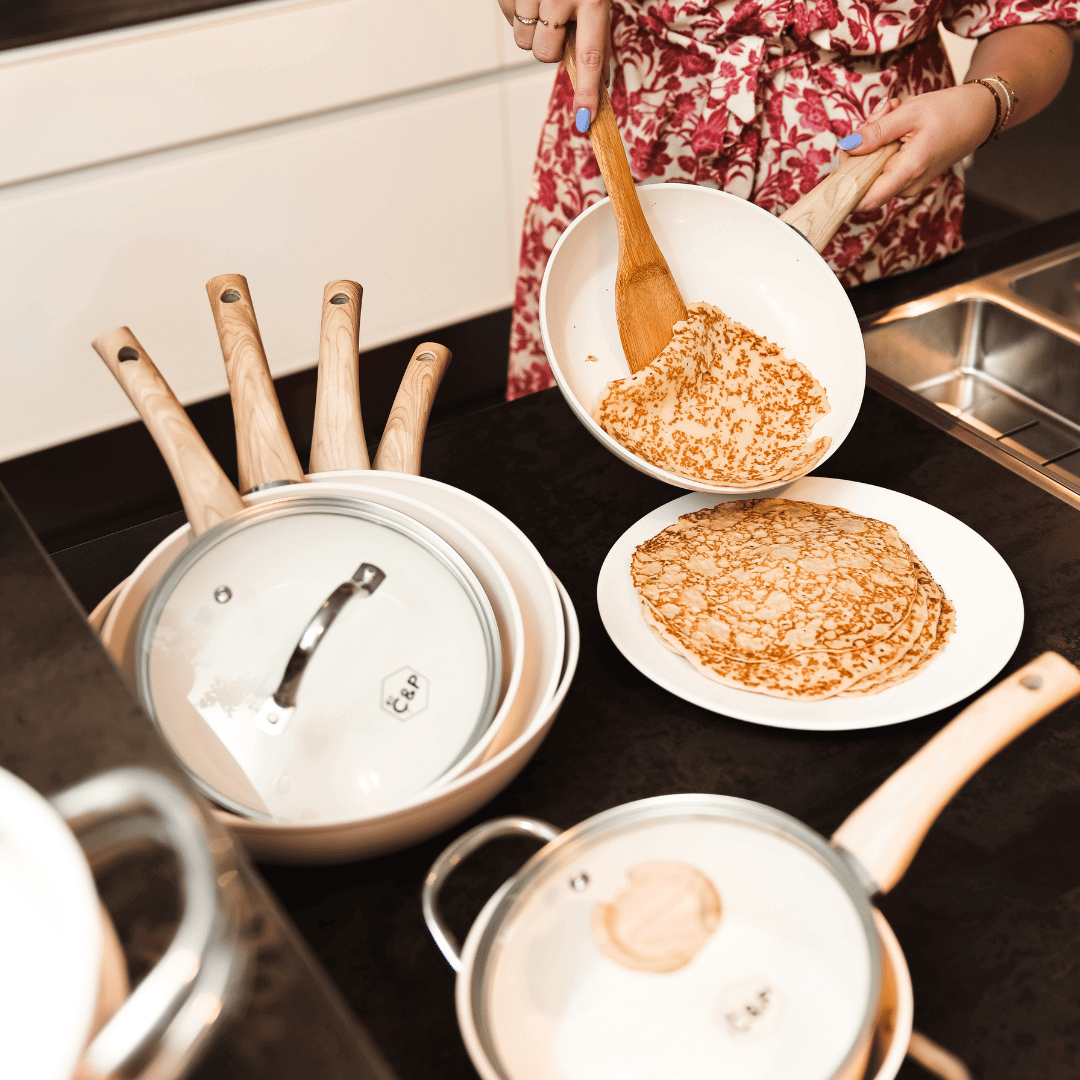
- Use wooden or silicone utensils. Steel forks are the death blow for non-stick.
- Wash by hand. The dishwasher quietly destroys coatings and handles.
- Always let a hot pan cool before you put it under water. Otherwise you get a warped base for free.
- Stack with a felt or cloth in between. Scratches often happen right inside your cupboard.
Want a complete reference? How to store your pans without scratches or damage lays it all out, and for the hob to match, this guide to stubborn stains on your induction cooktop gives you the best cleaning tips.
The induction trap nobody warns you about
Many people cook on induction and default to setting 9 on everything, simply because they can. That's where a big chunk of coating damage comes from. Induction is lightning fast, so 70 per cent power is almost always enough. Boost function? Skip it for your frying pan. Save that for bringing water to the boil in an empty pot.
A gradually heated pan wears less. Less wear means less replacing. Less replacing is by definition sustainable. Simple. Want to know exactly which pans work on induction? You'll save yourself a lot of frustration.
Spatulas, lids and all the little stuff
It's not just about your pans. Plastic spatulas that melt, rickety lids and bargain-bin thermometers are the silent mini-disposables of your kitchen. Invest once in solid utensils made of wood, silicone or stainless steel and you're set for years.
A good set of spatulas costs you the price of two takeaway meals. You'll build ten years on that. Do the maths again on what's more sustainable.
What to do with the old pans you already have?
Don't throw them away. Really, don't. Pans are full of metal that recycles beautifully, provided it ends up in the right place. The four best options in a row:
- Recycling centre: every council has a separate container for metal. That's where they belong.
- Charity shop: does your old pan still work decently? Someone else will be happy with it.
- Trade-in schemes: some brands take your old pan back when you buy a new one.
- Scrap dealer: with bigger quantities you sometimes even get a little money for it.
It costs you five extra minutes, but you save the planet a tidy portion of metal and yourself a clean conscience.
A pan set or single pans: which is more sustainable?
A set is cheaper per pan and you instantly buy the essential sizes. Provided you actually use them all. A set of six pans of which you stash three at the back of the cupboard isn't a win, it's waste at a discount.
So start honestly: which pans do you really use every week? For most households that's a frying pan, a sauté pan and a casserole. Check the smart combinations in our overview of the PFAS-free non-stick coating if you want a solid starting point in one go, or pick single pans from the complete pan collection for a build that fits you.
Three small routines that change more than you think
Not everything has to be a big investment. Three habits that start today:
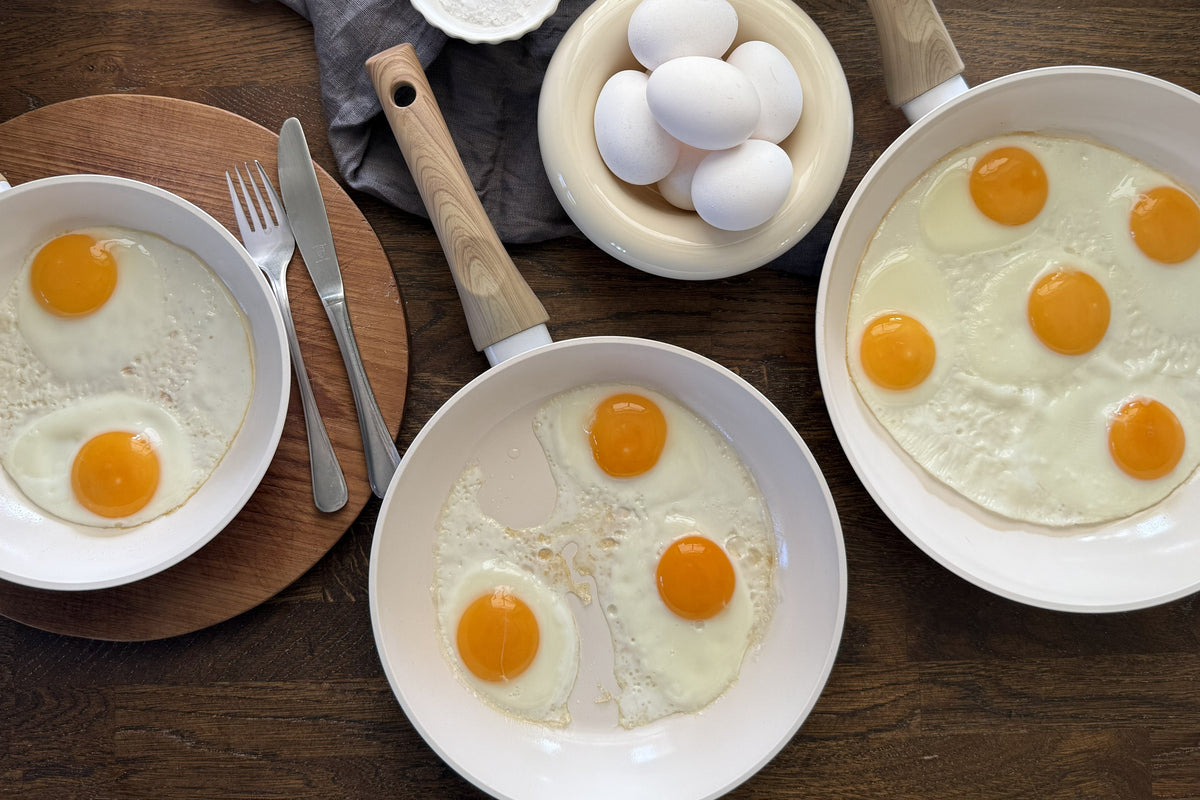
- Cook in the right size. A 28 cm frying pan for a single egg wastes energy and oil.
- Put the lid on whenever you can. Quicker to temperature means less gas or electricity.
- Cook with residual heat. Pasta off the heat for the last minute, potatoes finishing in the hot pan.
Sounds old-fashioned? It's exactly what your grandma did, and she kept her pans alive for four decades.
What a PFAS-free coating actually means
"PFAS-free" appears on more and more packaging. Time to know what you're actually buying. A ceramic coating is built up from mineral particles and baked onto the pan. No forever chemicals, but a perfectly fine non-stick at low and medium-high temperatures.
The fine print: ceramic works less well at extremely high heat. Build up gently remains the rule. For the details, read what's inside a PFAS-free non-stick coating and why it's a healthy and sustainable alternative.
Small sustainable action plan for this week
No more panic. A few concrete steps to get started this week:
- Take stock of your cupboard: which pans do you really use?
- See which ones are worn out and take them to the recycling centre.
- Don't replace them right away. Test first how little you really need.
- When replacing, consciously choose PFAS-free and with a warranty.
- Apply those five maintenance habits to your current pans starting today.
A better kitchen in the week after Sustainability Day. No panic, just a few clever moves.
Small start, big impact
Sustainability in the kitchen is not a one-year project. It's a series of small, honest choices that add up to a mountain of difference. A pan that lasts longer. A coating that doesn't end up in your food or in nature. A routine that saves energy.
No hype, just cookware that stays. That's what a Sustainability Day in the kitchen brings: less panic, more enjoyment and a cupboard full of pans that will one day still be your children's.
💡 Please note: we love cooking with boldness, but safety always comes first. Read more on our disclaimer page.